Wealtie logoWealtie

Money & budgeting blog: Plain answers, sources included

Straight answers to everyday money questions: how much to save, how to set a budget you'll keep, what to do when your pay changes from month to month. Every post works through real numbers and shows where they come from.
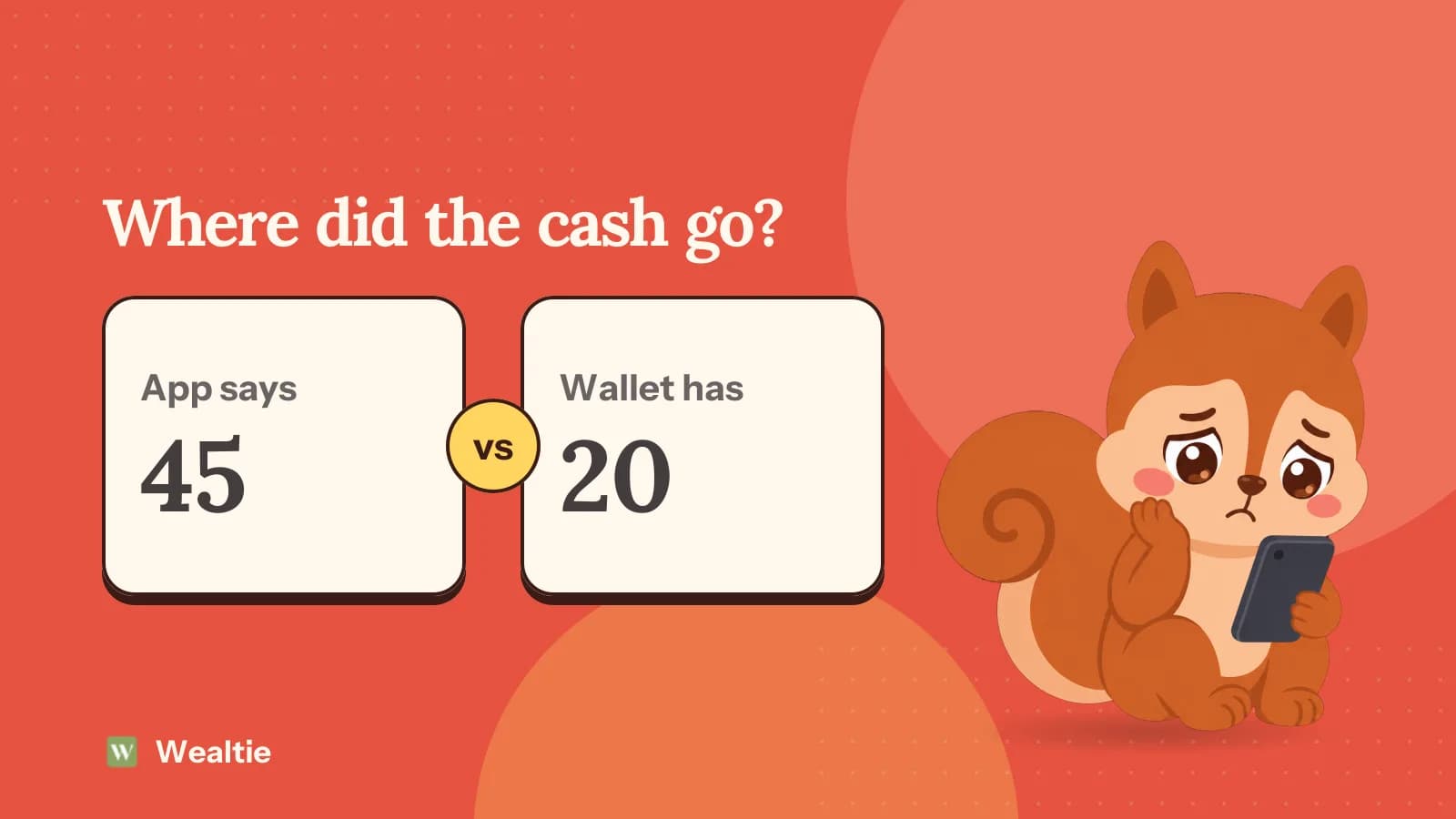
  • Wally looking worried beside 'Where did the cash go?': the app says 45, the wallet has 20.
    USING WEALTIE

    How to track cash spending the same way as your card

    To track cash spending, treat your wallet as an account: an ATM withdrawal is a transfer into it, not spending, and each cash purchase is logged from it as it happens. Once a week, count the cash and compare it with the wallet's balance; the difference is spending you forgot.

    · 3 min read
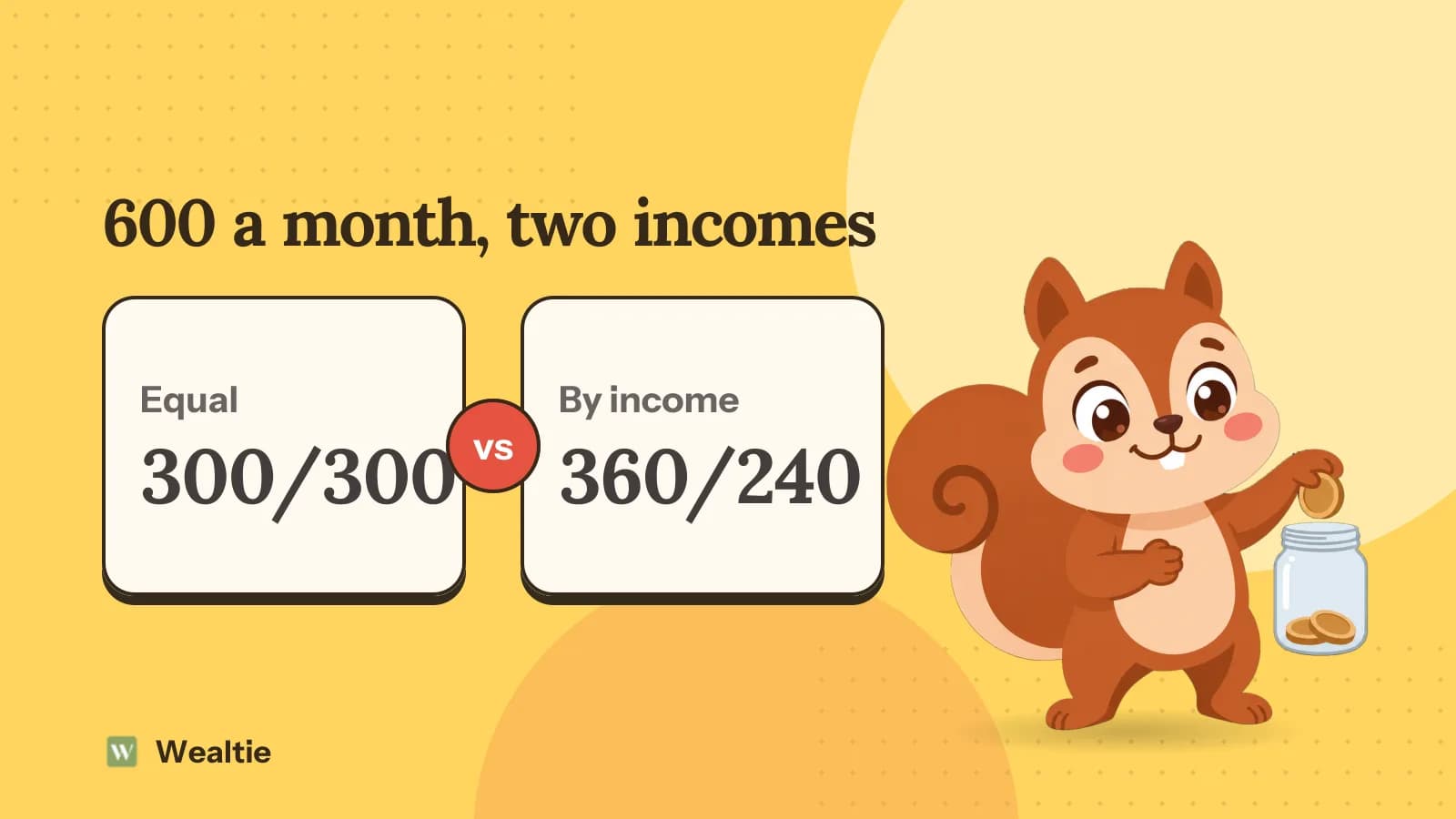
  • Wally dropping a coin into a jar beside '600 a month, two incomes': equal 300 and 300, or by income 360 and 240.
    MONEY AS A COUPLE

    Saving for a goal together when you earn different amounts

    Saving for a goal together starts with a target, a date and a monthly amount you both agree on. When you earn different amounts, contributing the same share of each income, rather than the same sum, keeps the goal fair. Keep the money in its own account and agree upfront what happens to it if plans change.

    · 3 min read

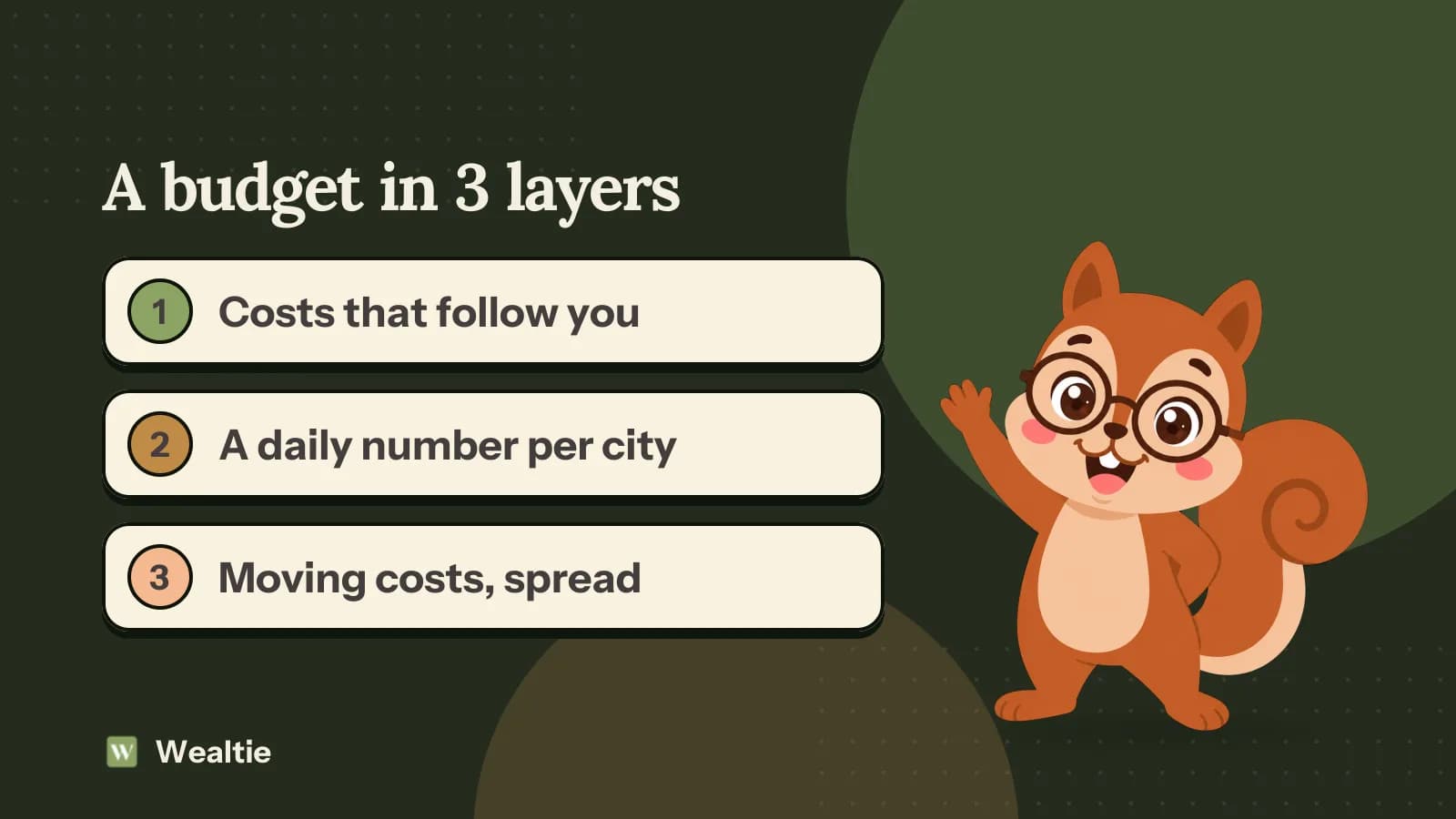
  • Wally waving beside 'A budget in 3 layers': costs that follow you, a daily number per city, moving costs spread out.
    MULTI-CURRENCY & TRAVEL

    A digital nomad budget that survives changing countries

    A digital nomad budget works in three layers: costs that follow you everywhere, like insurance and subscriptions; a daily spending number that resets in each country; and the cost of moving between bases. Budget in the currency you earn, set a monthly total, and let the daily number change with each place.

    · 3 min read

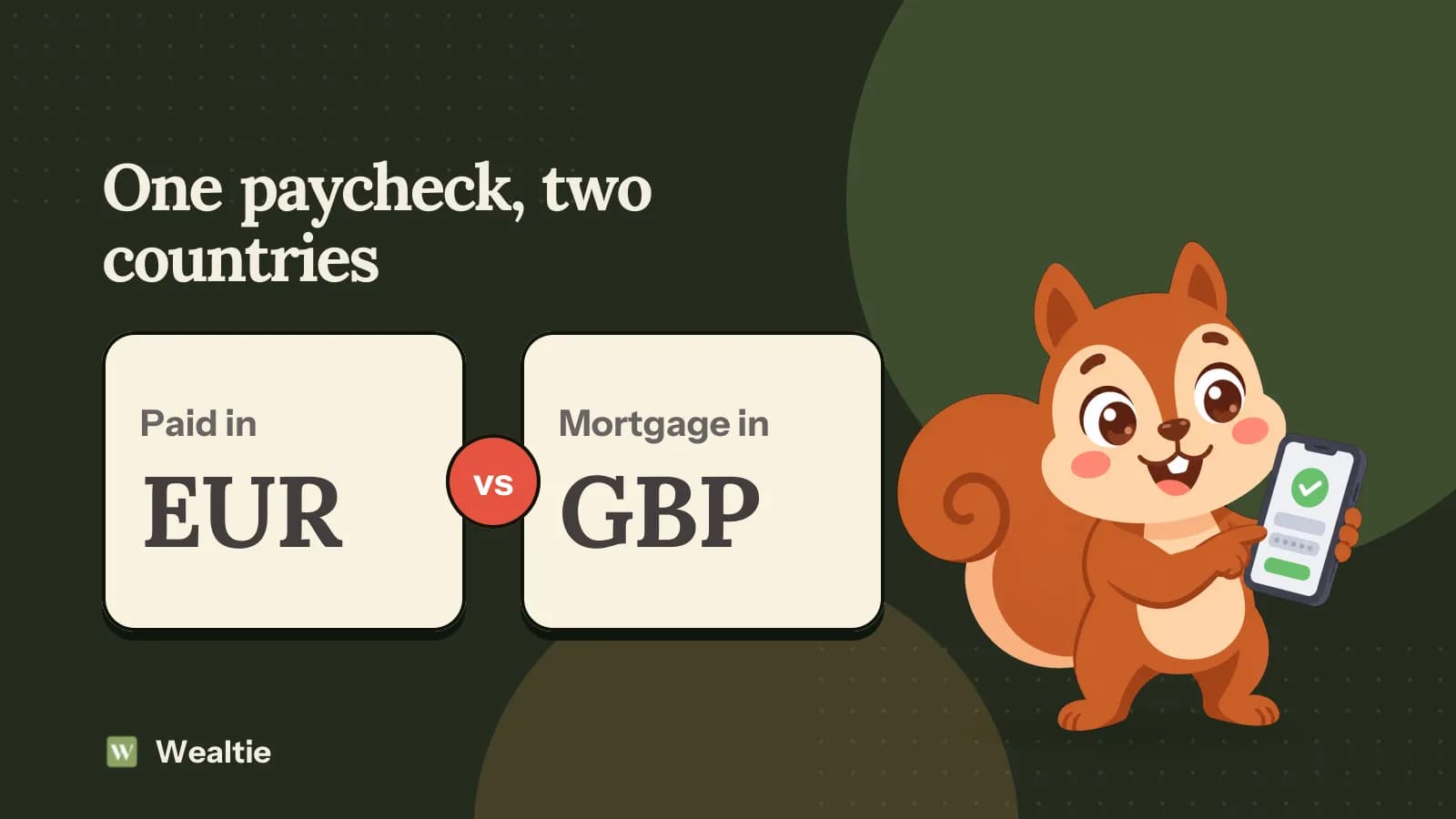
  • Wally checking his phone beside 'One paycheck, two countries': paid in euros, mortgage in pounds.
    MULTI-CURRENCY & TRAVEL

    Budgeting as an expat: two countries, two currencies, one total

    Budgeting as an expat works best in the currency you're paid in, with a separate line for every cost that's still in your home currency: a mortgage, family support, insurance or savings. Convert those at a planned rate, keep a small cushion for exchange swings, and look at both countries in one total.

    · 3 min read

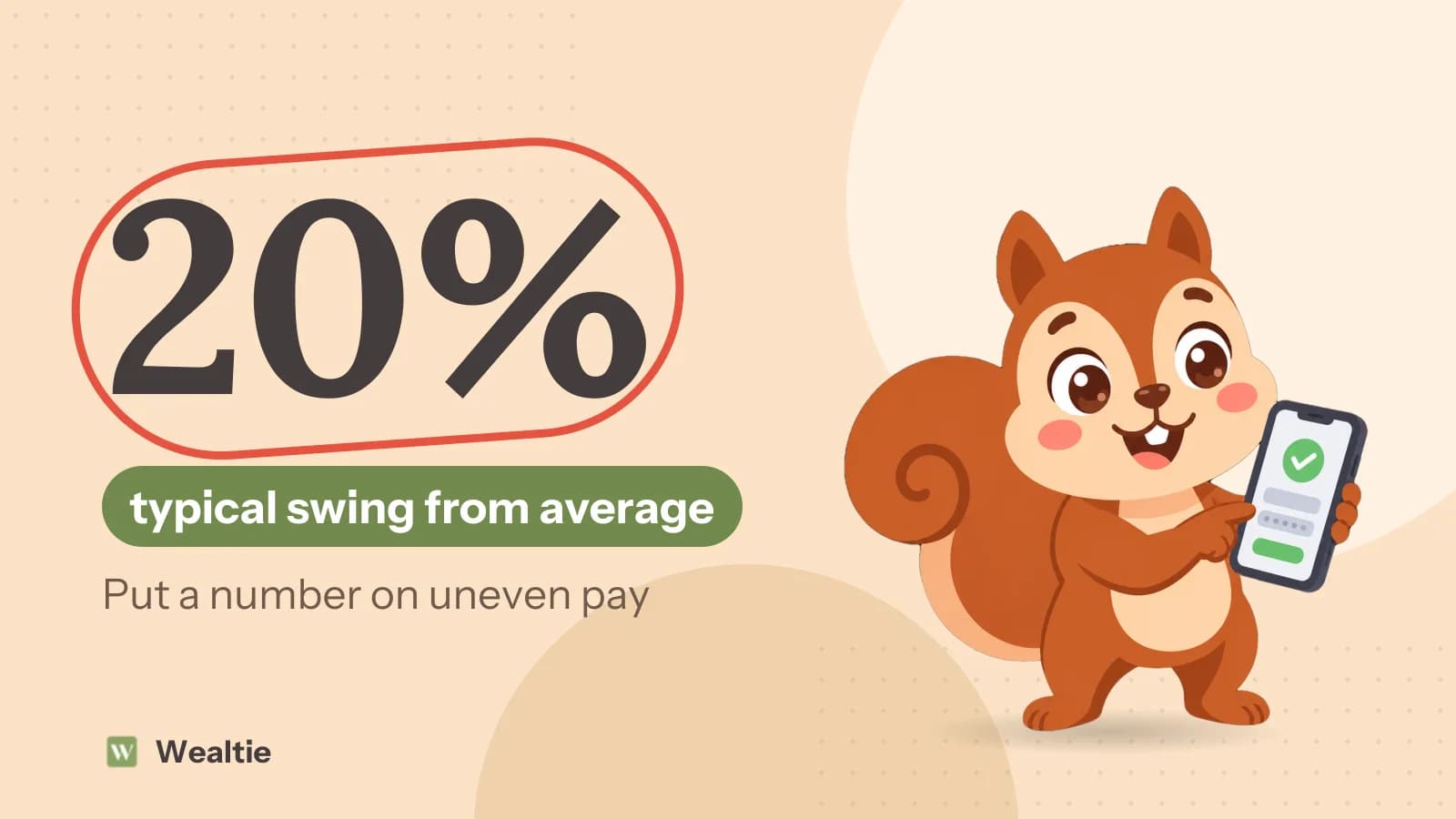
  • Wally checking his phone beside 20%, the typical swing from average in a worked example: put a number on uneven pay.
    INCOME & FREELANCING

    How to measure income stability: put a number on uneven pay

    To measure income stability, take your last 12 months of income and work out three numbers: the lowest normal month, the average, and how far a typical month strays from the average. The smaller that spread, the steadier your income, and the less you need in a buffer to budget on it.

    · 3 min read

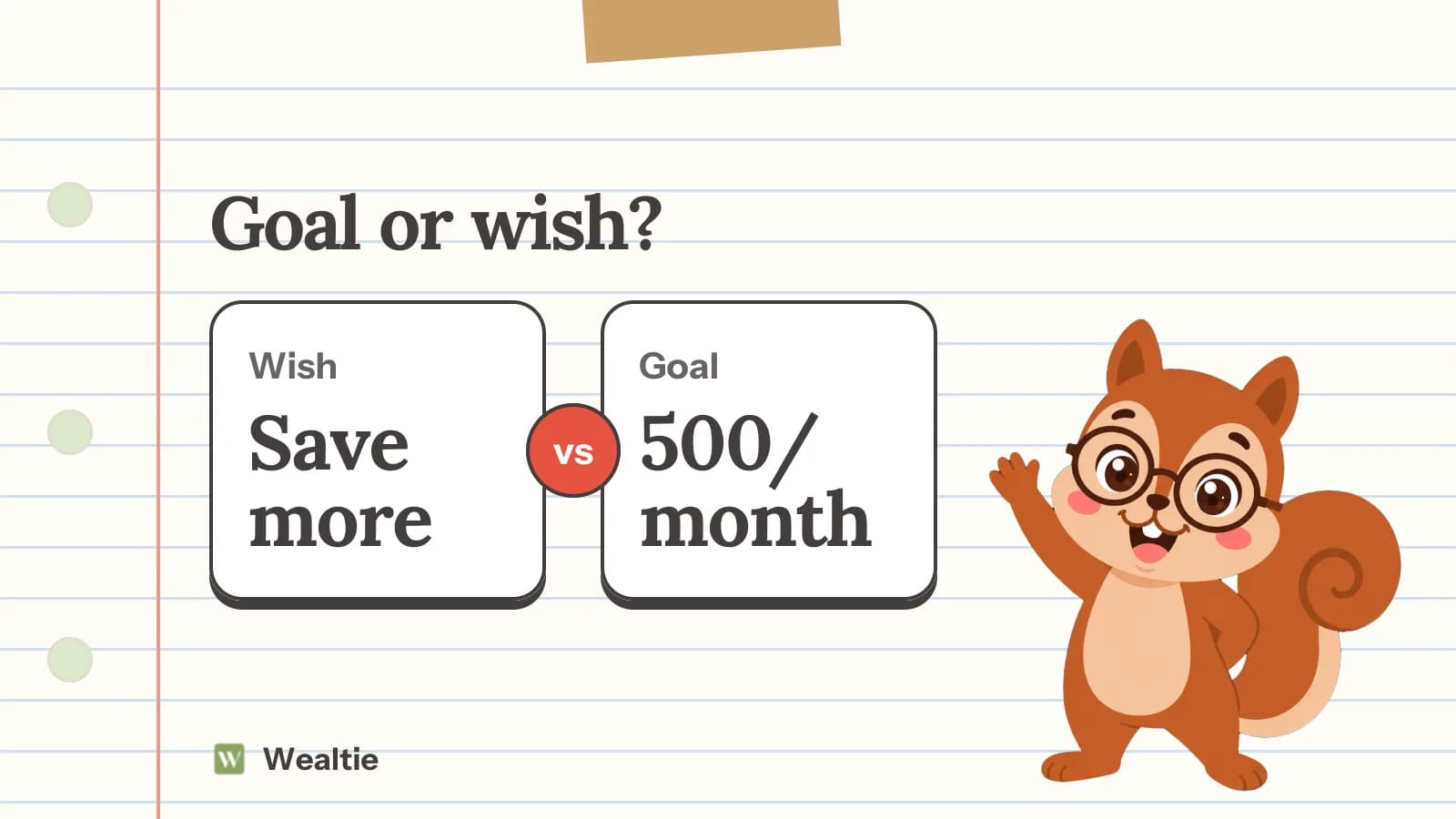
  • Wally waving beside a notebook: 'Goal or wish?' Save more is a wish; 500 a month is a goal.
    SAVING

    How to set financial goals for 2027 that you'll still have in March

    To set financial goals, pick one or two for the year, give each a number, a date and a monthly amount, and move that amount automatically on payday. "Save more" isn't a goal; "save 3,000 by July, 500 a month" is. Order matters too: a small emergency fund comes before almost everything else.

    · 3 min read

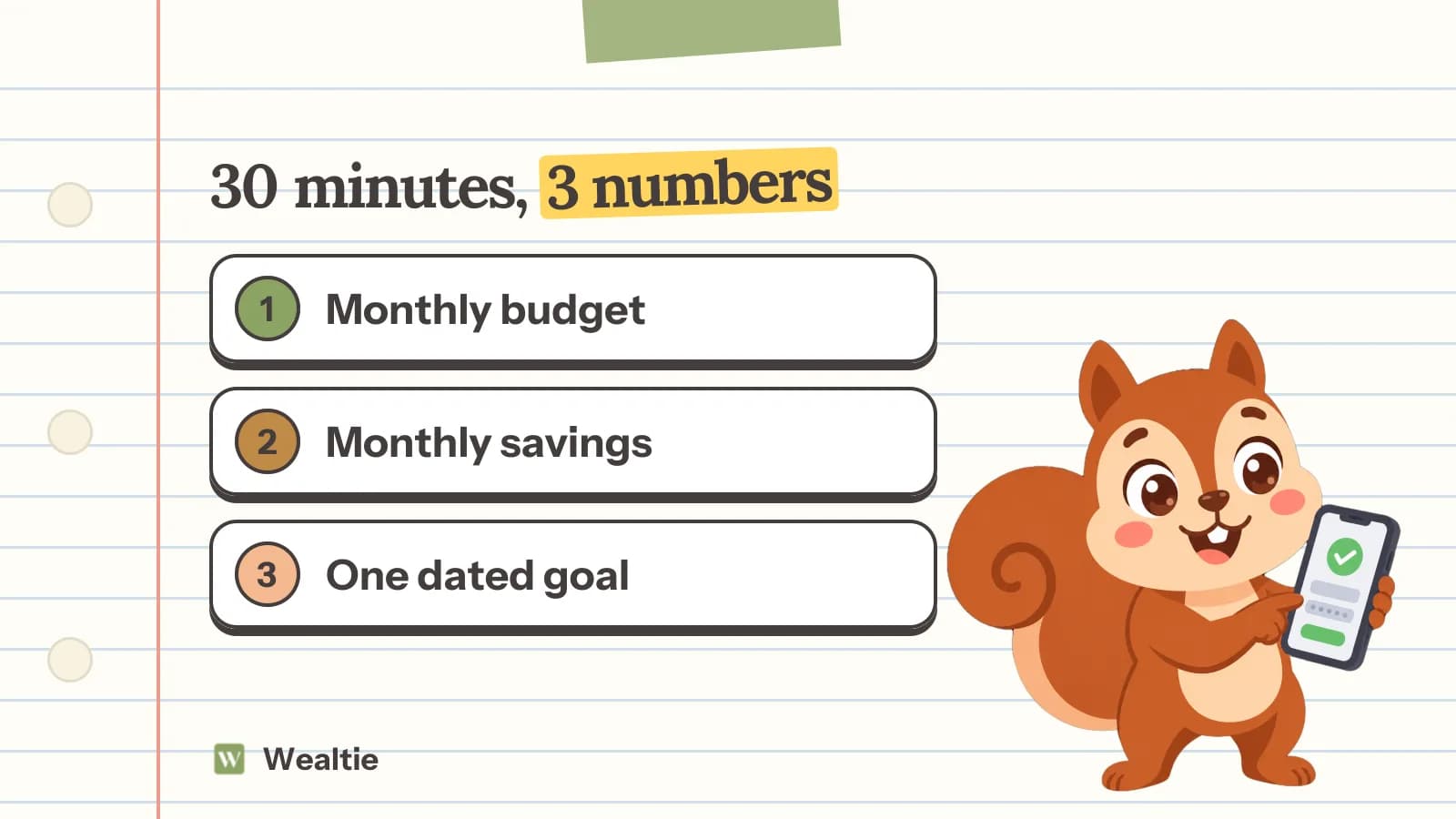
  • Wally checking his phone beside a notebook: 30 minutes, 3 numbers. Monthly budget, monthly savings, one dated goal.
    BUDGETING

    Year-end money review: 30 minutes to check the year and set the next

    A year-end money review takes about 30 minutes: add up the year's income and spending, find the three biggest surprises, check savings and debt against where you started, and set next year's budget and goals from the real numbers. Do it in the last week of December, before January's bills arrive.

    · 3 min read

  • Wally celebrating beside '30 days, nothing optional: write the rules before day one'.
    BUDGETING

    No spend challenge: rules, a 30-day plan and what to do after

    A no spend challenge is a set period, often a weekend, a week or 30 days, when you buy nothing beyond essentials agreed in advance: bills, groceries, transport and medicine. The rules decide whether it works, and the money saved only stays saved if you move it out on the last day.

    · 3 min read

  • Wally giving a thumbs up beside 'Which debt first?': avalanche pays the top rate first, snowball pays the smallest balance first.
    BUDGETING

    Debt snowball vs avalanche: which pays off debt faster, with numbers

    In the debt snowball vs avalanche choice, the avalanche pays the highest interest rate first and costs less; the snowball pays the smallest balance first and clears a debt sooner. With card interest at 22.36% on accounts paying interest in August 2026, the avalanche usually wins on money, if you stick with it.

    · 3 min read

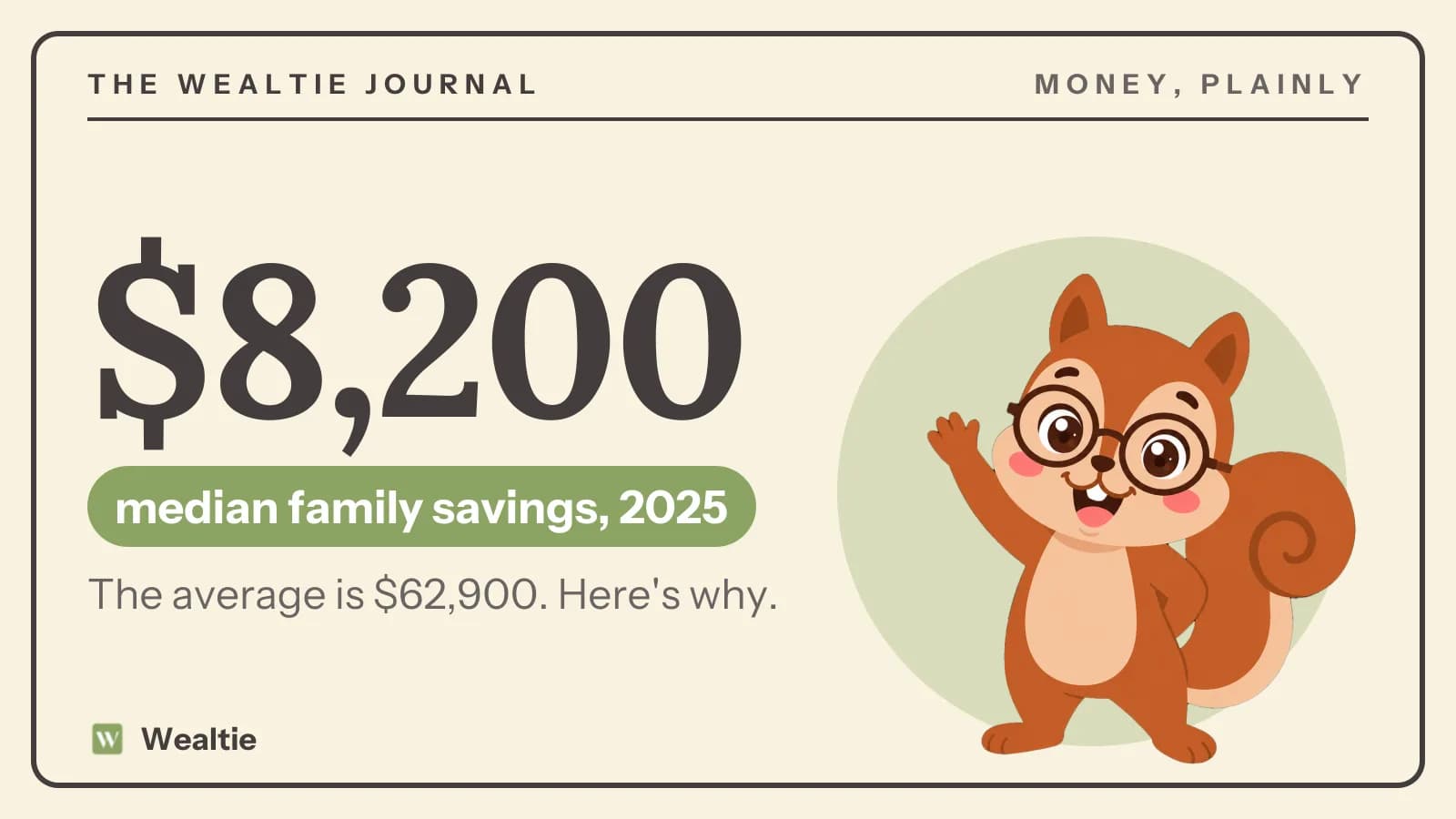
  • Wally waving beside $8,200, the median US family's checking and savings balance in 2025, against an average of $62,900.
    SAVING

    Average savings by age: what Americans have, and what to aim for

    The median family headed by someone under 35 had $5,000 in checking and savings in 2025, rising to $14,000 at 75 and over, in the Federal Reserve's Survey of Consumer Finances. Those are average savings by age; a better target is one month of income first, then three to six months of expenses.

    · 3 min read

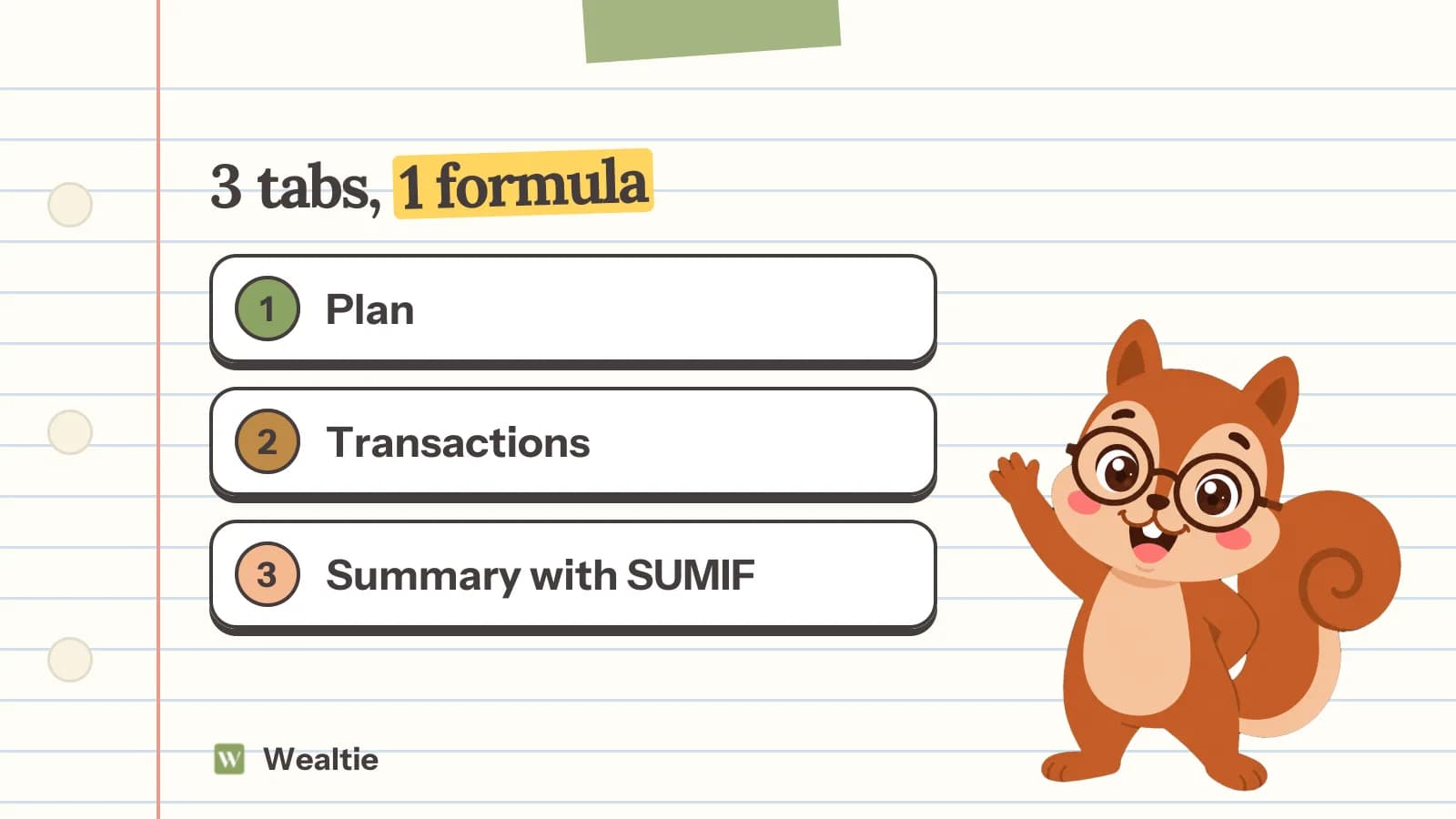
  • Wally waving beside a notebook: 3 tabs, 1 formula. Plan, Transactions, Summary with SUMIF.
    BUDGETING

    How to make a budget spreadsheet in Google Sheets or Excel

    To make a budget spreadsheet, set up three tabs: a plan with your monthly budget per category, a transactions log with one row per purchase, and a summary that compares the two with a SUMIF formula. It works the same in Google Sheets or Excel, and the formulas below are all you need.

    · 3 min read

  • Wally giving a thumbs up beside 'Plan on the base': spend base pay, bank commission.
    INCOME & FREELANCING

    Budgeting on commission: plan on the base, bank the rest

    Budgeting with commission income works best when your monthly budget runs on base pay alone and every commission check goes to a separate holding account first. From there you cover tax, fill a buffer for slow months, and pay yourself a fixed top-up, so a big quarter doesn't set spending a slow one can't keep.

    · 3 min read

The weekly email

New posts, once a week

Once a week, the new posts on budgeting, saving and everyday money. Nothing else, and one click to leave.