Multi-currency & travel: Budgeting as an expat: two countries, two currencies, one total
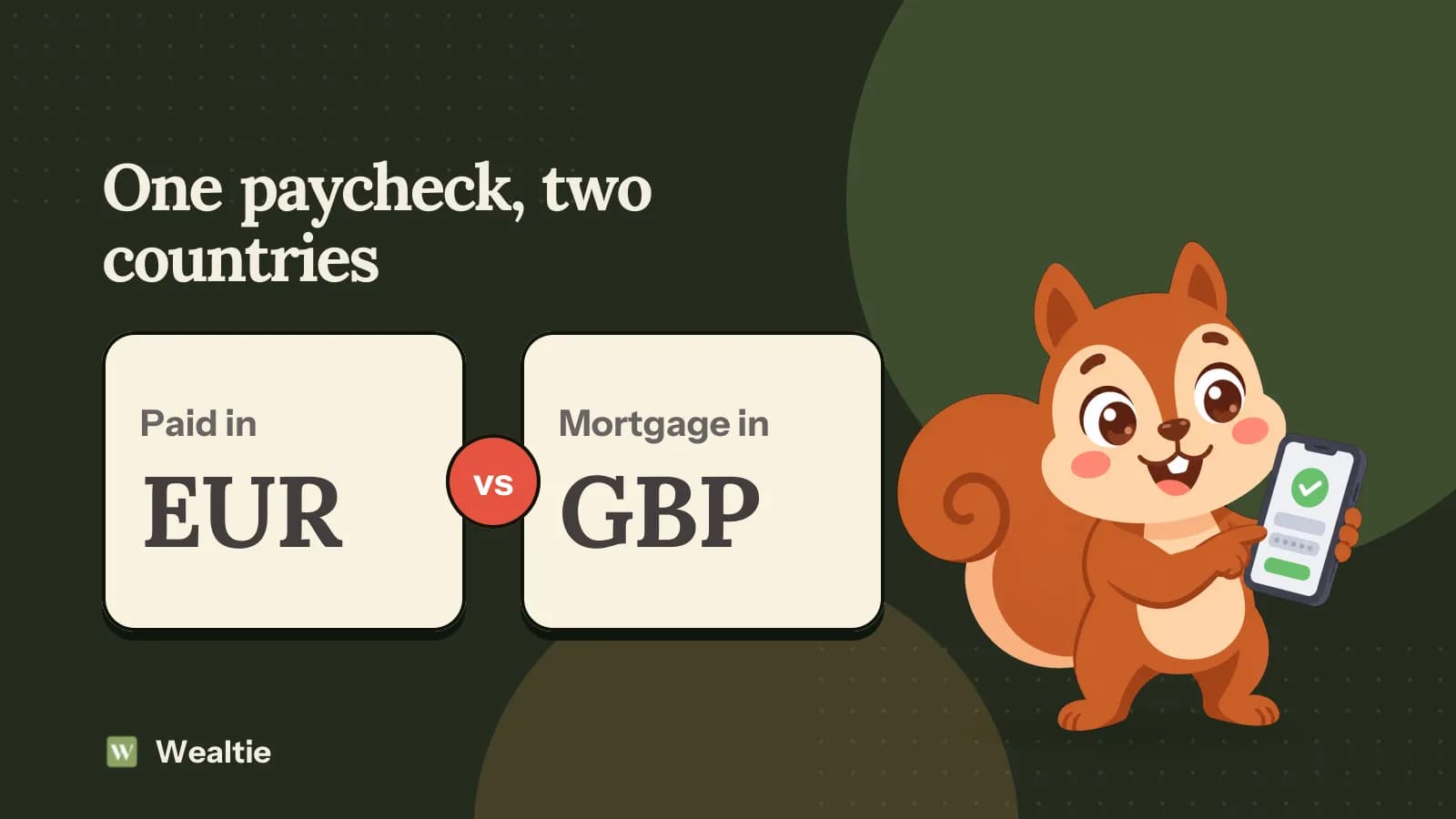
Budgeting as an expat works best in the currency you're paid in, with a separate line for every cost that's still in your home currency: a mortgage, family support, insurance or savings. Convert those at a planned rate, keep a small cushion for exchange swings, and look at both countries in one total.
 By Wealtie Team · 3 min read
Key takeaways
- Budget in the currency you're paid in; it's the one your income is fixed in.
- List every cost still paid in your home currency separately: a mortgage, family support, insurance, subscriptions or savings.
- Convert home-currency costs at a planned rate and add a cushion of a few percent for exchange swings.
- Transfer fees and the exchange rate margin are part of the cost of every transfer home, so compare the total amount received.
- Keep accounts in both currencies and look at them in one total, in a single display currency.
Budgeting as an expat: where do you start?
Budget in the currency you're paid in, list every cost still paid in your home currency on its own line, convert those at a planned rate with a small cushion, and keep both countries in one total.
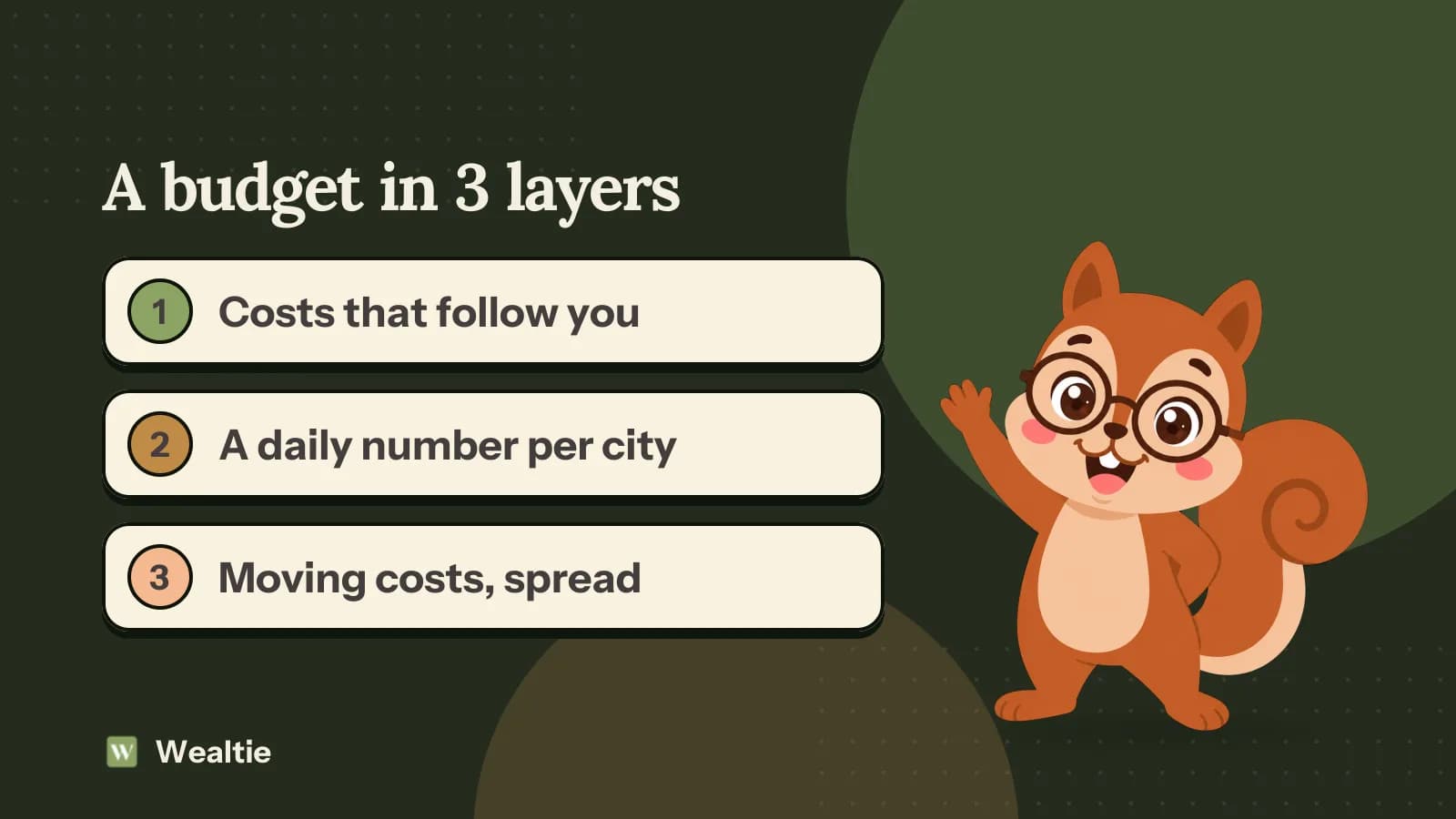
Expat money is two budgets that share one paycheck. Rent, groceries and transport are local. The mortgage on the flat you kept, money for your parents, a pension contribution or a phone contract back home are not. If you budget only in the local currency, the home costs move every month with the exchange rate and nobody notices until the account runs short.
Start with a list of every regular payment, and next to each, the currency it leaves in. Most people find more home-currency costs than they expected: an old subscription, a storage unit, a credit card they still use for one bill.
Which currency should you budget in?
The one you're paid in. Your income is fixed in that currency, and most of your spending happens in it.
Everything else is converted into it. That way the number at the top of the budget, your take-home pay, doesn't move, and any exchange rate risk sits in the lines where it belongs: the home-currency costs.
If you're paid in your home currency while living abroad, flip it: budget in the home currency and treat local costs as the converted ones. The rule is the same: budget in the currency of your income.
What does an expat budget look like?
Here's a worked example. Someone living in the euro area, paid 4,200 EUR a month, still has costs in the UK. The rate used, 1 GBP = 1.15 EUR, is an illustration, not a market rate.
| Cost | Paid in | Amount | In EUR |
|---|---|---|---|
| Rent and bills | EUR | 1,600 | |
| Groceries and household | EUR | 500 | |
| Transport | EUR | 180 | |
| Eating out and personal | EUR | 300 | |
| Mortgage on the flat back home | GBP | 600 | 690 |
| Money for family | GBP | 150 | 173 |
| UK phone and subscriptions | GBP | 80 | 92 |
| Savings into UK account | GBP | 200 | 230 |
| Exchange cushion (3%) | 35 | ||
| Total | 3,800 |
That leaves 400 EUR a month unassigned, for local savings or goals. The home-currency lines come to 1,030 GBP, about 1,185 EUR at the planned rate, plus a 35 EUR cushion.
How do you plan for exchange rate swings?
Pick a planned rate, add a cushion of a few percent to every home-currency cost, and review the rate every few months.
The planned rate is just the rate you budget with. When the real rate is better, the cushion goes unused and becomes savings. When it's worse, the cushion absorbs it. If the rate moves past your cushion for two or three months, change the planned rate rather than hoping it comes back.
For the big fixed costs, like a mortgage, a regular transfer on the same date each month makes the cost predictable even if the rate isn't. How to track spending in two currencies explains which rate to use when you record spending and why your total moves when you haven't spent anything.
What does it cost to send money home?
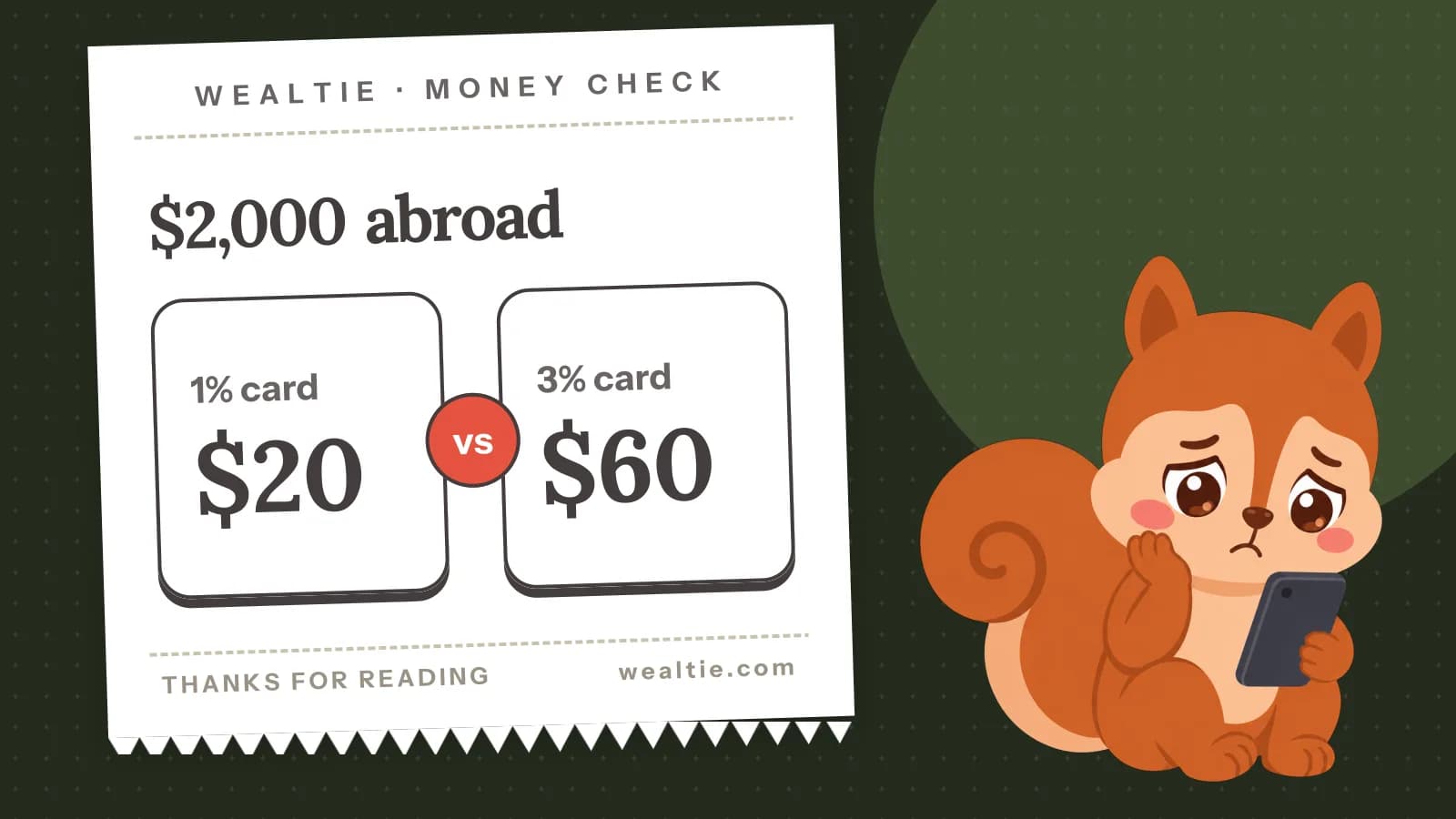
The fee plus the exchange rate margin, which is the gap between the rate you get and the mid-market rate. Compare providers on the amount that arrives, not on the advertised fee.
A transfer with no fee and a poor rate can cost more than one with a fee and a good rate. Fixed fees hit small transfers hardest, so one monthly transfer usually costs less than four weekly ones. Some banks charge for receiving international transfers too; check both ends.
Where should an expat keep savings?
In the currency you'll spend them in. An emergency fund for where you live belongs in the local currency; money for a future flat back home belongs in your home currency.
Keeping savings in the wrong currency adds exchange risk you don't need. If you're not sure where you'll end up, split savings between the two in rough proportion to where you expect to spend them.
How do you see two countries in one total?
Keep an account in each currency and look at them together, converted into one display currency.
Wealtie supports 68 currencies. Each account keeps its own currency, and your totals are converted into a display currency at each day's rate, so your euro account, your pound account and the cash in your wallet sit in one net worth total. The Free plan includes two accounts and every currency; Pro adds unlimited accounts. Log a transfer home as a transfer between your own accounts, not as spending, so the budget shows what you actually spent.
Questions people ask
The currency you're paid in. Your income is fixed in it, and most daily spending happens in it. Costs in your home currency get their own lines, converted at a planned rate with a small cushion.
Keep an account in each currency, budget in the currency you earn, list the home-country costs separately, and move money home on a schedule rather than whenever it's needed.
Add a cushion of a few percent to every home-currency cost, and review the planned rate every few months. If the rate moves past your cushion, adjust the budget rather than hoping it moves back.
Compare the total amount that arrives, after fees and the exchange rate margin, not the advertised fee alone. Sending larger amounts less often usually costs less in fixed fees.
Keep savings in the currency you'll spend them in. Money for a future home purchase back home belongs in your home currency; an emergency fund for where you live belongs in the local one.
This article is general information, not financial, tax or legal advice. Your situation is your own; check the numbers that apply to you before you act on them.