Multi-currency & travel: A digital nomad budget that survives changing countries
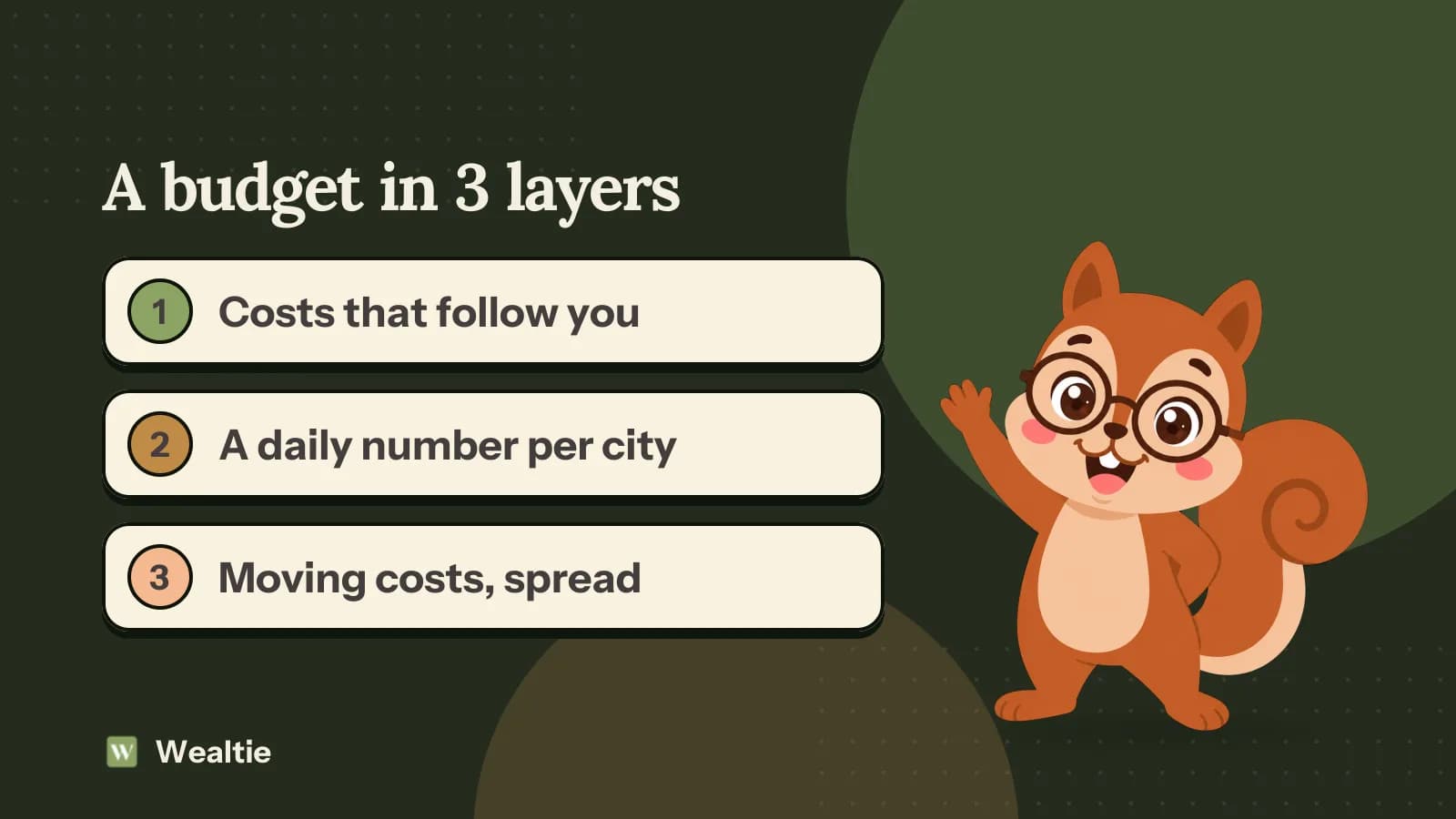
A digital nomad budget works in three layers: costs that follow you everywhere, like insurance and subscriptions; a daily spending number that resets in each country; and the cost of moving between bases. Budget in the currency you earn, set a monthly total, and let the daily number change with each place.
 By Wealtie Team · 3 min read
Key takeaways
- Split a nomad budget into three layers: fixed costs that follow you, local living costs, and moving costs between bases.
- Fixed costs, like health insurance, phone, software and savings, stay the same wherever you are, so they come off the top.
- For local costs, set a daily number for each country from accommodation plus food and transport, and check it every few days.
- Moving costs, flights, visas and the first night somewhere new, are lumpy, so spread them across the months between moves.
- Keep a buffer of at least one month's total, plus the cost of a flight home.
How do you make a digital nomad budget?
In three layers: costs that follow you everywhere, local costs that change with each country, and the cost of moving between bases.
A normal budget assumes rent, groceries and transport cost the same every month. A nomad's don't. A month in one city can cost twice what the last one did, and a move in between can cost as much as a week of living. Splitting the budget into layers keeps each kind of cost where you can see it.
Budget in the currency you're paid in. It's the only one that doesn't move against your income.
Layer 1: what costs follow you everywhere?
Health and travel insurance, your phone plan, software and subscriptions, and savings. These stay the same wherever you are, so they come off the top every month.
Here's a worked example in round numbers, the same in any currency:
| Fixed cost | Per month |
|---|---|
| Health and travel insurance | 180 |
| Phone and data | 25 |
| Software, storage and subscriptions | 60 |
| Savings and pension | 300 |
| Total | 565 |
Savings belong here, not at the end. If savings wait until the month is over, they're whatever a cheap country leaves and nothing after an expensive one.
Layer 2: how do you budget local costs?
Set a monthly accommodation figure and a daily spending number for each base, and check the daily number every few days.
Accommodation is usually the biggest cost and the easiest to fix in advance: book a month, and it's known. The daily number covers food, local transport, coworking, coffee and going out. Find it from a few days of tracking when you arrive, or from what people already there say, then adjust after the first week.
Continuing the example, a mid-cost base:
| Local cost | Per month |
|---|---|
| Accommodation, booked for the month | 1,100 |
| Daily spending, 40 a day × 30 | 1,200 |
| Total | 2,300 |
In a cheaper base, the daily number might be 25 and the flat 700; in an expensive city, 70 and 1,800. Same budget, different split. The daily number is what you check while you're there.
Layer 3: how do you plan for moving costs?
Spread them across the months between moves. Flights, visas, a night or two somewhere in between and the first big grocery shop in a new place are lumpy, so they need a monthly line of their own.
If a move costs about 1,200 and you move every three months, set aside 400 a month. When the move comes, the money's already there, and the month you move doesn't look like a disaster.
What does a month cost in total?
Add the three layers. In the example: 565 fixed, 2,300 local and 400 moving, about 3,250 a month.
| Layer | Per month |
|---|---|
| Fixed costs | 565 |
| Local costs | 2,300 |
| Moving costs, spread | 400 |
| Total | 3,265 |
That's the number to compare with your monthly income. If income is higher, the difference goes to savings or a buffer. If it's lower, the local layer is where to adjust: a cheaper base, a longer stay, or a smaller daily number.
How much buffer does a nomad need?
At least one month's total, plus the cost of a flight home at short notice. Health problems, a cancelled booking or a family emergency abroad all cost more than the same thing at home.
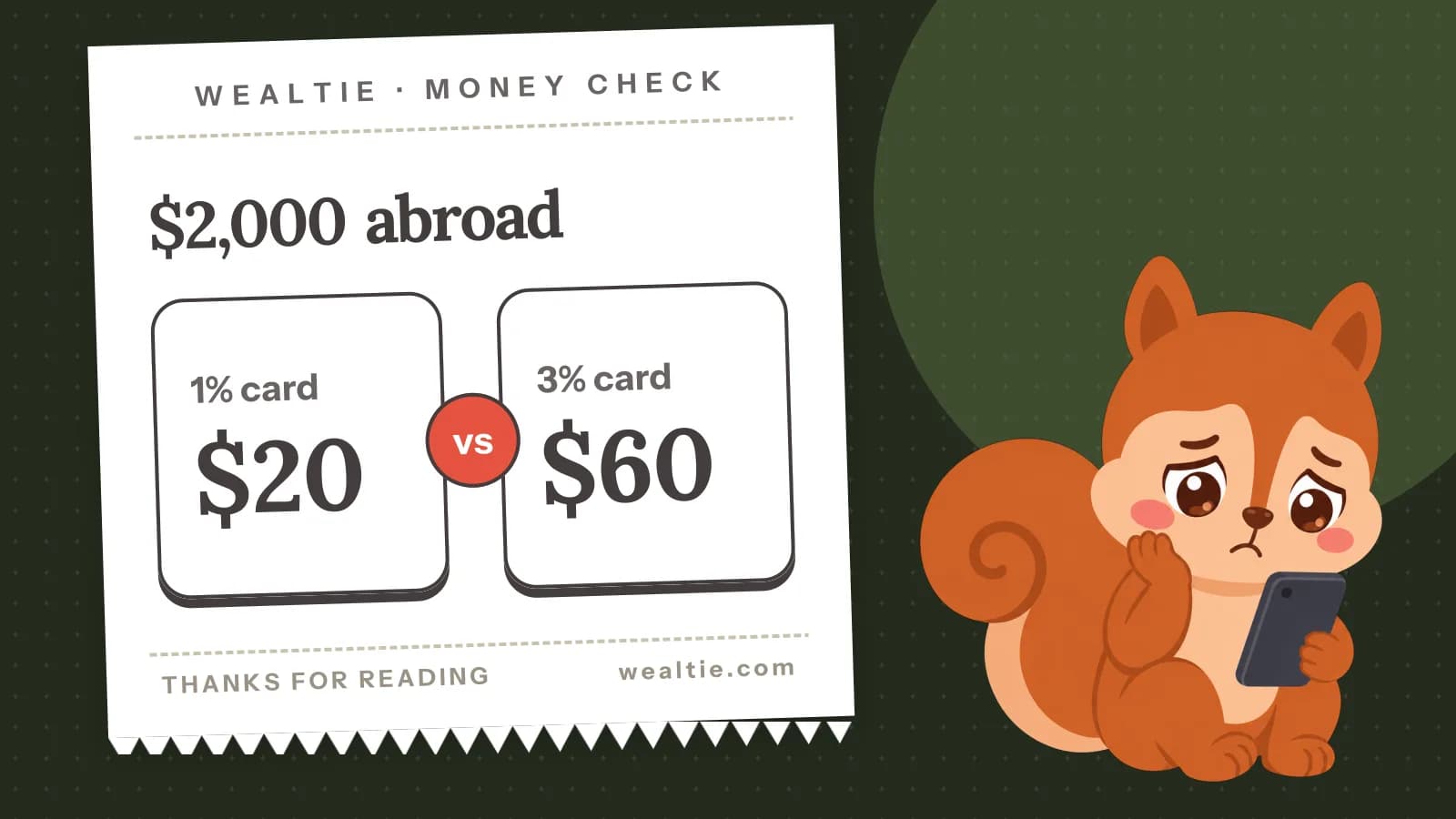
Keep it somewhere you can reach from abroad, with a card that works in other countries. Card fees abroad add up too; check what yours charges for purchases in a foreign currency before you leave. If your income is freelance, how to budget on irregular income covers the holding-account system that pairs with a nomad budget.
How do you track spending across countries?
Log each purchase in the currency you paid, and let totals convert into your budgeting currency.
Wealtie supports 68 currencies. Each account keeps its own currency, and totals are converted into your display currency at each day's rate, so a month in one country and a month in the next compare directly. Give moving costs their own expense category so a flight doesn't hide inside daily spending. How to track spending in two currencies explains which exchange rate to use and why totals move when you haven't spent anything, and how to budget for a trip abroad covers shorter trips.
Questions people ask
Add your fixed costs, a month of accommodation and daily spending where you are, and a monthly share of moving costs. In this post's example, that's about 3,250 a month in a mid-cost base.
They budget in the currency they earn, take fixed costs like insurance off the top, set a daily spending number for each country, and spread flight and visa costs across the months between moves.
The currency you're paid in. It's the only one that doesn't move against your income. Convert each country's daily number into it when you arrive, and review it if the rate moves a lot.
At least one month's total budget plus the cost of a last-minute flight home. Keep it somewhere you can reach from abroad, with a card that works in other countries.
Log each purchase in the currency you paid, and convert totals into your budgeting currency at each day's rate. Keep a separate category for moving costs so they don't hide inside daily spending.
This article is general information, not financial, tax or legal advice. Your situation is your own; check the numbers that apply to you before you act on them.