Budgeting: How to make a recession-proof budget before you need one
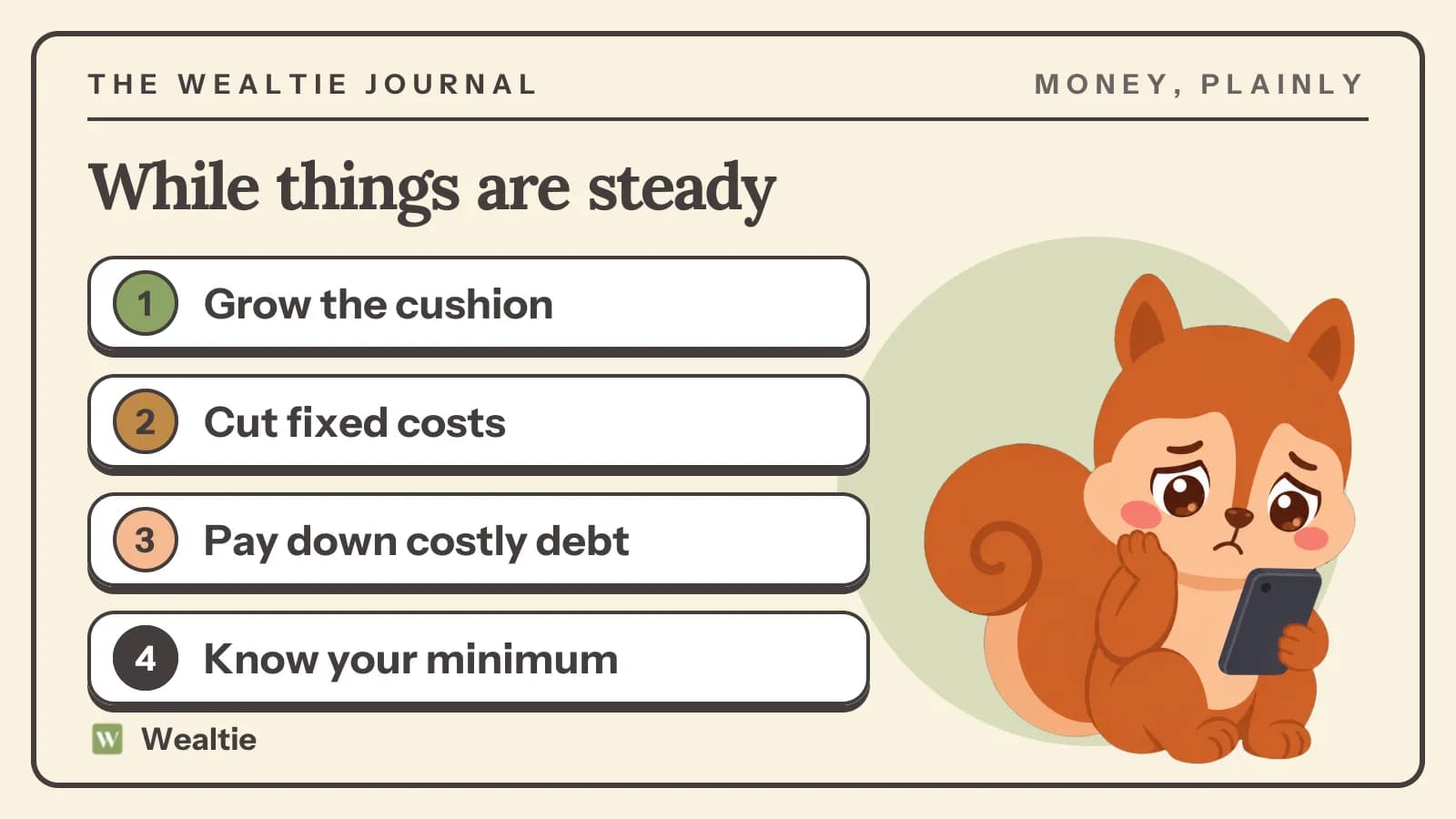
A recession-proof budget is one that could survive a drop in income: a larger emergency fund, lower fixed costs, less high-interest debt and a known bare minimum. The best time to build it is while things are still steady.
 By Wealtie Team · 3 min read
Key takeaways
- A recession-proof budget prepares for a fall in income before it happens.
- Know your bare-minimum monthly cost, because it tells you how long savings would last.
- Lower fixed costs give you more room than a large but flexible budget, since they're the hardest to cut quickly.
- Paying down high-interest debt now reduces the monthly payments you'd need to keep up in a downturn.
What is a recession-proof budget?
A budget that could cope if your income fell or stopped for a while. Nobody's budget is fully protected, but some are much better placed than others. The difference usually comes down to four things: savings, fixed costs, debt and knowing your minimum.
You don't need to predict a recession to do this. Each step is useful in ordinary times too, which is why it's worth doing now, while income is steady and the changes can be made calmly instead of in a rush. The same steps protect you from a job loss, an illness or a big repair.
How much emergency fund do you need?
More than usual if your job feels at risk or your income varies. Start by working out your bare-minimum monthly cost: rent, utilities, food, transport, insurance and minimum debt payments. Then see how many months your savings cover.
In round numbers that work in any currency, a minimum of 1,800 and savings of 5,400 gives you three months. Six months gives you more time to find work in a slow market. How much should be in an emergency fund helps set the target, and how to build an emergency fund shows how to get there.
Why do fixed costs matter so much?
Because they're the hardest to cut quickly. You can stop eating out tomorrow, but a lease, a car loan or a long contract keeps going. A household with low fixed costs and high flexible spending can adjust fast. One with high fixed costs has less room.
Look at your fixed costs now and see what could come down:
- Phone, internet and insurance, by switching or negotiating
- Subscriptions you don't use
- A car payment, if a cheaper car would do
- Rent, at your next renewal, if a cheaper option exists
How to negotiate bills can bring several of these down in an afternoon.
Should you pay down debt or save?
Both, in order. Keep a small cushion first, then pay down high-interest debt, then build the emergency fund. High-interest debt is expensive in good times and dangerous in bad ones, because the minimum payments keep coming when income drops.
Avoid taking on new debt for things you could put off, like a new car, while things feel uncertain. Pay off debt or save works through the trade-off.
What should you know about your income?
How secure it is and what you'd do if it dropped. Think through a few questions:
- Would you get redundancy or severance pay, and how much?
- Would you qualify for unemployment benefits?
- Could you pick up extra hours, freelance work or a second job?
- Does your partner's income cover the essentials alone?
If you've got two incomes, test living on one for a few months and saving the other. It's the most direct way to find out how exposed you are. How to budget after losing your job covers the steps if it happens.
What does your bare minimum look like?
Write it down now, so you're not working it out under stress. Keep it somewhere you'll find it, with the date, and update it once a year or after a big change like a move. List each essential cost and the amount. Anything else, like streaming, gym, eating out and holidays, is what you'd pause.
A bare bones budget has a worked example. Knowing that number tells you exactly how long your savings would last, and makes a hard situation feel more manageable.
What about investments and pensions?
Keep contributing if your job's secure and your emergency fund's in place. Markets can fall in a recession, and selling after a fall can lock in losses. Money you'll need within a few years is better in savings than invested. Should I save or invest explains the timing.
How do you keep the plan going?
Check it every few months: the emergency fund, the fixed costs and the debt balance. Small adjustments over time are easier than a sudden overhaul when things go wrong. The year-end money review is a good moment for a full check.
How do you build a recession-proof budget in Wealtie?
Add your emergency fund as its own account, and move money into it as a transfer, which isn't counted as spending. Your net worth tracker shows how many months it covers against your minimum. Set your monthly limit in the budget tracker, and Budget Health warns you mid-month if your pace would take you over.
Questions people ask
Build your emergency fund, lower fixed costs, pay down high-interest debt and write down your bare-minimum monthly costs, while income is still steady.
At least three months of bare-minimum costs, and six if your job feels at risk or your income varies.
Pay down high-interest debt after building a small cushion, since minimum payments keep coming if income drops. Avoid new debt for things you could put off.
Flexible spending like eating out and subscriptions can go quickly. Fixed costs take longer to change, so it helps to lower them before you need to.
This article is general information, not financial, tax or legal advice. Your situation is your own; check the numbers that apply to you before you act on them.



