Budgeting: How to budget after losing your job: the first 30 days
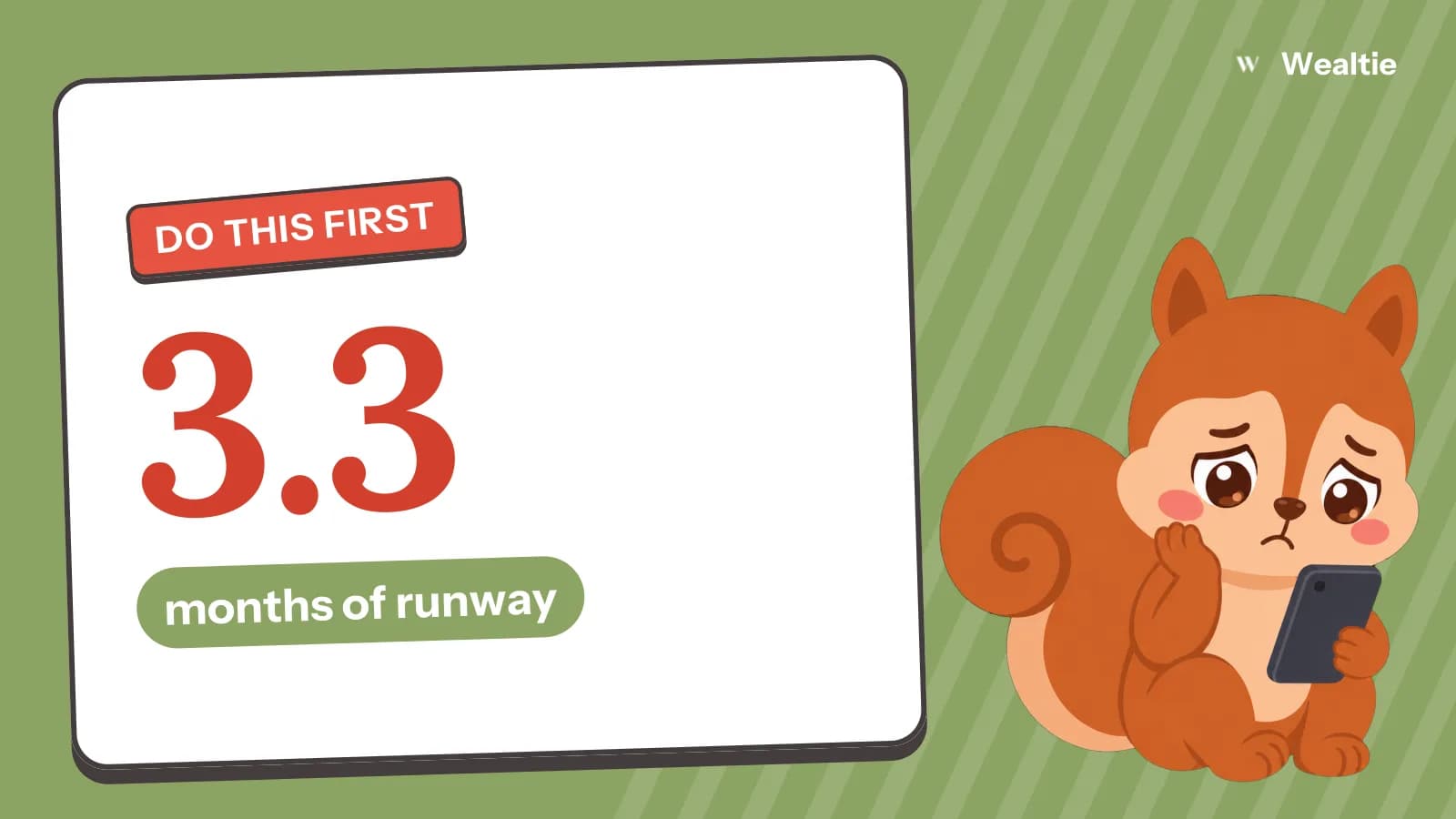
To budget after losing your job, add up your cash and final pay, divide by your bare minimum monthly costs, and that's your runway. On 6,000 of cash and 1,800 a month, you've got just over three months.
 By Wealtie Team · 3 min read
Key takeaways
- Work out your runway first: cash and final pay divided by your minimum monthly costs.
- With 6,000 of cash and costs of 1,800 a month, that's about 3.3 months.
- Apply for unemployment benefits or Universal Credit in the first few days, since payments can take weeks to start.
- Contact lenders and providers before you miss a payment.
What should you do first when you lose your job?
Find out how long your money lasts, then claim anything you're owed. Those two jobs matter more in the first week than anything else, including updating your CV.
Check what's coming from your employer. Final pay, unused holiday, notice pay and any redundancy or severance may be owed, depending on your contract and where you live. Ask for it in writing and check the amounts. If you're offered a settlement to sign, take the time to read it and get advice if you can.
How do you budget after losing your job?
Work out your runway: the money you can reach, divided by your minimum monthly costs. In round numbers that work in any currency:
| Line | Amount |
|---|---|
| Savings and current account | 4,500 |
| Final pay still to come | 1,500 |
| Money available | 6,000 |
| Minimum monthly costs | 1,800 |
| Runway | About 3.3 months |
Count only money you can get at quickly. Leave out investments that would cost you to sell, and don't count on a job offer you haven't got yet.
To work out your minimum, take only what you can't go without: housing, utilities, food, transport, insurance and minimum debt payments. Go through your last two months of spending and cross off everything else.
What can you claim?
Apply for support in the first few days, because it can take weeks to arrive. In the UK, Universal Credit is a payment to help with living costs, and GOV.UK says you may be able to get it if you're on a low income, out of work or can't work. In the US, apply through your state's unemployment insurance office. Other countries have their own systems.
Ask about help with housing, health cover, food or energy as well. Some schemes depend on your income in the last month, so a change in your situation might make you eligible where you weren't before.
If your income doesn't fall to zero, your runway grows. With 1,200 a month coming in, your 1,800 of costs only needs 600 from savings, and 6,000 lasts ten months.
How can you bring money in while you look?
Temporary work, freelance jobs, selling things you don't need. Before taking anything, check how it affects your benefits, since some payments are reduced by what you earn. Keep records of what you make, because you may have to report it. How to track side hustle income explains how.
Treat your job search as if it's a job too, with set hours. It's also easier on your head.
What should you cut straight away?
Everything you can restart later. Subscriptions, memberships, eating out, shopping and holidays can all stop now. Note what you've paused, with dates. Check for free trials and annual renewals due in the next couple of months.
Keep your health cover and essential insurance going if you possibly can. Keep your phone and internet too, since you'll need them to find work. If you've got any job-related costs, like a professional membership, check whether it's needed for applying.
Who should you call?
Anyone you'll struggle to pay, and do it before you miss a payment. That includes your landlord or mortgage lender, credit card companies, loan providers, and utility companies.
Say what's happened and ask what they can do. Many have hardship options, like reduced payments for a set period. Get anything you agree in writing. Prioritise housing and utilities, because the consequences of falling behind on those are the most serious.
If it looks unmanageable, free debt advice from a non-profit or government-backed service can help you work out the order. Be wary of companies that charge to do this.
Should you use your savings or a credit card?
Your savings. That's what your emergency fund is for, and what counts as an emergency has this one at the top of the list. Credit cards charge a lot and can leave you with a debt when you do find work.
Think hard before you take money out of a retirement account. It may come with tax or penalties, and you'd lose the long-term growth. Treat it as a last resort, and check the rules first.
Avoid payday loans if you possibly can.
What should you do when you get a new job?
Don't go back to your old spending immediately. First payday can be a month away, and you've likely got debts or a depleted fund. Refill the emergency fund first, then bring back what you've paused in order of what you've missed most.
If you're starting again with less, how to make a budget walks through building a new one.
How do you track your runway in Wealtie?
Set your monthly limit in the budget tracker to your minimum costs, and Budget Health will warn you mid-month if your pace would use the money up faster. Each account you add shows in your net worth tracker total, so the money you've got left is one number. You can also log benefits and part-time work as income, which keeps you honest about what's coming in.
Questions people ask
Divide the money you can reach by your minimum monthly costs. With 6,000 and costs of 1,800, that's about 3.3 months.
Housing and utilities come first, then insurance and minimum debt payments. Contact lenders and providers before you miss a payment, because many have hardship options.
Yes, that's what it's for. It's usually a much better option than a credit card or a payday loan.
Straight away, because payments can take weeks to start. In the UK, check whether you can claim Universal Credit, and in the US apply through your state's unemployment office.
Sources
- Universal Credit · GOV.UK · checked 9 November 2026
This article is general information, not financial, tax or legal advice. Your situation is your own; check the numbers that apply to you before you act on them.



