Budgeting: How to do meal planning on a budget in 20 minutes a week
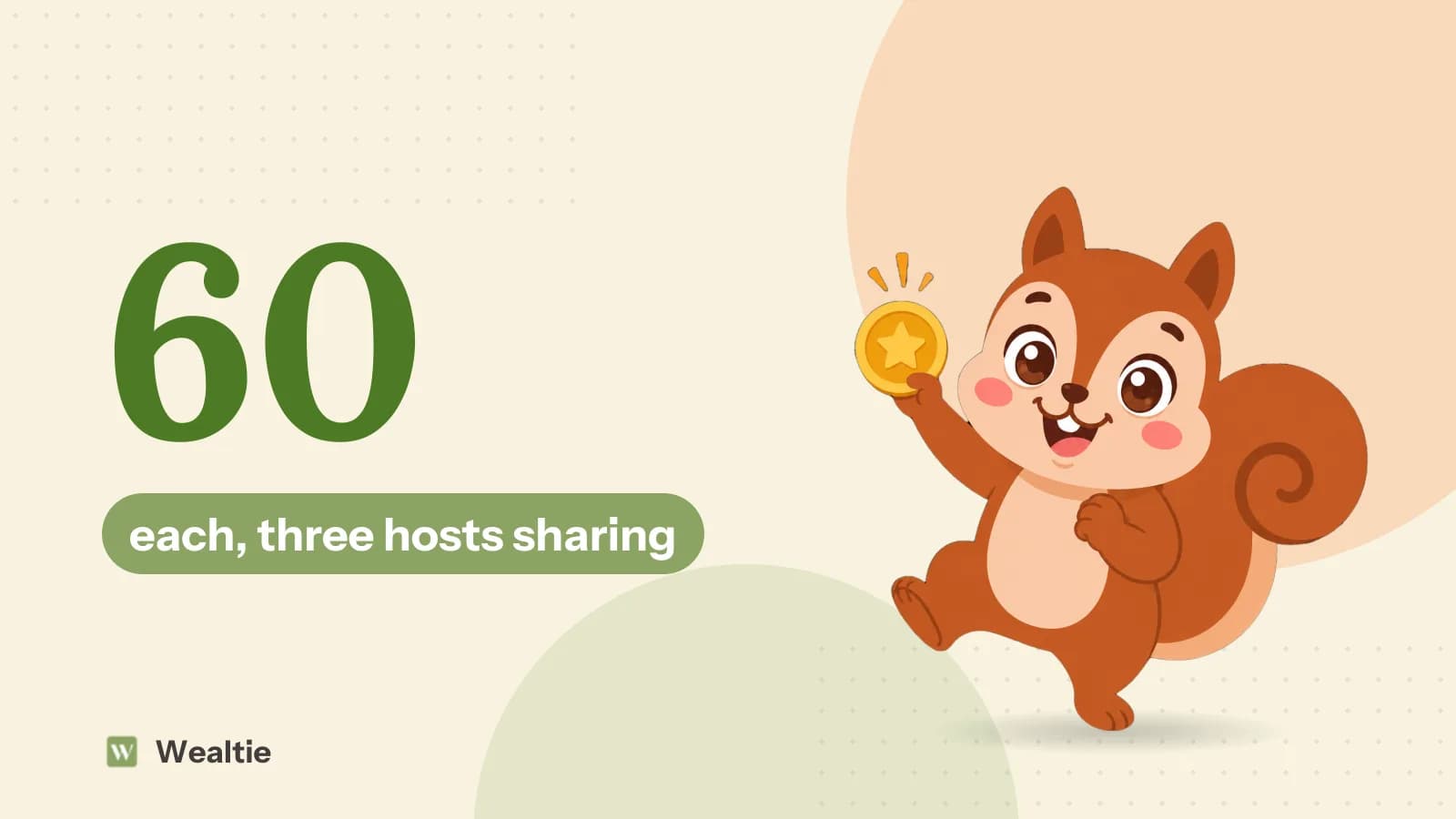
Meal planning on a budget means choosing the week's meals before you shop, built around cheap base ingredients you can stretch across several dishes. In a worked example, a week of dinners for two costs about 60.
 By Wealtie Team · 3 min read
Key takeaways
- Spend 20 minutes a week choosing meals and writing a list before you shop.
- In a worked example, a week of dinners for two costs about 60.
- Choose meals that share ingredients, so nothing is bought for one dish and wasted.
- Cook once, eat twice: batch cooking turns one meal into lunches or a second dinner.
How do you do meal planning on a budget?
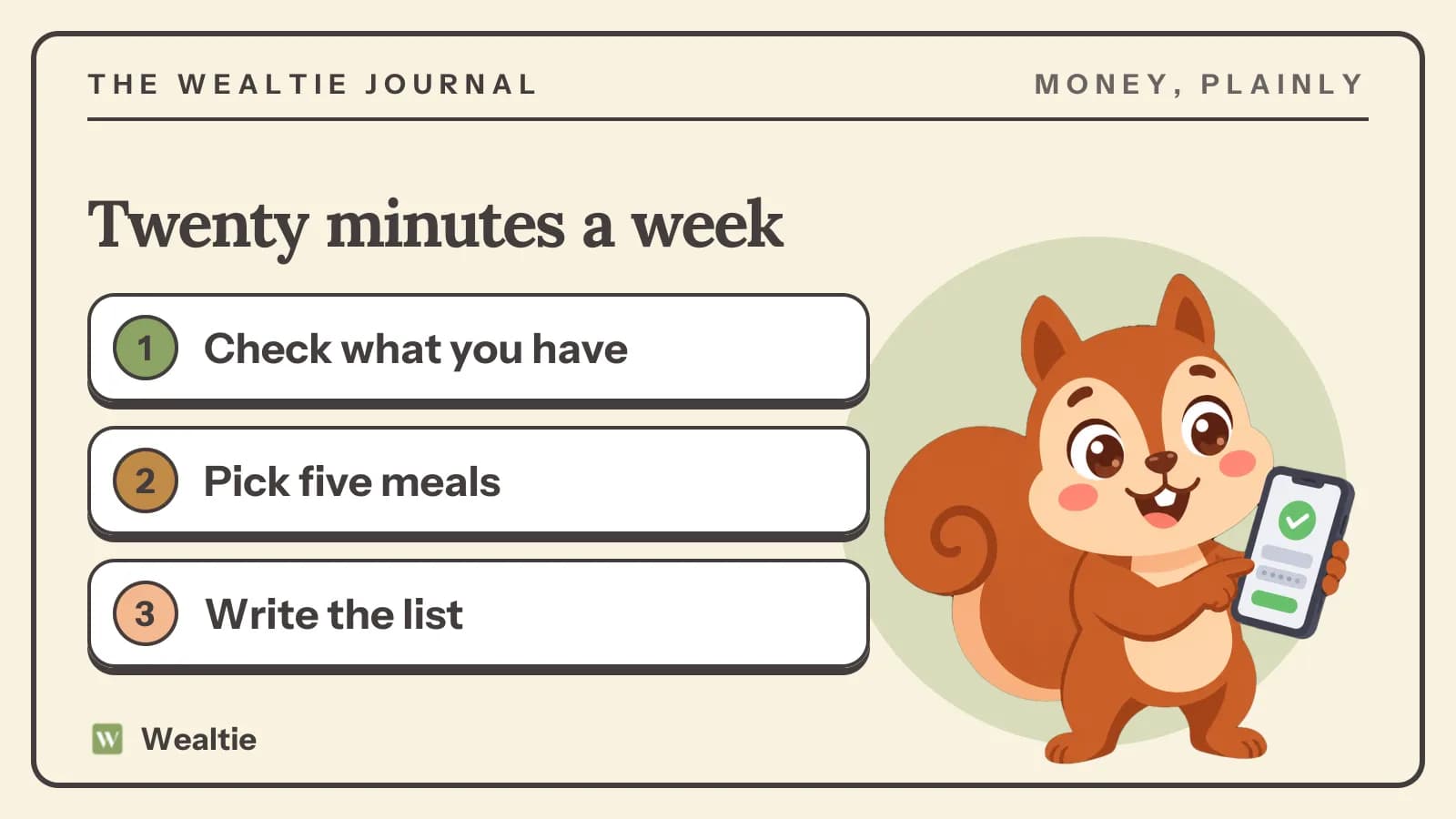
Check what you've got, pick the week's meals, and write a shopping list from them. That's the whole method. It takes about 20 minutes a week and usually saves far more than it costs in time. The first week is the slowest, and after a month most people have a set of favourite meals and a list that almost writes itself. It works because you stop buying food without a plan and stop ordering takeaways on nights when nothing's ready.
What does a planned week cost?
Here's a week of dinners for two, in round numbers that work in any currency:
| Night | Meal | Cost |
|---|---|---|
| Monday | Chilli with rice | 10 |
| Tuesday | Leftover chilli in wraps | 6 |
| Wednesday | Pasta bake | 11 |
| Thursday | Vegetable curry | 10 |
| Friday | Roast chicken and vegetables | 15 |
| Saturday | Soup and bread from the chicken | 8 |
| Sunday | Leftovers or freezer meal | 0 |
| Week | 60 |
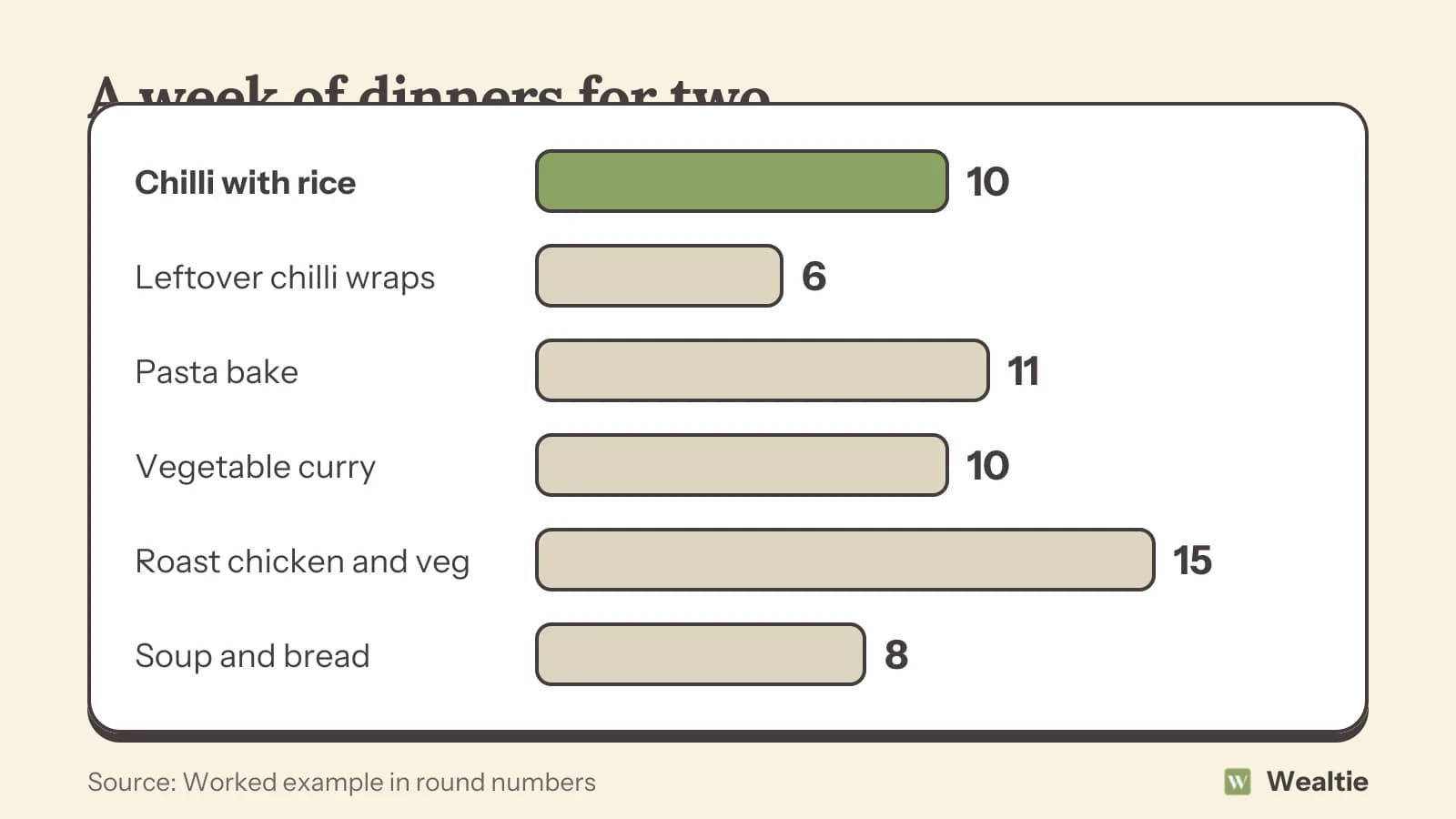
The meals share ingredients: the chilli becomes wraps, the chicken becomes soup, and onions, tinned tomatoes and rice appear in several dishes. That's where the saving comes from. Breakfasts and lunches can follow the same idea, with oats, eggs and sandwiches made from dinner's leftovers.
Which meals stretch furthest?
Ones built on cheap bases that make good leftovers:
- Rice, pasta, potatoes and bread as the filling base
- Lentils, beans and chickpeas, which are cheap and go into many dishes
- A whole chicken, which covers a roast, then sandwiches, then soup
- Seasonal vegetables, which cost less and taste better
- Eggs, which make quick meals any night
Meals like chilli, curry, stew and pasta sauces scale up easily, freeze well and taste good the next day. Frozen vegetables are cheap, last for months and cut waste.
What should be in a budget store cupboard?
A few staples make planning easier and cheaper: rice, pasta, oats, tinned tomatoes, tinned beans and lentils, stock cubes, onions, garlic and a few spices. With those in the cupboard, most weeks only need fresh vegetables, some protein and dairy. Buy the staples in larger packs when they're on offer, and check the cupboard before you write the list so you don't buy duplicates.
What's the weekly routine?
Pick a time, like Saturday morning, and follow the same steps:
- Check the fridge, freezer and cupboards, and note what needs using
- Choose five or six dinners, starting with what needs using up
- Plan one or two to make double, for lunches or the freezer
- Write the shopping list by section of the shop
- Shop once, from the list
Plan around the shop's weekly offers, but only for things you'd use anyway. Leave one night free for leftovers or something from the freezer, since a plan with no slack tends to break by Thursday. Writing the plan on the fridge reminds everyone what's for dinner and stops impulse takeaways. Plans change, and a free night stops food going to waste.
How does batch cooking help?
Cooking a big pot once gives you several meals for little extra cost and time. A Sunday afternoon of cooking can cover two or three weeknight dinners, which is when most people are too tired to cook from scratch and most likely to order in. Cool food quickly and freeze it in portions, labelled with the date, so you can take out just what you need. On a busy night, a frozen portion is quicker and cheaper than a takeaway. How to save money on eating out covers the takeaway side.
How do you get the family on board?
Let everyone pick one meal for the week. People are more likely to eat what they chose, and children often enjoy helping to cook it. Keep a list of meals that went down well, and rotate them, so planning gets quicker each week. For picky eaters, plan meals where people add their own toppings.
What if you don't like cooking?
Keep it simple. A plan with a few easy meals, some quick ones like eggs or pasta, and a couple of freezer nights still saves money. You don't need complicated recipes to eat well on a budget. A slow cooker or one-pot recipes cut the effort and the washing up. How to save money on groceries has tips for the shop itself.
How do you track food spending in Wealtie?
Log your weekly shop in a Groceries category, and give it a share of your monthly limit in the budget tracker, so you can see how much of the month's food money is left. Your expense categories show whether planning brings the monthly total down.
Questions people ask
Check what you've got, choose five or six meals that share ingredients, plan one or two to make double, and shop once from a list.
A worked example of planned dinners comes to about 60 a week, using cheap bases and leftovers.
Chilli, curry, pasta bakes, soups, stews and a whole roast chicken stretched across several meals.
About 20 minutes a week once you've got a routine and a list of favourite meals.
This article is general information, not financial, tax or legal advice. Your situation is your own; check the numbers that apply to you before you act on them.