Budgeting: How to make a bare bones budget when money gets tight
A bare bones budget covers only what keeps you housed, fed, working and out of default. In a worked example, that takes monthly costs down to 1,880, and it's meant for a few hard months, not for good.
 By Wealtie Team · 3 min read
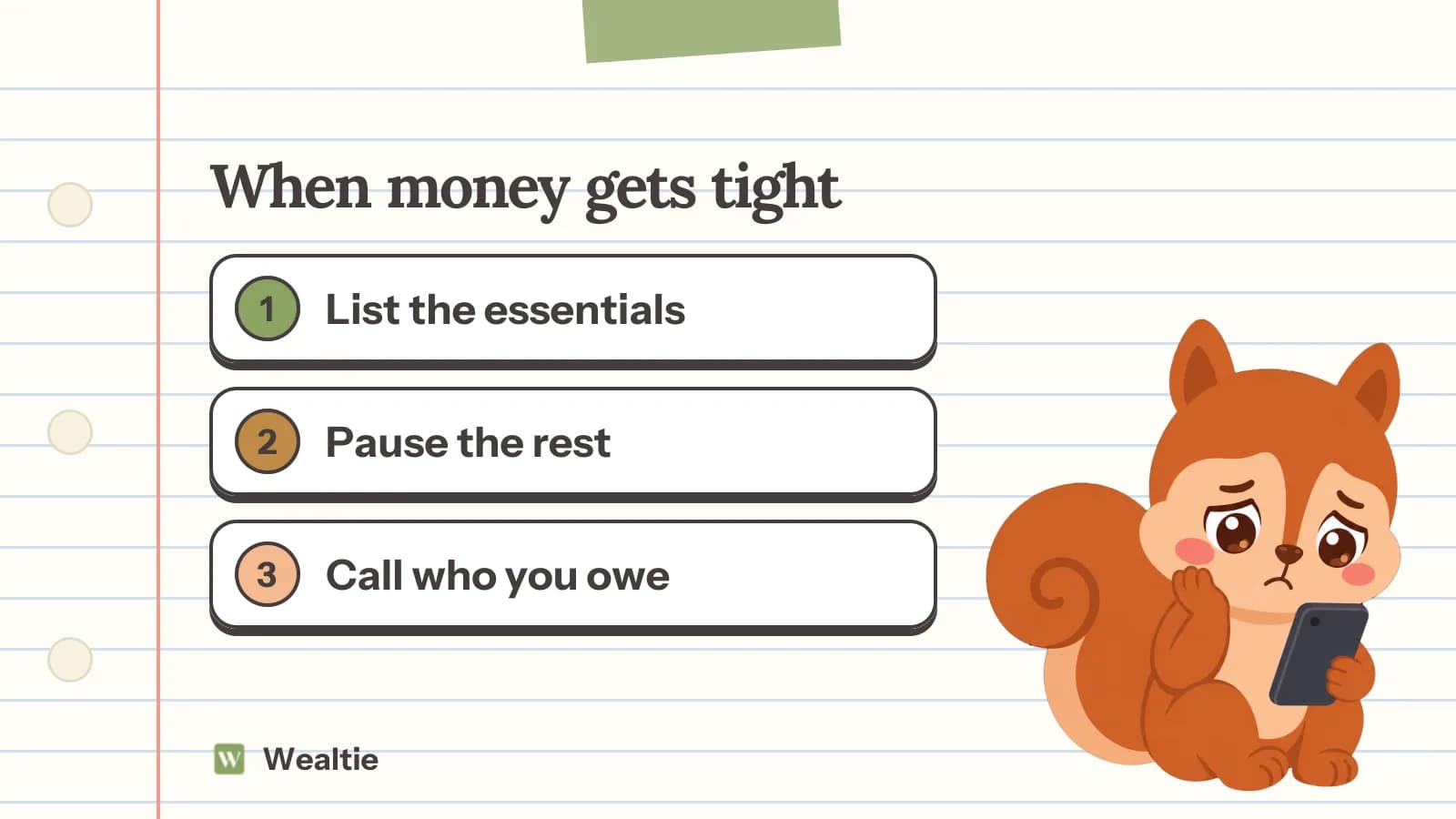
Key takeaways
- A bare bones budget includes only housing, utilities, food, essential transport, insurance and minimum debt payments.
- In a worked example, a normal month of 2,900 comes down to 1,880.
- Pause things you can restart later, and write down what you paused so you don't lose track.
- Contact lenders and providers before you miss a payment, because most options get harder afterwards.
- Set an end date or a trigger for when you'll review it, since this budget isn't meant to last.
What is a bare bones budget?
A plan that pays for what you can't go without and nothing else. It's what you use when income has dropped, a big bill has landed, or you're trying to clear a debt quickly.
The test for each line is what would happen if it went unpaid for two months. If you'd lose your home, your job, your power or your insurance, it stays. If you'd be a bit bored, it goes.
What goes in a bare bones budget?
Housing, utilities, food at home, the transport you need for work, essential insurance, and the minimum on every debt. Here's a worked example in round numbers that work in any currency:
| Line | Normal month | Bare bones |
|---|---|---|
| Rent | 1,100 | 1,100 |
| Debt minimums | 120 | 120 |
| Utilities and phone | 200 | 160 |
| Groceries | 450 | 350 |
| Transport | 160 | 90 |
| Insurance | 60 | 60 |
| Eating out | 250 | 0 |
| Shopping | 200 | 0 |
| Subscriptions and gym | 160 | 0 |
| Savings | 200 | 0 |
| Total | 2,900 | 1,880 |
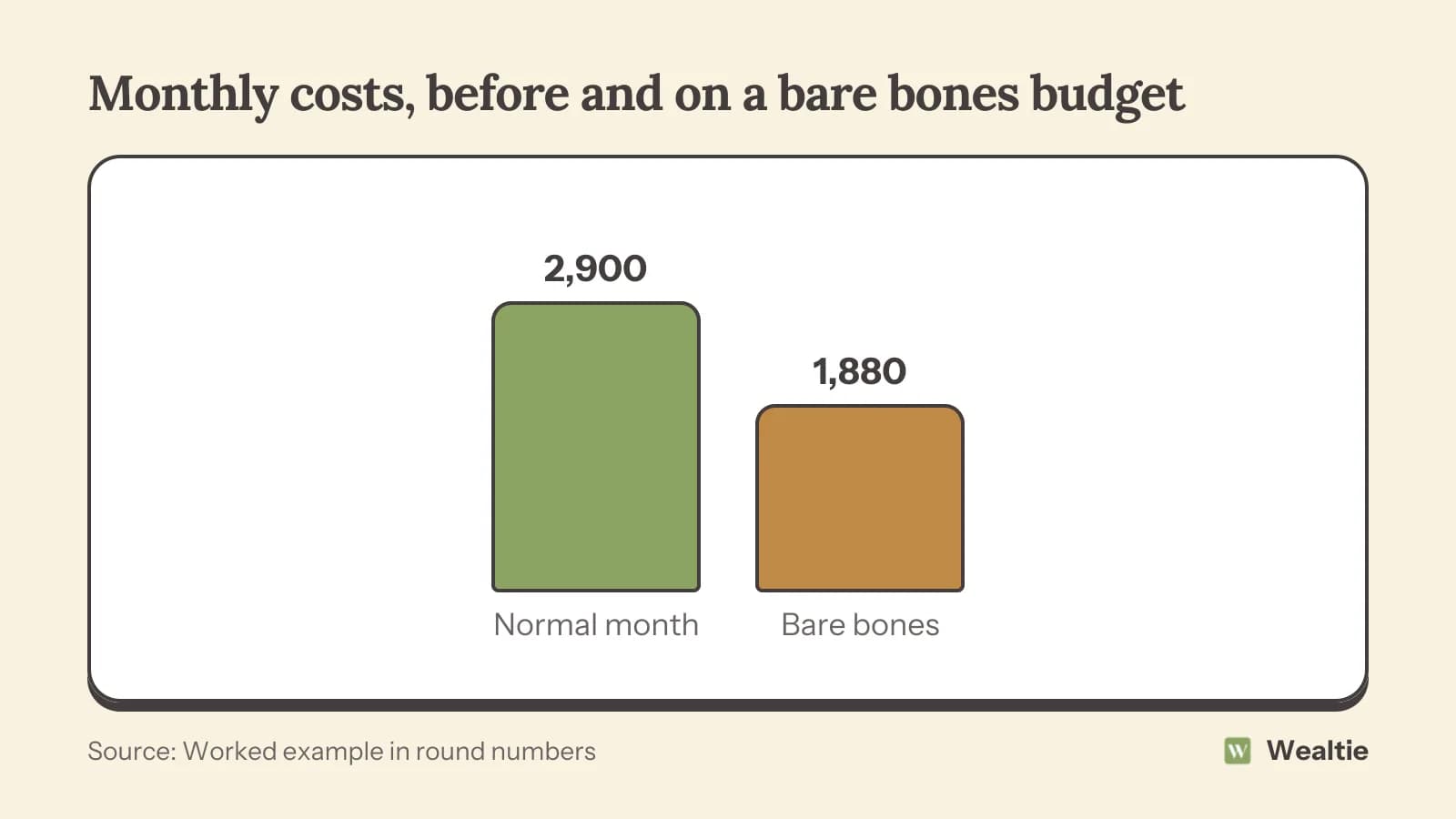
That frees 1,020 a month. Your own lines will differ, particularly if you've got children, medication or care costs. Those are essentials, so leave them in.
What should you cut first?
The things you can restart whenever you like. Subscriptions, memberships, eating out, shopping and holidays can all stop this week and come back later with no lasting cost.
Some cuts cost more than they save, so be careful with these:
- Insurance: a gap in cover can be expensive if something goes wrong in that window
- Car maintenance, if you need the car for work
- Medication and essential healthcare
- Minimum debt payments, which protect your credit record
Write down everything you pause, with the date. It makes it much easier to bring things back in order, and it means you won't forget a subscription that restarts on its own.
How do you lower the bills that stay?
Rent's usually the largest and the hardest to change quickly. If the situation looks long-term, a cheaper place or a flatmate might be the only change that moves the total by enough. How to split rent with roommates covers sharing fairly.
For the rest, go through them one at a time. Drop to a cheaper phone plan or SIM-only deal, check for a cheaper energy option, and shop for groceries from a list. How to save money on groceries has a worked approach, and small changes there can add up to 100 a month.
Should you still save on a bare bones budget?
Pause saving for goals and keep whatever emergency fund you've got. That's the money for exactly this kind of period, so using it is fine. If you've got a small amount left over, build a cushion of a few hundred before paying extra toward debts, so that one more surprise doesn't go on a card.
What if the bare bones total is still more than your income?
Then cutting won't close the gap, and you'll need to find money or change the bills themselves. Start with these:
- Call your lenders and ask about hardship options
- Talk to your landlord or mortgage lender before you fall behind
- Ask your energy and water providers about payment plans or support schemes
- Check what benefits or assistance you're entitled to
- Look for free debt advice from a non-profit or government-backed service
Do this early. Most companies have more options before a payment's missed than they do after. If you've got more than one debt, keep up with housing and utilities first, because the consequences of missing those are more serious. How to save on a low income has more for the months when there's nothing left to cut.
How long should you stay on it?
As short a time as you can. It's a stopgap, and most people can't live on one for long without something giving way. Set a date to review it, or a trigger such as your next paycheck from a new job.
Bring things back in order of value. Start with the savings transfer, even a small one, then whatever you've missed the most. Give yourself a small amount for something enjoyable as soon as you can. A plan with no room in it is hard to keep.
If you've been using this to clear a debt, put a date on the finish. The debt snowball or avalanche can help you work out how long it'll take.
How do you keep a bare bones budget in Wealtie?
Set your monthly limit to the bare bones total in the budget tracker. Give each essential a share of the limit, and Budget Health warns you mid-month if your pace would take you over. A budget widget on your home screen shows what's left, which helps when each purchase needs thinking about. Both are on the Free plan.
Questions people ask
Housing, utilities, food at home, transport you need for work, essential insurance and minimum debt payments. Anything else gets paused for now.
Only until the crisis has passed, ideally a few months. Set a date or a trigger to review it, because it's hard to sustain.
Contact your lenders and providers before you miss a payment, check what assistance you qualify for, and look for free debt advice from a non-profit or government-backed service.
Pause saving for goals, but keep your emergency fund for this kind of period. If there's a little left over, build a cushion before paying extra on debts.
This article is general information, not financial, tax or legal advice. Your situation is your own; check the numbers that apply to you before you act on them.



