Budgeting: How to negotiate bills: phone, internet and insurance
Here's how to negotiate bills: get a competing quote, call before the contract ends and ask for the best price for an existing customer. In a worked example, that saves 35 a month across phone, internet and insurance.
 By Wealtie Team · 3 min read
Key takeaways
- Bills with competitors and contracts, like internet, phone, insurance and TV, usually have the most room to negotiate.
- A competing quote and a call near the end of your contract give you the best chance of a lower price.
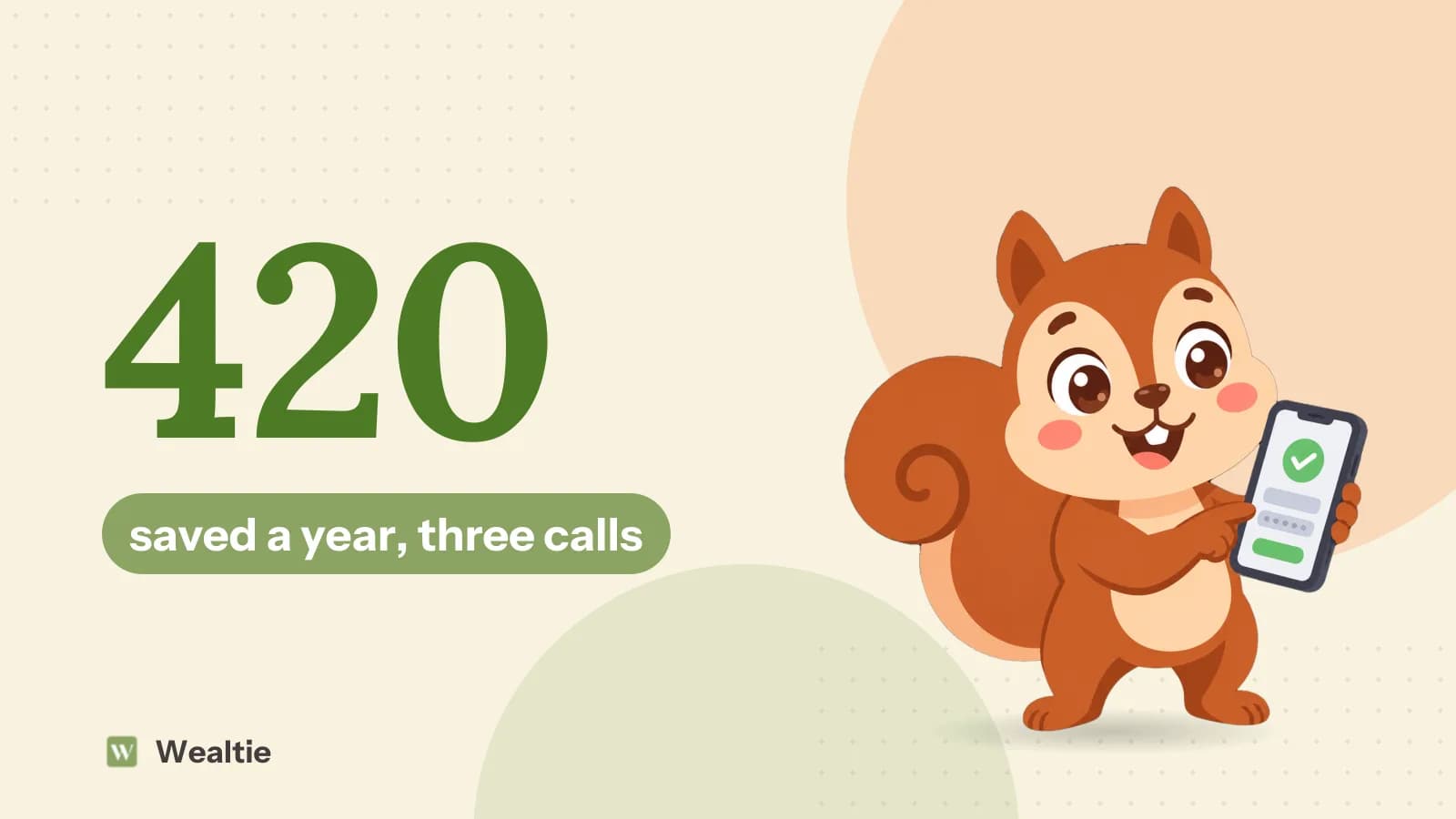
- In a worked example, three calls save 35 a month, or 420 a year.
- Be ready to switch, because a provider that won't move is telling you the competitor's offer is better.
How do you negotiate bills?
Find out what a new customer would pay elsewhere, then call your provider and ask them to match it. It works best with bills where there's competition and a contract coming to an end. You need a number, a polite tone and a willingness to switch.
Which bills can you negotiate?
The ones where you could take your business elsewhere:
| Bill | Room to negotiate |
|---|---|
| Internet and TV | Often a lot, especially out of contract |
| Mobile phone | Often, or switch to a cheaper SIM-only plan |
| Car and home insurance | Usually at renewal |
| Gym membership | Sometimes, especially if you ask to cancel |
| Rent | Sometimes, at renewal, if you're a good tenant |
| Medical bills | Sometimes, ask about payment plans and discounts |
| Utilities | Depends on your market; compare tariffs |
Bills set by law or a single supplier, like local taxes, usually can't be negotiated, though you might qualify for a discount or exemption.
What should you do before the call?
Prepare three things. Your current price and what it includes. The date your contract ends. And a competing quote for the same service, written down with the provider's name.
Check what you use. If you've got unlimited data and use a fraction of it, or a TV package with channels you never watch, you can ask for less and pay less. Don't negotiate for features you'd drop anyway.
The best time to call is in the last month or two of a contract, or right after you've had a renewal notice with a higher price.
Check for discounts you might already qualify for. Some employers, unions and membership groups have deals on insurance or phone plans, and many providers have basic or lower-cost plans they won't mention unless you ask.
Rent works a little differently. At renewal, look up similar places nearby, and if you've paid on time and looked after the flat, ask whether the landlord would accept a smaller rise in exchange for a longer lease. Re-letting a place costs landlords money, so a reliable tenant has some leverage.
What do you say?
Keep it short and specific. Something like:
"Hi, I've been a customer for three years and my contract's ending. I've had a quote from another provider for the same speed at 40 a month, and I'm paying 55. Can you do anything to keep me?"
If the first person can't help, ask to speak to the team that handles cancellations or retention. They often have offers the first line doesn't. Be polite the whole time. The person on the phone didn't set the price, and they're more likely to help someone who's pleasant.
Write down what they offer, the new price, how long it lasts and any new contract length. Ask for it in writing before you hang up.
What can one afternoon save?
Here's a worked example in round numbers that work in any currency:
| Bill | Before | After | Saved a month |
|---|---|---|---|
| Internet | 55 | 40 | 15 |
| Phone | 30 | 20 | 10 |
| Car insurance (840 a year) | 70 | 60 | 10 |
| Total | 35 |
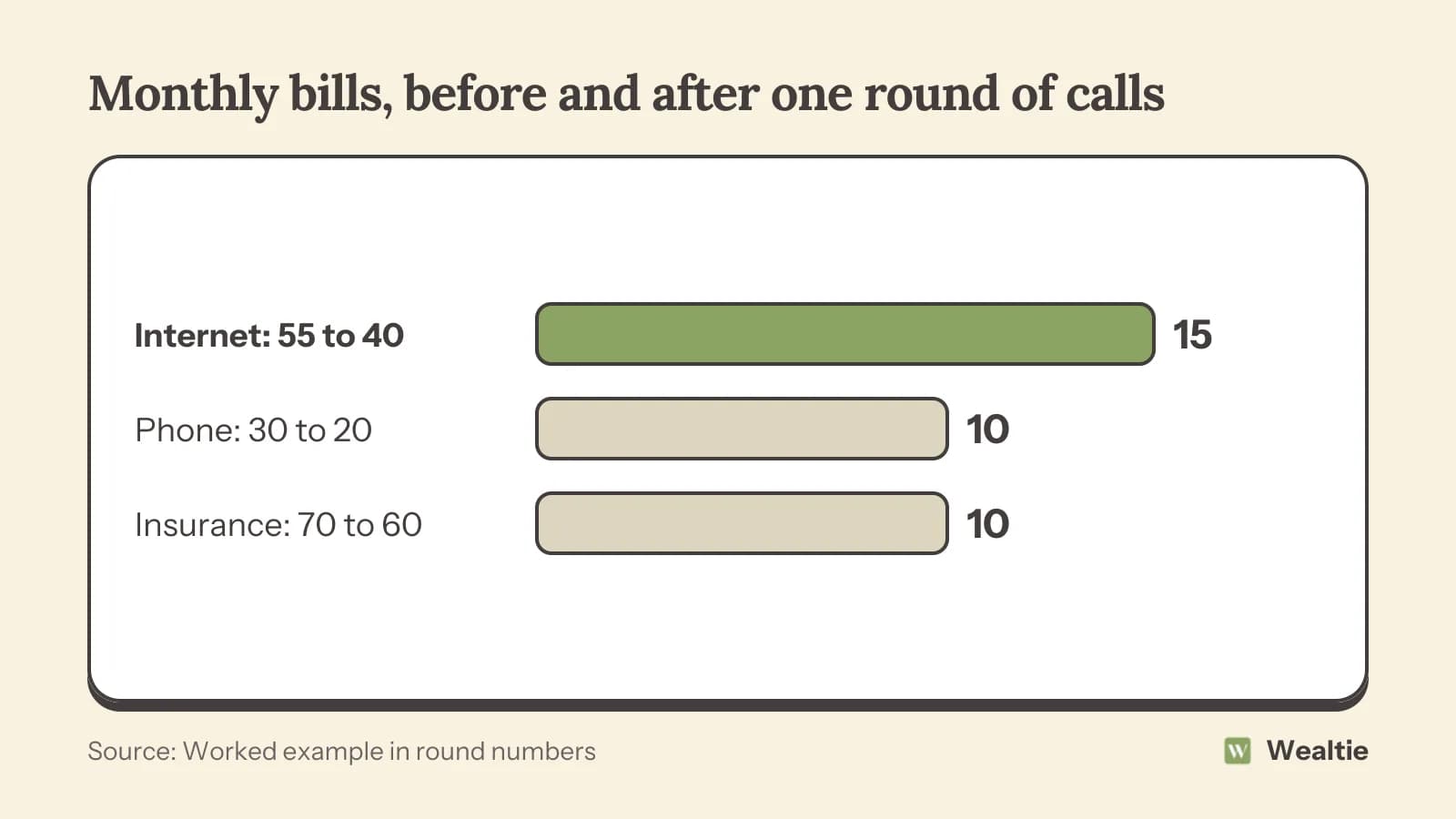
That's 420 a year from three phone calls. Repeat it next year, since prices often creep back up after a deal ends.
What if they won't lower the price?
Then switch, if the competitor's cheaper for the same service. The point of a quote is that you're willing to use it. Check for exit fees first, and don't cancel the old service until the new one's working.
If you're out of contract, there's usually nothing stopping you. Sometimes the cancellation process itself brings a better offer, and you can decide then.
What if you're struggling to pay a bill?
Call before you fall behind, and say so. Many providers have support for customers in financial difficulty, including payment plans or cheaper social tariffs for people on low incomes. That's a different conversation from negotiating a discount, and it's worth having early. How to save on a low income covers more of this.
For energy specifically, look at how to save money on electric bill too, since use matters as much as price.
How often should you check your bills?
Once a year for each one, around the renewal date. Put the dates in your calendar along with what you're paying, so you'll know when to call. How to organize bills has a monthly check that catches price rises before they settle in.
How do you track the savings in Wealtie?
Set each fixed bill up as a recurring transaction in the bill tracker. When you negotiate a new price, edit the rule, and every payment after that uses the new amount while past ones stay as they were. Your budget tracker then shows the lower total straight away. Free includes one recurring transaction, and Pro has no limit.
Questions people ask
Internet, TV, mobile phone and insurance usually have the most room, because there's competition and contracts end. Rent, gym memberships and medical bills can sometimes be negotiated too.
Say how long you've been a customer, quote a competitor's price for the same service, and ask if they can do anything to keep you. Ask for the retention team if the first person can't help.
In the last month or two of your contract, or right after a renewal notice with a higher price. That's when switching is easiest.
Switch, if the competing offer is better for the same service. Check exit fees first and keep the old service running until the new one works.
This article is general information, not financial, tax or legal advice. Your situation is your own; check the numbers that apply to you before you act on them.