Budgeting: How to budget for time off sick when your pay drops
To budget for time off sick, find out exactly what you'll be paid and for how long, cut spending to essentials, claim any support you're entitled to, and use your emergency fund to fill the gap. In a worked example, a gap of 900 a month is covered for three months.
 By Wealtie Team · 3 min read

Key takeaways
- Find out what you'll be paid while off sick, and for how long, from your employer and your country's rules.
- In a worked example, sick pay of 1,700 against normal take-home of 2,600 leaves a gap of 900 a month.
- Cut spending to essentials and claim any support, so your emergency fund lasts longer.
- If you're self-employed, plan ahead, since there may be no sick pay at all.
How do you budget for time off sick?
Start with what you'll be paid, then close the gap between that and your normal spending. Being ill is stressful enough without money worries, so a quick, simple plan in the first week helps. The aim is to protect the essentials and make your savings last as long as you might need them.
What will you be paid?
Check your contract and ask your employer or HR. Sick pay can be full pay for a time, a reduced amount, a statutory minimum, or nothing, depending on your employer and where you live. It can also change after a number of weeks. Find out:
- How much you'll get, and from when
- How long it lasts, and whether it drops after a set period
- What evidence you need, like a doctor's note
- Whether any income protection insurance you have will pay, and when
Keep copies of sick notes and any letters about pay, in case you need them for support or a dispute. If you're self-employed, there may be no sick pay at all, which is why a larger emergency fund matters. How much to save before going freelance covers planning for that.
How big is the gap?
Compare your sick pay with your normal take-home. Here's a worked example in round numbers that work in any currency:
| Monthly | |
|---|---|
| Normal take-home | 2,600 |
| Sick pay | 1,700 |
| Gap | 900 |
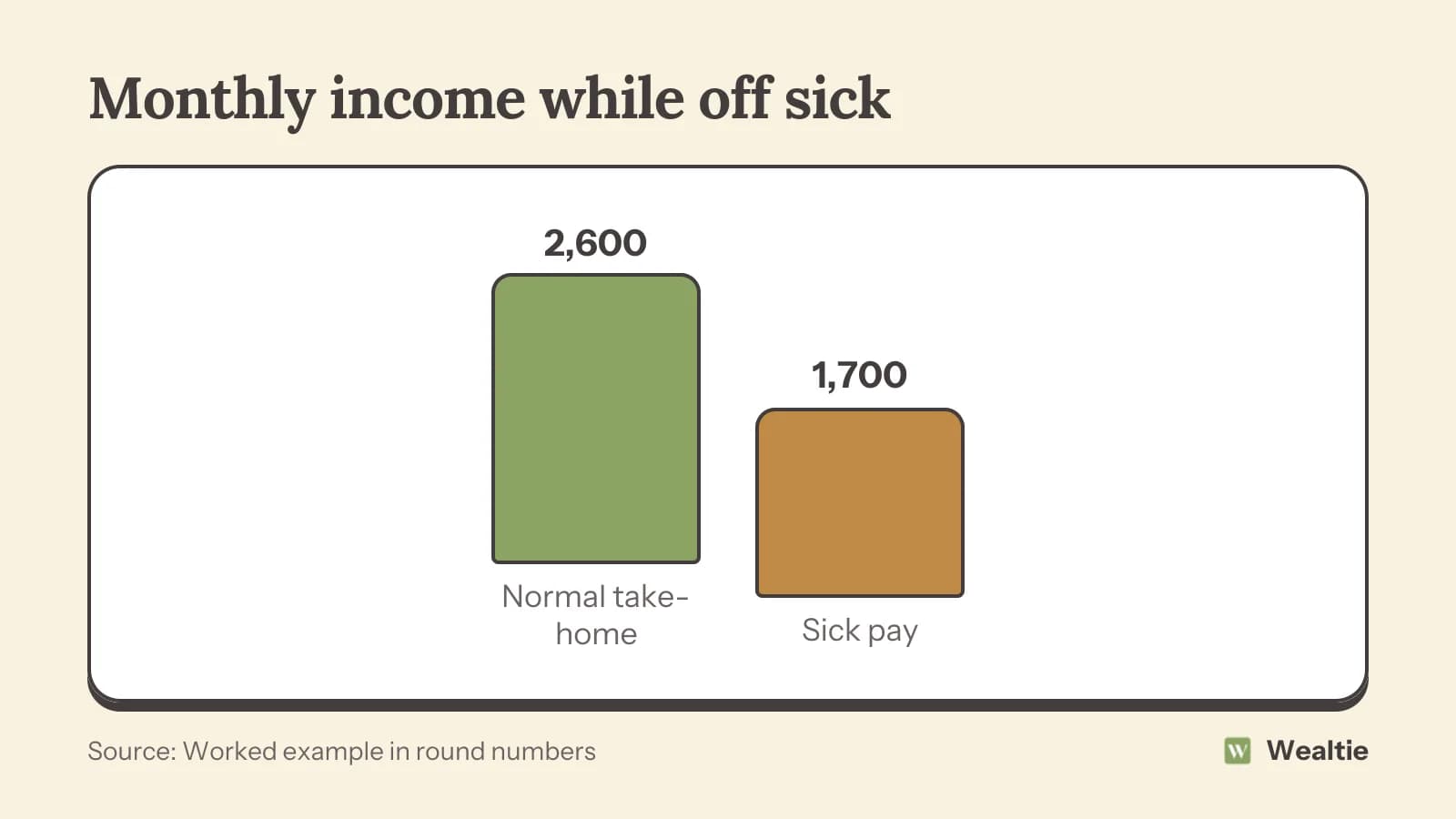
That's the amount you need to find each month, through cuts, support or savings.
How do you close the gap?
Usually with a mix. In this example, cutting 400 of spending leaves 500 a month to come from savings. Over three months, that's 1,500 from your emergency fund, rather than 2,700.
Cut the flexible spending first: eating out, shopping, subscriptions and anything you can pause. Some costs fall naturally while you're at home, like commuting and work lunches. A bare bones budget shows what to keep and what to pause. Write down which costs you've paused, so they're easy to restart when you're back.
What support might you be entitled to?
Depending on where you live, there may be state sickness benefits, help with housing costs, or support if your illness lasts a long time. If your income drops a lot, you might qualify for help you didn't before. Check official guidance or a local advice service, since some support takes time to start.
Ask about a phased return, which lets you rebuild hours and pay gradually. Ask your employer about any hardship funds, or whether you can return on reduced hours when you're well enough, if that would help.
Should you use your emergency fund?
Yes, that's what it's for. Use it to cover the gap after cuts, and keep track of how much is left. If it looks like it'll run out before you're back at work, act early: talk to lenders and providers about payment plans, and look at bigger changes.
Once you're back, refill the fund before restarting other goals, and keep the lean budget for a month, since the first full payslip might still be lower. Avoid putting the gap on credit cards if you can. Interest makes the months after you return tighter. How much should be in an emergency fund helps you set a target once you're back.
What if you have debts or bills you can't pay?
Contact the companies before you miss a payment. Many have hardship options, like reduced payments for a while, especially if you explain you're ill. Keep housing and energy first. Free debt advice from a non-profit can help you sort priorities if several bills are at risk.
How do you prepare before you need it?
Build an emergency fund that covers a few months of the gap, check what sick pay you'd get, and consider income protection insurance if your household relies on your income. Starting an emergency fund now is the most useful single step, and how to build an emergency fund has the steps. Check too whether your employer offers income protection as a benefit, since some do without staff realising.
How do you manage a sick-pay budget in Wealtie?
Update your monthly income goal to the sick pay amount and set the limit in the budget tracker to match, so Budget Health warns you if spending runs ahead. Your emergency fund shows in your net worth tracker, so you can see how long it'll last.
Questions people ask
Find out what you'll be paid, compare it with your normal take-home, cut spending to essentials, claim any support and use your emergency fund for the rest.
Often it falls after a while, depending on your employer and local rules. You might get full pay for a time, a reduced amount, a statutory minimum or nothing.
Yes, that's what an emergency fund is for. Cut spending first so it lasts longer, and avoid credit cards if you can.
There may be no sick pay, so a larger emergency fund and income protection insurance are worth considering in advance.
This article is general information, not financial, tax or legal advice. Your situation is your own; check the numbers that apply to you before you act on them.