Budgeting: How to reduce food waste and save money on every shop
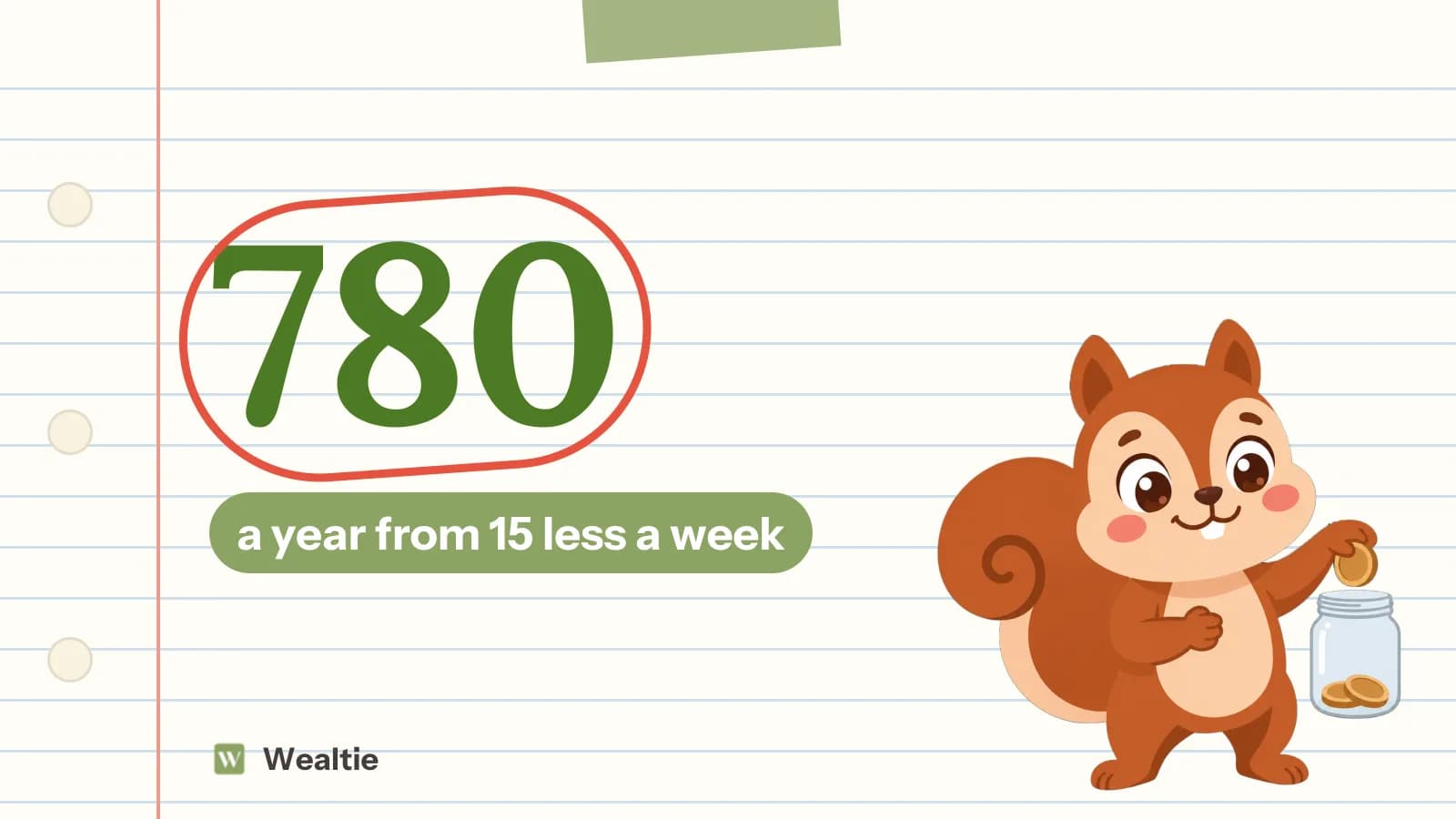
To reduce food waste and save money, plan meals before you shop, check what you've already got, store food so it lasts, and turn leftovers into the next meal. In a worked example, wasting 15 a week less saves 780 a year.
 By Wealtie Team · 3 min read
Key takeaways
- Plan meals before you shop and check the fridge, freezer and cupboards first.
- In a worked example, wasting 15 a week less saves 780 a year.
- Storing food well and using the freezer stops a lot of food going off before it's eaten.
- Use-by dates are about safety, while best-before dates are about quality, so food past best-before is often fine.
How do you reduce food waste?
Buy only what you'll use, store it well, and plan to use up what's left. Most household food waste happens because food is bought without a plan, stored badly, or forgotten at the back of the fridge. Each of those is fixable, and the savings come straight off your food bill. You don't need to change everything at once. Pick one habit, like checking the fridge before you shop, try it for a month, then add another. Small changes that stick save more than a big overhaul you abandon.
How much could you save?
Work out roughly what you throw away in a week. Here's a worked example in round numbers that work in any currency:
| Thrown away each week | Over a year | |
|---|---|---|
| Before | 20 | 1,040 |
| After | 5 | 260 |
| Saved | 15 | 780 |
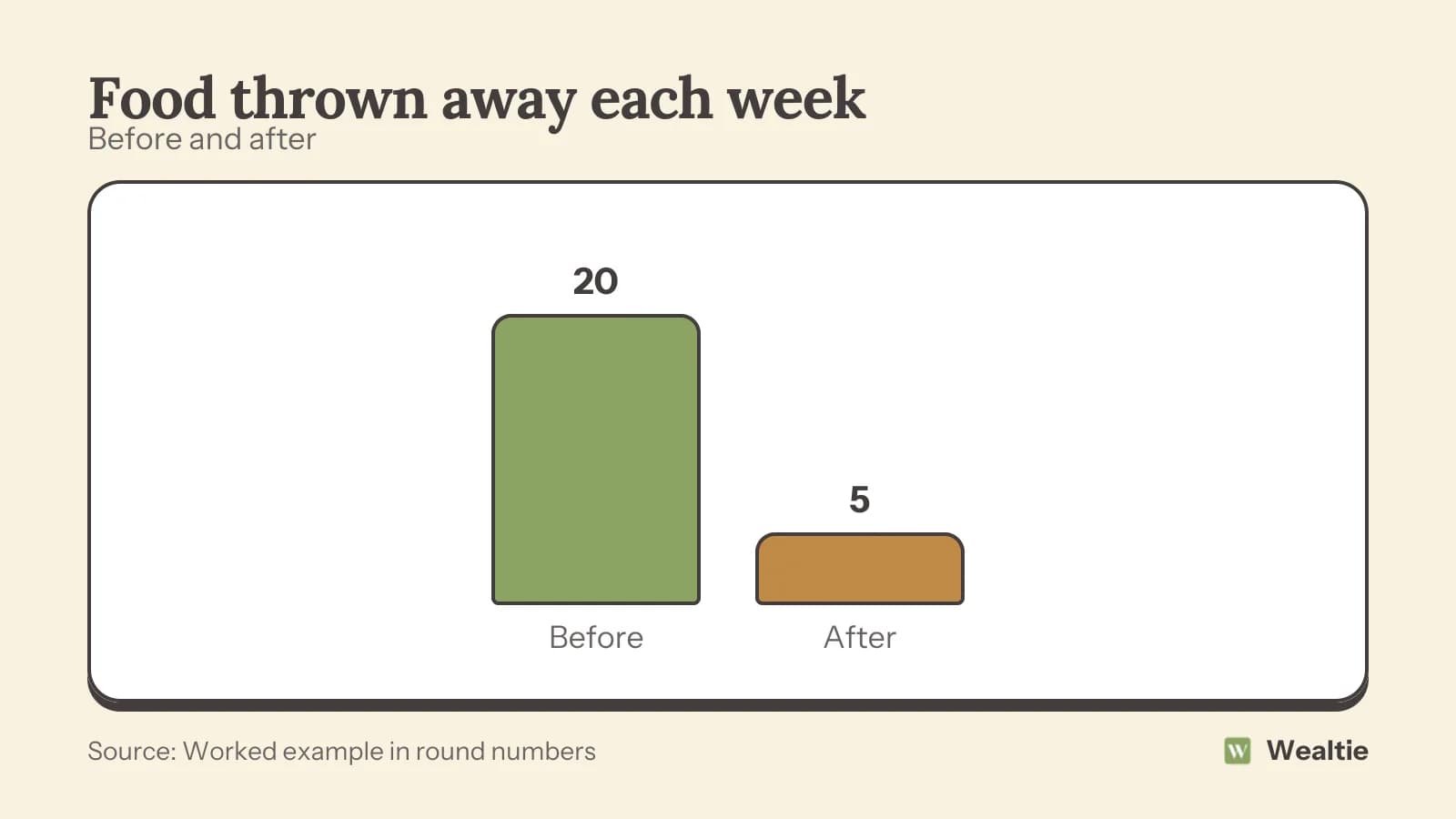
For a week, keep a note of everything you throw away and roughly what it cost, even if it's only a few items a day. Most people are surprised by the total, and it shows which foods to buy less of. Bread, salad, fruit and leftovers are the usual suspects, so start with those. Shopping hungry or without a list is a common cause of buying too much.
How does planning help?
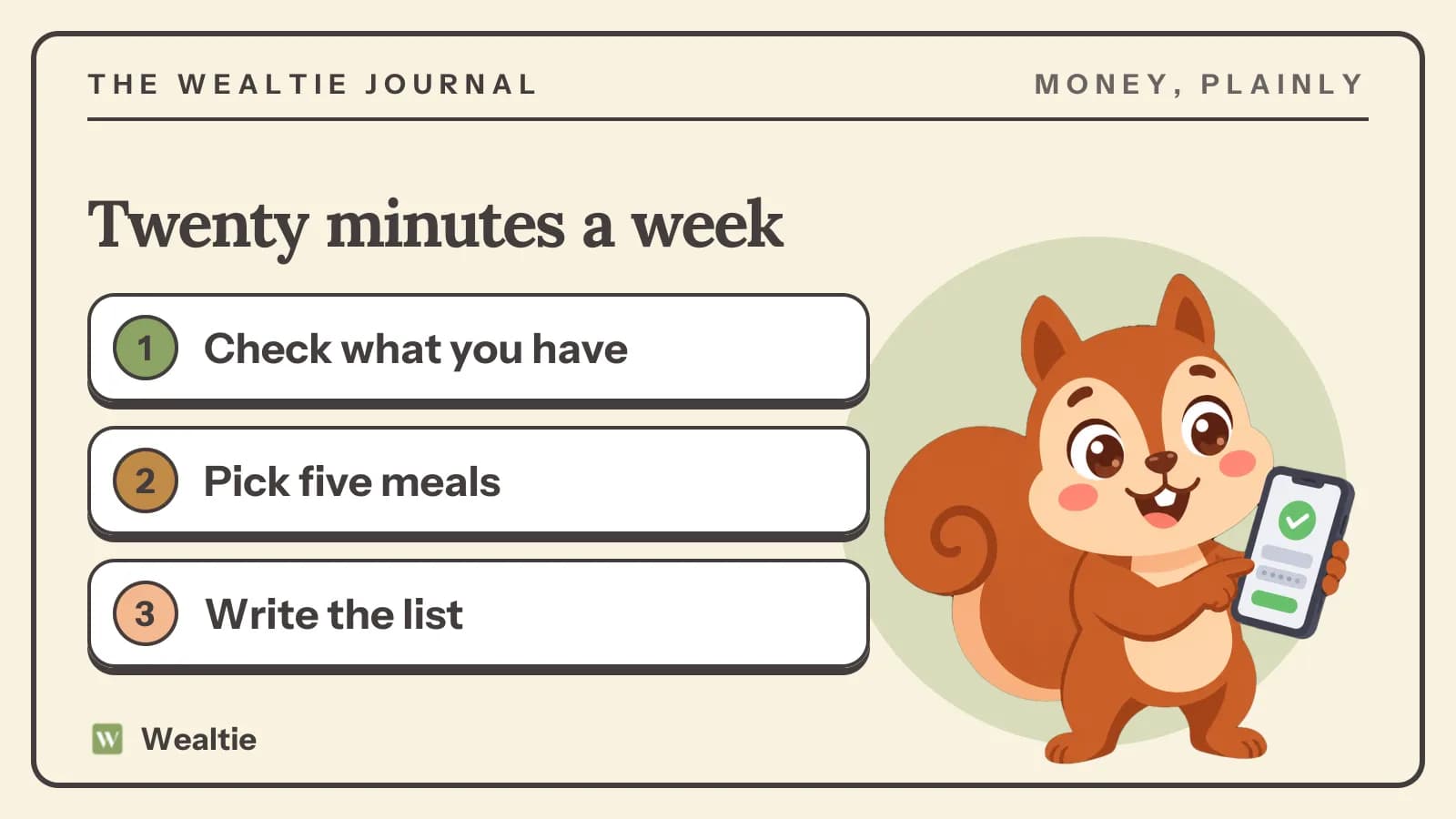
It means you buy for meals, not for a vague idea of the week. Before you shop, check the fridge, freezer and cupboards, plan meals that use what's already there, and write a list for what's missing. Plan a "leftovers night" each week to use up what's left, and keep a running list on the fridge of things that need using soon.
Buying loose fruit and vegetables lets you buy exactly the amount you need. Buying smaller amounts more often can help with fresh food like salad and soft fruit, as long as the extra trips don't lead to impulse buys. How to save money on groceries has more on planning the shop.
How do you store food so it lasts?
A few habits make a big difference:
- Keep the fridge cold enough, and don't overpack it
- Store bread in a cool place, or freeze half a loaf
- Keep potatoes and onions somewhere cool and dark, apart from each other
- Move older food to the front of the fridge and newer to the back
- Freeze food before its date, not after, including bread, meat, cooked rice and ripe bananas
Store herbs in a glass of water in the fridge and wrap cheese well, since small habits like these add days to food's life. The freezer is one of the best tools against waste. Portion and freeze leftovers, and label them with what they are and the date.
How do you use up leftovers?
Turn them into another meal. Leftover vegetables go into soup, a frittata or a stir-fry. Stale bread becomes breadcrumbs or toast. Cooked rice and pasta make the next day's lunch. Overripe fruit goes into smoothies or baking.
Keep a few go-to recipes for odds and ends, like fried rice, omelettes or a big soup. Cook the right amount in the first place, too. Measuring rice and pasta per person stops pots of leftovers that never get eaten.
What do date labels mean?
Use-by dates are about safety: don't eat food after its use-by date, even if it looks fine. Best-before dates are about quality: food is often still fine after that date, though it might not be at its best. Use your senses for best-before foods, and check the guidance where you live, since label rules vary.
Knowing the difference stops a lot of good food being thrown away. Check dates when you put shopping away, and plan the first meals of the week around the shortest ones.
How do you keep it going?
Make it part of the weekly routine, so it doesn't rely on remembering: check what's there before you shop, plan a leftovers night, and freeze anything you won't use in time. After a few weeks, you'll buy closer to what you eat, and the bin will be noticeably emptier. Composting peelings and scraps you can't eat turns them into something useful for the garden.
How do you see the savings in Wealtie?
Log your food shopping in a Groceries category, so your expense categories show what you spend each month. As waste drops, the total should come down too, and a share of your monthly limit in the budget tracker keeps it in view.
Questions people ask
Plan meals before you shop, check what you've got, store food properly, freeze what you won't use in time and turn leftovers into new meals.
About 780 a year if you waste 15 a week less, in a worked example.
Often, yes, since best-before is about quality. Use-by dates are about safety, so don't eat food after those.
Bread, meat, cooked rice, many cooked meals, and ripe fruit like bananas freeze well. Freeze before the date, not after.
This article is general information, not financial, tax or legal advice. Your situation is your own; check the numbers that apply to you before you act on them.