Saving: Own brand vs branded: where the cheaper option wins
In the own brand vs branded choice, switching everyday staples to own-brand products often saves a lot with little difference in quality. In a worked example, switching a weekly basket saves 18, or about 940 a year.
 By Wealtie Team · 3 min read
Key takeaways
- Own brand vs branded switching saves the most on everyday staples.
- Many own-brand products are very similar to branded ones.
- Try a swap test: switch one item at a time and keep what you like.
- Keep the few brands you prefer and switch the rest.
Own brand vs branded: is there a real difference?
Supermarkets and pharmacies sell their own versions of almost everything, from pasta and tinned tomatoes to washing-up liquid and painkillers. Own-brand products are usually cheaper because they don't carry the same advertising and marketing costs as big brands. For many everyday items, the difference in quality is small or hard to notice. Some own-brand products are even made by the same manufacturers as branded ones, though not all.
That makes own brand vs branded one of the easiest places to save on your weekly shop. You don't need to switch everything. Switching the items where you can't tell the difference, and keeping the brands you love, can cut your bill without changing what you eat.
How much can you save?
Here's a worked example of a weekly basket of everyday staples, in round numbers that work in any currency:
| Weekly basket | Cost |
|---|---|
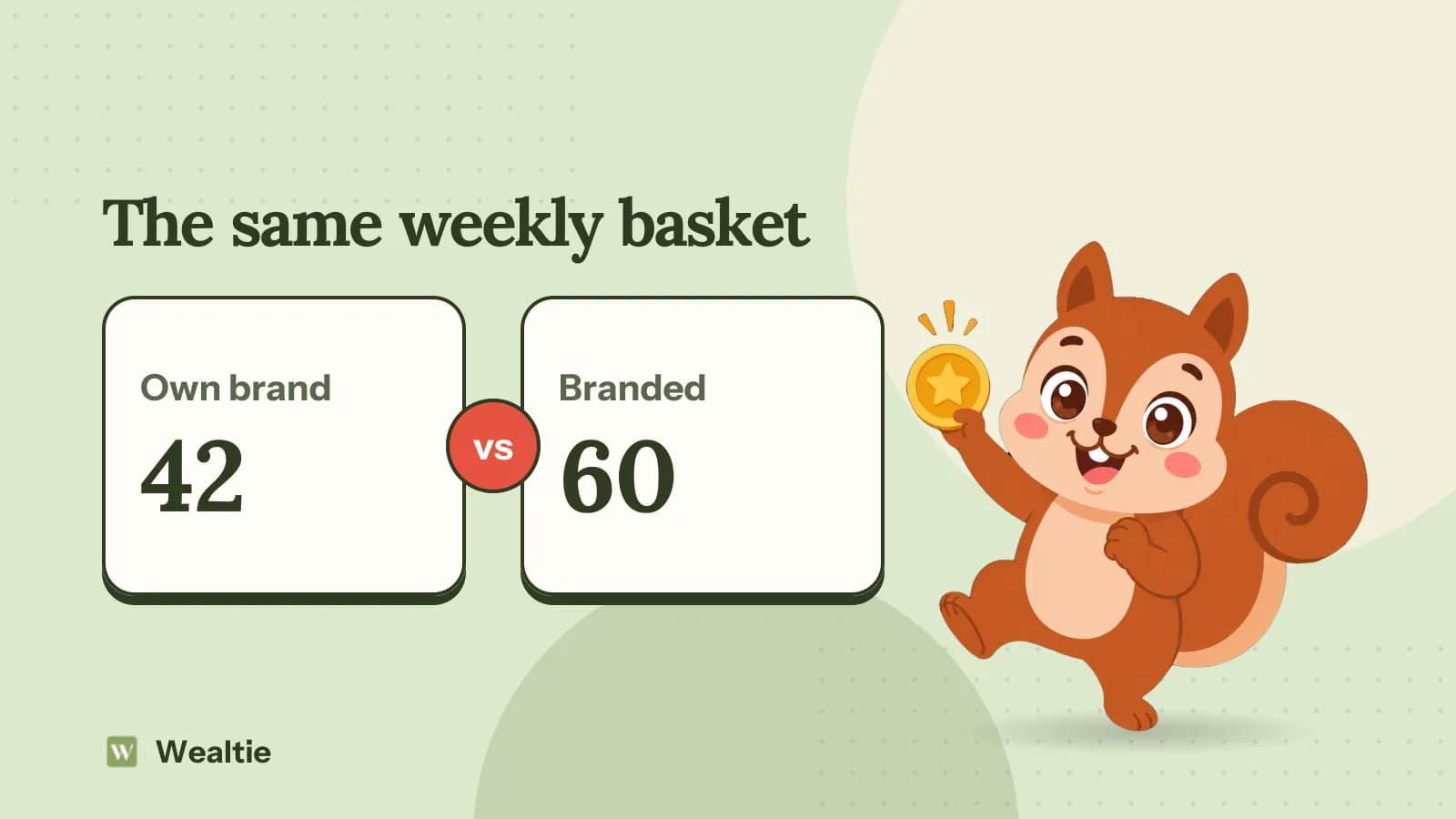
| Own brand | 42 |
| Branded | 60 |
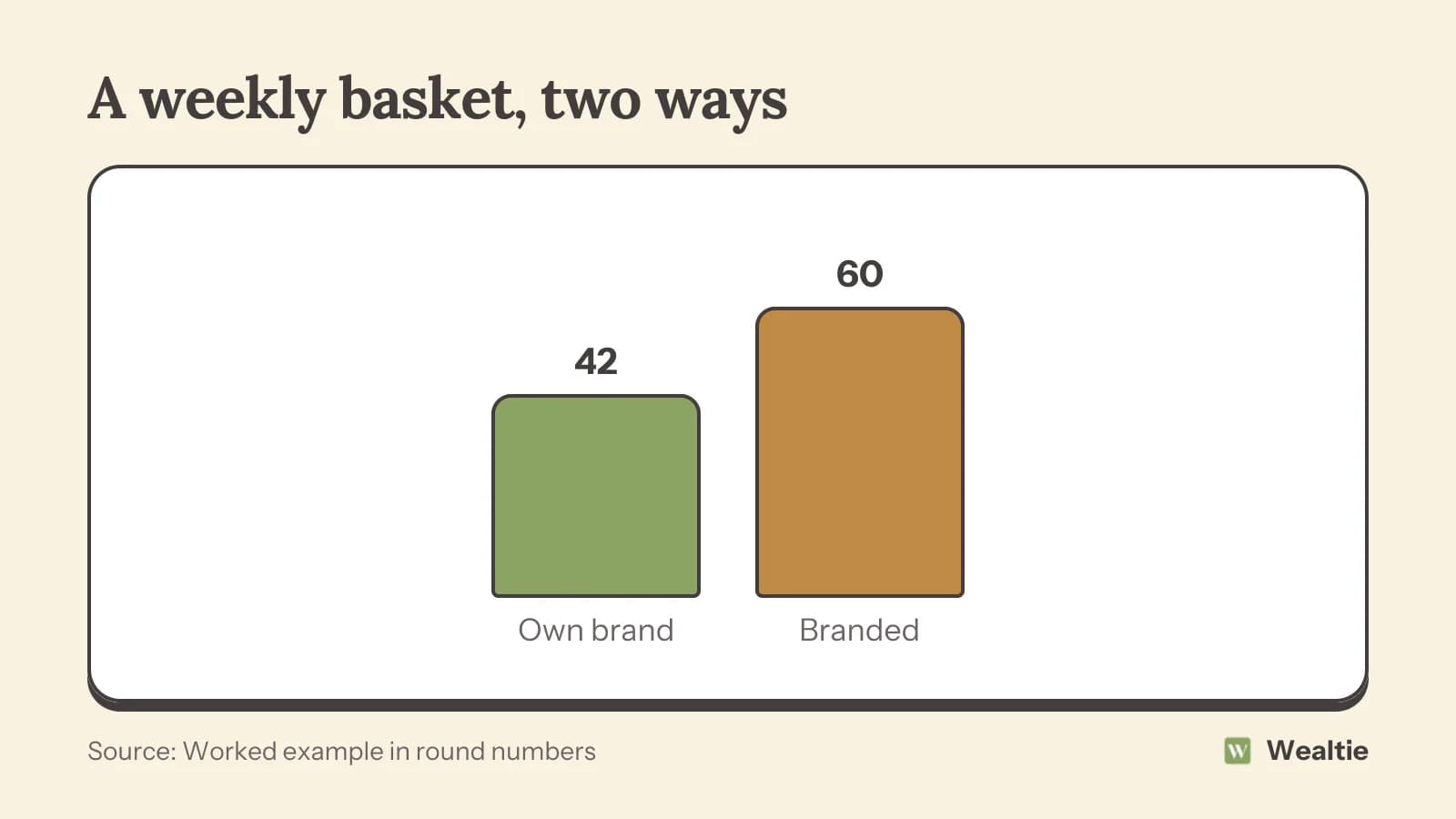
Switching saves 18 a week, or about 940 a year. The basket includes items like pasta, rice, tinned tomatoes, cereal, bread, butter, cleaning products and toiletries. Your savings will depend on what you buy and where you shop, but the pattern is similar in most supermarkets.
Where is own brand usually just as good?
Basic cupboard staples
Pasta, rice, flour, sugar, oats, tinned tomatoes, tinned beans and frozen vegetables are often very similar whatever the label.
Medicines
Own-brand painkillers and many other common medicines usually contain the same active ingredients in the same amounts as branded ones. Check the ingredients on the box, and ask a pharmacist if you're unsure.
Cleaning products
Washing-up liquid, bleach, surface sprays and bin bags are easy swaps for most households.
Toiletries
Cotton pads, basic soap, toothpaste and many skincare basics are worth trying in own-brand versions. How to save money on personal care has more ideas.
Baby basics
Many parents find own-brand wipes and some nappies work just as well. How to save money on baby basics covers this in more detail.
Where might brands be worth it?
Some people prefer certain brands for taste, texture or performance, especially for things like coffee, chocolate, cereal, ketchup or laundry detergent. That's fine. The aim is to spend on the brands that matter to you and save on the ones that don't. If a branded product lasts longer or works better, it may even be better value per use. Cost per use helps judge that.
How do you switch without missing out?
Do a swap test
Switch one or two items each week. If you can't tell the difference, keep the swap. If you don't like it, go back to the brand. After a month or two, you'll have a basket that suits you.
Try a blind taste test
For food, try the own-brand and branded versions side by side without knowing which is which. Many families are surprised by the results.
Compare unit prices
Shelf labels often show the price per kilogram or litre. Use them to compare like for like, since pack sizes differ.
Look at the cheapest ranges too
Many supermarkets have a basic value range as well as a standard own brand. For some items, like flour or tinned vegetables, the cheapest range works well.
Watch out for brand deals
Branded products on offer can sometimes be cheaper than own brand. Unit prices show when that's the case. Price anchoring covers how offers can make prices look better than they are.
How does it fit into a wider grocery budget?
Switching to own brand works best alongside other habits, like planning meals, writing a list and reducing waste. How to save money on groceries covers the full set of ways to cut your food bill, and how much should you spend on groceries? covers setting a target.
Habit is often the main reason people stick with brands. We buy what our parents bought or what we've always bought, without checking whether a cheaper version would do. Making one or two swaps a week breaks that habit gently, and because you're only changing a few items at a time, it never feels like a big sacrifice.
Involve the rest of the household too. Children and partners may be more open to own-brand products if they're part of a taste test rather than a surprise in the cupboard. Some families turn it into a game and keep score of which version wins.
Remember that the savings grow over time. A few small swaps each week add up to hundreds over a year, which can go towards a goal that matters more to you than the label on a tin.
How can Wealtie help you see the savings?
Log your weekly shop in a groceries expense category and set a monthly budget for food. As you switch more items to own brand, you'll see your grocery spending fall month by month.
Questions people ask
Many are very similar, especially basic staples, cleaning products and common medicines. Some are made by the same manufacturers, though not all.
In a worked example, switching a weekly basket of staples saved 18 a week, or about 940 a year.
Many contain the same active ingredients in the same amounts. Check the box, and ask a pharmacist if you're unsure.
Swap one or two items a week, keep the swaps you're happy with and stay with brands where you prefer the taste or performance.
This article is general information, not financial, tax or legal advice. Your situation is your own; check the numbers that apply to you before you act on them.