Budgeting: How to save money on personal care without giving it up
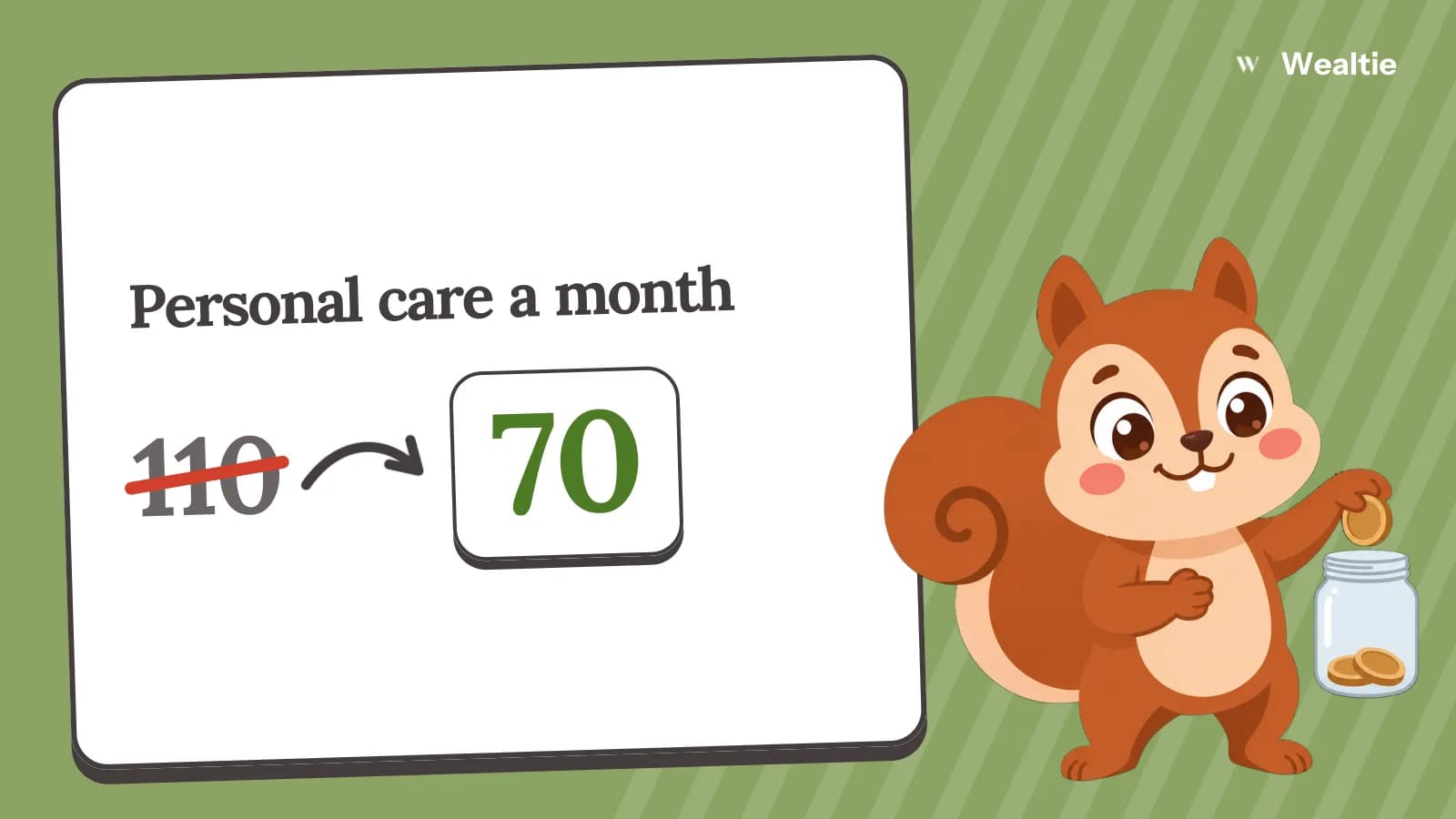
To save money on personal care, add up what you spend on haircuts, skincare, toiletries and treatments, then stretch the time between appointments, buy fewer products and swap a few for cheaper ones. In a worked example, that cuts 110 a month to 70.
 By Wealtie Team · 3 min read
Key takeaways
- Add up a full month of personal care, including haircuts, skincare, toiletries and treatments, since it's often more than people think.
- In a worked example, a few changes cut 110 a month to 70.
- Stretching the time between haircuts or treatments is one of the easiest savings.
- A shorter routine with fewer products usually costs less and wastes less.
How do you save money on personal care?
Find out what it costs, then change the parts that cost most without giving up what you enjoy. Personal care is easy to overlook because it's spread across shops, salons and online orders. Added up, it can be a noticeable monthly cost. Start with the biggest line, which for most people is haircuts or treatments, since a small change there saves more than switching shampoo.
How much do you spend now?
Track a month, or look back at the last three, including things bought on a whim at the pharmacy or online, which are easy to miss. Here's a worked example in round numbers that work in any currency:
| Item | Before | After |
|---|---|---|
| Haircuts | 40 | 30 |
| Skincare | 35 | 20 |
| Toiletries | 20 | 12 |
| Treatments, like nails or brows | 15 | 8 |
| Total | 110 | 70 |
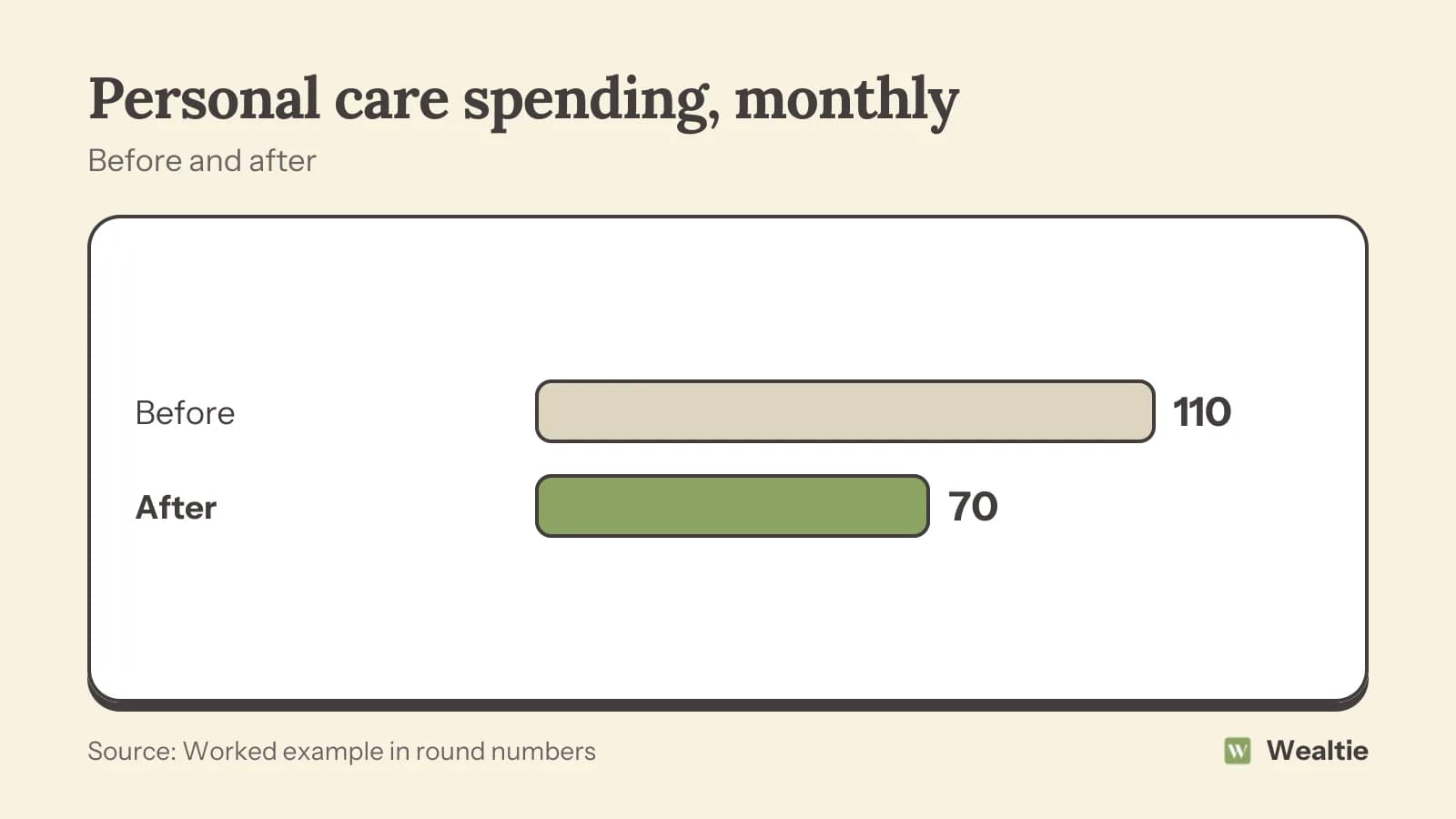
That's 40 a month, or 480 a year. Write your own figures in the same way, with a target for each line, so you can check after three months whether the changes have stuck. Most people find one or two lines move easily and the rest stay about the same. The changes in this example are modest, and none means giving anything up entirely.
How do you spend less on haircuts?
Stretch the time between them. Going from every five weeks to every seven cuts the number of haircuts in a year by more than a quarter. A style that grows out well helps, and most hairdressers are happy to suggest one.
Other options: a training salon or academy, where students cut hair under supervision for less; a simpler service, like a cut without a blow-dry; or a trim at home between professional cuts, if you're comfortable with it. For children's haircuts, a cheaper barber or a home trim often works well.
How do you spend less on skincare and toiletries?
Use fewer products. Many routines include several products that do overlapping jobs. A short routine with a few basics usually costs less, wastes less, and is easier to keep up. Finish a product before buying the next.
Supermarket and pharmacy own-brand versions of basics like moisturiser, shampoo and body wash are often much cheaper. Look at the price per millilitre or per use, not just the price on the shelf. For the few products you care about, keep the one you like. Samples and travel sizes let you try something before buying the full size, and refillable razors with blades bought in bulk usually cost less over a year.
Be wary of buying on impulse from social media. A new product every week adds up fast. How to stop impulse buying has rules that help.
How do you cut the cost of treatments?
Space them out, choose a simpler version, or learn to do some at home. Nails, brows, lashes and similar treatments can be expensive if they're on a regular cycle. Ask whether a less frequent appointment would work, or whether a cheaper option, like polish instead of gels, would do.
Look for introductory offers at local salons, but check the regular price before you commit. Doing nails at home with a basic kit can cost a fraction of salon visits over a year.
Are subscription boxes worth it?
Sometimes, if you use most of what arrives. Many people find they build up a drawer of products they don't use. Before keeping one, look at what you used from the last three boxes. If it's less than half, cancel it. Swapping unwanted products with friends turns unused items into ones somebody will use. How to cut subscription costs covers the rest.
What about gifts and offers?
Gift sets around holidays can be cheaper per product, but only if you'd use everything in them. Loyalty schemes at pharmacies and beauty shops can give useful discounts on things you'd buy anyway. Don't let points tempt you into buying more. If people ask what you'd like as a gift, a product you love and buy anyway is a useful answer.
How do you track personal care in Wealtie?
Give personal care its own line in your expense categories, separate from household essentials, so you can see what it costs each month. A share of your monthly limit in the budget tracker keeps it in view. Keep cleaning products and paper goods in a separate category, so personal care shows on its own. Dental and eye care are health costs, so keep those separate too.
Questions people ask
Track a month of spending, stretch the time between haircuts and treatments, use fewer products and switch some basics to own-brand.
Go a little longer between cuts, try a training salon, choose a simpler service or trim at home between appointments.
For many basics, own-brand products do a similar job. Keep the few products you value and simplify the rest.
Only if you use most of what arrives. Check what you used from the last few boxes before keeping one.
This article is general information, not financial, tax or legal advice. Your situation is your own; check the numbers that apply to you before you act on them.