Saving: Grocery delivery vs in-store shopping: which costs less?
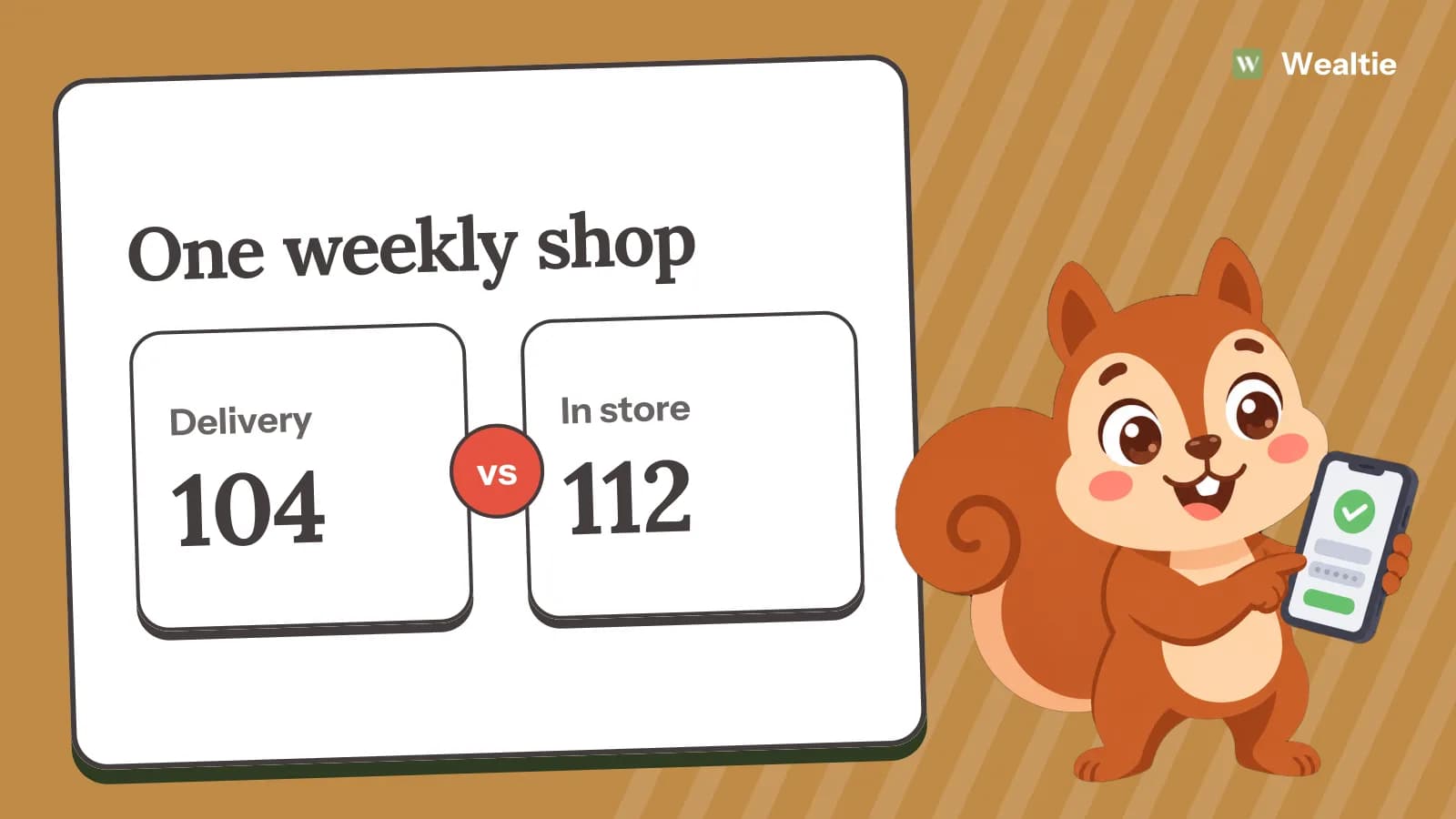
In the grocery delivery vs in-store choice, delivery can cost less overall despite the fee, because it cuts impulse buys and travel. In a worked example, a weekly delivery shop costs 104, while a trip to the store costs 112.
 By Wealtie Team · 3 min read
Key takeaways
- Grocery delivery vs in-store costs depend on fees, impulse buys and travel.
- Online shopping makes it easier to stick to a list and see the running total.
- Delivery passes and click-and-collect cut fees.
- In-store shopping can win on reduced items and comparing fresh produce.
Grocery delivery vs in-store: which costs less?
Ordering groceries online saves time, but many people assume the delivery fee makes it more expensive than going to the shop. That isn't always true. Shopping in person comes with its own costs: impulse buys, special offers you didn't plan for, snacks at the checkout and the fuel or fare to get there. Online, you can see your running total, stick to a list and avoid the aisles designed to tempt you.
Here's a worked example of one weekly shop, in round numbers that work in any currency. The planned list comes to 100 either way:
| Weekly shop | Cost |
|---|---|
| Delivery: shop plus 4 fee | 104 |
| In store: shop, extras and fuel | 112 |
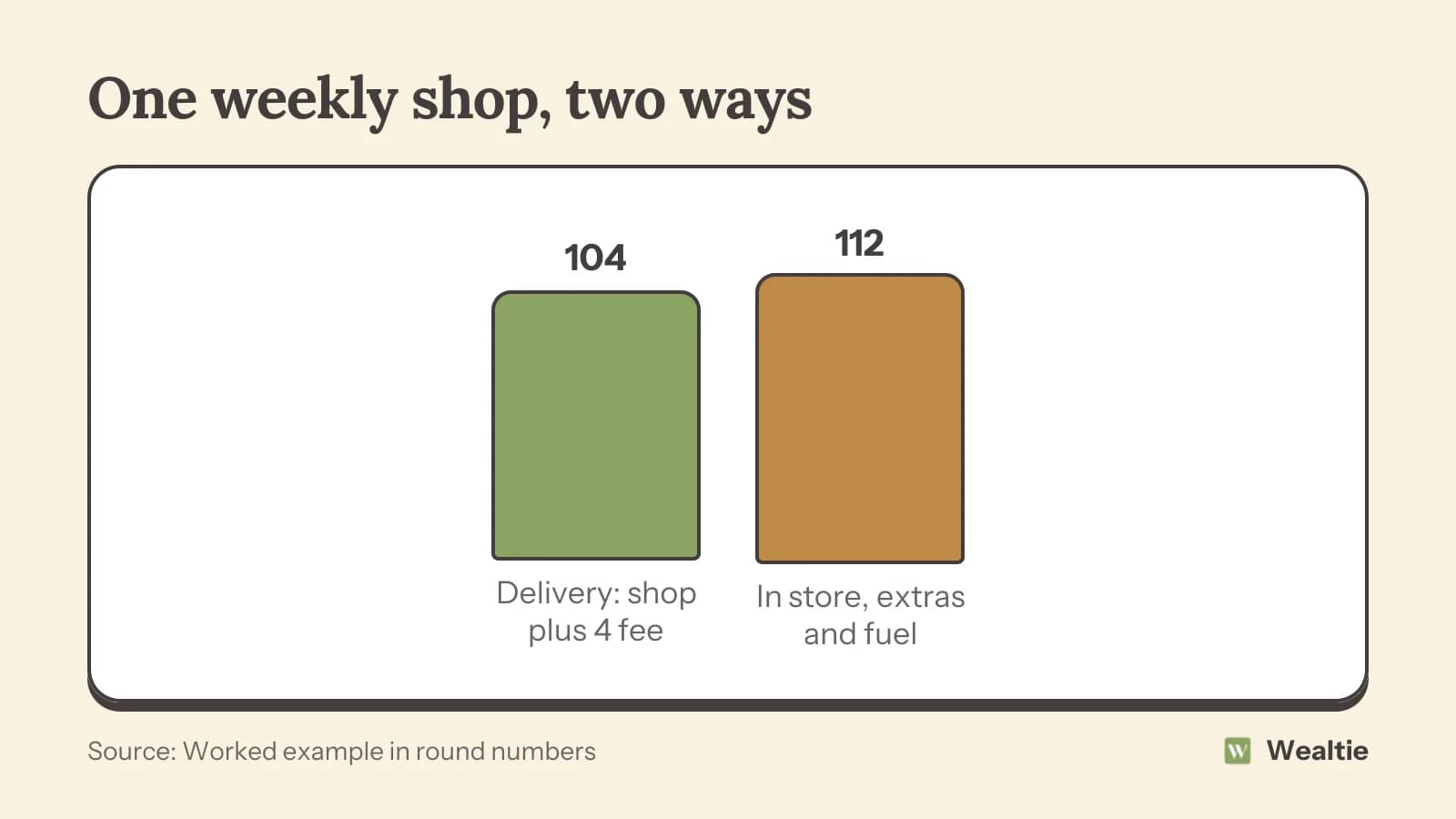
In store, 8 of unplanned extras and 4 of fuel take the total to 112. Delivery, with a 4 fee, comes to 104. Whether delivery wins for you depends on how disciplined you are in the shop, how far you travel and what delivery costs where you live.
Why can online shopping cost less?
You see the running total
The basket total updates as you add items, so you know exactly what you're spending before you pay. It's easy to remove things if the total is too high.
Fewer impulse buys
There are no end-of-aisle displays, no smell of fresh bread and no checkout snacks. You can still be tempted by offers online, but it's easier to stick to the list. How to stop impulse buying covers more ways to avoid unplanned spending.
No travel costs
Delivery saves fuel, parking or bus fares, which matters if your nearest supermarket is far away. Living without a car covers how delivery fits a car-free life.
Saved lists and favourites
Reusing last week's order makes it quick to buy the same staples and easy to compare prices.
Easier price comparison
You can compare unit prices and switch to cheaper alternatives without walking around the shop.
When is shopping in store cheaper?
Reduced and yellow-sticker items
Shops often reduce fresh food near its date, especially late in the day. You'll only find these in store.
Choosing fresh produce
Picking your own fruit, vegetables and meat lets you choose the best value and the right amount.
Discount supermarkets
Some low-cost supermarkets don't offer delivery, and shopping there in person can beat online prices elsewhere.
Substitutions
Online orders sometimes include substitutions that cost more or aren't what you wanted. You can usually reject them, but it's worth checking at the door.
How do you keep delivery costs down?
Use a delivery pass
If you order often, a monthly delivery pass can cost less than paying for each delivery. In the example, a pass at 7 a month is cheaper than four deliveries at 4 each.
Choose cheaper slots
Off-peak slots, like weekday mornings, are often cheaper or free.
Try click-and-collect
Ordering online and collecting from the store is often free, combining the list discipline of online shopping with no delivery fee.
Meet the minimum without padding
If there's a minimum order, plan a bigger, less frequent shop rather than adding things you don't need.
How do you shop in store without overspending?
Take a list and stick to it, eat before you go, set a budget and leave the trolley at home if you only need a few things. Shopping less often also helps, since each trip is a chance to spend more. How to save money on groceries covers more ways to cut the bill, and how to plan meals on a budget helps you write a list that covers the week.
How do you decide which works for you?
Try both for a month and compare. Keep receipts or order confirmations, add delivery fees or travel costs, and see which total is lower for the same kind of shopping. Many households end up mixing the two: a weekly online shop for staples and a quick in-store trip for fresh food and reduced items.
Time matters too. A trip to the supermarket can take an hour or more once you count travel, parking, queues and unpacking. If delivery frees that time for work, rest or family, it may be worth a small fee even if the totals are close. On the other hand, some people enjoy browsing in store and find it a useful chance to spot new products or seasonal deals.
Whichever you choose, the biggest saving comes from planning. A clear list based on a meal plan, checked against what's already in your cupboards, cuts waste and impulse buys in any shop.
How can Wealtie help you compare?
Log each shop in a groceries expense category, and add delivery fees or a delivery pass as part of the cost. Setting a monthly budget for groceries shows which way of shopping keeps you closer to it.
Questions people ask
Not always. In a worked example, delivery cost 104 including the fee, while an in-store trip cost 112 with impulse buys and fuel.
You see the running total, avoid impulse buys, save on travel and can compare unit prices easily.
Use a delivery pass if you order often, choose cheaper off-peak slots or use free click-and-collect.
In-store shopping can be cheaper for reduced items near their date, discount supermarkets and picking exactly the fresh produce you want.
This article is general information, not financial, tax or legal advice. Your situation is your own; check the numbers that apply to you before you act on them.