Budgeting: Price anchoring: how shops make prices look like bargains
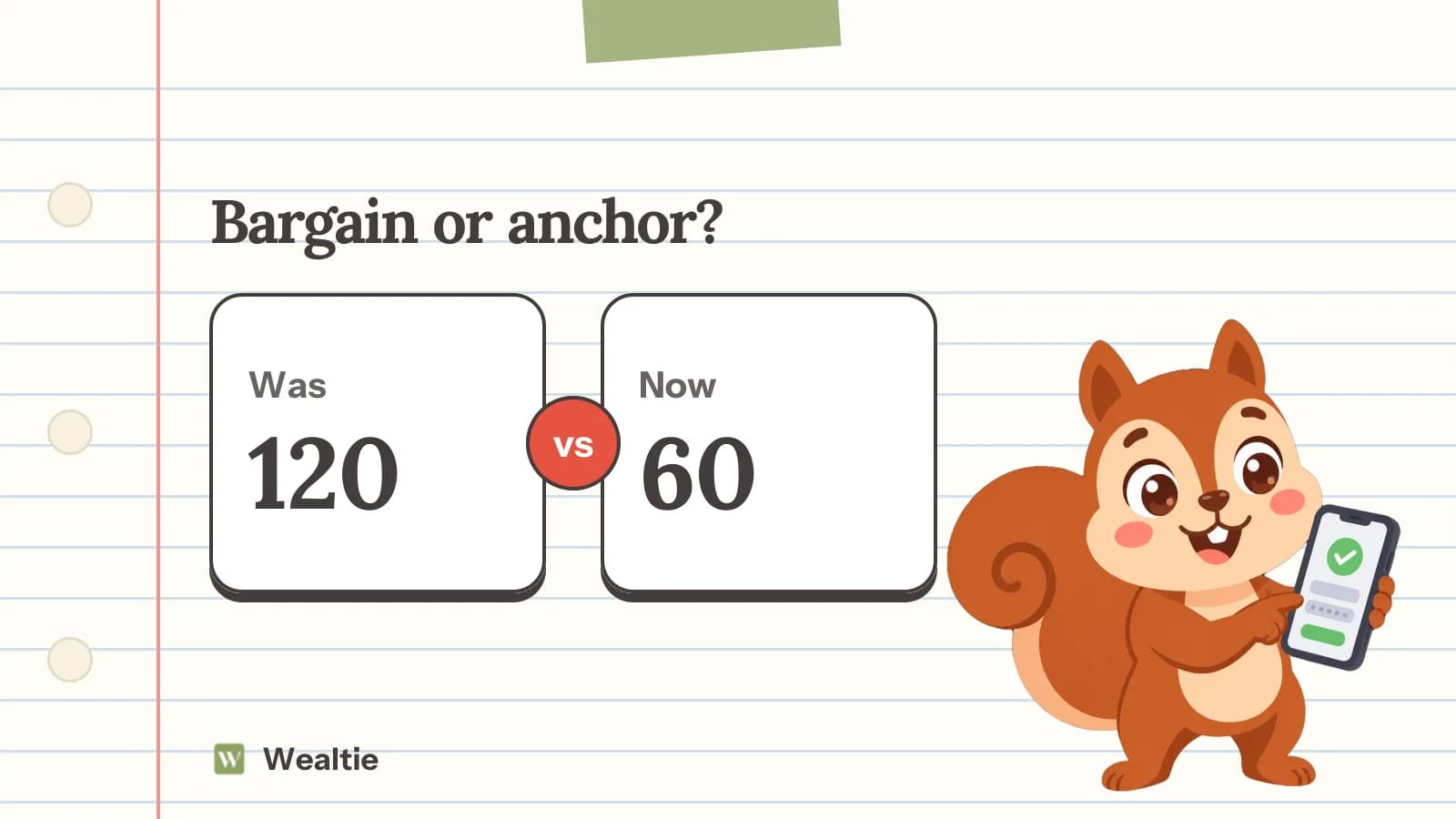
Price anchoring is when a first price you see, like a "was" price or an expensive option, shapes how cheap other prices feel. In a worked example, a jacket "reduced from 120 to 60" feels like a bargain, but if you'd only ever have paid 40, it's 20 more than you meant to spend.
 By Wealtie Team · 3 min read
Key takeaways
- Price anchoring is when a first price you see shapes how cheap other prices feel.
- "Was" prices, premium options and decoys are common anchors.
- Decide what something is worth to you before you look at prices.
- Compare with what you'd normally pay, not with the anchor.
What is price anchoring?
Price anchoring is the way the first price you see shapes how you judge other prices. Once a number is in your head, other prices are compared with it. If the first price is high, everything after it feels cheaper, even if it isn't good value. Shops, restaurants and websites use anchors, sometimes on purpose, to make spending feel like saving.
Knowing how it works helps you see prices more clearly and make your own choices. It's not about avoiding sales, but about knowing whether a deal is good for you.
What are common examples?
You'll see anchoring in many places:
- "Was" prices: a jacket "reduced from 120 to 60" feels like half price, but the 120 may rarely have been charged.
- Premium options first: seeing a very expensive item first makes the mid-range one feel reasonable.
- Decoy options: a choice placed to make another look like better value.
- Subscription tiers: a top plan that makes the middle plan seem like a bargain.
- Restaurant menus: one very expensive dish that makes others look modest.
In the jacket example, if you'd only ever have paid 40 for that jacket, buying it at 60 means spending 20 more than you meant to, even though it felt like saving 60.
How does a decoy work?
Here's a worked example of drink sizes at a café, in round numbers that work in any currency:
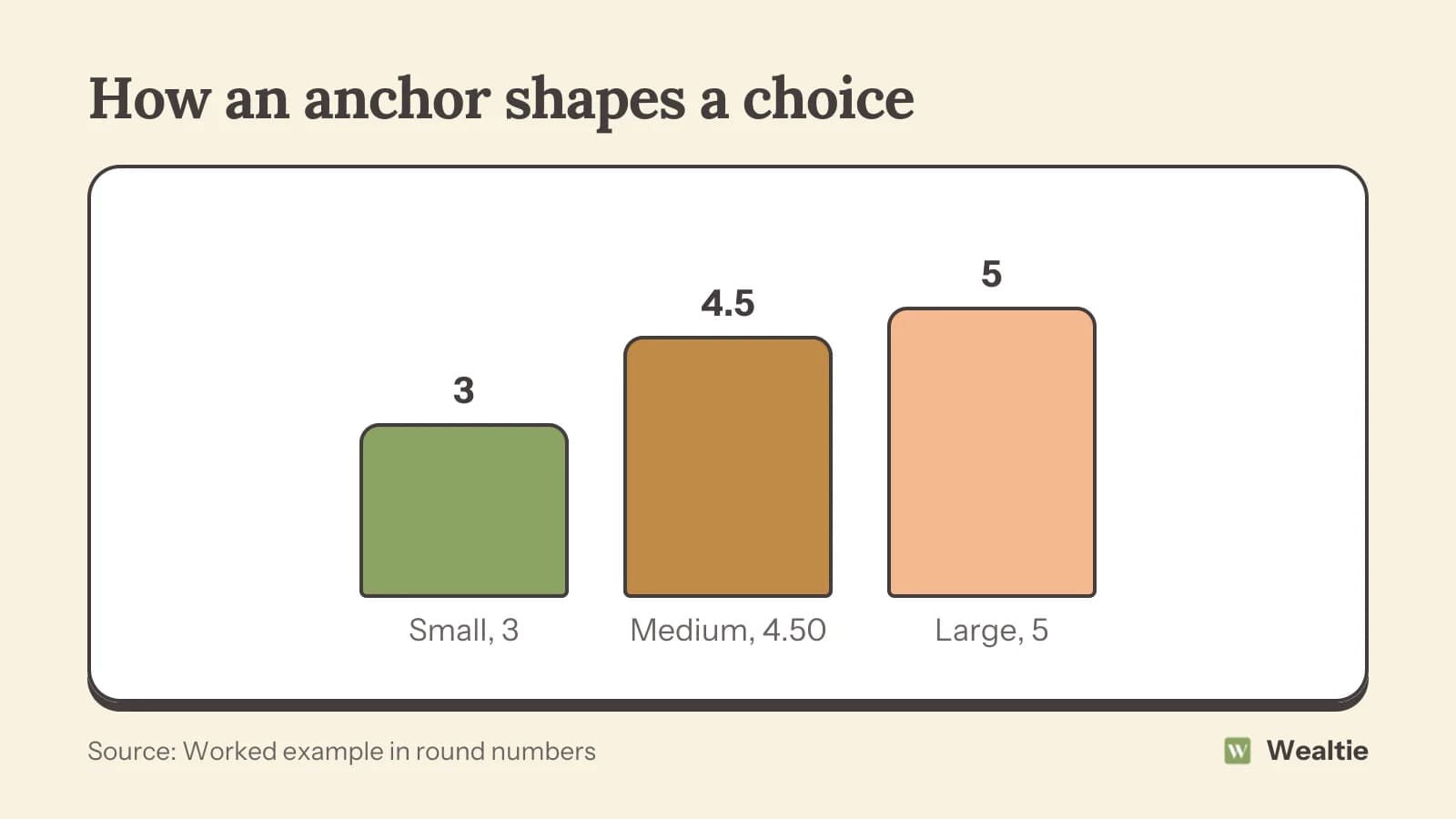
The medium at 4.50 is only a little cheaper than the large at 5, which makes the large look like great value. Many people choose the large, even if a small would have done. The same pattern appears in cinema snacks, phone plans and software subscriptions. The medium's main job is to push people towards the large.
Why does anchoring work?
Because judging value is hard. Without a reference point, we struggle to know whether a price is fair, so we use whatever number is in front of us. A high anchor feels like useful information, even when it's set by the seller. Time pressure, like a sale ending soon, makes it harder to step back and think. Even knowing about anchoring doesn't make you immune, which is why simple habits help more than willpower.
How do you avoid being anchored?
A few habits help:
- Decide what it's worth first. Before you look at prices, ask how much you'd be happy to pay.
- Compare with what you'd normally pay, not with the "was" price.
- Check price history. Some tools show whether a sale price is lower than usual.
- Ignore the most expensive option when comparing; ask which option meets your needs.
- Wait before buying. A day's pause lets the anchor fade.
How to stop impulse buying covers more ways to pause before spending. Keeping a short list of things you plan to buy, with the price you're willing to pay, makes sales easier to navigate.
Think in cost per use
Asking how often you'll use something, and dividing the price by that, gives you a value measure that no anchor can change. Cost per use explains how.
Anchors in your own head
Anchors aren't only set by shops. What you paid last time, what a friend spent or what something cost years ago can all shape how you judge a price. Being aware of these personal anchors helps you decide based on what something is worth to you now, rather than on a number that's stuck in your mind.
When do anchors matter most?
During big sales, when buying expensive items like cars or furniture, and when choosing between subscription plans. Sales events are full of anchors, with "was" prices and countdown timers. The Black Friday budget has a plan for shopping big sales on purpose. For big purchases, comparing prices across several shops and over a few weeks shows the real going rate.
Can anchoring work for you?
Yes. You can set your own anchors, and they're often the simplest defence against the shop's ones. Deciding a firm budget before shopping, or writing down what you'd pay for each item on your list, gives you a reference point that's yours, not the shop's. When you negotiate, starting with a clear figure can anchor the conversation in your favour. This works for salary negotiations, selling a car or haggling at a market.
How do you track spending in Wealtie?
Log purchases in your expense categories as you go, so you can see what you spend, not what you saved on paper. A monthly limit in the budget tracker acts as your own anchor: a number you set before any shop gets to set one for you.
Questions people ask
When the first price you see shapes how cheap or expensive other prices feel.
A jacket "reduced from 120 to 60" feels like a bargain, even if you'd only have paid 40.
An option placed to make another look like better value, like a medium drink priced close to the large.
Decide what something is worth before looking at prices, compare with what you'd normally pay and wait before buying.
This article is general information, not financial, tax or legal advice. Your situation is your own; check the numbers that apply to you before you act on them.