Saving: Does a vegetarian diet save money? The weekly sums
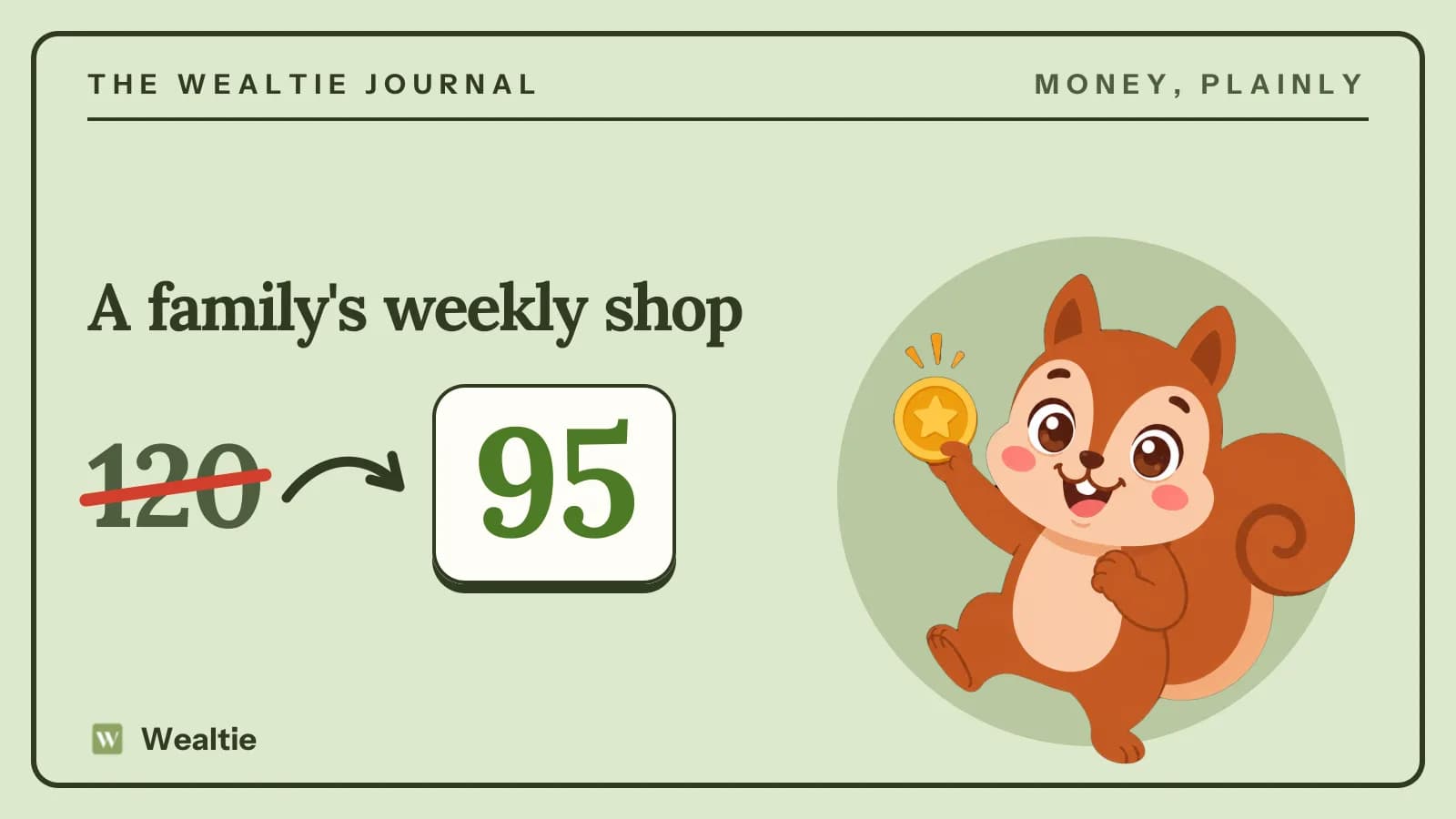
A vegetarian diet can save money if it's built on beans, lentils, eggs and seasonal vegetables rather than branded meat substitutes. In a worked example, a family's weekly shop drops from 120 to 95 by going meat-free.
 By Wealtie Team · 3 min read
Key takeaways
- A vegetarian diet can save money when it's based on whole foods.
- Beans, lentils, eggs and tofu are cheap sources of protein.
- Branded meat substitutes can cost as much as meat or more.
- Even a few meat-free days a week cut the grocery bill.
Does a vegetarian diet save money?
Meat and fish are often among the most expensive items in a shopping basket, so cutting them out can lower your grocery bill. But whether a vegetarian diet saves money depends on what you replace them with. Meals built on beans, lentils, eggs, rice, pasta and seasonal vegetables are usually cheap. Meals built on branded meat substitutes, specialty cheeses and ready meals can cost as much as meat or more.
Here's a worked example of a weekly shop for a family of four, in round numbers that work in any currency:
| Weekly shop | Cost |
|---|---|
| With meat most days | 120 |
| Vegetarian, mostly whole foods | 95 |
| Vegetarian, lots of substitutes | 125 |
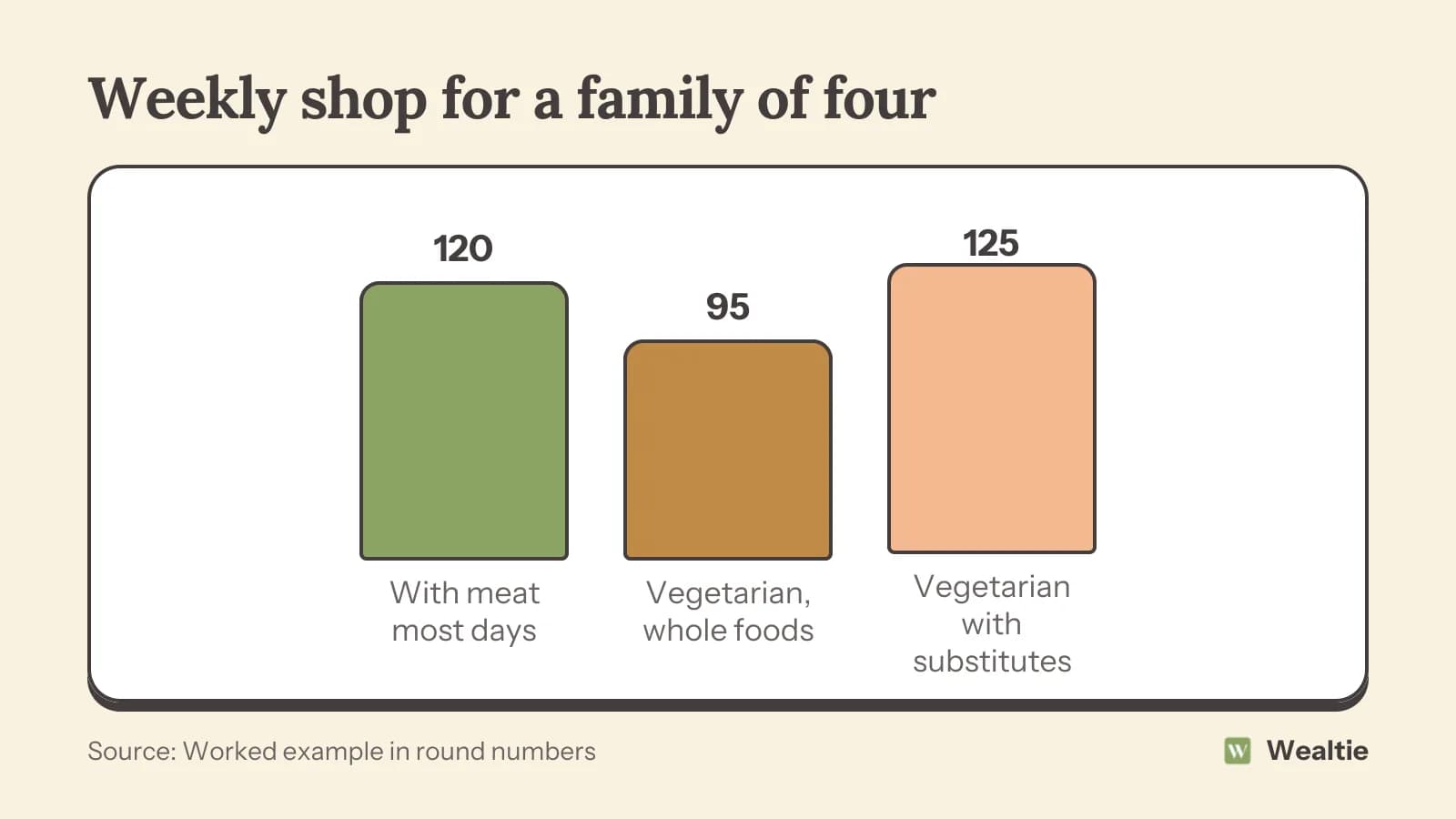
Going vegetarian with whole foods saves 25 a week, or about 1,300 a year. Swapping meat for a trolley of substitutes and ready meals saves nothing and costs a little more. The savings come from how you cook, not just from leaving out meat.
Which plant proteins are cheapest?
Dried beans and lentils
Dried beans, chickpeas and lentils are among the cheapest proteins you can buy, especially in larger bags. Lentils cook quickly with no soaking.
Tinned beans
Tinned beans cost a little more than dried but are ready to use. Own-brand tins are usually very cheap.
Eggs
Eggs are versatile, quick and affordable, and work for breakfast, lunch and dinner.
Tofu
Plain tofu is often good value per portion and takes on the flavour of whatever you cook it with.
Peanut butter, nuts and seeds
These add protein and are cheaper bought in larger packs. Peanuts and sunflower seeds are usually the cheapest.
Dairy
Milk, yoghurt and cheese add protein. Buying cheese in blocks and grating it yourself costs less than pre-grated.
Where can a vegetarian diet cost more?
Meat substitutes
Branded burgers, sausages and mince alternatives are convenient but often expensive per portion. Use them as an occasional treat rather than a daily swap.
Specialty ingredients
Some recipes call for expensive ingredients like specialty cheeses, unusual grains or imported produce. Simpler recipes using common ingredients cost less.
Ready meals and snacks
Vegetarian ready meals and snack bars are priced for convenience. Cooking in batches is cheaper.
Do you have to go fully vegetarian?
No. Many people save money by eating meat less often rather than giving it up. Swapping meat for beans or lentils on three days a week might save around 10 a week in the example, or about 520 a year. You can also stretch meat further by mixing lentils or beans into mince dishes, like chilli and bolognese, which keeps the flavour while using less meat.
How do you plan cheap vegetarian meals?
Build meals around staples
Rice, pasta, potatoes, oats and bread are cheap and filling. Add beans, lentils or eggs and vegetables for complete meals.
Cook in batches
Soups, stews, curries and chilli freeze well and cost little per portion. How to plan meals on a budget covers planning a week of meals.
Buy seasonal and frozen vegetables
Seasonal produce is cheaper and tastier, and frozen vegetables are often as nutritious as fresh and don't go to waste. How to reduce food waste and save money covers using what you buy.
Use herbs and spices
A few spices make simple ingredients taste great. Buying them in larger bags from world food aisles is usually cheaper than small jars.
How do you check whether it's saving money?
Compare your grocery spending for a month before and after changing your diet. If it hasn't gone down, look at what's in your basket: substitutes, snacks and ready meals are the usual reasons. How much should you spend on groceries? covers setting a target for your household.
If you're trying a vegetarian diet for the first time, start with a few dishes you already know and like, such as vegetable curry, bean chilli or a pasta bake. Learning three or four cheap, reliable meals makes it easier to stick with than trying lots of new recipes at once. Over time, you can add more dishes and find the ones your household enjoys most.
Shopping in world food aisles and specialist shops can also save money. Large bags of lentils, chickpeas, rice and spices are often much cheaper there than in the standard aisles of a supermarket, and they last for months.
Think about breakfasts and lunches too, not only dinners. Porridge, eggs, beans on toast and leftover curry are cheap, filling and meat-free, and they make a bigger difference to the weekly bill than many people expect.
How can Wealtie help you track food costs?
Log your grocery shopping in a food expense category and set a monthly budget for it. Comparing a few months before and after a change in diet shows exactly how much it saves.
Questions people ask
It can. In a worked example, a family's weekly shop dropped from 120 to 95 with a vegetarian diet based on whole foods.
Dried beans, lentils, chickpeas, eggs, tofu, peanut butter and own-brand tinned beans are among the cheapest.
Branded meat substitutes often cost as much as meat or more per portion, so they're best as an occasional swap.
Yes. Swapping meat for beans or lentils a few days a week cut a family's shop by about 10 a week in a worked example.
This article is general information, not financial, tax or legal advice. Your situation is your own; check the numbers that apply to you before you act on them.