Saving: How to save money on nappies, wipes and baby basics
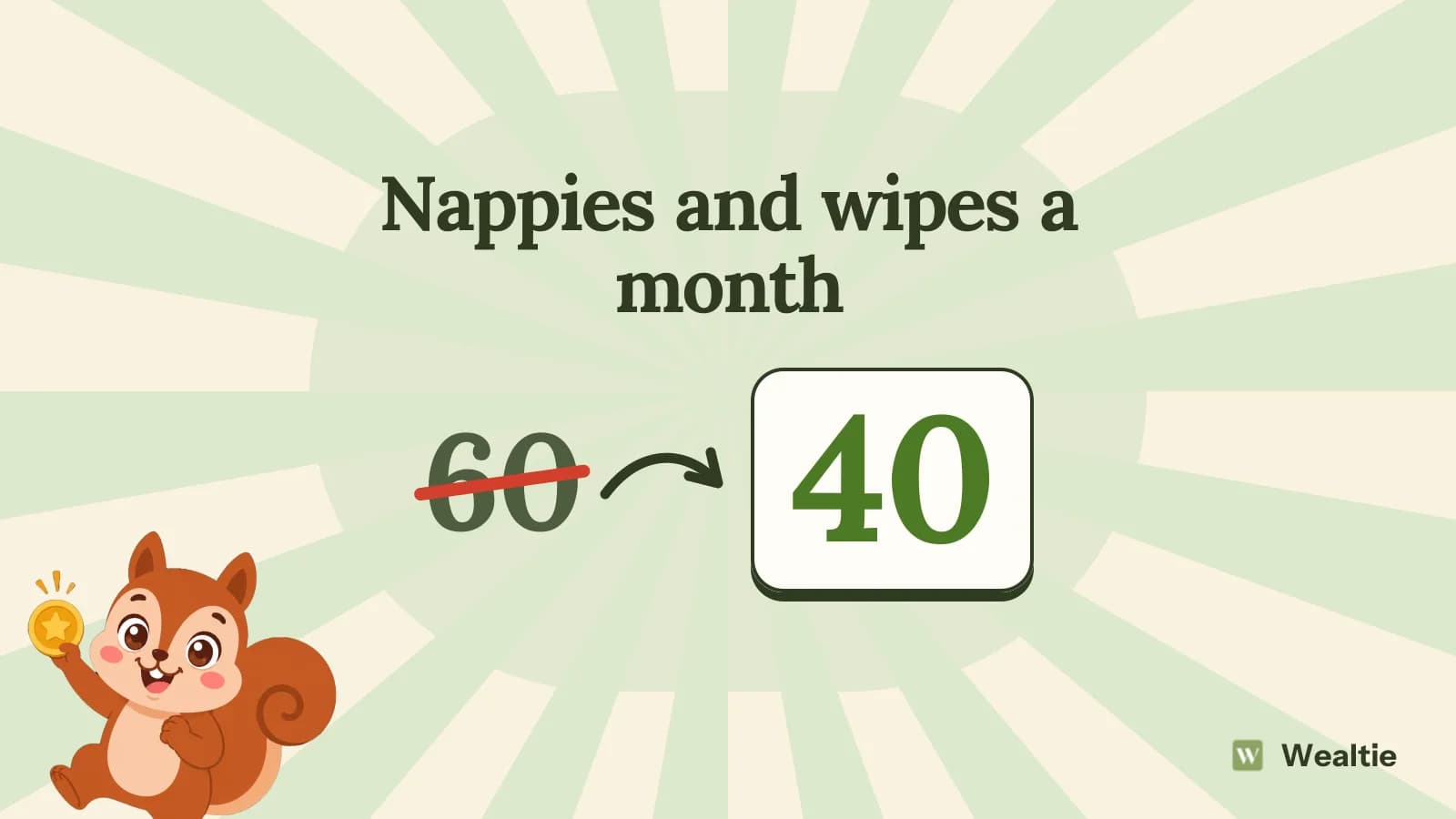
To save money on nappies, wipes and baby basics, compare price per item rather than per pack, buy larger packs once you know the size fits, and try own-brand or reusable options. In a worked example, these changes cut a monthly bill from 60 to 40, saving 240 a year.
 By Wealtie Team · 3 min read
Key takeaways
- To save money on nappies, compare price per nappy and buy larger packs once the size fits.
- In a worked example, switching to own-brand larger packs cuts the monthly bill from 60 to 40.
- Reusable nappies cost more upfront but can save a lot over time.
- Avoid stockpiling sizes your baby will soon grow out of.
How do you save money on nappies and baby basics?
Compare prices properly, buy the right amounts and be open to own-brand and reusable options. Nappies, wipes, cream and other baby basics are bought constantly in the first years, so even small savings add up over time. Many parents stick with the first brand they tried, but switching, or buying differently, can save a noticeable amount without any loss of quality.
Every baby is different, so what works for one family may not suit another. A little trial and error helps you find the best value for yours. Keeping a note of what you spend for a month gives you a starting point to compare against.
How much can you save?
Here's a worked example of a month of nappies and wipes, in round numbers that work in any currency:
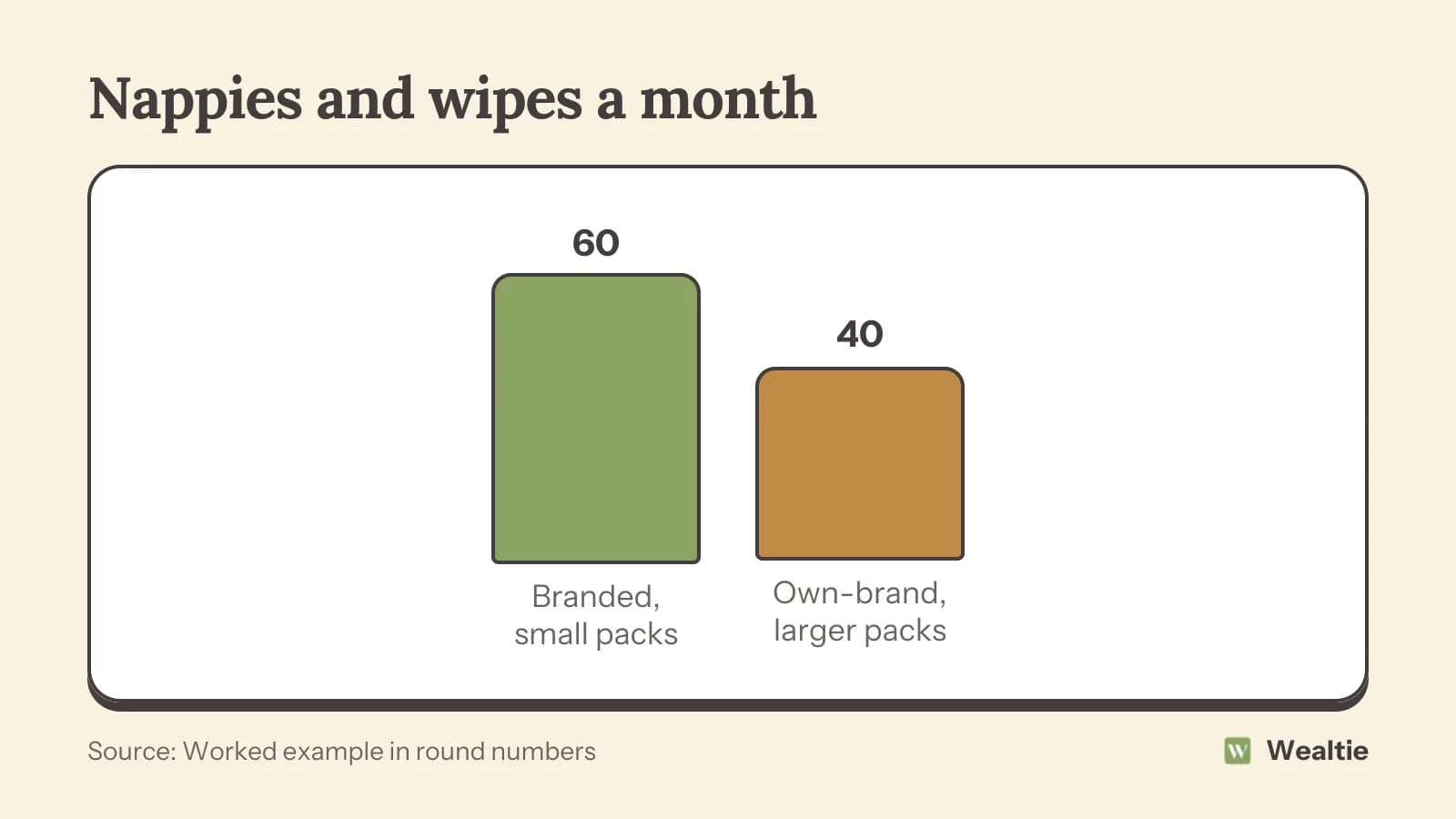
In this example, switching from small packs of a branded nappy to larger packs of an own-brand one cuts the bill from 60 to 40 a month, saving 240 a year. Your own savings depend on what you use now and how many nappies your baby gets through.
How do you compare nappy prices?
Look at the price per nappy, not per pack. Pack sizes and prices vary a lot, and a bigger pack isn't always cheaper per nappy. Divide the price by the number in the pack, or check the unit price on the shelf label. Do the same for wipes, cream and other basics.
Try own-brand
Supermarket and pharmacy own-brand nappies are often much cheaper and work well for many babies. Try a small pack first to check the fit and how well they hold. If they work, the saving each month can be significant.
Should you buy in bulk?
Yes, once you know the size fits, but carefully. Babies move up sizes quickly in the first months, so stocking up on small sizes can leave you with packs you can't use. Buy bulk packs of the current size, and only a little of the next. Some shops let you exchange unopened packs for a different size, so keep receipts.
Splitting a bulk pack with a friend whose baby is the same size is another option.
Are reusable nappies cheaper?
Often, over time. Reusable cloth nappies cost more upfront, perhaps 300 for a full kit in a worked example, but you don't keep buying them. If disposables would cost several hundred a year, reusables can pay for themselves within the first year, and even more if used for a second child. Washing adds a little to energy and water bills, and drying on a line or rack keeps that cost low.
Many families use a mix: reusables at home and disposables for outings or nights. Second-hand reusable nappies are widely available and can be cleaned thoroughly. How to buy second-hand has tips.
Reusable wipes
Washable cloth wipes with water are a simple, cheap alternative to disposable wipes, especially at home. They can be washed with reusable nappies.
How do you save on other baby basics?
Many baby products are optional. A newborn mainly needs nappies, wipes or cloths, a gentle cream and basic toiletries. Specialist baby washes, lotions and gadgets often aren't necessary, and plain water is enough for cleaning a newborn's skin in many cases. Ask your health visitor or midwife what your baby needs.
Buying baby basics alongside your normal shop, rather than in special trips, helps you notice offers and avoid impulse buys. How to save money on household essentials has more ideas.
Subscriptions and loyalty schemes
Some retailers offer discounts on regular nappy deliveries or baby clubs with vouchers. These can save money if the price is good and the delivery schedule matches how fast you use them. Check the per-nappy price against supermarket own-brand, since a subscription discount on an expensive brand can still cost more.
How do you budget for baby basics?
Treat them as a regular monthly cost. Work out what you spend in a typical month, and set a limit. As your baby grows and moves to fewer, bigger nappies, and eventually out of nappies altogether, the cost changes. How to budget for a baby covers the bigger picture of baby costs.
How do you track baby spending in Wealtie?
Give baby basics their own line in your expense categories, so you can see what nappies, wipes and toiletries cost each month. A monthly limit in the budget tracker helps keep it steady, and comparing months shows whether a switch is saving money.
Questions people ask
Compare price per nappy, try own-brand, buy larger packs once the size fits and consider reusables.
For many babies, yes. Try a small pack first to check the fit.
Often over time. They cost more upfront but can pay for themselves within the first year.
Only in the current size, since babies move up sizes quickly. Keep receipts in case you can exchange packs.
This article is general information, not financial, tax or legal advice. Your situation is your own; check the numbers that apply to you before you act on them.