Budgeting: Cost per use: a simple way to decide if something's worth buying
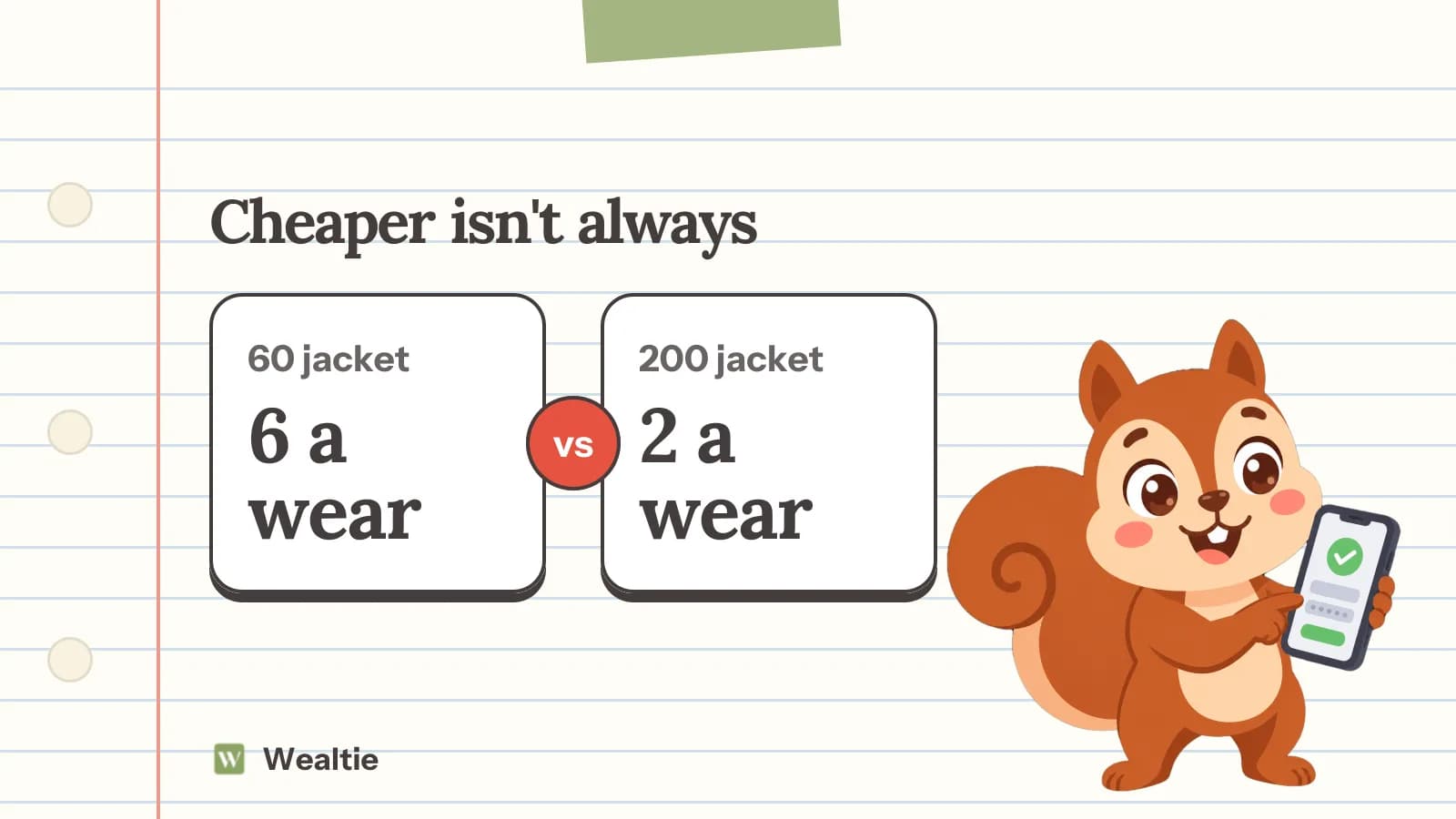
Cost per use is the price of something divided by how many times you'll use it. A 200 jacket worn 100 times costs 2 a wear, while a 60 one worn ten times costs 6, so the cheaper item can be the more expensive choice.
 By Wealtie Team · 3 min read
Key takeaways
- Cost per use is the price divided by the number of times you'll use something.
- A 200 jacket worn 100 times costs 2 a wear, against 6 for a 60 jacket worn ten times.
- A gym at 40 a month used four times costs 10 a visit, which you can compare with a class pass.
- The method only works if you're honest about how often you'll use it, and it doesn't make an unaffordable purchase affordable.
What is cost per use?
The price of something divided by how many times you'll use it. It's a way to compare a cheap item you'll barely use with a pricier one you'll use constantly. The number that matters is what each use costs you, not the price tag.
How do you work out cost per use?
Divide the price by your honest estimate of uses. In round numbers that work in any currency:
| Item | Price | Uses | Cost per use |
|---|---|---|---|
| Cheap jacket | 60 | 10 | 6 |
| Well-made jacket | 200 | 100 | 2 |
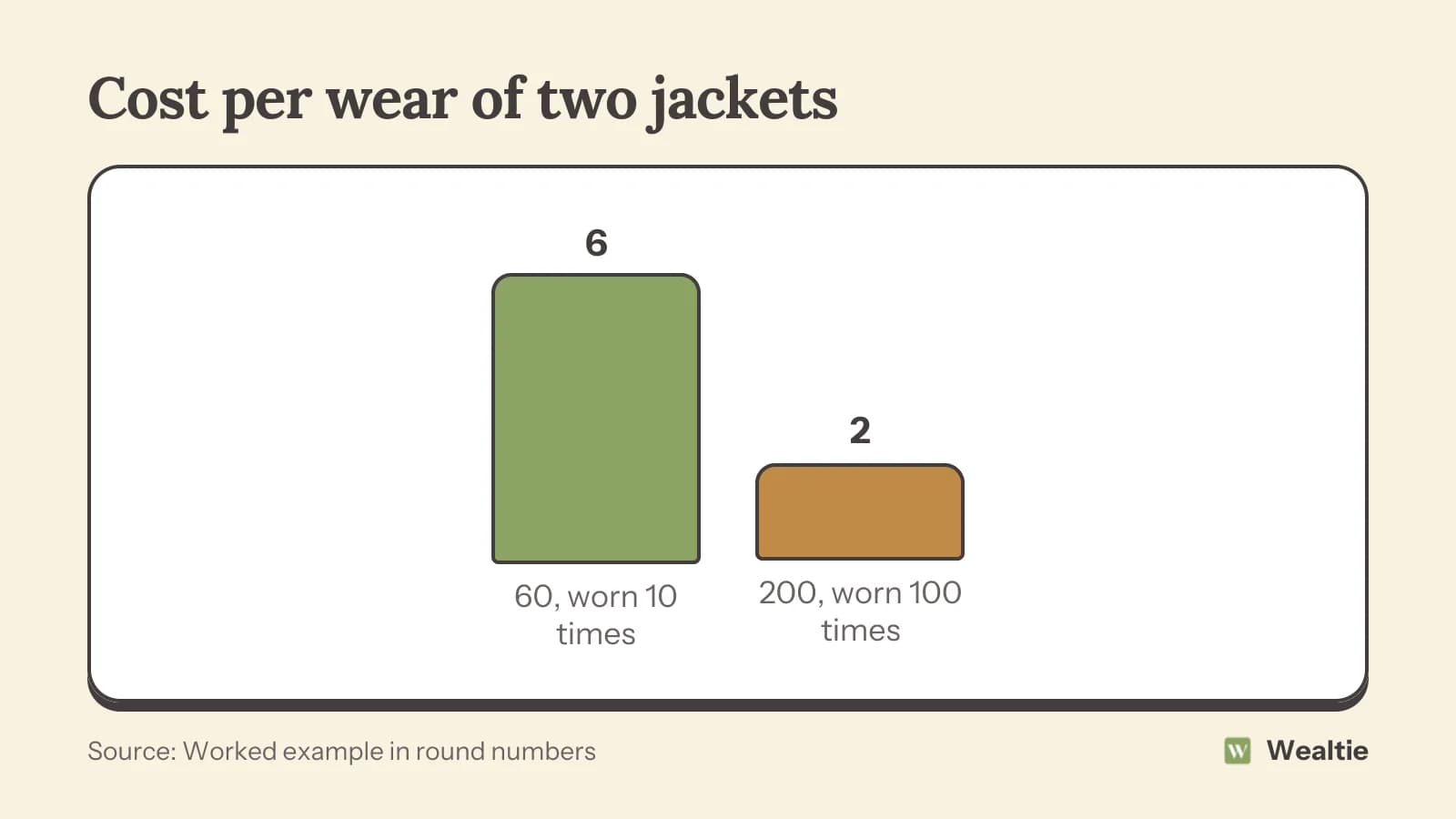
The cheaper jacket costs more per wear because it's worn far less, perhaps because it doesn't fit well or wears out fast. Over the years, buying a few cheap jackets that don't last can cost more than one good one.
Where does cost per use help most?
With things you use often and that last:
- Clothes and shoes you'll wear every week
- Kitchen tools and appliances you use daily
- A mattress, a desk chair, a good bag
- Memberships and subscriptions, where the "uses" are visits or logins
Children's things are a special case. They're outgrown quickly, so cost per use usually favours second-hand.
It's useful for subscriptions in particular. A gym at 40 a month used four times costs 10 a visit. If a class pass costs 12 a visit, the membership wins. Used twice, it's 20 a visit, and the pass would be cheaper. Used eight times, it's 5. How to cut subscription costs applies the same idea.
How does it work for bigger purchases?
Spread the price over the time you'll have it. A phone that costs 900 and lasts three years is 25 a month. A cheaper one at 400 that lasts two years is about 17. The pricier phone costs more per month, so it's worth it only if the extra year or features matter to you.
Repairs count too. If a cheaper item needs fixing, add that to its price before you divide. For things that keep some resale value, take that off first. A bike bought for 600 and sold for 200 three years later cost 400 to use.
Where does cost per use mislead?
When the estimate of uses is wishful. Everyone's planned to use the expensive running shoes, the bread maker or the language course every day. If you're not sure, look at how often you've used something similar in the past.
It can also justify spending you can't afford. A 1,000 coat might work out at 1 a wear over ten years, but if 1,000 isn't in your budget, cost per use doesn't change that. Use it to choose between options you can afford, not to talk yourself into something you can't.
It leaves out enjoyment and convenience as well. Something you use rarely might still be worth it, like a good suit for interviews, and the method just makes the trade-off visible. And it ignores the price of storing or maintaining something. A car, a boat or a big piece of equipment costs money even when it isn't used.
How do you use it before buying?
Ask three questions:
- How often will I use this, honestly?
- How long will it last?
- Can I afford the full price without borrowing?
If the answers are "often", "years" and "yes", a higher price can be good value. If you already own something that does the job, its cost per use for the next year is zero, which is hard to beat. If the first answer's vague, wait. A 48-hour waiting period on non-essential purchases helps here.
How do you check it afterwards?
Keep a note of a few bigger purchases and count the uses for a few months. It's a useful reality check, and it only takes a tally mark in a note each time you use something. You'll learn which kinds of things you use and which ones sit in a cupboard, and the next purchase gets easier.
Selling things you don't use returns part of the price, which lowers what they cost you. For subscriptions, check usage before each renewal. If you didn't open it last month, the cost per use was the whole monthly fee.
How do you see what you're spending on in Wealtie?
Log purchases in expense categories that match how you think about them, like Clothes or Subscriptions. At the end of a few months, you'll see what each category costs, which is the starting point for asking whether you're getting the use out of it. The expense tracker covers logging.
Questions people ask
Divide the price by the number of times you'll use the item. A 200 jacket worn 100 times costs 2 a wear.
Often, for things you use frequently and that last, because the cost per use can be lower. It only works if you'll use it as much as you expect and can afford the price.
Divide the monthly fee by your visits. At 40 a month and four visits, that's 10 a visit, which you can compare with a pay-as-you-go option.
When you overestimate how much you'll use something, or when it's used to justify a purchase you can't afford.
This article is general information, not financial, tax or legal advice. Your situation is your own; check the numbers that apply to you before you act on them.