Saving: Eat seasonally and save money on fruit and veg
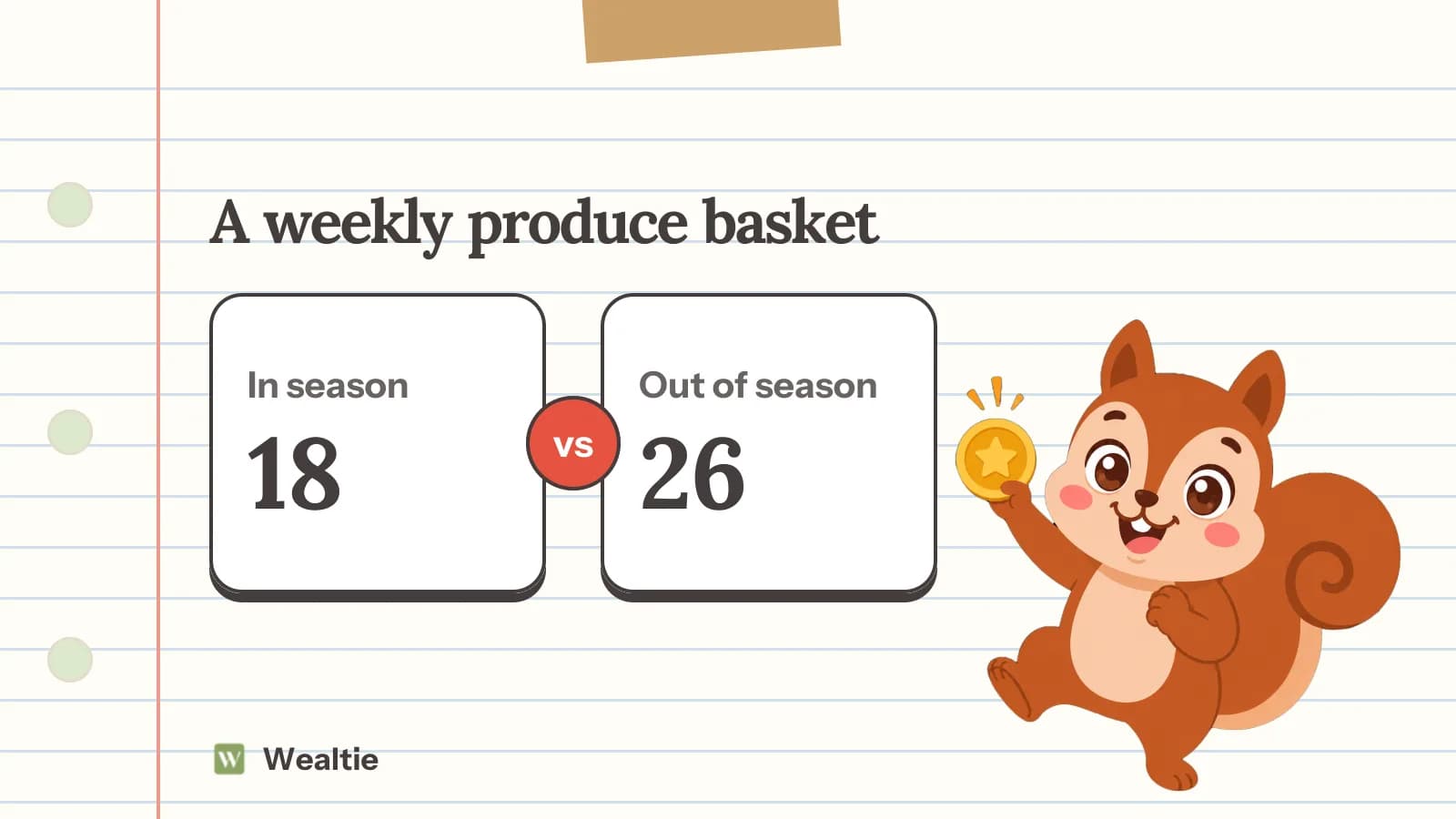
To eat seasonally and save money, build meals around fruit and vegetables at their peak, when they're plentiful and cheaper. In a worked example, a weekly produce basket costs 18 in season, against 26 out of season.
 By Wealtie Team · 3 min read
Key takeaways
- Eating seasonally saves money because in-season produce is plentiful and cheaper.
- Seasonal food often tastes better too.
- Frozen and tinned produce fill gaps when fresh options are pricey.
- Plan meals around what's cheap this month rather than fixed recipes.
Why does eating seasonally save money?
Fruit and vegetables have natural seasons when they grow best. When something is in season, there's plenty of it, it travels shorter distances and shops often sell it for less. Out of season, the same produce may be imported, grown in heated greenhouses or stored for months, which pushes the price up. That makes it possible to eat seasonally and save money, often with better-tasting food as a bonus.
Here's a worked example of a weekly basket of fruit and vegetables for a household, in round numbers that work in any currency:
| Weekly produce basket | Cost |
|---|---|
| In season | 18 |
| Out of season | 26 |
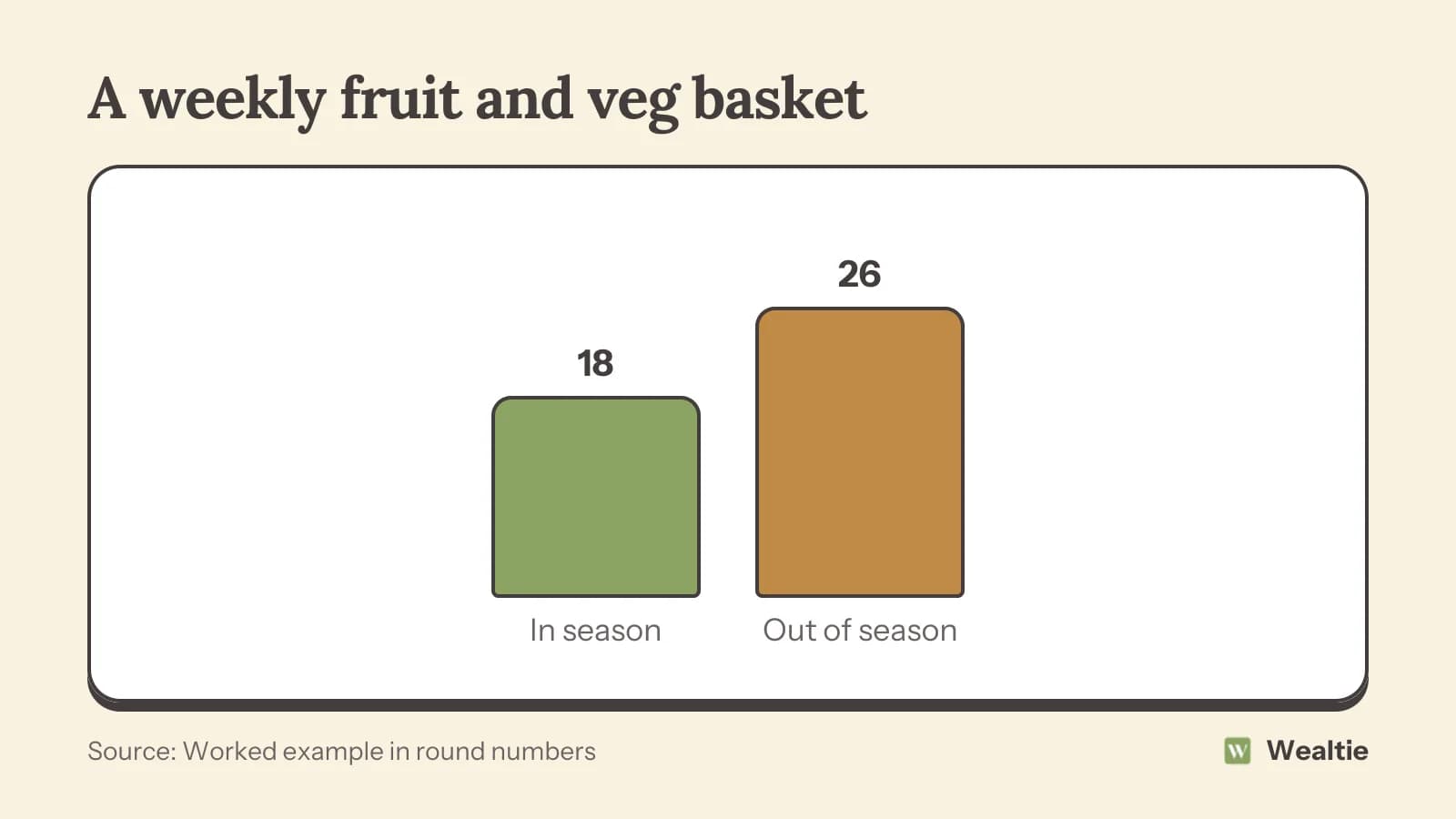
Choosing what's in season saves 8 a week, or about 416 a year, without eating less fruit and veg. The exact savings depend on where you live and what you buy, but the pattern holds in most places.
How do you eat seasonally and know what's in season?
Seasons depend on where you live, so a local guide is the best reference. As a general pattern in many temperate climates:
- Spring: asparagus, spring greens, radishes, rhubarb and new potatoes
- Summer: berries, tomatoes, courgettes, salad leaves, peas and stone fruit
- Autumn: apples, pears, squash, pumpkins, mushrooms and root vegetables
- Winter: cabbage, kale, leeks, carrots, parsnips and citrus fruit
Price is a good clue too. When a fruit or vegetable is suddenly cheap and piled high, it's usually in season. Local markets and farm shops make it obvious, since they mostly sell what's growing nearby.
How do you plan meals around the seasons?
Start with what's cheap
Look at what's on offer or plentiful before you plan the week's meals, rather than choosing recipes first and buying whatever they need.
Keep flexible recipes
Soups, stews, stir-fries, curries, salads and traybakes work with almost any vegetables, so you can use whatever's in season. How to plan meals on a budget covers building a weekly plan.
Cook in batches when produce is cheap
When tomatoes or squash are cheap, make big batches of sauce or soup and freeze them for later in the year.
Swap ingredients freely
If a recipe calls for something out of season and expensive, swap in a seasonal alternative, like kale instead of spinach or apples instead of berries.
What about out-of-season months?
Use frozen fruit and vegetables
Frozen produce is picked and frozen at its peak, often costs less than fresh out of season and lasts for months. Frozen berries, peas, spinach and mixed vegetables are good value all year.
Use tinned produce
Tinned tomatoes, sweetcorn, beans and fruit are cheap, long-lasting and useful in winter cooking.
Store seasonal produce
Apples, potatoes, onions, squash and root vegetables keep well for weeks if stored somewhere cool and dark.
Where can you buy seasonal produce cheaply?
Supermarkets
Supermarkets often discount seasonal produce when supply is high. Loose fruit and vegetables can be cheaper than packaged ones.
Markets
Local markets often sell seasonal produce at good prices, especially near closing time.
Wonky veg boxes
Some shops and schemes sell misshapen produce at lower prices. It tastes the same.
Growing your own
Even a few pots of herbs, salad leaves or tomatoes can save money in summer. How to save money on gardening covers growing on a budget.
How do you avoid waste?
Buying seasonal produce in bulk only saves money if you use it. Plan meals, freeze extras and use up what's in the fridge before buying more. How to reduce food waste and save money covers practical ways to waste less.
Eating seasonally can also make cooking more interesting. Each season brings different ingredients, so your meals change through the year instead of repeating the same dishes. Many people find they look forward to the first strawberries of summer or a warming squash soup in autumn, which makes cheaper food feel like a treat rather than a sacrifice.
It helps to learn a few go-to recipes for each season. A summer salad, an autumn soup, a winter stew and a spring stir-fry give you a starting point, and you can swap in whatever's cheapest that week. Writing them on a list on the fridge makes planning quick.
If you have children, involve them in choosing seasonal produce at the shop or market. It's a simple way to teach them about food and money at the same time, and they're often more willing to try vegetables they picked themselves.
How can Wealtie help you see the difference?
Log your food shopping in a groceries expense category and set a monthly budget. Over a few months, you'll see how your spending changes with the seasons and whether seasonal cooking keeps the bill down.
Questions people ask
Yes. In-season produce is plentiful and usually cheaper. In a worked example, a weekly basket cost 18 in season and 26 out of season.
Check a local seasonal guide, look for produce that's suddenly cheap and plentiful, and see what local markets and farm shops are selling.
Yes. Frozen fruit and vegetables are frozen at their peak, often cost less than fresh out of season and last for months.
Soups, stews, stir-fries, curries, salads and traybakes work with almost any vegetables, so you can use whatever is in season.
This article is general information, not financial, tax or legal advice. Your situation is your own; check the numbers that apply to you before you act on them.