Budgeting: What is lifestyle creep, and how do you stop it eating your raise?
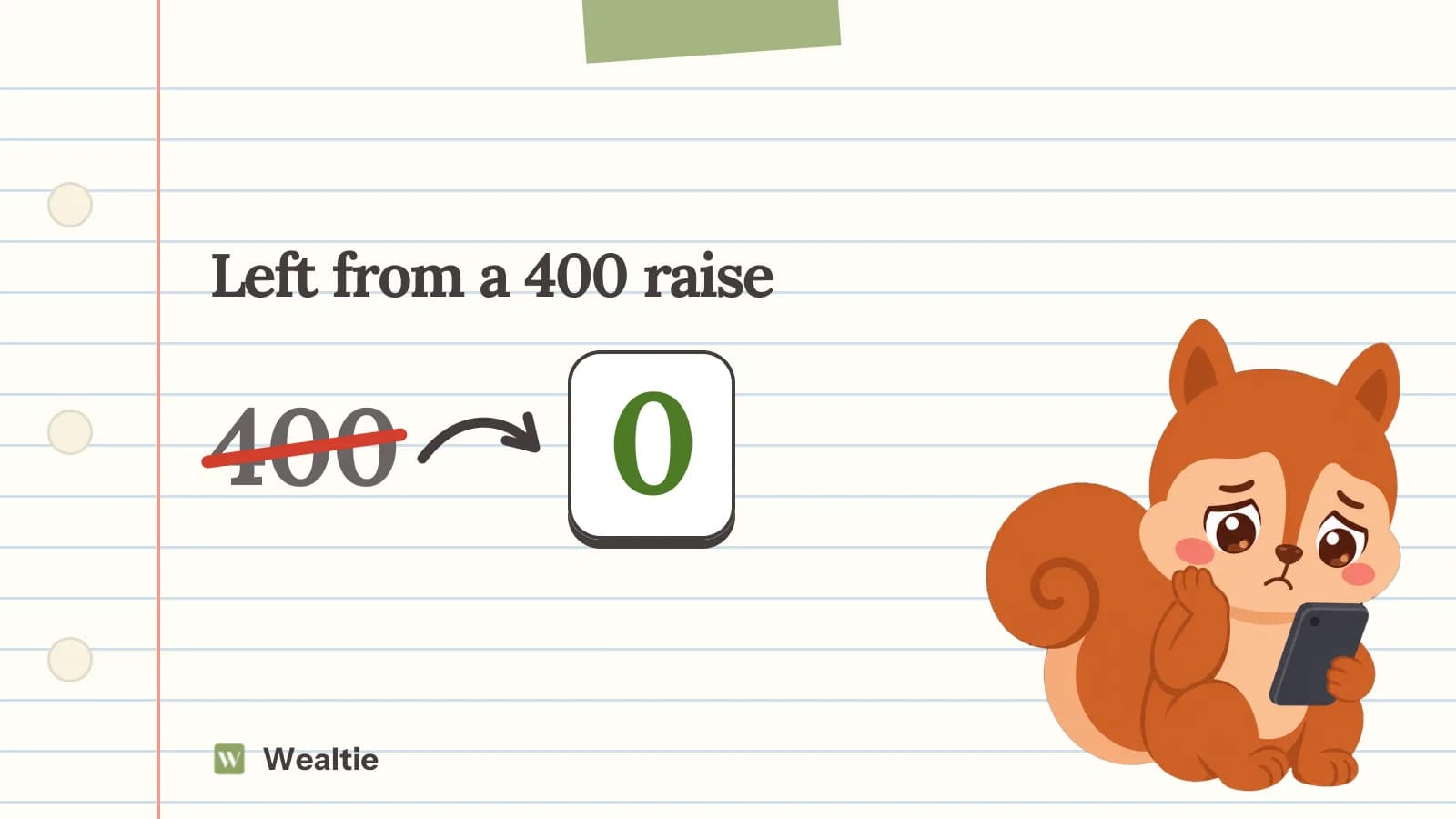
Lifestyle creep is when your spending rises to match your income, so a pay rise leaves you no better off. In a worked example, a 400 raise disappears into rent, a car payment and takeaways within a few months.
 By Wealtie Team · 3 min read
Key takeaways
- Lifestyle creep is spending rising alongside income until a raise leaves you with nothing extra.
- Fixed costs like rent and car payments are the hardest creep to undo, because they're locked in by contracts.
- Sending half of every raise to savings before you see it keeps spending growth slower than income.
- Comparing your savings rate year on year shows creep more clearly than looking at your spending.
What is lifestyle creep?
Spending that grows as income grows, until there's nothing extra left. Each change seems reasonable at the time, like a nicer flat after a promotion or a better car once you can afford the payment. Added up, they use the whole raise.
It's why people on very different salaries can all feel stretched at the end of the month.
How does lifestyle creep happen?
Slowly, a bit at a time. Here's a raise of 400 a month in take-home pay, in round numbers that work in any currency, followed for a year:
| Change | Extra a month |
|---|---|
| Moved to a bigger flat | 200 |
| Upgraded to a car on finance | 120 |
| More takeaways and dinners | 60 |
| A few more subscriptions | 20 |
| Total | 400 |
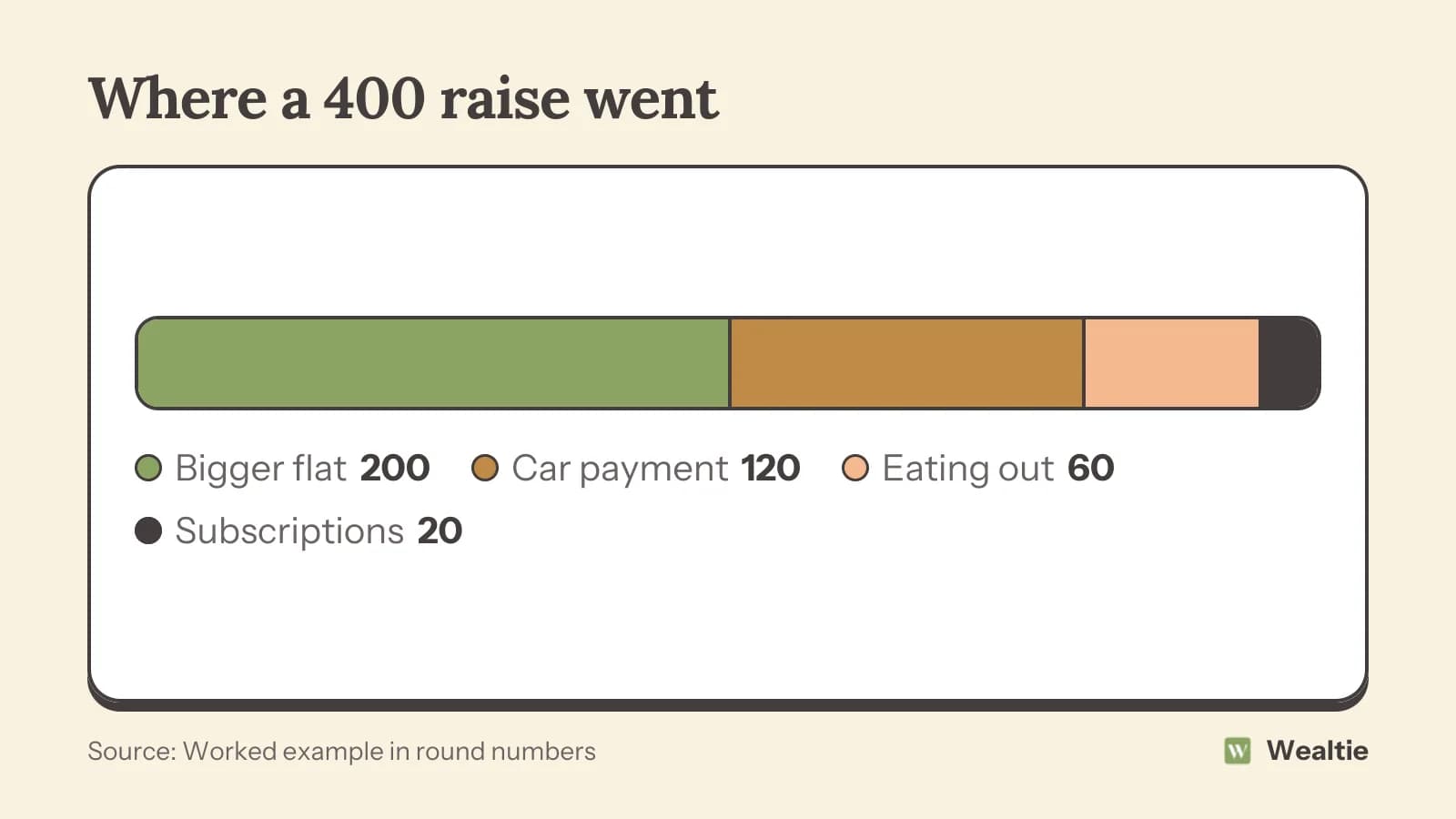
None of those is a bad choice by itself. The trouble is that the raise was spent before anyone decided to spend it, and the savings figure didn't move.
Which kind of creep is hardest to undo?
Fixed costs. Takeaways can stop next week. A lease, a car finance agreement or a long phone contract can't, and those are usually the largest amounts.
So before you sign anything that runs for a year or more, check what it does to your budget if your income fell back to what it was. If the answer's that you couldn't afford it, think twice. How much rent can I afford and how much car can I afford each have a test.
What are the signs?
Look for these:
- You earn more than two years ago and save the same amount, or less
- The account still runs low before payday
- More of your spending is on monthly commitments than it used to be
- You can't name what the last raise paid for
The first is the clearest. Spending going up is normal as life changes. Saving staying flat while income rises is lifestyle creep.
How do you stop it?
Decide where a raise goes before it arrives. The simplest rule: half of any increase goes to savings or debt, and the other half is yours to enjoy. With a 400 raise, that's 200 a month saved, or 2,400 a year, and you still get a noticeable improvement in what you can spend.
Set the transfer up for the first payday after the raise, before you've got used to the higher balance. What to do with a pay rise has more on the decision itself, and pay yourself first explains why moving money on payday works.
Make the upgrades you care about most, on purpose, and skip the ones you'd barely notice. A better flat might be worth it to you. Six more subscriptions probably aren't.
How do you reverse creep that's already happened?
Start with the costs you can change now, and plan for the ones you can't.
Go through a month of spending and mark each line as fixed or flexible. Cut the flexible ones that don't add much: subscriptions you rarely use, delivery fees, upgrades that stopped feeling special. How to cut subscription costs helps with those.
For fixed costs, put the end dates in your calendar. When a phone contract ends, switch to a cheaper plan. When a lease is up, decide whether the extra rent's worth it. When the car's paid off, keep making the same payment into savings for a while. Each of those can free up a large amount without feeling like a cut.
How do you measure it?
Compare your savings rate each year: what you saved divided by what you took home. If your income rose and the share you saved stayed the same or fell, creep is taking the difference.
Spending totals alone can mislead, because some rises are necessary, like a child or a move for work. The savings share answers the question you care about, which is whether you're getting ahead.
A year-end look is a good moment for this. The year-end money review includes it as one of the checks.
Is all lifestyle creep bad?
No. Earning more is supposed to make life better, and some spending is how it does. The aim is to choose the upgrades and keep saving growing too, so that your future self gets a share of every raise.
How do you spot creep in Wealtie?
Log your spending for a few months and compare the monthly totals. The spending analytics page shows month against month, and on Pro you can look across any period. Set a monthly limit in the budget tracker and leave it where it is after a raise, moving the extra to savings as a transfer, which isn't counted as spending.
Questions people ask
Lifestyle creep is when your spending rises along with your income, so a pay rise doesn't leave you better off. It often happens through gradual upgrades like a bigger flat or a new car.
Send at least half of every pay rise to savings or debt before you see it, and make upgrades by choice rather than by default. Check your savings rate each year.
Usually because fixed costs like rent, car payments and subscriptions rose with your income. Compare what you save now with what you saved when you earned less.
No. Some upgrades are what extra income is for. It becomes a problem when it uses up all of every raise and your savings stop growing.
This article is general information, not financial, tax or legal advice. Your situation is your own; check the numbers that apply to you before you act on them.



