Budgeting: How to cut subscription costs: a 30-minute audit and what to keep
To cut subscription costs, list every recurring charge from three months of statements, then decide for each one: keep, downgrade, pause or cancel. Rotating streaming services instead of paying for all of them at once, and switching the ones you keep to yearly billing, usually cuts the total without losing much.
 By Wealtie Team · 3 min read
Key takeaways
- Three months of bank and card statements show almost every subscription, including yearly ones if you check twelve months.
- Each subscription gets one of four decisions: keep, downgrade, pause or cancel.
- Rotating streaming services, one or two at a time, keeps most of the value at a fraction of the cost.
- Yearly billing is cheaper for services you'll use all year, and a trap for ones you won't.
- Free trials turn into charges by default; set a reminder for the day before they end when you sign up.
How do you cut subscription costs?
Find every recurring charge, then make one decision for each: keep, downgrade, pause or cancel. It takes about 30 minutes, and you only need to do it properly once a year.
Subscriptions are easy to start and easy to forget. Each one is small, so none of them feels worth thinking about. Together they're a monthly bill nobody approved, and many people find a few they'd forgotten about entirely.
Step 1: how do you find all your subscriptions?
Go through three months of bank and card statements line by line, and twelve months for anything billed yearly.
Look in these places too:
- Your phone's app store subscription settings, for app and in-app subscriptions.
- Payment apps and online wallets, which may be billing a card you don't use often.
- Your email, by searching for "receipt", "renewal" and "subscription".
Write each one down with its price, how often it's billed, and when you last used it.
Step 2: what do you decide for each one?
One of four things:
| Decision | When | Example |
|---|---|---|
| Keep | Used every week and worth the price | Music you listen to daily |
| Downgrade | Used, but not the top tier | Ad-supported streaming, a smaller storage plan |
| Pause | Used in some months, not others | A fitness app over the summer |
| Cancel | Not used in a month, a duplicate, or a forgotten trial | A second streaming service, an old news app |
Be honest about "I'll use it next month". If you didn't use it last month, cancel. You can always sign up again, often with a new-customer offer.
What does a subscription audit save?
Here's a worked example in round numbers, the same in any currency.
| Subscription | Before | After |
|---|---|---|
| Music streaming | 15 | 15 (keep) |
| Video streaming A | 12 | 12 (keep) |
| Video streaming B | 18 | 0 (cancel, rotate later) |
| Video streaming C | 11 | 0 (cancel) |
| Cloud storage, top tier | 10 | 3 (downgrade) |
| Cloud storage, second service | 3 | 0 (duplicate) |
| News app | 13 | 13 (keep) |
| Gym | 30 | 6 (switch to app-only plan) |
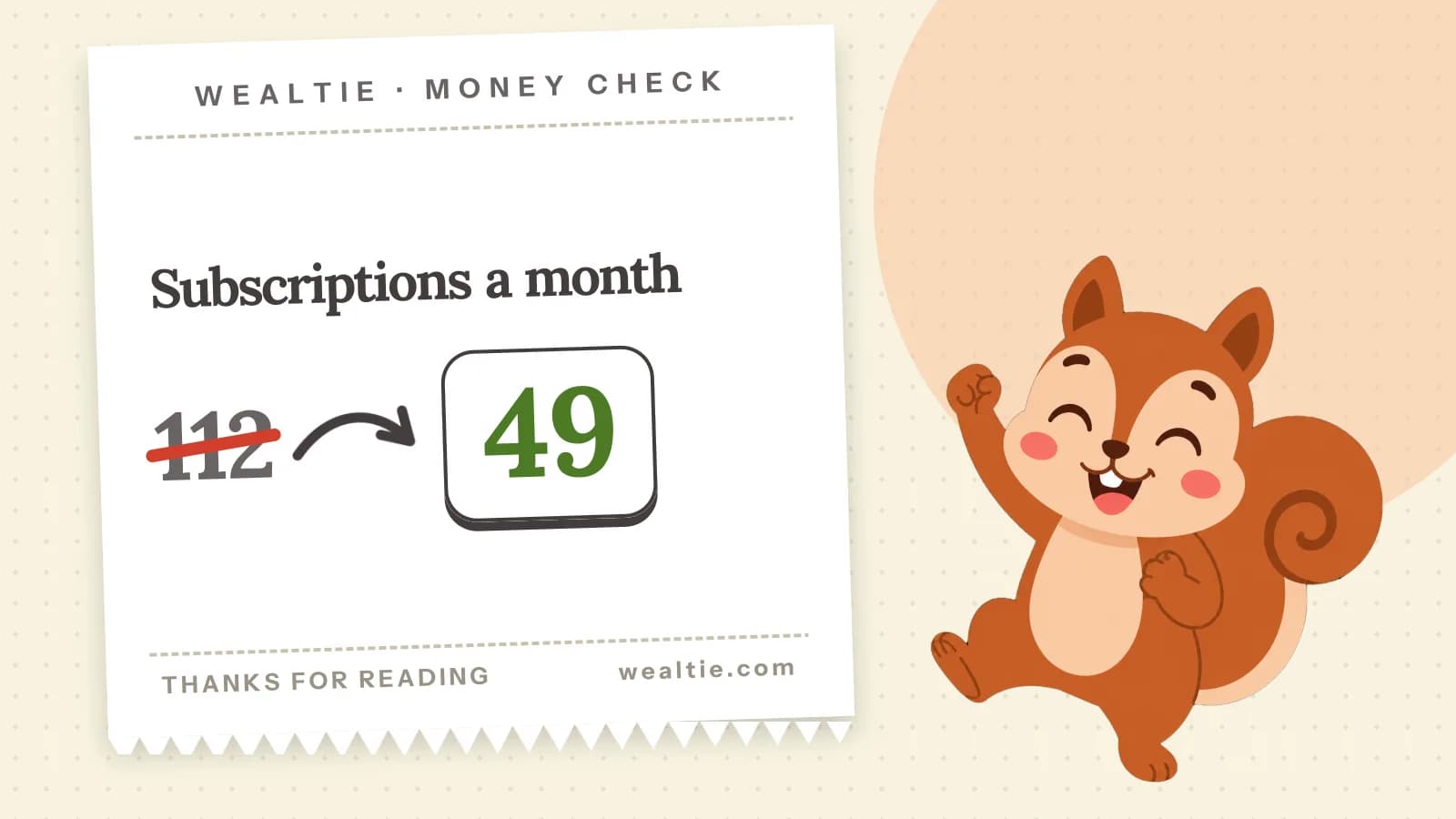
| Total per month | 112 | 49 |
That's 63 a month, or 756 a year, for an afternoon's work and very little given up.
How do you cancel a subscription that's hard to cancel?
Use the same route you signed up through, keep proof, and check the next statement.
- App store subscriptions are cancelled in your phone's subscription settings, not in the app itself.
- Website subscriptions usually have a cancel option in account settings. If it's buried, search the help pages for "cancel".
- Phone-only cancellations: call, ask for cancellation, and write down the date, time and the name of the person you spoke to.
- Screenshots: save the cancellation confirmation, email or screen.
If you're charged after cancelling, contact the company first with your proof. If that fails, your bank or card issuer can help with a dispute. Many banking apps also let you block a merchant or freeze a card, which stops a subscription you can't otherwise get out of.
Is it worth rotating streaming services?
Yes, for most people. Keep one or two at a time, watch what you wanted, cancel, and switch to the next. Over a year you see most of what you'd watch on all of them, for a fraction of the cost.
The habit that makes it work: cancel as soon as you sign up, if the service lets you keep access until the end of the paid month. Then it ends on its own, and the next one starts when you choose.
Monthly or yearly billing?
Yearly for services you'll use all year, monthly for anything you might drop.
Yearly plans usually cost a month or two less than twelve monthly payments. That's a real saving on the music or storage you'll use every week. For a fitness app you might abandon in March, monthly is cheaper in practice. Put yearly renewals in your calendar a week ahead, so they're a decision, not a surprise. A sinking fund spreads their cost across the year.
How do you stop subscriptions creeping back?
Make new ones a decision, and keep a list.
- Free trials: put a reminder in your calendar for the day before the trial ends, the moment you sign up.
- One in, one out: a new streaming service means cancelling one.
- A yearly audit: the same 30 minutes, every January.
Wealtie never connects to your bank, so it doesn't find subscriptions for you; you add the ones you keep once, as recurring transactions that log themselves on their billing date. That's what a subscription tracker needs to be: a list of what you pay, how often, and when it renews, in the same place as your monthly budget. The Free plan includes one recurring transaction; Pro has unlimited.
Questions people ask
Go through three months of bank and card statements line by line, then check twelve months for yearly charges. Also look at your phone's app store subscriptions and any payment apps you use.
The ones you haven't used in the last month, duplicates (two music services, two cloud storage plans) and anything you signed up for as a trial. Then downgrade the ones you use but don't need the top tier of.
Yes, for most people. Subscribe to one or two at a time, watch what you wanted, cancel, and move to the next. You keep access to most shows over a year for a fraction of paying for all of them.
Usually, by a month or two's worth, but only if you'll use the service all year. For anything you might drop, monthly is cheaper in practice.
When you sign up, put a reminder in your calendar for the day before the trial ends, or cancel immediately after signing up if the service lets you keep access until the trial ends.
This article is general information, not financial, tax or legal advice. Your situation is your own; check the numbers that apply to you before you act on them.