Saving: Pay yourself first: how to save before you spend, with numbers
Pay yourself first means moving a set amount into savings on payday, before rent, bills or anything else, and living on what's left. Instead of saving whatever remains at the end of the month, which is usually nothing, you decide the saving first and the spending fits around it.
 By Wealtie Team · 3 min read
Key takeaways
- Paying yourself first means savings leave your account on payday, before any spending, by automatic transfer.
- Start with an amount you'll keep every month, even 5% of take-home pay, and raise it when your pay rises.
- The order on payday is: the savings transfer, then fixed bills, then a spending budget for whatever's left.
- If bills don't fit after the transfer, lower the transfer rather than stopping it; the habit matters more than the amount at first.
- Pay yourself first works as a whole budget for some people: save first, pay bills, and spend the rest without tracking every category.
What does pay yourself first mean?
Moving a set amount into savings on payday, before rent, bills or anything else, and living on what's left.
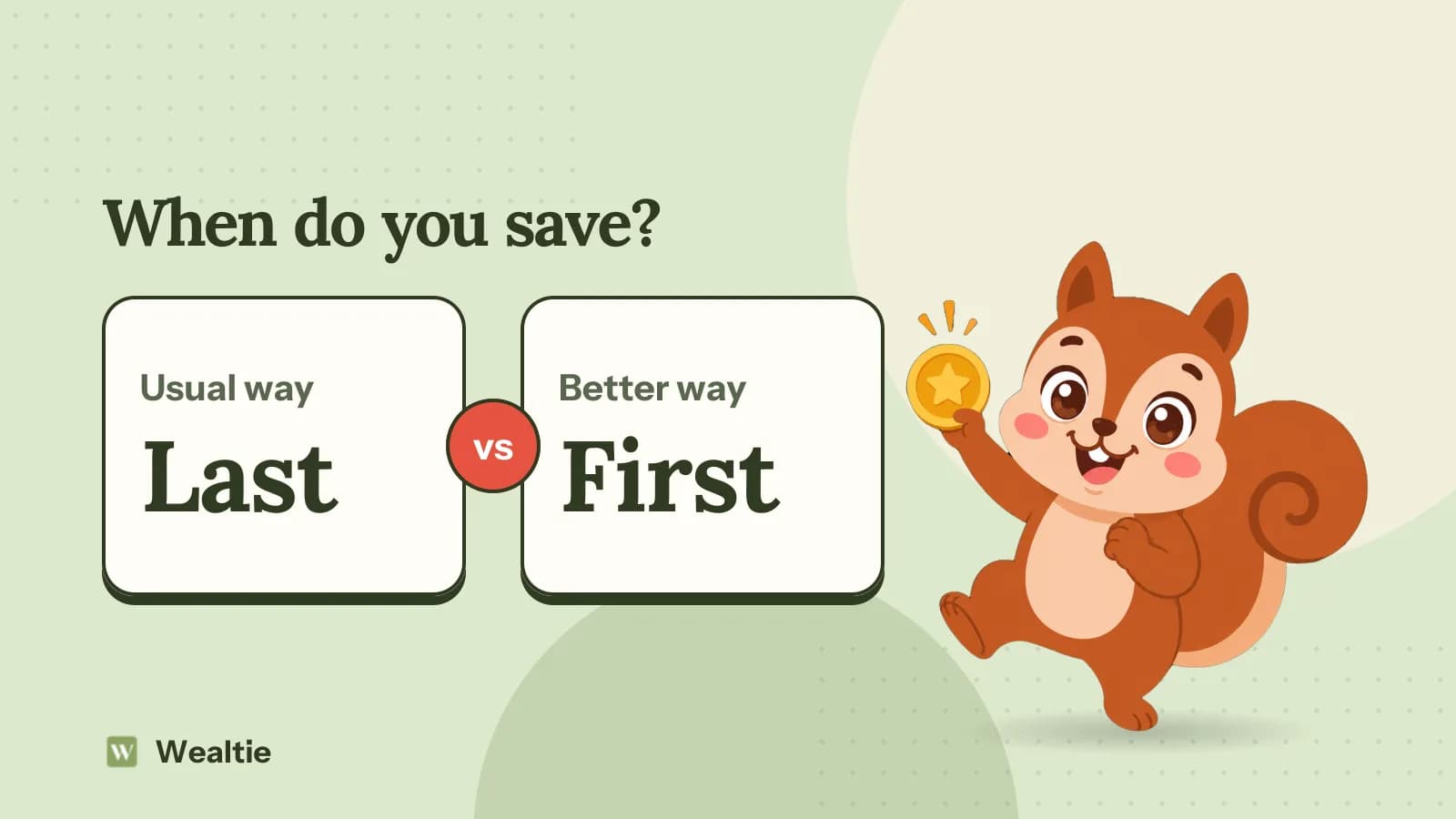
Most people save at the end of the month: whatever's left over goes into savings. In practice there's rarely anything left over, because spending expands to fill the account. Paying yourself first flips the order. The saving is decided in advance and leaves on day one, and the month's spending fits around what remains.
It's less about discipline than about defaults. Money you never see in your everyday account doesn't get spent.
How does pay yourself first work on payday?
Three steps, in this order:
- The savings transfer. An automatic transfer for the day your pay lands, into a separate savings account.
- Fixed bills. Rent, utilities, insurance, minimum debt payments.
- Spending. Whatever's left is the month's budget for groceries, transport, eating out and everything else.
Here's a worked example in round numbers, the same in any currency.
| Payday | Amount |
|---|---|
| Take-home pay | 3,000 |
| Savings transfer (10%) | −300 |
| Fixed bills | −1,700 |
| Left for the month's spending | 1,000 |
The 300 is gone before the month starts. The 1,000 is the spending budget, and it's the only number you need to watch.
How much should you pay yourself first?
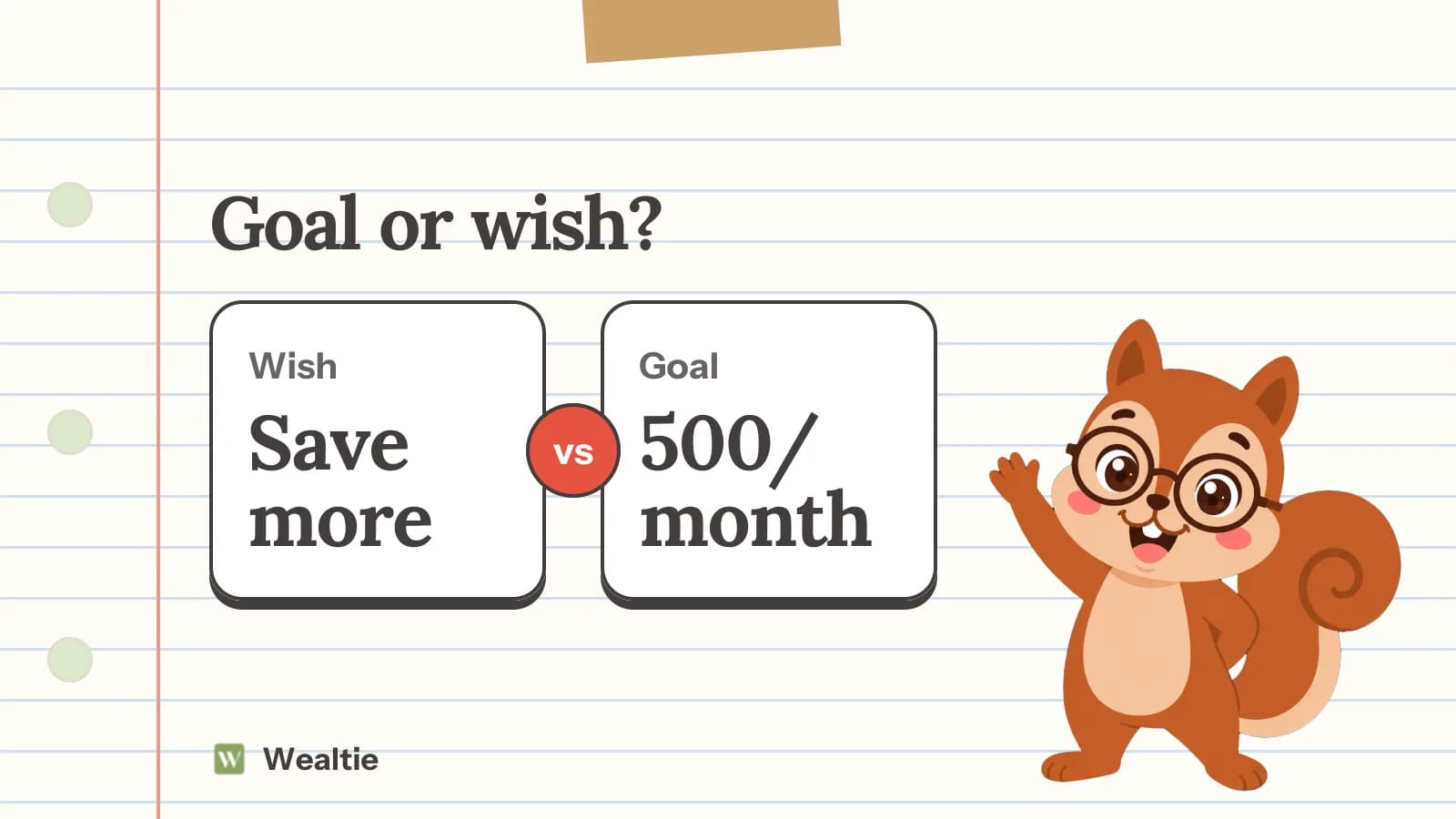
Start with an amount you'll keep every month, even if it feels small. 5% of take-home pay, 150 on 3,000, is a fine first step.
The usual target is 20% for savings and extra debt payments, from the 50/30/20 rule. That's 600 on 3,000. Work up to it rather than starting there and stopping in month three. How much of your income should you save shows what each percentage looks like on different incomes.
The easiest way to raise it is with pay rises. If your pay goes up 4%, from 3,000 to 3,120, put half of the extra 120 into the transfer before you get used to having it: 360 instead of 300.
What if your bills don't fit after the transfer?
Lower the transfer, but don't stop it. Keeping a 50 transfer going builds the habit; stopping it until things are better usually means stopping it for good.
Then look at why the bills don't fit. Often it's timing: a bill that's due just before payday. Moving its due date can fix it. If the bills simply cost more than the pay allows, that's the problem to work on, and the budget calculator shows how your needs compare with your take-home pay.
What if your income changes every month?
Pay yourself first as a percentage, not a fixed amount. Move 10% of every payment the day it arrives, whatever its size.
If you're freelance, on commission or paid by the shift, a fixed 300 might be easy one month and impossible the next. A percentage scales with what came in: 10% of a 4,000 month is 400, 10% of a 1,800 month is 180. Both months, you saved first. In a big month, consider saving a higher share of everything above your usual income, so the good months carry the lean ones.
If you're self-employed, set tax aside before savings, because tax isn't taken out for you. How to budget on irregular income covers the full setup for uneven pay.
Where should the money go?
To an emergency fund first, then to longer goals.
Until you have one month of take-home pay set aside, everything you pay yourself first goes there. How much should be in an emergency fund explains why that first month matters most. After that, split the transfer between the fuller emergency fund, a sinking fund for yearly costs, and long-term goals such as retirement or a deposit.
If your employer offers a pension or retirement plan with a match, contributions taken from your pay are already a form of paying yourself first. They count towards the total.
Can pay yourself first replace a budget?
For some people, yes. It's sometimes called reverse budgeting: save first, pay the bills, and spend the rest without tracking every category.
It works well if your spending is fairly steady and you don't run out before payday. If you do run out, add category limits for the areas that leak, or check your pace mid-month.
In Wealtie, set the savings transfer as a recurring transaction that logs itself on payday (one is included on the Free plan), and add the savings account alongside your everyday account in your net worth total; the transfer counts as a transfer, not spending. Set your monthly budget to what's left after savings and bills, and Budget Health warns you mid-month if spending is heading past it.
Questions people ask
It means moving money into savings as soon as you're paid, before paying bills or spending anything, and then living on what's left. Savings become the first bill rather than the leftovers.
Start with an amount you can keep every month, even 5% of take-home pay. The 50/30/20 rule suggests 20% for savings and extra debt payments; work up to it as your pay rises.
It can be. Some people use it as their whole budget, sometimes called reverse budgeting: save first, pay fixed bills, and spend the rest freely. Others add category limits on top.
Lower the savings transfer to an amount that leaves the bills covered, but don't stop it. Then look at moving bill dates or cutting costs, and raise the transfer again when there's room.
First into an emergency fund in a separate savings account. Once that's at its target, into longer goals and retirement savings.
This article is general information, not financial, tax or legal advice. Your situation is your own; check the numbers that apply to you before you act on them.