Budgeting: How much rent can I afford? A rule, a table and the budget check
A common answer to how much rent can I afford is 30% of gross income. A safer test uses take-home pay: keep rent to about 25% to 30% of what reaches your account, then check that rent, bills, groceries and debt payments together fit in half of it. On 4,000 a month take-home, that's rent of 1,000 to 1,200.
 By Wealtie Team · 3 min read
Key takeaways
- The 30% rule says rent should be no more than 30% of gross income; it's a long-standing rule of thumb, not a law.
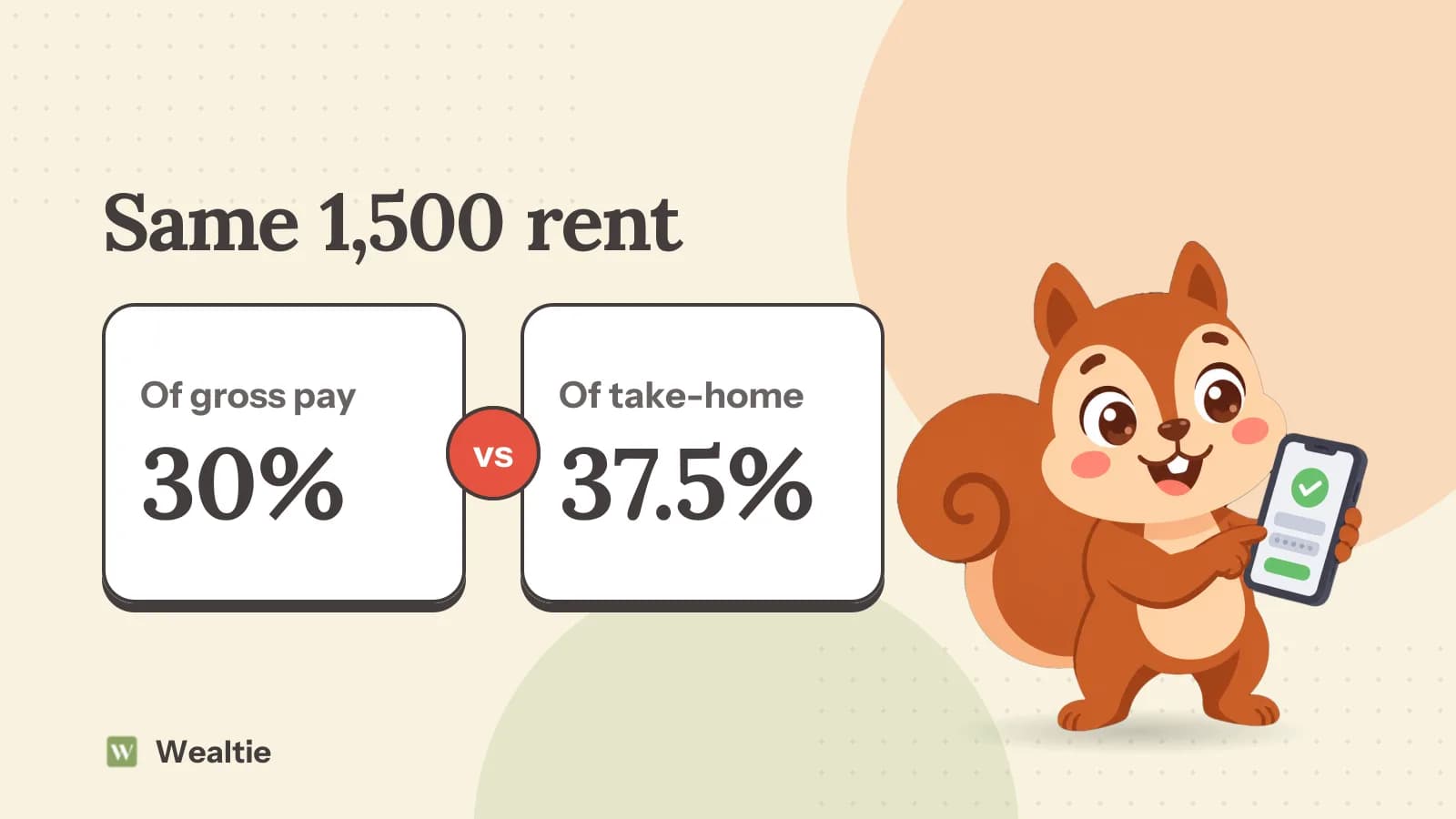
- Take-home pay is a safer base: 30% of gross can be 37% or more of what actually reaches your account.
- A practical test is rent at 25% to 30% of take-home pay, with rent, bills, groceries and minimum debt payments together under 50%.
- US rents rose 2.8% in the 12 months to September 2026, according to the Bureau of Labor Statistics, so next year's renewal may cost more.
- Count the move-in costs too: deposit, first month's rent and moving can come to two months' rent or more.
How much rent can I afford?
About 25% to 30% of your take-home pay, as long as rent, bills, groceries and minimum debt payments together stay under half of it.
The answer you'll hear most is the 30% rule: rent should be no more than 30% of your gross income, before tax. It's a long-standing rule of thumb, and a decent starting point. But you pay rent from what reaches your account, not from your salary, so the safer test starts from take-home pay. That's the number on your payslip after tax, pension and other deductions, or the amount that lands in your bank account each month.
What's wrong with the 30% rule?
Nothing, except that it's based on gross income, and tax comes out first.
Here's a worked example in round numbers, the same in any currency. On a salary of 60,000, gross monthly income is 5,000, and 30% of that is 1,500. Say take-home pay is 4,000 after tax and deductions. Then 1,500 in rent is 37.5% of what you actually have to spend. That's a lot more than 30%, and the gap grows the more tax you pay.
The 30% rule also ignores everything else. Two people on the same salary, one with a car loan and one without, can't afford the same rent.
How much rent is that on your take-home pay?
| Monthly take-home pay | Rent at 25% | Rent at 30% |
|---|---|---|
| 2,000 | 500 | 600 |
| 3,000 | 750 | 900 |
| 4,000 | 1,000 | 1,200 |
| 5,000 | 1,250 | 1,500 |
| 6,000 | 1,500 | 1,800 |
25% leaves room for savings and for the months that go wrong. 30% works if your other fixed costs are low. Above 30% of take-home, something else has to give.
How do you check a rent against your whole budget?
Use the needs half of the 50/30/20 rule: rent, utilities, groceries, transport to work, insurance and minimum debt payments should fit in 50% of take-home pay.
Continuing the example, on 4,000 take-home, needs get 2,000.
| Need | Monthly |
|---|---|
| Rent | 1,100 |
| Utilities and internet | 180 |
| Groceries | 400 |
| Transport | 150 |
| Insurance and minimum debt payments | 170 |
| Total | 2,000 |
At 1,100, it fits exactly. At 1,400, the same list comes to 2,300, and either savings or spending money has to shrink by 300 a month. That's the real cost of the nicer flat, and it's worth knowing before you sign. The budget calculator does this split for your own pay.
What do renters actually spend?
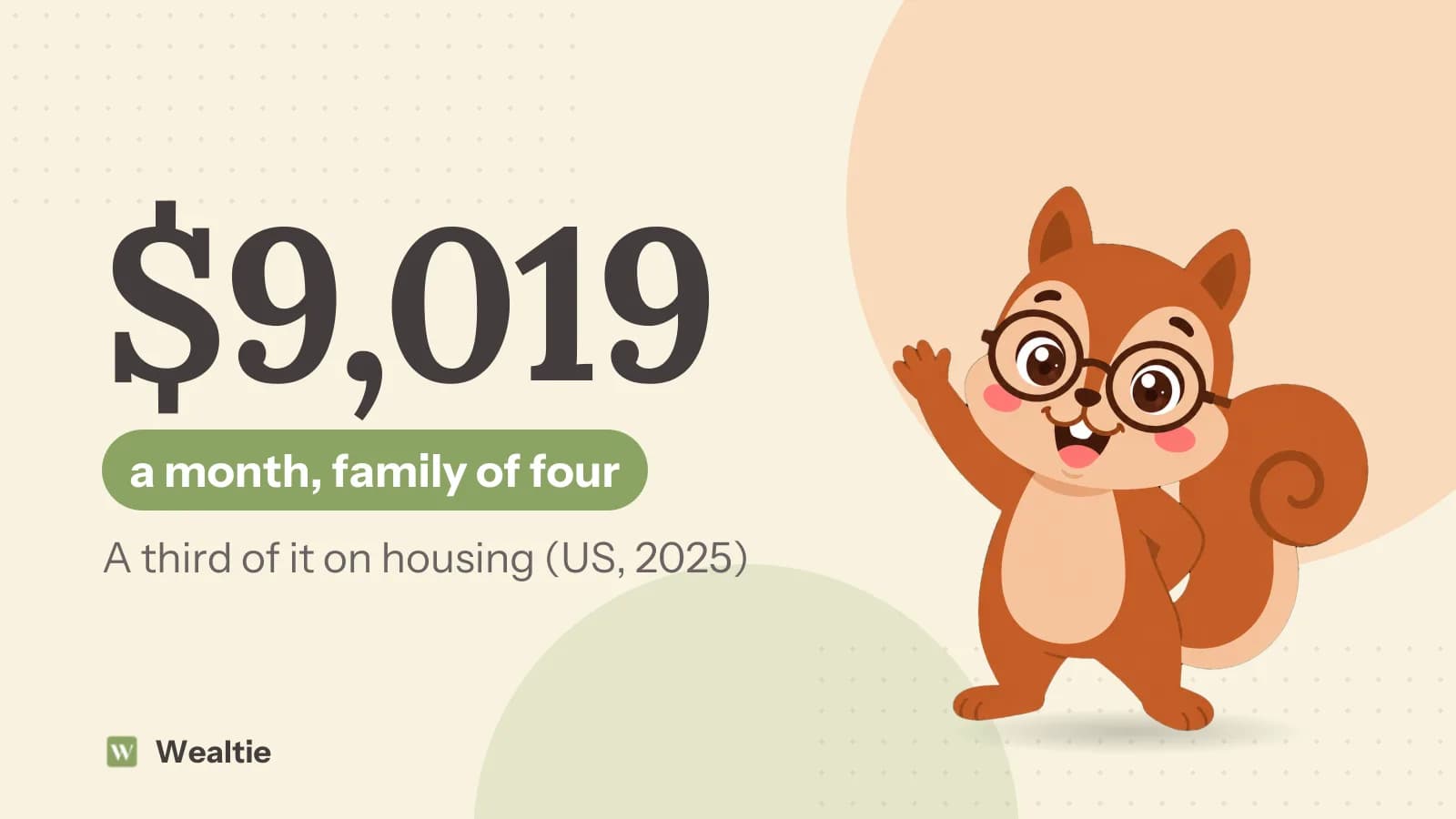
For people living alone in the US, housing is by far the biggest cost. In the Bureau of Labor Statistics' Consumer Expenditure Survey for 2025, one-person households spent an average of $14,172 a year on shelter, about $1,181 a month. Half of them rented; the figure includes owners' housing costs too.
Rents are still rising. The rent index rose 2.8% in the 12 months to September 2026, according to the BLS Consumer Price Index. On a 1,200 rent, a similar rise at renewal would be about 34 a month. Leave room for it.
What else does a new flat cost?
The deposit, the first month's rent, moving, and anything you need to buy. Together these can come to two months' rent or more.
Save for them separately, so the move doesn't empty your emergency fund. Check the bills that come with the flat too: some rents include heating or water, some don't, and a cheaper flat with expensive bills can cost more overall. If you're sharing, how to split rent with roommates covers fair splits when rooms aren't equal.
Is it ever fine to pay more?
Sometimes. In an expensive city, close to work, rent above 30% of take-home can make sense if it cuts transport costs or time. But the rest of the budget has to work around it, and savings are usually what gives.
If you do stretch, plan the next step: a pay rise, a flatmate, or a cheaper move at renewal. Paying 40% for one year is a decision; paying it indefinitely is a squeeze.
How do you keep rent from crowding out everything else?
Set the rent as a fixed line in a monthly budget and give every other category its own amount.
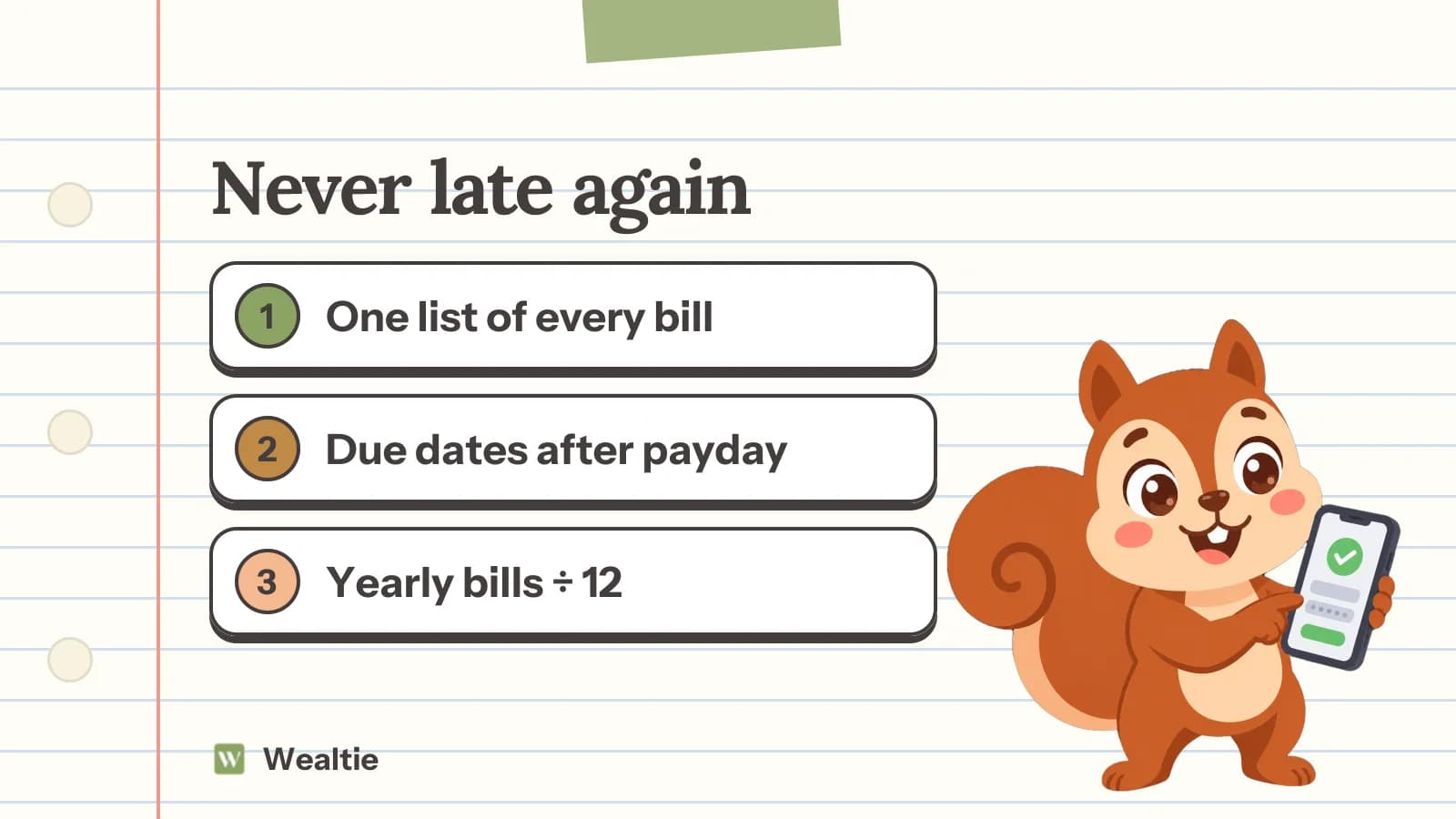
In Wealtie, set your monthly budget to take-home pay minus rent and savings, split it by category, and Budget Health warns you mid-month if your spending pace will take you over. Rent can be a recurring transaction that logs itself on the due date, so it never surprises the budget.
Questions people ask
Take your monthly take-home pay and multiply by 0.25 to 0.30. On 4,000 a month, that's 1,000 to 1,200. Then check that rent, bills, groceries and debt payments together stay under half your take-home pay.
A rule of thumb that rent should be no more than 30% of your gross monthly income. On a 60,000 salary, that's 1,500 a month. Because tax comes out first, it's a bigger share of take-home pay.
Net, if you want a figure that fits your budget. The 30% rule uses gross income, but your rent is paid from take-home pay, so 25% to 30% of take-home is the safer test.
It can work for a while in an expensive city, but everything else has to be tight. At 40% of take-home pay, bills, groceries and debt payments have 10% left inside a 50% needs budget.
Usually the first month's rent, a deposit and moving costs, which can come to two months' rent or more. Save for them separately from your emergency fund.
Sources
- Consumer Price Index – September 2026 · U.S. Bureau of Labor Statistics · checked 1 November 2026
- Consumer Expenditures in 2025, table 1400: Size of consumer unit · U.S. Bureau of Labor Statistics · checked 1 November 2026
- Private rent and house prices, UK: October 2026 · Office for National Statistics · checked 1 November 2026
This article is general information, not financial, tax or legal advice. Your situation is your own; check the numbers that apply to you before you act on them.