Budgeting: What to do with a pay rise so it doesn't disappear into spending
The best thing to do with a pay rise is decide where it goes before the first bigger payslip arrives. Work out the take-home difference, send at least half of it to savings or debt automatically, and enjoy the rest on purpose. Rises left undecided usually vanish into spending within a few months.
 By Wealtie Team · 3 min read
Key takeaways
- Work out the take-home difference first; after tax and deductions, a rise is smaller than the headline number.
- Decide where it goes before the first new payslip, while you're still used to living without it.
- A common split: at least half to savings or debt, the rest to spending you'll actually enjoy.
- Lifestyle creep, spending rising quietly to match income, is what makes rises disappear.
- Update your budget, your savings transfer and your goals on the same day the new pay starts.
What should you do with a pay rise?
Decide where it goes before the first bigger payslip arrives.
A rise is easiest to save at the moment it starts, because you're already living without it. Leave it undecided and it fills up within a few months: a slightly nicer lunch, a new subscription, a bigger shop. None of it feels like a choice, and by the next year it's hard to say where the money went.
The plan takes four steps: find the real number, split it, automate it, and update your budget.
How much is the rise after tax?
Less than the headline. Tax and other deductions come out of the rise too, and part of it may be taxed at a higher rate than the rest of your pay. Contributions set as a percentage of pay, like many pensions, also rise with it.
The number that matters is the change in take-home pay. If you can, wait for the first new payslip and compare it with the last old one. That difference is what you're deciding about.
How should you split a pay rise?
At least half to your future, the rest to spending you'll enjoy.
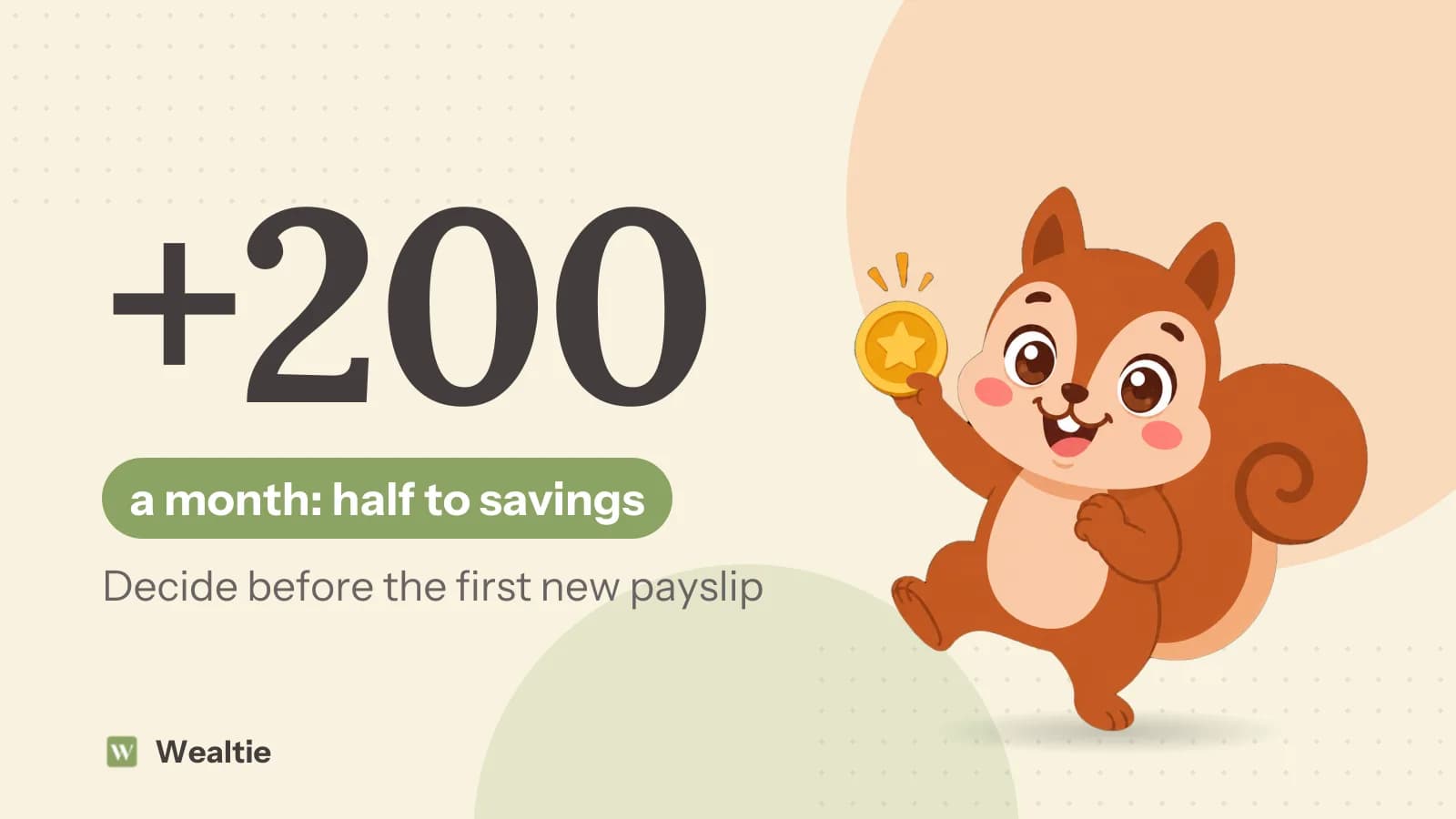
Here's a worked example in round numbers, the same in any currency. Take-home pay goes from 3,000 to 3,200 a month, a rise of 200:
| Where it goes | Per month | Per year |
|---|---|---|
| Savings | 100 | 1,200 |
| Extra debt payment | 50 | 600 |
| Spending you choose | 50 | 600 |
| Rise | 200 | 2,400 |
Adjust the split to where you are. With high-interest debt or no emergency fund, put more of the rise there first. If you're already saving well, more of it can go to things you enjoy. How much of your income should you save? gives a target to check against.
Why spend some of it at all?
Because a plan with no reward is hard to keep. Choosing what part of the rise is for, a hobby, a trip, a better weekly shop, turns it into a decision. Spending without a decision is what lifestyle creep is.
Name the spending part in your budget: "climbing", "weekends away", "good coffee". A named category is easy to enjoy without guilt, and easy to notice if it starts to grow past its share.
What is lifestyle creep?
Spending that rises to match income without anyone deciding it should.
It usually shows up in categories that grow a little at a time: eating out, takeaways, shopping, subscriptions, upgrades to things that were fine. Each step feels small and deserved. The total is the problem. People earning far more than they did five years ago can feel no better off, because their costs moved with them.
The fix isn't to never upgrade. It's to make upgrades on purpose, one at a time, and to keep the savings rate rising with the income.
How do you make the plan stick?
Automate the savings part on the day the new pay starts.
- Increase the payday transfer to savings by the agreed amount, so it moves before you can spend it. That's pay yourself first applied to a rise.
- Increase any extra debt payment at the same time.
- Update your budget to the new take-home pay, with the spending part of the rise in a named category.
- Don't raise fixed costs straight away. A bigger rent or car payment is the hardest kind of creep to undo.
What about a bonus or back pay?
Treat a one-off payment the same way, but decide it in one go. A bonus doesn't repeat, so it shouldn't raise any monthly cost. A simple rule is to split it before it arrives: most of it to savings, debt or a goal you're saving for, and a fixed part to enjoy. Back pay from a rise that was applied late can do the same job, and it's a good moment to set the new monthly transfer at the same time.
What if the rise only matches inflation?
Then it may not be a rise in real terms at all. If prices for what you buy rose as much as your pay, your budget hasn't gained anything, and the split above may need to be smaller. How to budget for inflation shows how to check which of your costs went up.
How do you see where the rise went?
In Wealtie, update your monthly budget to the new take-home pay, and set the higher savings transfer as a recurring transaction between your accounts. After a few months, compare spending by category with the months before the rise. Any category that grew without a decision is where creep has started.
Questions people ask
Work out the take-home difference, then decide before the first new payslip where it goes. A common approach is at least half to savings or debt, set up as an automatic transfer, and the rest to spending you choose.
At least half is a good rule if you're already covering your costs. If you have high-interest debt or no emergency fund, put more of it there first.
Spending that rises quietly to match a higher income: a nicer flat, more meals out, more subscriptions. None of it feels like a decision, and the rise ends up gone.
Because tax and other deductions come out of it. Part of the rise may be taxed at a higher rate, and pension contributions set as a percentage rise with it.
Yes. Spending part of it on purpose makes the plan easier to keep. Choose what you'll spend it on, so it's a decision, not drift.
This article is general information, not financial, tax or legal advice. Your situation is your own; check the numbers that apply to you before you act on them.