Saving: How much money should you have in savings? A simple way to decide
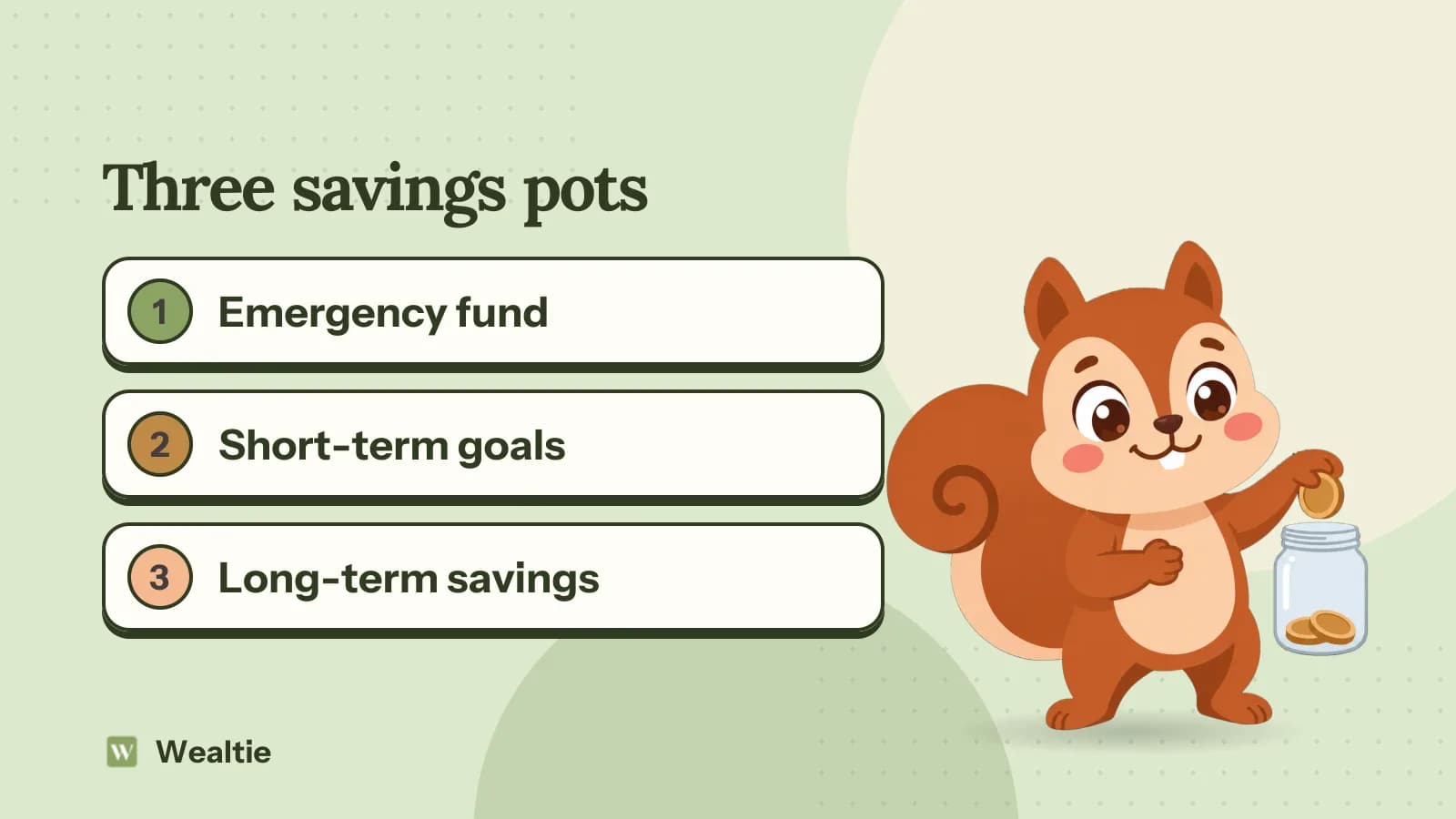
How much money should you have in savings depends on your costs and goals, but a simple way is to split it into three pots: an emergency fund, short-term goals and long-term savings. In a worked example, someone with costs of 2,000 a month aims for about 12,000 across the first two pots.
 By Wealtie Team · 3 min read
Key takeaways
- How much money you should have in savings depends on your costs and goals.
- Split savings into an emergency fund, short-term goals and long-term savings.
- A common emergency target is three to six months of essential costs.
- Build the emergency fund first, then save for goals.
How much money should you have in savings?
There's no single right number, because it depends on what you spend each month, how secure your income is and what you're saving for. A simple way to work it out is to stop thinking of savings as one pot and split it into three: an emergency fund for surprises, short-term savings for goals in the next few years, and long-term savings for things further away. Each pot has its own target, which makes the overall number much easier to set.
Splitting savings this way also stops one goal eating another. Without separate pots, it's easy to dip into emergency money for a holiday, then find there's nothing left when the car breaks down. With each pot labelled, you can see at a glance which goals are on track and which need more. It also makes saving feel more rewarding, since you can watch each target fill up instead of one large number that never seems to be enough.
Comparing yourself with averages can be discouraging and doesn't tell you much about your own needs. Average savings by age gives a picture, but your targets should come from your own costs and plans.
What are the three savings pots?
Emergency fund
Money for unexpected costs, like a broken boiler, car repairs or a gap in income. A common guide is three to six months of essential costs, the things you must pay like rent, food, bills and debt repayments. People with steady jobs might aim for the lower end. Those with irregular income, dependants or a single income might aim higher. How much emergency fund do you need? goes into detail.
Short-term goals
Money for things you know are coming in the next few years: a holiday, a car, gifts, a new laptop, a house deposit. Each goal gets a target and a date. This is where sinking funds are useful, setting aside a small amount each month for each goal.
Long-term savings
Money for goals more than a few years away, such as retirement or a child's future. This is often invested rather than kept in cash, since it has time to grow. Should I save or invest? covers how to decide based on when you'll need the money.
What does that look like in practice?
Here's a worked example for someone whose essential costs are 2,000 a month, in round numbers that work in any currency:
| Pot | Target |
|---|---|
| Emergency fund | 6,000 |
| Short-term goals | 6,000 |
| Long-term savings | Depends on plans |
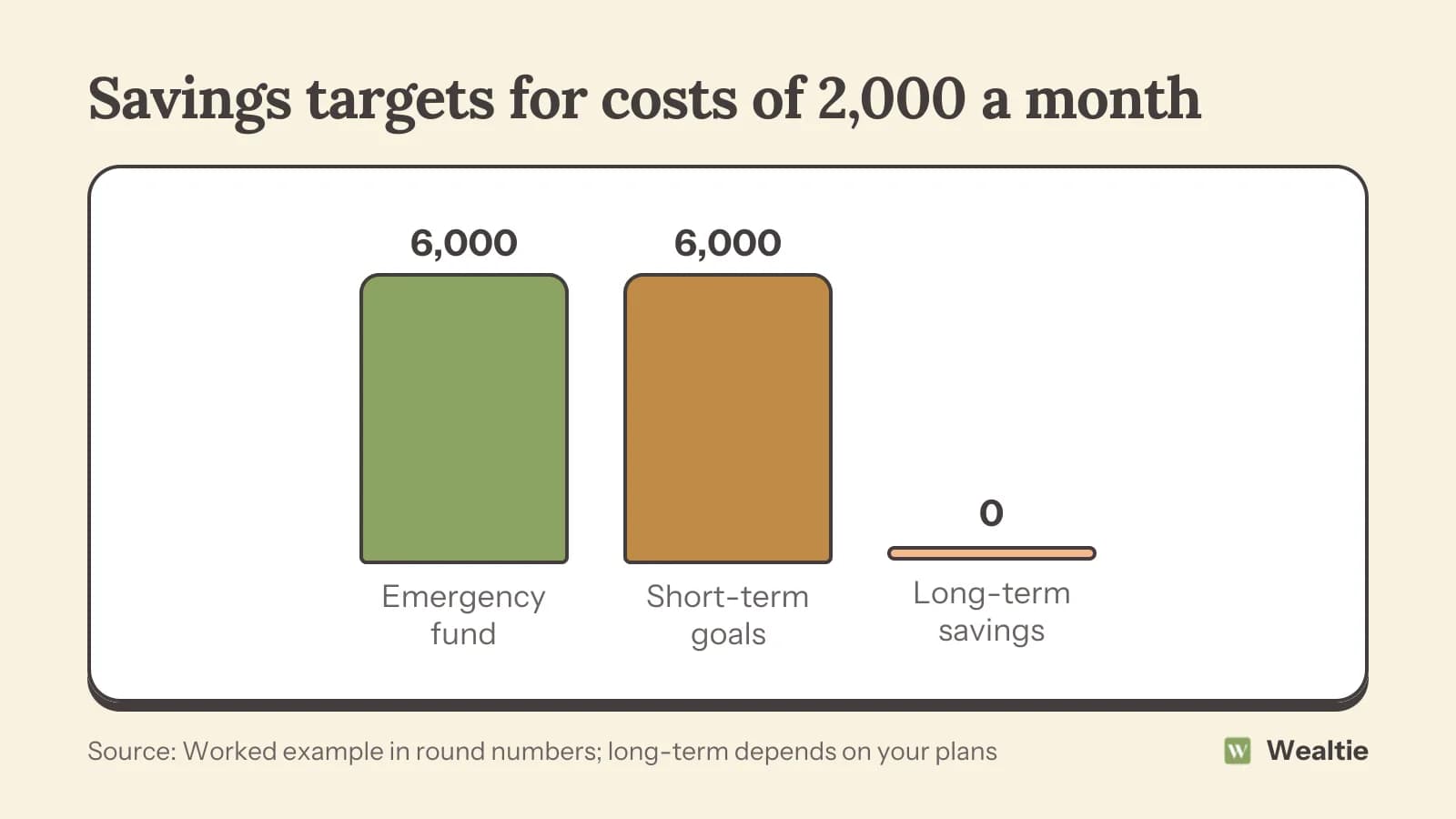
The emergency fund is three months of essential costs. The short-term pot covers a holiday of 1,500, car repairs of 1,000, a new laptop of 1,000, gifts of 500 and 2,000 towards home improvements. Long-term savings depend on their retirement plans and other goals, so they set that separately.
Which pot should you fill first?
Start with a small emergency buffer, even a few hundred, so a surprise doesn't push you into debt. Then pay off expensive debt, like credit cards, since the interest usually costs more than savings earn. After that, build the emergency fund to your full target. Once it's in place, save for short-term goals and long-term plans side by side. How to build an emergency fund covers the first steps.
Where should you keep each pot?
Keep the emergency fund somewhere safe and easy to reach, like an easy-access savings account. Short-term goals can sit in savings accounts too, perhaps one for each goal. Long-term money is often invested. Where to keep your emergency fund covers the options.
How much should you save each month?
Work backwards from your targets. If you want a 6,000 emergency fund in two years, that's 250 a month. Add each short-term goal's monthly amount, plus whatever you're putting towards the long term. If the total is more than you can manage, stretch the dates or start with the most important goals. How much of your income should you save? covers setting a monthly figure.
Review your targets once a year
Costs change, incomes change and goals change. Once a year, check whether your emergency fund still covers three to six months of essential costs and whether your goals still make sense.
How do you track savings in Wealtie?
Add your savings accounts in Wealtie, and see them alongside your other accounts and your net worth. Add regular transfers to savings as recurring transactions, so they log themselves on their date, and set a monthly budget that leaves room for saving.
Questions people ask
Aim for an emergency fund of three to six months of essential costs, plus a target for each short-term goal and separate long-term savings.
A common guide is three to six months of essential costs. In a worked example, with costs of 2,000 a month, that's 6,000 to 12,000.
Build a small emergency buffer first, then pay off expensive debt, then grow the emergency fund to its full target.
Keep the emergency fund and short-term goals in easy-access savings. Long-term money is often invested.
This article is general information, not financial, tax or legal advice. Your situation is your own; check the numbers that apply to you before you act on them.