Budgeting: The default effect: how pre-set choices steer your money
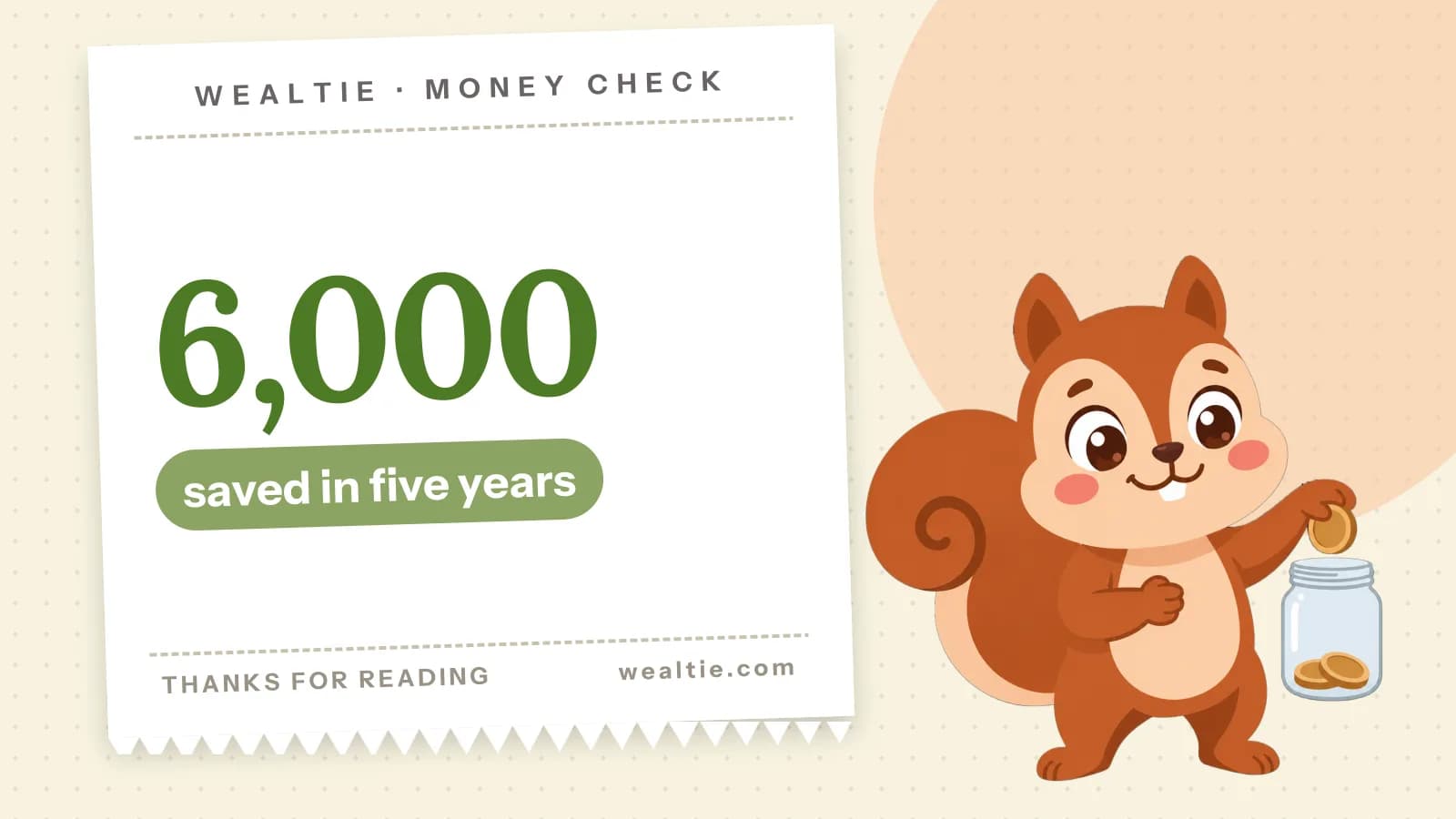
The default effect is our tendency to stick with whatever option is pre-set, which you can turn to your advantage by making saving the default. In a worked example, an automatic 100 a month transfer builds 6,000 in five years.
 By Wealtie Team · 3 min read
Key takeaways
- The default effect means people usually stick with pre-set options.
- Automatic saving makes putting money aside the default.
- Workplace pension auto-enrolment uses the same idea.
- Check the defaults you already have, like auto-renewals.
What is the default effect?
The default effect is the tendency to go with whatever option is already chosen for us. Whether it's a settings menu, a form or a pension scheme, most people leave the default in place. Research by economists Brigitte Madrian and Dennis Shea found that when employers automatically enrolled staff in a retirement plan, far more people stayed in it than when they had to sign up themselves. Richard Thaler and Cass Sunstein later made defaults a central idea in their book Nudge.
Defaults work because changing them takes effort and a decision, and doing nothing is easy. That's a problem when defaults work against you, like subscriptions that renew automatically. It's a powerful tool when you set defaults that work for you, like saving automatically.
How does an automatic saving default add up?
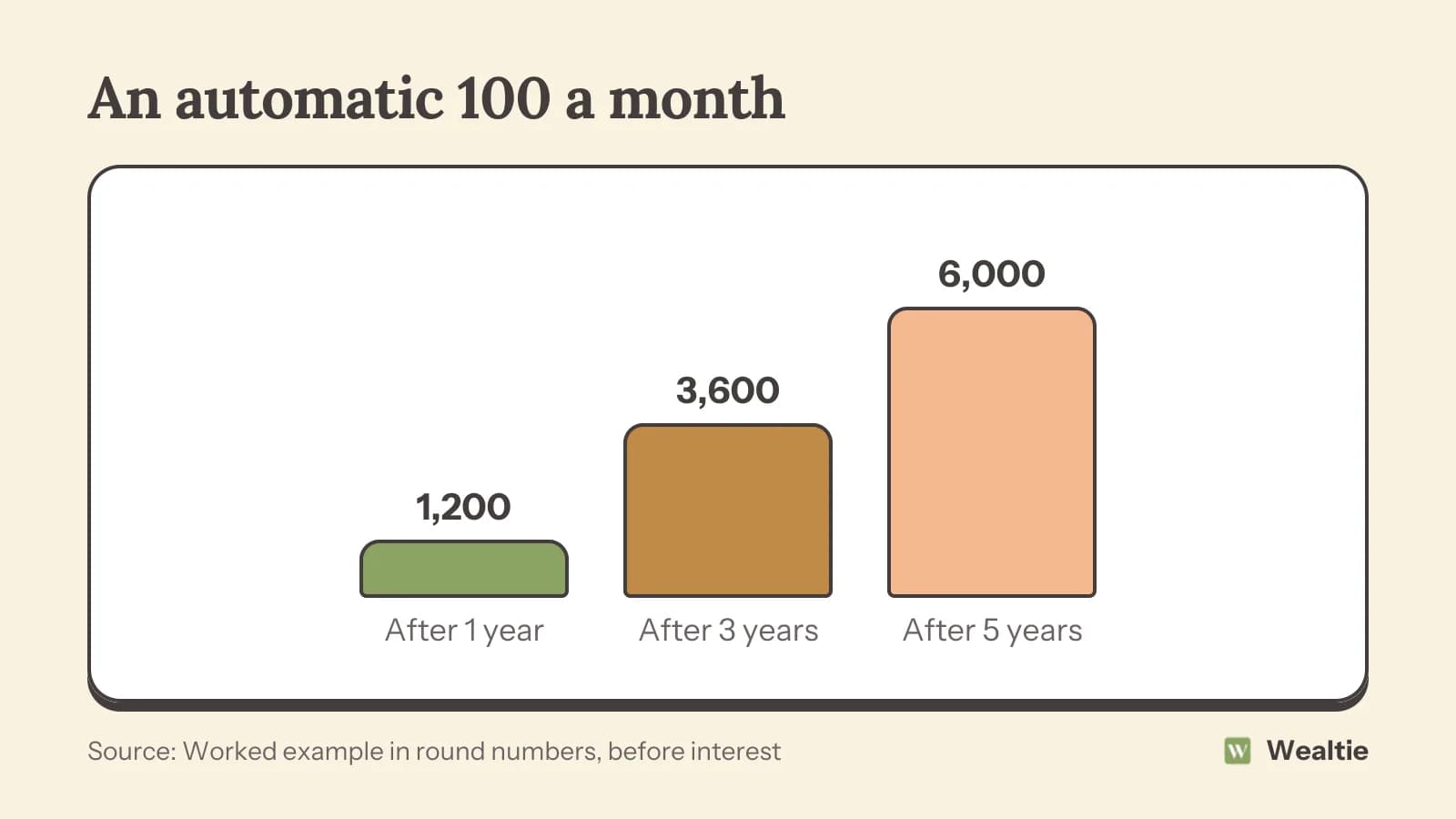
Here's a worked example of an automatic transfer of 100 a month, in round numbers that work in any currency, before any interest:
| Time | Saved |
|---|---|
| After 1 year | 1,200 |
| After 3 years | 3,600 |
| After 5 years | 6,000 |
Once it's set up, the transfer happens without any decision or willpower. Most people don't miss money that leaves their account on payday before they see it. How to automate your savings covers setting it up step by step.
Where do defaults affect your money?
Workplace pensions
In many countries, employees are automatically enrolled in a pension. Staying in, rather than opting out, is usually one of the best long-term money decisions.
Subscriptions and renewals
Free trials that turn into paid plans, and insurance that renews automatically, use defaults against you. How to cut subscription costs covers checking them.
Bank account settings
Overdraft limits, notifications and savings round-ups are often set to defaults. Reviewing them can help. Round-up savings covers one useful default.
Tipping and donations
Pre-selected tip amounts and donation options nudge you towards a figure. Changing them is fine.
How do you set defaults that work for you?
Pay yourself first
Set up a standing order to savings on payday, before bills and spending. Pay yourself first explains why this order matters.
Automate bills
Pay bills automatically so they're never late, which avoids fees.
Increase savings automatically
Thaler and Shlomo Benartzi designed a scheme called Save More Tomorrow, where people agree in advance to save more each time they get a pay rise. You can copy the idea by raising your standing order whenever your pay goes up. How much income should you save? covers choosing an amount.
Make spending take effort
Remove saved cards from shopping sites and turn off one-click buying, so spending is no longer the easy default.
Set calendar defaults
Put renewal dates and a yearly money review in your calendar, so reviewing becomes routine.
What about your emergency fund?
An automatic transfer is one of the easiest ways to build an emergency fund. Even a small amount each month adds up, and you won't need to remember to do it. How to build an emergency fund covers how much to aim for.
Start small if money is tight. A default of 20 or 50 a month is better than none, and you can raise it later. The key is getting the automatic habit in place, since once it's running, increasing the amount is just a small change to an existing standing order. Many people find they barely notice the money leaving, and are surprised by how much has built up after a year.
Timing matters. Setting the transfer for payday, rather than the end of the month, means the money moves before it can be spent. If your income varies, you might set a lower default and add extra in good months.
Give your savings a clear purpose, too. A default transfer into a pot labelled for a holiday, a house deposit or an emergency fund is easier to leave alone than money in a general savings account. Some people set up several automatic transfers into different pots, each with its own goal.
Finally, review your defaults once a year. Check whether your savings amount still fits your income, whether your pension contributions could rise and whether any subscriptions or renewals are running on defaults you no longer want.
Defaults work quietly in the background, so it pays to choose them on purpose rather than leaving them to chance. A few minutes spent setting them up can shape your finances for years.
How can Wealtie help with automatic habits?
Add your savings transfer as a recurring transaction in Wealtie, alongside your bills, so it's built into your budget every month. Logging spending in expense categories shows how much is left after your savings default has done its work.
Questions people ask
The default effect is the tendency to stick with whatever option is pre-set, because changing it takes effort.
Make saving the default with an automatic transfer on payday. In a worked example, 100 a month built 6,000 in five years.
Subscriptions that renew automatically and free trials that turn into paid plans use defaults against you.
It's a scheme designed by Richard Thaler and Shlomo Benartzi where people agree in advance to save more each time their pay rises.
This article is general information, not financial, tax or legal advice. Your situation is your own; check the numbers that apply to you before you act on them.