Budgeting: Master's degree cost: tuition, living and payback
Master's degree cost combines tuition with a year or more of living costs, and part-time study can spread both. In a worked example, a one-year master's costs 10,000 in tuition and 12,000 to live on.
 By Wealtie Team · 3 min read

Key takeaways
- Master's degree cost is tuition plus living costs for the length of the course.
- Loans, scholarships, employer funding and part-time work help cover it.
- Part-time study spreads costs and lets you keep earning.
- Check whether the degree is needed for your career goals before paying.
How much does a master's degree cost?
A master's degree can deepen your knowledge, open doors to certain careers or prepare you for further research. Master's degree cost has two main parts: tuition fees and the cost of living while you study. Tuition varies widely by country, university and subject, and living costs depend on where you study and how you live.
Here's a worked example for a one-year full-time master's, in round numbers that work in any currency:
| Cost | Amount |
|---|---|
| Tuition | 10,000 |
| Rent | 7,200 |
| Food and household | 2,400 |
| Books, travel and other | 2,400 |
| Total | 22,000 |
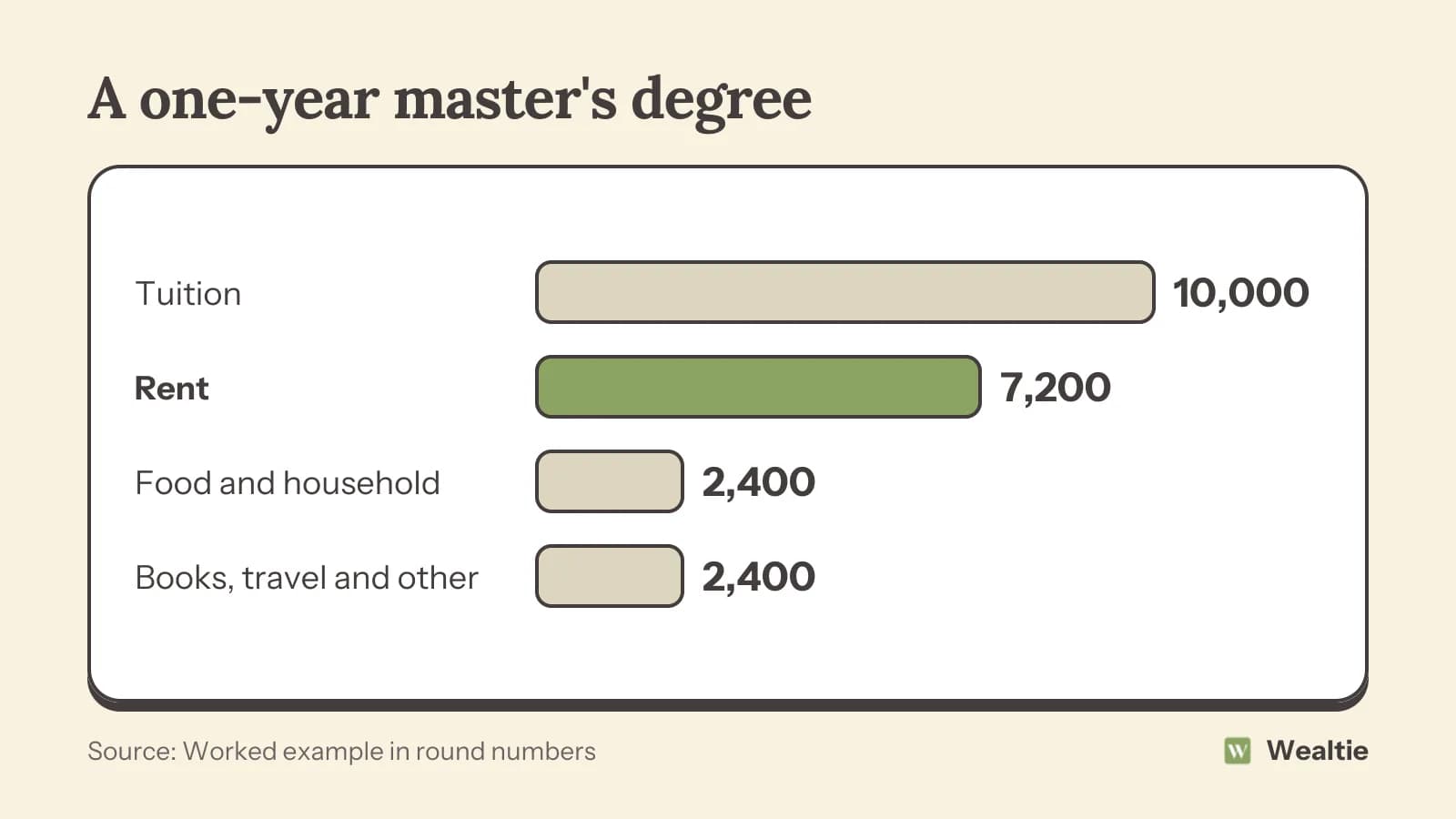
Living costs of 12,000 are more than the tuition in this example. Studying in an expensive city, or for a longer course, raises the total. Part-time study over two years spreads tuition and lets you keep working, which can reduce the overall cost a lot.
What affects the cost?
Subject and university
Some subjects, like business, law, medicine and specialist sciences, often charge higher fees. Well-known universities may charge more too.
Country and fee status
Fees can differ for home and international students. Studying abroad may cost more or less depending on where you go. How to budget for study abroad covers the extra costs of studying in another country.
Length and mode of study
One-year full-time courses are common, but some take two years. Part-time and online options change both fees and living costs.
Where you live
Rent is usually the biggest living cost. Living at home, sharing a flat or choosing a cheaper city can make a big difference. University accommodation costs covers options and prices.
How do people fund a master's?
Postgraduate loans
In some countries, government loans are available for master's study. Check the amount, interest and how repayments work. How to budget with student loan repayments covers fitting repayments into your budget later.
Scholarships and bursaries
Universities, charities and professional bodies offer funding, often based on merit, subject or background. Apply early, as deadlines can be months before the course starts.
Employer funding
If the degree relates to your job, your employer may pay part of the cost, especially for part-time study.
Savings and part-time work
Many students combine savings with part-time work. A job earning 400 a month during term would cover a good part of food and household costs in the example.
Family support
Some students get help from family. Agreeing amounts upfront makes budgeting easier.
Is a master's degree worth it?
Check whether you need it
Some careers require a master's, while in others, experience matters more. Look at job adverts and talk to people in the roles you want.
Work out the payback
Compare the total cost, including any lost earnings, with the extra income you might expect afterwards. Be realistic and cautious about headline figures.
Consider part-time or online
If you can keep working, part-time or online study can make the degree much more affordable and reduce the risk.
Value beyond money
Interest in the subject, personal growth and connections matter too. Just make sure the cost fits your budget.
How do you budget during the course?
Plan a monthly budget for the whole course before it starts, covering rent, food, travel, books and some fun. Divide any lump sums, like loan payments or savings, across the months so you don't run short near the end. How to make a college student budget covers building a student budget, and the mature student budget covers returning to study later in life.
Before you apply, look carefully at the course content and outcomes. Ask universities where their graduates work, how many find relevant jobs and what support they offer with careers. Talking to current students or recent graduates can give you an honest view of whether the course is worth the money. Some courses have strong links with employers, which can make a big difference to the payoff.
It's also worth thinking about timing. Some people go straight from an undergraduate degree, while others work for a few years first. Working first can help you save, clarify what you want to study and sometimes qualify for employer funding. There's no wrong answer, but the timing can change how much the degree costs you overall.
If you're unsure, a short course or online module in the subject is a cheap way to test your interest before committing to a full year of study and costs.
How can Wealtie help you manage student money?
Set a monthly budget for your study year and log rent, food, books and travel in their own expense categories. Adding loan or savings payments as income each month helps you see whether the money will last until the course ends.
Questions people ask
Costs vary widely. In a worked example, a one-year master's cost 10,000 in tuition and 12,000 in living costs.
Common options are postgraduate loans, scholarships, employer funding, savings, part-time work and family support.
Often, yes. Part-time study lets you keep working and spreads tuition over a longer period, which can lower the total cost.
It's worth it if your career needs it or the extra income outweighs the cost. Check job adverts and talk to people in the roles you want.
This article is general information, not financial, tax or legal advice. Your situation is your own; check the numbers that apply to you before you act on them.