Budgeting: Apprenticeship vs university: the money compared
In the apprenticeship vs university choice, apprentices earn while they learn, while students usually take on debt. In a worked example, three years as an apprentice earns 45,000, while three years at university costs 30,000 in tuition alone.
 By Wealtie Team · 3 min read

Key takeaways
- In apprenticeship vs university, apprentices earn while students usually borrow.
- Apprentices often finish training with experience and no tuition debt.
- Some careers need a degree, and some apprenticeships lead to one.
- Choose based on the career you want, not only the short-term money.
Apprenticeship vs university: how do the finances differ?
For many young people, the choice after school comes down to two paths: an apprenticeship, where you work and train at the same time, or university, where you study full-time for a degree. Both can lead to good careers, and the right choice depends on what you want to do. But the money looks very different, especially in the first few years.
Apprentices are paid a wage from day one, and their training costs are usually covered by the employer or government. University students usually pay tuition fees, often through loans, and need to cover living costs too. Here's a worked example over three years, in round numbers that work in any currency:
| Over three years | Amount |
|---|---|
| Apprentice take-home pay | 45,000 |
| Student tuition | 30,000 |
| Student living costs | 27,000 |
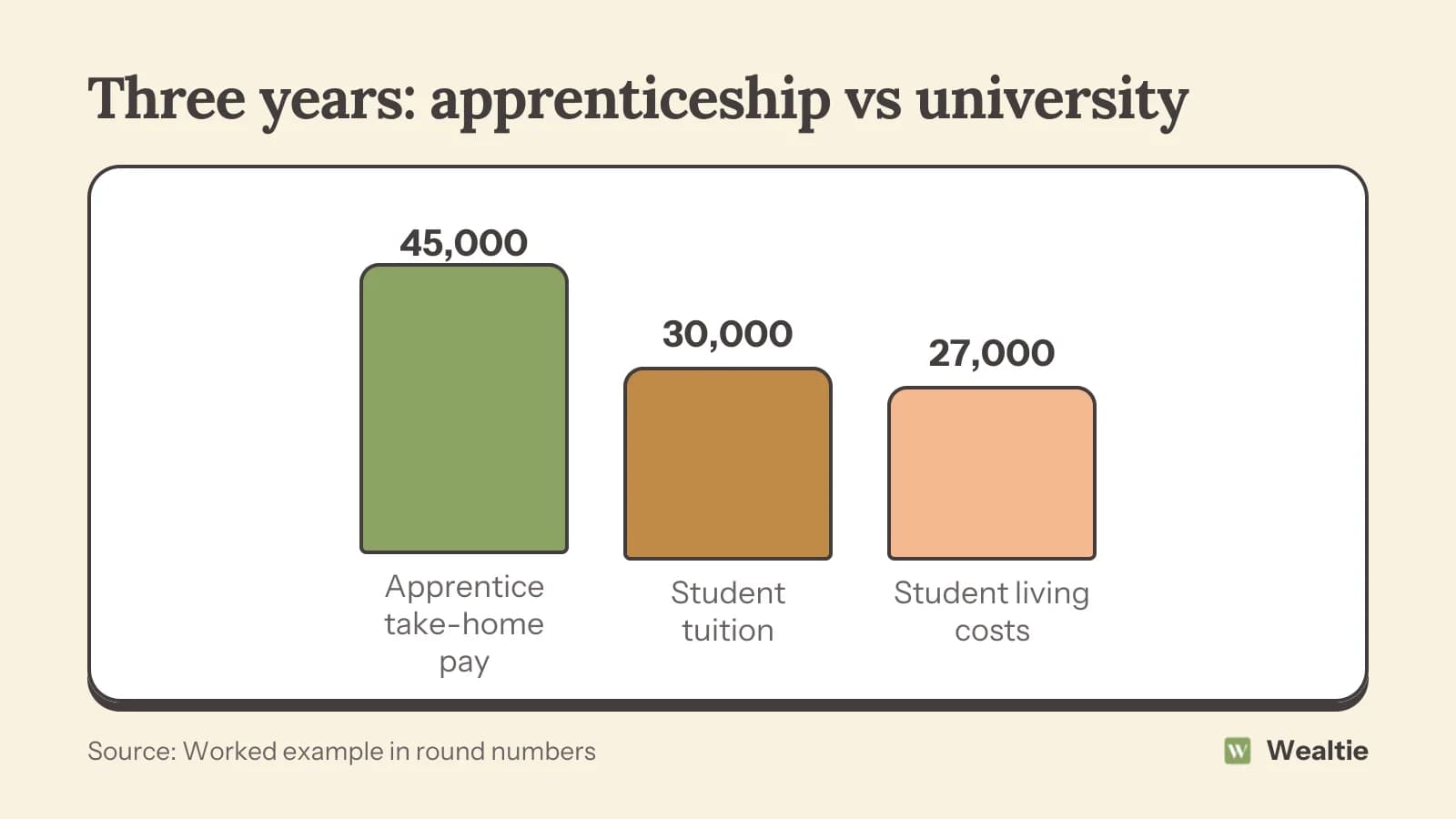
The apprentice earns around 45,000 in take-home pay, while the student faces 30,000 in tuition and 27,000 in living costs, often funded by loans, part-time work and family. Systems differ a lot between countries, so check how fees, loans and apprentice wages work where you live.
What are the money advantages of an apprenticeship?
Earning from the start
Apprentices get a regular wage, which often rises as they gain skills. That means they can start saving, build credit and learn to budget early. How to budget your first paycheck as a teen covers managing first wages.
No tuition debt
Training is usually paid for, so apprentices often finish without the debt many students carry.
Work experience
Apprentices finish with years of real experience, which employers value and which can lead to a permanent job with the same company.
Some lead to degrees
In some countries, degree apprenticeships combine work with a university degree, with fees paid by the employer.
What are the money advantages of university?
Access to some careers
Some professions, like medicine, law and teaching, usually require a degree. For those careers, university is the main route.
Possible higher earnings later
In some fields, graduates go on to earn more over their careers. That varies a lot by subject and job, so it's worth researching your chosen field.
Loan repayments linked to income
In some countries, student loan repayments depend on what you earn, so you only repay when your income is above a threshold. How to budget with student loan repayments covers how that affects your budget.
Part-time work
Many students work part-time, which helps with living costs. Earning 4,000 a year would cover part of the living costs in the example.
What should you weigh beyond the money?
How you like to learn
Some people thrive in hands-on work, while others prefer study and research. Choosing the path that suits you makes success more likely.
The career you want
Look at the jobs you're interested in and how people get into them. Talk to people in those roles.
Flexibility later
You can go to university after an apprenticeship, or move into work after a degree. Neither choice closes all doors.
Living away from home
University often means moving out, which brings independence and costs. Apprentices often live at home at first, which helps them save. How much rent should you pay your parents? covers that arrangement.
How do you budget on either path?
Apprentices should build a budget around their take-home pay, not the headline wage. Gross vs net income explains the difference. Students should plan their budget across each term, since loans and grants often arrive in lump sums. How to make a college student budget covers that.
Talk to people on both paths before deciding. Apprentices, students and recent graduates can tell you what a typical week looks like, what they earn or spend and what surprised them. Schools, colleges and careers advisers often run events where you can meet employers offering apprenticeships and universities in the same place.
Parents can help by looking at the numbers together with their child. Working out what each path would cost, how much support the family can offer and what the young person could earn makes the conversation more concrete. It also helps teenagers understand money decisions that will shape their early adult life.
Remember that the first choice isn't final. Many apprentices go on to study later, often with employer support, and many graduates take on apprenticeships or retrain. Thinking about the next few years, rather than the whole career, makes the decision feel more manageable.
How can Wealtie help with either path?
As an apprentice or a student, set a monthly budget and log spending in expense categories like rent, food and travel. Recording your wage or loan payments as income shows how much you have each month and helps build good money habits early.
Questions people ask
In the short term, usually yes. Apprentices earn a wage and avoid tuition debt, while students often borrow for fees and living costs.
Usually not. Training costs are often covered by the employer or government, though rules vary by country.
In some countries, yes. Degree apprenticeships combine paid work with a university degree, with fees paid by the employer.
Choose based on the career you want and how you like to learn. Some careers need a degree, while many value hands-on experience.
This article is general information, not financial, tax or legal advice. Your situation is your own; check the numbers that apply to you before you act on them.