Budgeting: Gluten-free diet cost: how to keep it affordable
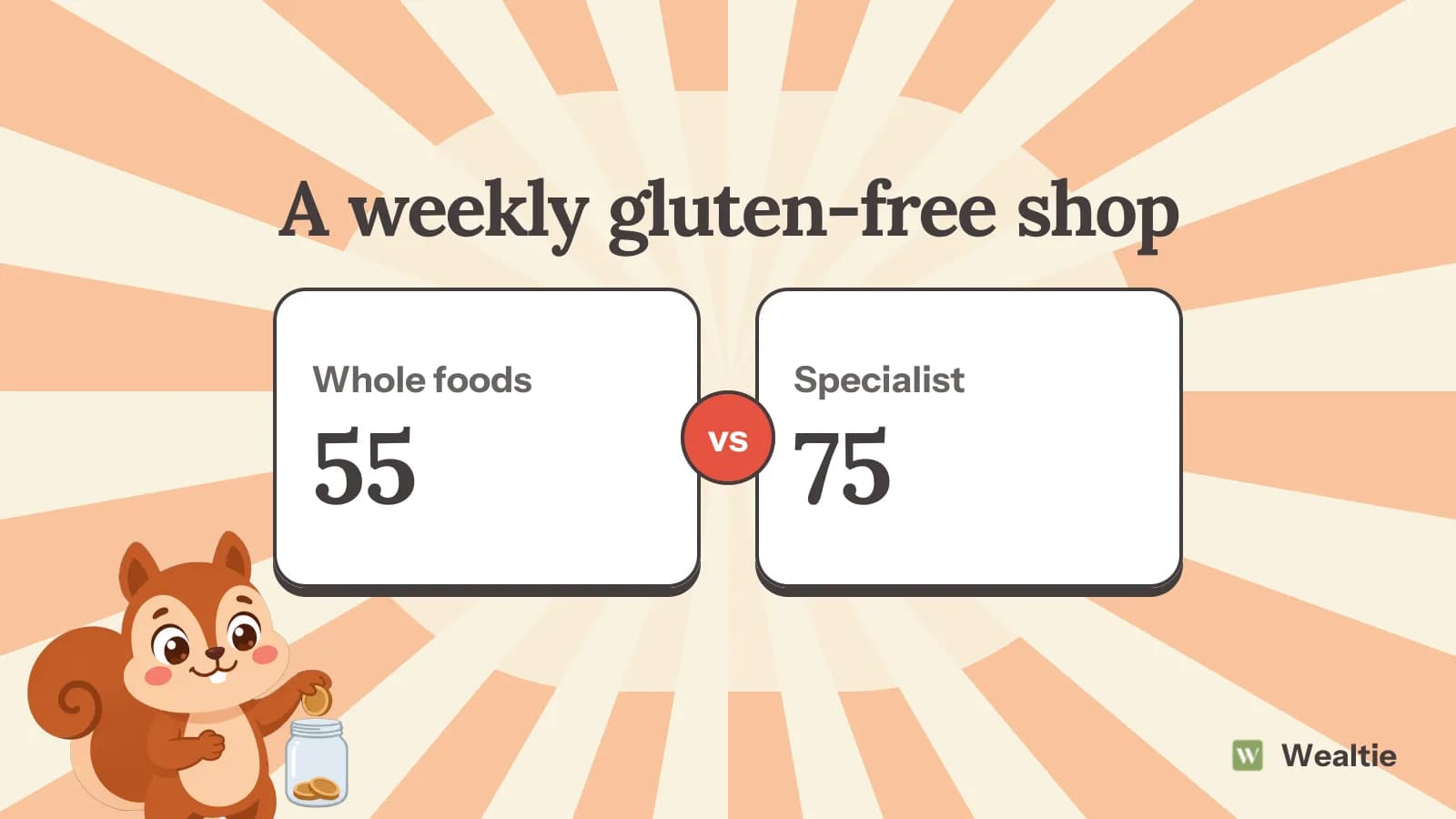
Gluten-free diet cost runs higher mainly because of specialist bread, pasta and baked goods, not naturally gluten-free foods. In a worked example, a weekly shop costs 75 with specialist products, against 55 built on naturally gluten-free foods.
 By Wealtie Team · 3 min read
Key takeaways
- Gluten-free diet cost rises mainly through specialist products.
- Rice, potatoes, meat, fish, eggs, dairy, beans and fresh produce are naturally gluten-free.
- Baking your own bread and buying specialist items in bulk cut costs.
- People with coeliac disease should check what support is available where they live.
Why does a gluten-free diet cost more?
For people with coeliac disease, gluten sensitivity or other medical reasons, avoiding gluten isn't optional, and the extra cost can be frustrating. Gluten-free diet cost rises mostly because of specialist products. Gluten-free bread, pasta, biscuits, cakes and flour are made in smaller quantities with different ingredients and careful processes to avoid cross-contamination, and they're often priced much higher than regular versions.
The good news is that many foods are naturally gluten-free and no more expensive than usual. Building most meals around those, and keeping specialist products for where they matter, brings the cost down a lot.
How much more does it cost?
Here's a worked example of a weekly shop for one person, in round numbers that work in any currency:
| Weekly shop | Cost |
|---|---|
| Regular diet | 50 |
| Gluten-free, naturally GF foods | 55 |
| Gluten-free, specialist products | 75 |
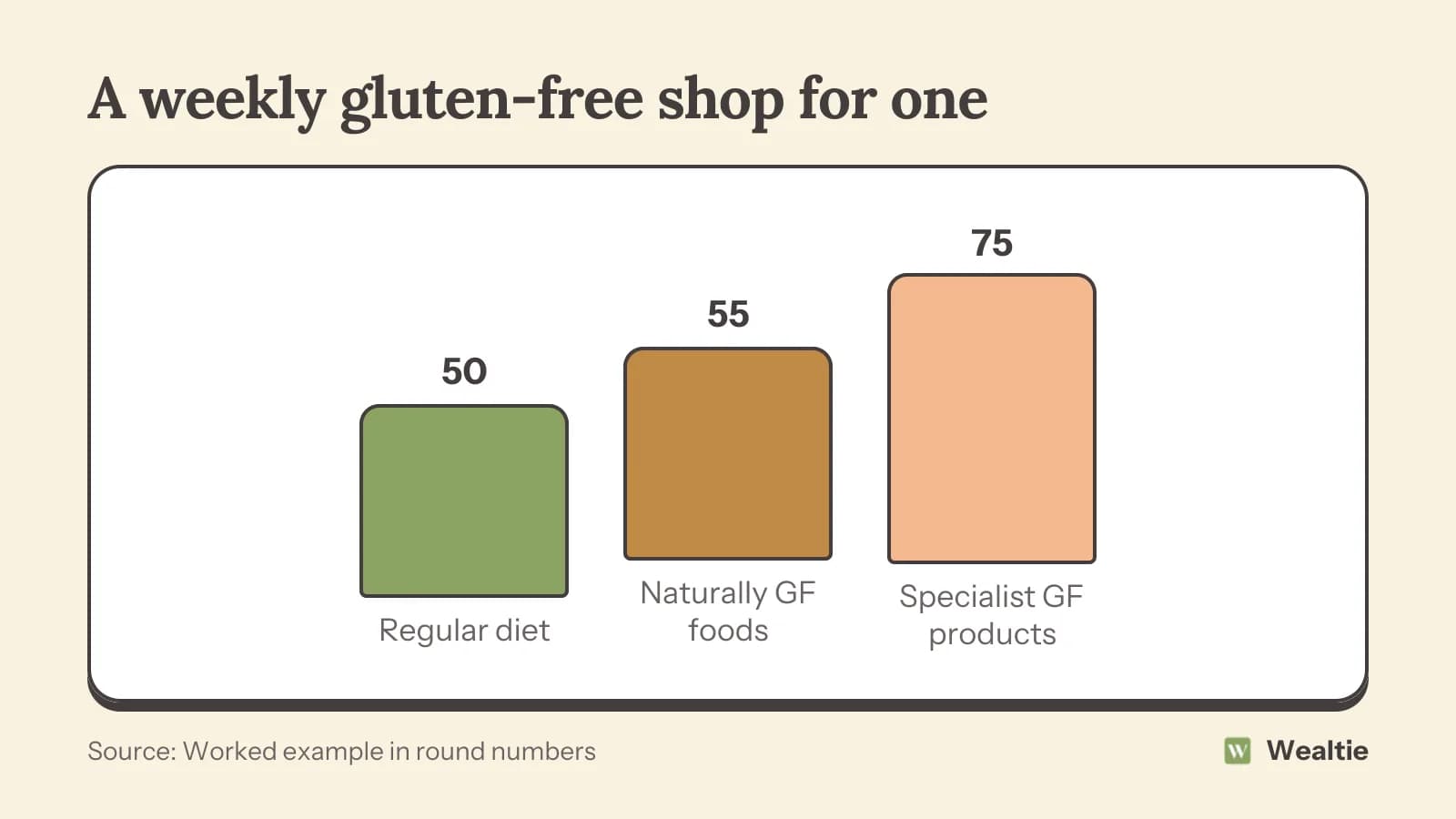
A gluten-free shop that leans heavily on specialist bread, pasta and snacks costs 75, or 25 more than a regular shop. Building meals around naturally gluten-free foods brings it to 55, only slightly more than a regular diet. Over a year, that difference of 20 a week is about 1,040.
Which foods are naturally gluten-free?
Many everyday foods contain no gluten:
- Grains and starches: rice, potatoes, corn, polenta, quinoa, buckwheat and oats labelled gluten-free
- Protein: meat, fish, eggs, tofu, beans, lentils and nuts
- Dairy: milk, cheese, yoghurt and butter, in most cases
- Fruit and vegetables: all fresh, frozen and plain tinned produce
Processed versions of these can contain gluten, like sausages, sauces, stock cubes and seasoned products, so always check labels. People with coeliac disease also need to watch for cross-contamination, so follow advice from your doctor or dietitian.
How do you eat gluten-free for less?
Build meals around rice and potatoes
Rice dishes, jacket potatoes, risottos, curries and stir-fries with rice are cheap and naturally gluten-free.
Bake your own bread
Gluten-free flour mixes are cheaper than buying ready-made loaves, especially in larger bags. Baking in batches and freezing slices keeps bread fresh.
Buy specialist items in bulk
If you use gluten-free pasta or flour often, larger packs or multi-buys usually cost less per kilogram. Online shops and warehouse stores sometimes have better prices.
Compare supermarket own brands
Own-brand gluten-free ranges are often cheaper than branded ones and widely available.
Cook in batches
Soups, stews and curries made in bulk with naturally gluten-free ingredients are cheap and easy to freeze. How to plan meals on a budget covers planning a week of meals.
Keep snacks simple
Fruit, nuts, yoghurt, rice cakes and popcorn are cheaper than specialist gluten-free biscuits and bars.
What about eating out?
Eating out gluten-free can be expensive and limits your choice. Checking menus in advance, choosing naturally gluten-free dishes and taking packed lunches for work or trips keeps costs down. How to save money eating out has more ways to enjoy meals out for less.
Is there any financial support?
In some countries, people with a medical diagnosis of coeliac disease can get some gluten-free staples on prescription, tax relief on the extra cost or other support. It varies a lot by country and region, so check with your doctor, dietitian or a coeliac support organisation where you live. How to budget for medical bills covers planning for other health-related costs.
Planning ahead makes a big difference. Many people on a gluten-free diet spend more because they buy expensive convenience foods when they're hungry and short of options. Keeping a stock of naturally gluten-free basics, like rice, potatoes, eggs, tinned beans and frozen vegetables, means there's always something quick and affordable to cook.
If you live with others who eat gluten, you don't necessarily need to cook separate meals. Many family favourites, like curries, chilli, roast dinners and stir-fries, can be made gluten-free for everyone with a few simple swaps, which saves money and time. Keep separate toasters, butter and chopping boards if cross-contamination is a concern.
Reading labels takes time at first, but it gets quicker. Once you know which everyday products are safe, you can buy cheaper own-brand versions with confidence instead of paying extra for items marketed as gluten-free that never contained gluten in the first place.
Finally, keep an eye on offers and reduced items for specialist products you rely on. Gluten-free bread and pasta freeze well, so buying extra when they're discounted can bring the cost down over the year.
How can Wealtie help you manage the cost?
Log gluten-free groceries in a food expense category, and if you want to see the extra cost clearly, give specialist products their own category. Setting a monthly budget for food shows whether batch cooking and naturally gluten-free meals are bringing the cost down.
Questions people ask
Usually, yes, mainly because specialist bread, pasta and baked goods cost more. Naturally gluten-free foods cost about the same as usual.
Build meals around rice, potatoes, meat, eggs, beans and fresh produce, bake your own bread and buy specialist items in bulk.
Rice, potatoes, corn, quinoa, meat, fish, eggs, beans, lentils, most dairy and all plain fruit and vegetables are naturally gluten-free.
Some countries offer prescriptions, tax relief or other support for people diagnosed with coeliac disease. Check what's available where you live.
This article is general information, not financial, tax or legal advice. Your situation is your own; check the numbers that apply to you before you act on them.