Saving: Do round-up savings work? How spare change adds up
Round-up savings move the spare change from each card purchase into savings, and they work best as a starting habit rather than your main plan. In a worked example, rounding up 60 purchases a month saves about 30 a month, or 360 a year.
 By Wealtie Team · 3 min read
Key takeaways
- Round-up savings move the spare change from each purchase into savings.
- In a worked example, rounding up 60 purchases a month saves about 360 a year.
- They're a great way to start saving, but usually too small to be your only plan.
- Combine round-ups with a fixed monthly transfer for real progress.
What are round-up savings?
Round-up savings round each card purchase up to the next whole number and move the difference into savings. If you spend 3.40 on a coffee, 0.60 goes into your savings pot. Many banks and apps offer this feature, and some let you multiply the round-up, like saving double or triple the spare change.
It's popular because it's painless. You barely notice the small amounts leaving, but they add up over time. For people who find it hard to save at all, that painless start can be the most important part.
How much do round-ups save?
Here's a worked example for someone who makes 60 card purchases a month, with an average round-up of 0.50, in round numbers that work in any currency:
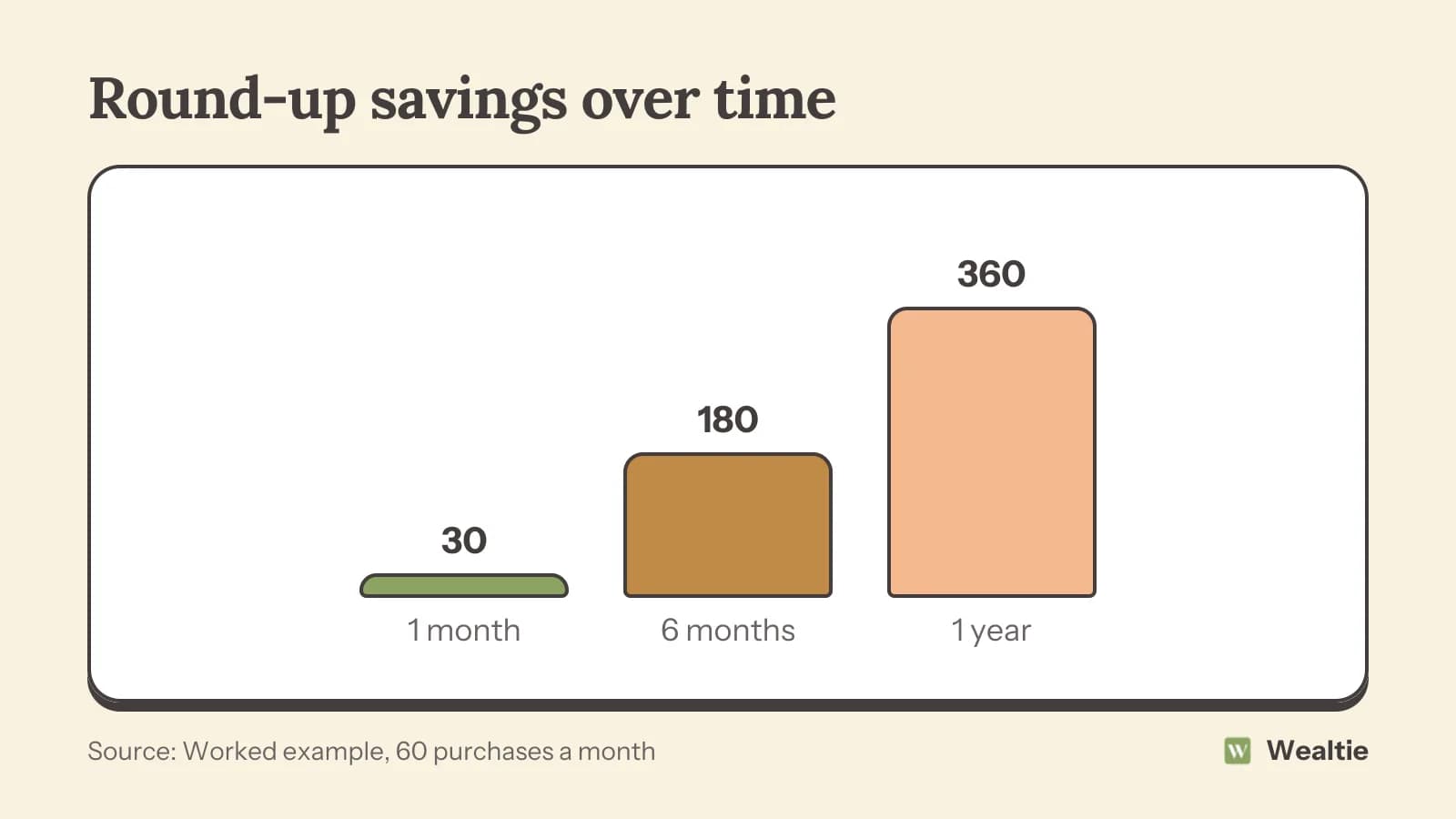
That's about 30 a month, 180 after six months and 360 after a year. If you double the round-up, it becomes 720 a year. Your own figures depend on how often you use your card and how close your purchases are to whole numbers. Contactless payments for small items, like coffee and snacks, usually create lots of round-ups.
Do round-up savings work?
Yes, as a habit-builder. For people who find it hard to save anything, round-ups are an easy first step. They build a savings balance from almost nothing, which is motivating, and they prove that saving doesn't have to hurt.
But they're usually too small to be your only plan. 360 a year is useful, but it won't build an emergency fund or a house deposit on its own. Round-ups work best alongside a regular transfer on payday. Think of them as a bonus on top of your main savings, rather than the savings themselves.
They depend on spending
Round-ups grow when you spend more, which is a little backwards. If you cut spending, your round-ups shrink. That's another reason not to rely on them alone.
How do you get the most from round-ups?
A few ideas:
- Multiply them. Doubling or tripling round-ups, if your bank allows it, makes a big difference.
- Give them a goal. Point round-ups at something specific, like a holiday or an emergency fund starter.
- Combine with a fixed transfer. Add a regular amount on payday, so savings grow even when spending is low.
- Check the balance monthly. Seeing the total grow is part of what keeps the habit going.
Pay yourself first explains why a fixed transfer on payday works so well. Some people also add a manual round-up at the end of each month, moving whatever's left in their spending account.
What should you watch out for?
Check whether the feature costs anything. Most bank round-ups are free, but some apps charge a monthly fee, which can eat a large share of small savings. Make sure the savings account pays some interest, or at least doesn't charge. And keep an eye on your current account balance, since lots of small round-ups can push a low balance into an overdraft.
Round-ups and budgeting
Round-ups move money out of your spending account, so include them in your budget. Checking the total each month shows how much they're moving. If money is tight, a small round-up is fine, but make sure essentials are covered first.
Pair them with a challenge
Some people combine round-ups with a savings challenge, like saving a little more each week, to keep things interesting. Seeing two pots grow side by side is motivating, and it builds the confidence to save more regularly.
What can you do with round-up savings?
Use them for something that feels rewarding. Many people use round-ups to start an emergency fund, then switch them to a fun goal once the fund is in place. How to build an emergency fund covers the first step, and the 52-week savings challenge is another way to make saving feel like a game.
How do you go beyond round-ups?
Once the habit is in place, raise your savings with a fixed monthly amount, and increase it each time you get a pay rise. How to save 1,000 fast has ideas for building a bigger cushion quickly. Once round-ups have proved you can save without noticing, a fixed amount is the natural next step.
How do you track round-up savings in Wealtie?
Add your savings pot as an account, and record round-ups as transfers, which aren't counted as spending, so your spending figures stay accurate. Checking the account each month shows how your spare change is adding up, and your expense categories show where the original purchases went. A limit in the budget tracker keeps the rest of your spending on plan.
Questions people ask
Yes, as a way to start saving, but they're usually too small to be your only savings plan.
In a worked example, 60 purchases a month with an average round-up of 0.50 saves about 360 a year.
If you can afford it, doubling or tripling round-ups makes a big difference.
Usually not. Monthly fees can eat a large share of small savings, and many banks offer round-ups for free.
This article is general information, not financial, tax or legal advice. Your situation is your own; check the numbers that apply to you before you act on them.