Budgeting: Window cleaner cost: is it worth paying for?
Window cleaner cost is modest per visit but adds up over a year, especially with frequent cleans. In a worked example, a clean every eight weeks costs 130 a year, against 30 for DIY tools.
 By Wealtie Team · 3 min read

Key takeaways
- Window cleaner cost is modest per visit but adds up over a year.
- Cleaning less often cuts the yearly cost a lot.
- DIY is cheap for ground-floor windows.
- Paying a professional is safer for upper floors.
How much does a window cleaner cost?
Clean windows let in more light and make a home look cared for, but cleaning them, especially upstairs, is a job many people would rather pay for. Window cleaner cost depends on the size of your home, the number of windows, how often you have them cleaned and whether you want frames, sills and conservatory roofs done too.
Here's a worked example of a year of window cleaning for a typical house, in round numbers that work in any currency:
| Option | Yearly cost |
|---|---|
| DIY tools and cleaner | 30 |
| Window cleaner every 8 weeks | 130 |
| Window cleaner every 4 weeks | 260 |
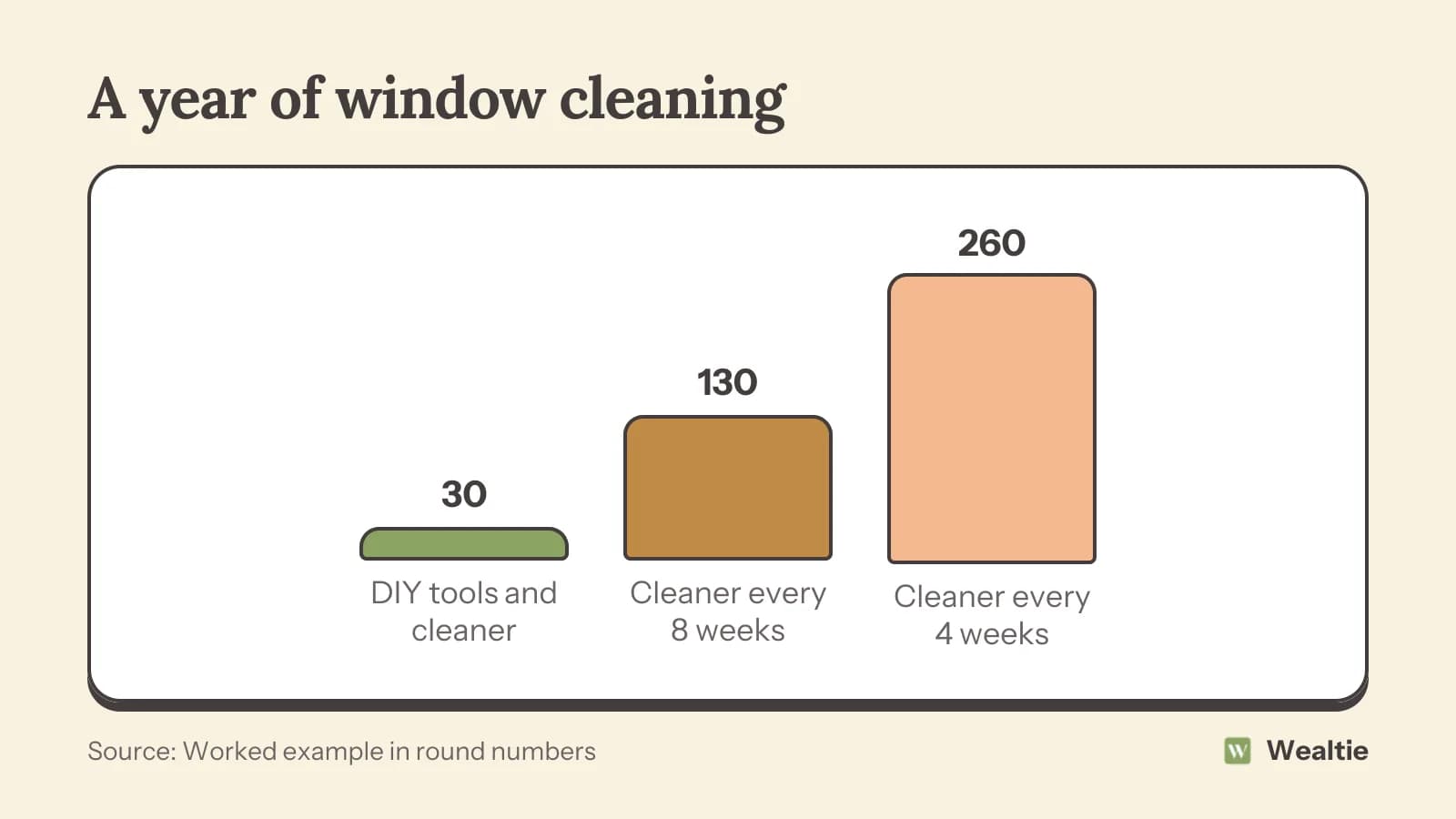
At around 20 a visit, a clean every eight weeks costs about 130 a year, while every four weeks costs 260. Doing it yourself with a squeegee, cloth and cleaner costs about 30 for tools that last years.
How often do windows need cleaning?
Many homes are happy with a clean every eight weeks or so. Homes near busy roads, the coast or building work may need more frequent cleaning. Choosing a longer interval is one of the easiest ways to cut the yearly cost, since many people don't notice much difference between four and eight weeks.
Should you clean windows yourself?
DIY for ground floors
Ground-floor windows are easy to clean yourself with a bucket, squeegee and cloth. It takes an hour or so and costs very little.
Upper floors
Working on ladders is risky. Extendable poles help reach upper windows from the ground, but for tall homes or awkward windows, a professional is often safer.
Inside windows
Most window cleaners only do the outside. Cleaning insides yourself is usually quick and easy.
What do window cleaners offer?
Many use water-fed poles that clean from the ground with purified water, which leaves windows streak-free without detergents. Some include frames and sills, while others charge extra. Conservatory roofs, gutters and fascias are often extra services.
Is a window cleaner worth it?
For many households, a window cleaner is a small cost that saves time and avoids risky ladder work. If you have a large house or upper-floor windows, it may be well worth it. If you have a flat with easy-to-reach windows or enjoy doing it yourself, DIY is much cheaper. Is a cleaner worth it? covers the bigger question of paying for help around the house, and cost per use can help you judge value.
How do you keep the cost down?
Clean less often
Every eight or twelve weeks instead of four can halve the yearly cost or more.
Do the easy windows yourself
Clean ground-floor windows yourself and pay only for upper floors.
Ask about regular customer prices
Some cleaners offer lower prices for regular customers or neighbours on the same street.
Skip extras you don't need
Frames and sills don't need cleaning every visit.
How do you budget for it?
A regular window cleaner is a small recurring cost. Adding it to your budget as a fixed amount, even if it's only every couple of months, stops it being forgotten. Fixed vs variable expenses covers how to plan for regular costs like this, and how to plan a home maintenance budget covers other upkeep.
Ask neighbours for recommendations. A window cleaner who already works on your street may offer a lower price, since they're in the area anyway, and neighbours can tell you whether they're reliable. Regular customers often get a more consistent service and priority when the weather has caused delays.
Agree how and when you'll pay. Many window cleaners leave a note and collect payment later, or take card or bank transfer. Knowing the arrangement avoids misunderstandings and missed payments. If you're away often, a regular standing payment can make it easier.
Some window cleaners also offer gutter clearing, conservatory roof cleaning or fascia cleaning. Bundling occasional extra jobs with a regular clean can be cheaper than booking separate services.
If you clean windows yourself, a good squeegee and microfibre cloth make the job quicker and leave fewer streaks than paper towels. Cleaning on a dull day stops the cleaner drying too fast and leaving marks.
Finally, review how often you need a clean after a few months. Many people find they can stretch the interval without noticing, which lowers the yearly cost.
How can Wealtie help you track home services?
Add your window cleaner as a recurring transaction in Wealtie and log it in a home expense category. Seeing all your regular home services together, like cleaners and gardeners, shows what they cost over a year. How to set up recurring bills in Wealtie shows how.
Questions people ask
In a worked example, a clean every eight weeks at about 20 a visit cost around 130 a year.
Many homes are happy with every eight weeks. Homes near roads, the coast or building work may need more often.
Yes. DIY tools cost about 30 and last years, though upper floors are safer left to a professional.
Clean less often, do ground-floor windows yourself, ask about regular customer prices and skip extras you don't need.
This article is general information, not financial, tax or legal advice. Your situation is your own; check the numbers that apply to you before you act on them.