Saving: How to set a home maintenance budget before something breaks
A common home maintenance budget rule is to set aside about one in every hundred of your home's value each year. On a 250,000 home, that's 2,500 a year, or about 208 a month, more if the house is older.
 By Wealtie Team · 3 min read

Key takeaways
- A common rule of thumb is to budget about one in every hundred of your home's value each year for maintenance.
- On a 250,000 home, that's 2,500 a year, or about 208 a month.
- Older homes, homes with large gardens and homes in harsh climates usually need more.
- Keep the money in a separate pot so a broken boiler doesn't come out of your emergency fund.
How much should your home maintenance budget be?
A common starting point is about one in every hundred of your home's value each year. It's a rule of thumb, not a law, and it gives you a figure to plan around before you've got a few years of your own repair history.
In round numbers that work in any currency:
| Home value | Per year | Per month |
|---|---|---|
| 150,000 | 1,500 | 125 |
| 250,000 | 2,500 | 208 |
| 400,000 | 4,000 | 333 |
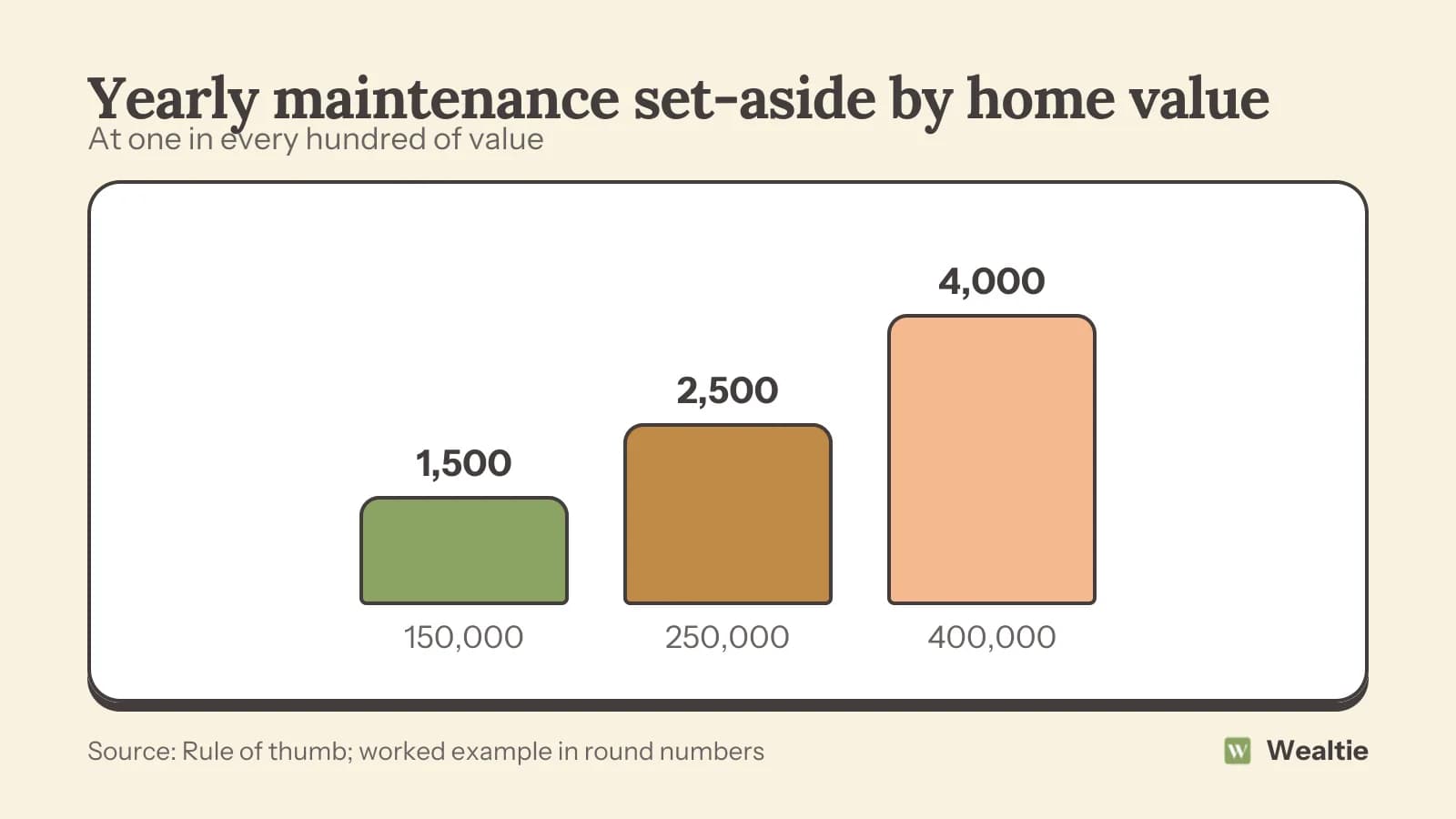
Some years you'll spend far less, and then a roof or a boiler will take several years' worth at once. That's why a steady monthly amount works better than paying as things break.
What changes the amount?
The age and condition of the home most of all. A new build might need very little for the first few years. A house that's 60 years old, with original windows and an ageing roof, can need much more.
Other things that push it up:
- A large garden, trees, or outbuildings
- A harsh climate, with frost, heavy rain or strong sun
- Older systems: boiler, wiring, plumbing
- A flat roof or a lot of exterior woodwork
If you live in a flat, some maintenance may be covered by a service charge or building fees, so check what you pay for already and what's yours.
What does maintenance include?
The regular jobs that keep things working, and the repairs when they don't:
| Type | Examples |
|---|---|
| Yearly | Boiler service, gutter clearing, smoke alarm checks |
| Every few years | Repainting, sealing, servicing appliances |
| Occasional repairs | Leaks, broken appliances, a cracked window |
| Big replacements | Roof, boiler, windows, kitchen appliances |
Spread the yearly jobs across the seasons. Before winter: the boiler service, gutters and draught-proofing. In spring: a check of the roof after storms and any outside painting. Spreading the jobs spreads the cost too.
The yearly jobs are the cheapest way to avoid big repairs. A boiler service costs far less than a boiler breakdown in January.
How do you save for it?
Set up a monthly transfer to a separate pot on payday. Keep it apart from your emergency fund. A repair you could see coming, like replacing an old boiler, is a planned cost. An emergency fund is for the things you couldn't, like losing your job. What counts as an emergency draws the line.
A sinking fund is the name for this kind of pot, and it works the same way for the car insurance or holiday gifts.
Track what you spend for a year. After 12 months you'll know whether the rule's too high or too low for your home, and you can adjust the monthly amount. If you've just bought, ask the previous owners or check the survey for the age of the boiler, roof and windows, and write those down.
If you're buying a home, start the pot before you move in. The first year often brings surprises the survey didn't catch.
How do you plan for big replacements?
List the big items and how old they are. Boilers, roofs and windows each have a rough lifespan. If your boiler is near the end of its life, start saving for its replacement specifically, on top of the monthly maintenance amount.
Say a replacement would cost 3,000 and you think it'll need doing in about three years. That's about 83 a month for that alone. Knowing it's coming takes most of the sting out of it.
What if you rent?
Most structural repairs are the landlord's responsibility, depending on your lease and local law. You might still pay for small things, like replacing light bulbs or unblocking a drain you caused. A small amount set aside each month, say 20, covers most of those.
How do you keep the costs down?
Do the small jobs on time, and learn a few simple ones yourself. Bleeding radiators, resealing a bath, clearing gutters and replacing washers are often straightforward. For anything with gas, electrics or heights, use a qualified professional.
Keep receipts and warranty documents in one folder, since some appliance repairs are covered for a while after purchase. Get more than one quote for big jobs, and ask what's included. The cheapest quote isn't always the best value if it leaves out something you'll need later.
How do you track a repair fund in Wealtie?
Add the repair pot as its own account and move the monthly amount into it as a transfer, which isn't counted as spending. When a repair comes up, log it as an expense from that account. Your net worth tracker shows the pot growing, and a monthly limit in the budget tracker keeps the everyday budget separate from house costs.
Questions people ask
A common rule of thumb is about one in every hundred of your home's value each year. On a 250,000 home, that's 2,500 a year, or about 208 a month.
Planned repairs and replacements are better paid from a separate maintenance pot. Keep the emergency fund for things you couldn't see coming.
Usually, yes. Older roofs, boilers, windows and wiring tend to need more repairs and replacements.
Estimate the cost and how many years until it's needed, then divide to get a monthly amount on top of your usual maintenance savings.
This article is general information, not financial, tax or legal advice. Your situation is your own; check the numbers that apply to you before you act on them.