Budgeting: Fixed vs variable expenses: what they are and how to budget for each
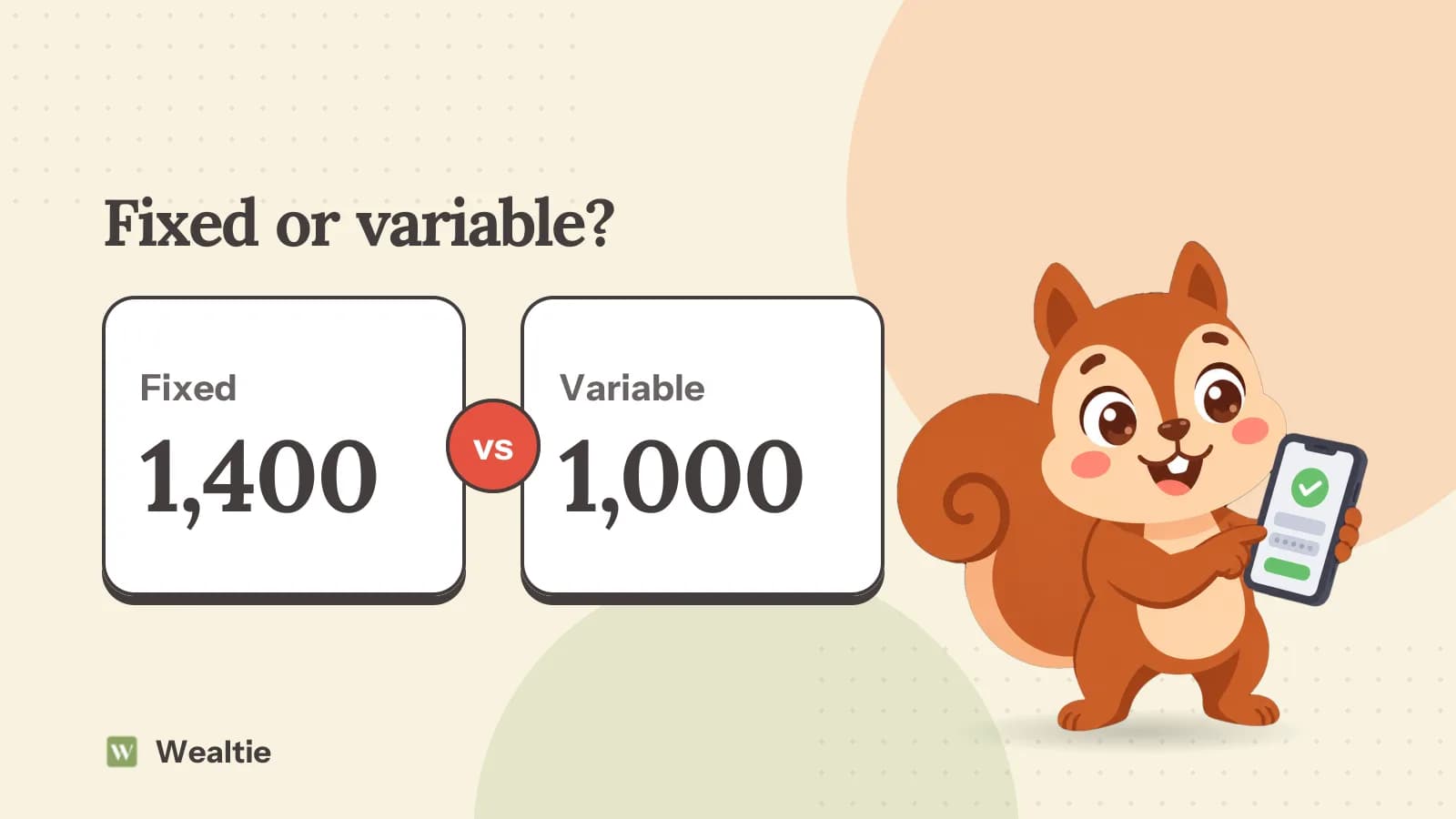
Fixed vs variable expenses is the difference between costs that stay the same each month, like rent, and costs that change, like groceries. In a worked example, a 2,400 monthly budget splits into 1,400 fixed and 1,000 variable, and the variable part is where most of your control lies.
 By Wealtie Team · 3 min read
Key takeaways
- Fixed expenses stay the same each month, while variable expenses change with your choices and circumstances.
- In a worked example, a 2,400 budget splits into 1,400 fixed and 1,000 variable.
- Variable expenses are where most day-to-day savings come from.
- Fixed expenses can still be cut, but usually through bigger decisions made less often.
What are fixed vs variable expenses?
Fixed expenses are costs that stay the same, or nearly the same, every month. Variable expenses are costs that change from month to month, depending on what you use, buy or choose. Knowing which is which helps you build a budget that holds up, because it shows what's locked in and where you have room to adjust.
Some costs sit in between. An energy bill might be paid at a fixed monthly amount but change with the seasons. A phone contract is fixed, but extra charges make it vary. It's fine to put these in whichever group fits how you pay them.
What are examples of fixed expenses?
Common fixed expenses include:
- Rent or mortgage payments
- Insurance premiums
- Loan and car finance repayments
- Phone and internet contracts
- Subscriptions and memberships
- Childcare with a set fee
- Council or property taxes paid in instalments
They're usually set by a contract or agreement, and they're paid on a regular date. Many are paid by direct debit or standing order, so they leave your account automatically. Because they're automatic, they're easy to forget, which is why a yearly review matters.
What are examples of variable expenses?
Common variable expenses include:
- Groceries and household items
- Fuel and public transport
- Eating out and takeaways
- Clothing and shopping
- Entertainment and hobbies
- Gifts
- Personal care
They depend on your habits, the season and your choices each week. They're also the costs most likely to drift up without you noticing. Tracking them weekly, rather than waiting for the end of the month, gives you time to adjust.
How do fixed and variable expenses fit in a budget?
Here's a worked example for a monthly budget of 2,400, in round numbers that work in any currency:
| Fixed | Amount | Variable | Amount |
|---|---|---|---|
| Rent | 900 | Groceries | 400 |
| Loan repayment | 280 | Transport | 150 |
| Insurance | 100 | Eating out | 150 |
| Phone and internet | 80 | Shopping | 150 |
| Subscriptions | 40 | Other | 150 |
| Total | 1,400 | Total | 1,000 |
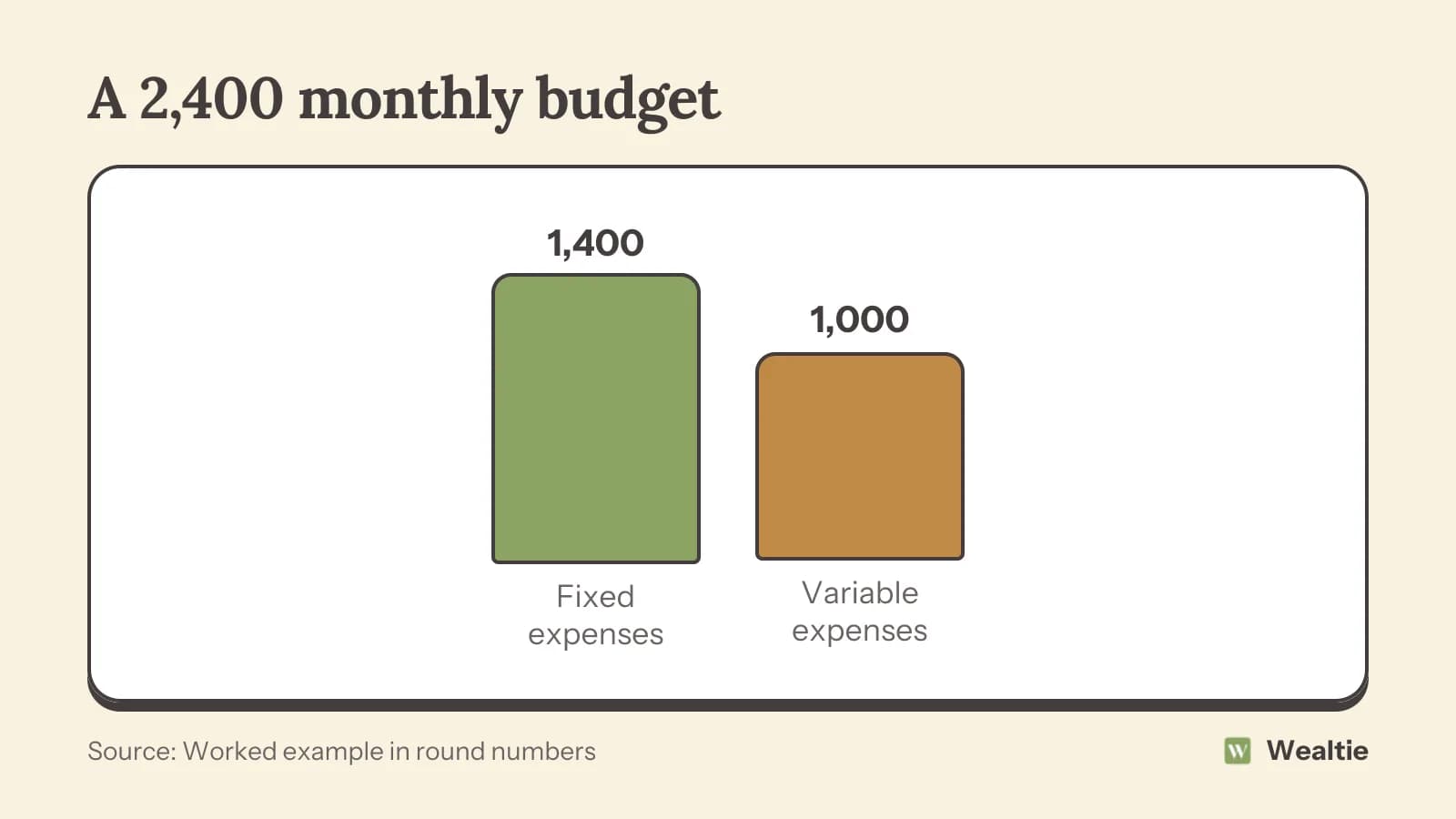
In this example, fixed costs take more than half the budget. That 1,400 leaves your account almost no matter what you do, so it needs to be covered first. The 1,000 of variable spending is where most of your everyday choices happen.
Why does the difference matter?
It tells you where to look when you need to change something. If you want to save a little each month, variable expenses are usually the quickest place to start. Small changes to groceries, eating out or shopping show up straight away.
If you need to make a bigger change, fixed expenses matter more. A cheaper phone contract, a lower insurance quote or a less expensive home can save more over a year than trimming many small purchases. These decisions take more effort but are made less often, and the saving repeats every month without further work.
Fixed costs set your baseline
Your fixed costs are the minimum you need each month. Knowing that figure helps you plan an emergency fund, since it shows how much you'd need to cover if your income stopped. It also shows how much room you have for everything else. Many people find their fixed costs have grown slowly over the years, as new subscriptions and contracts were added one at a time.
How do you budget for variable expenses?
Set a monthly limit for each main category, based on what you've spent over the last few months. Then check in regularly, weekly or every couple of weeks, to see how you're doing. If one category runs high, you can adjust another before the month ends.
Some variable costs are irregular but predictable, like gifts, car repairs or yearly subscriptions. Setting a little aside each month for these smooths out the bumps. Sinking funds and how to budget for annual expenses cover this in detail.
How do you reduce fixed expenses?
Review them once or twice a year. Compare insurance quotes at renewal, check whether your phone or internet contract is still good value, and cancel subscriptions you no longer use. Many providers offer better prices to customers who ask. How to negotiate your bills has tips for getting a better deal, and how to organise your bills helps you see them all in one place. Setting a reminder a month before each contract ends gives you time to compare and switch before you're moved onto a higher rate.
How do you track fixed and variable expenses in Wealtie?
Set up fixed costs as recurring transactions with the bill tracker, so they log themselves on the day. Track variable spending in your expense categories as it happens. A monthly limit in the budget tracker, with Budget Health, shows whether your variable spending is on pace for the month.
Questions people ask
Fixed expenses stay the same each month, like rent or insurance. Variable expenses change, like groceries, fuel and eating out.
Variable. The amount changes with what you buy, how many people you feed and the time of year.
Variable expenses are quickest to cut. Fixed expenses can save more over time but need bigger decisions, like switching providers.
Set a monthly limit for each category based on recent spending, and check in weekly so you can adjust before the month ends.
This article is general information, not financial, tax or legal advice. Your situation is your own; check the numbers that apply to you before you act on them.