Budgeting: Snack spending: how small treats add up
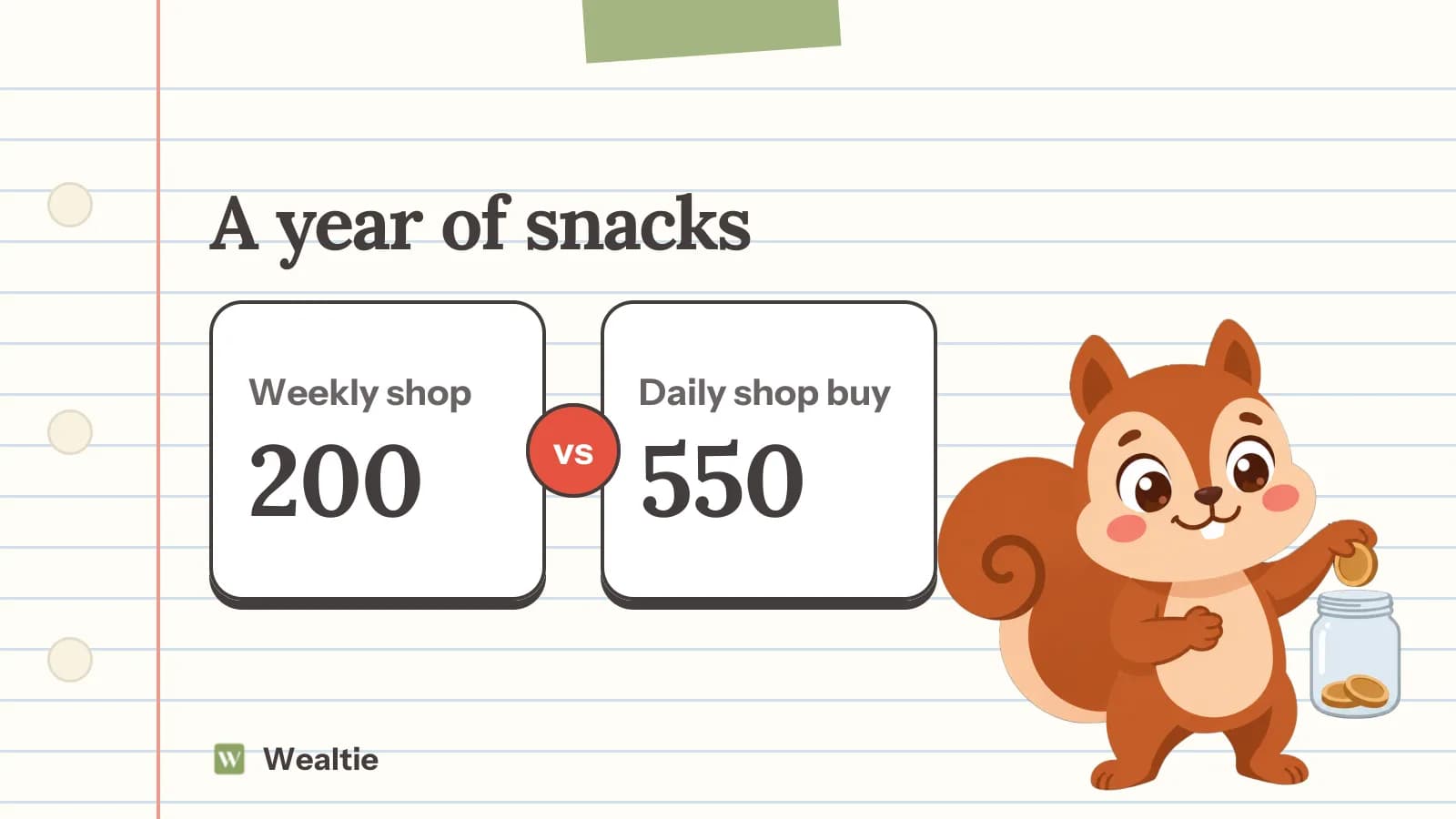
Snack spending is easy to miss because each purchase is small, but daily treats from shops and vending machines add up. In a worked example, one shop snack a day costs 550 a year, while buying snacks in the weekly shop costs 200.
 By Wealtie Team · 3 min read
Key takeaways
- Snack spending adds up because purchases are small and frequent.
- Shop and vending machine prices are much higher than supermarket prices.
- Packing snacks from home cuts the cost a lot.
- A weekly snack budget keeps treats enjoyable without overspending.
How much does snack spending add up to?
A chocolate bar from the corner shop, crisps from a vending machine, a pastry with your coffee: snacks are small, quick and easy to buy without thinking. That's exactly what makes snack spending add up. Each purchase is cheap, but daily habits can cost hundreds a year.
Here's a worked example, in round numbers that work in any currency:
| Habit | Yearly cost |
|---|---|
| Snacks from the weekly shop | 200 |
| One shop snack a day | 550 |
| Shop snack and drink a day | 900 |
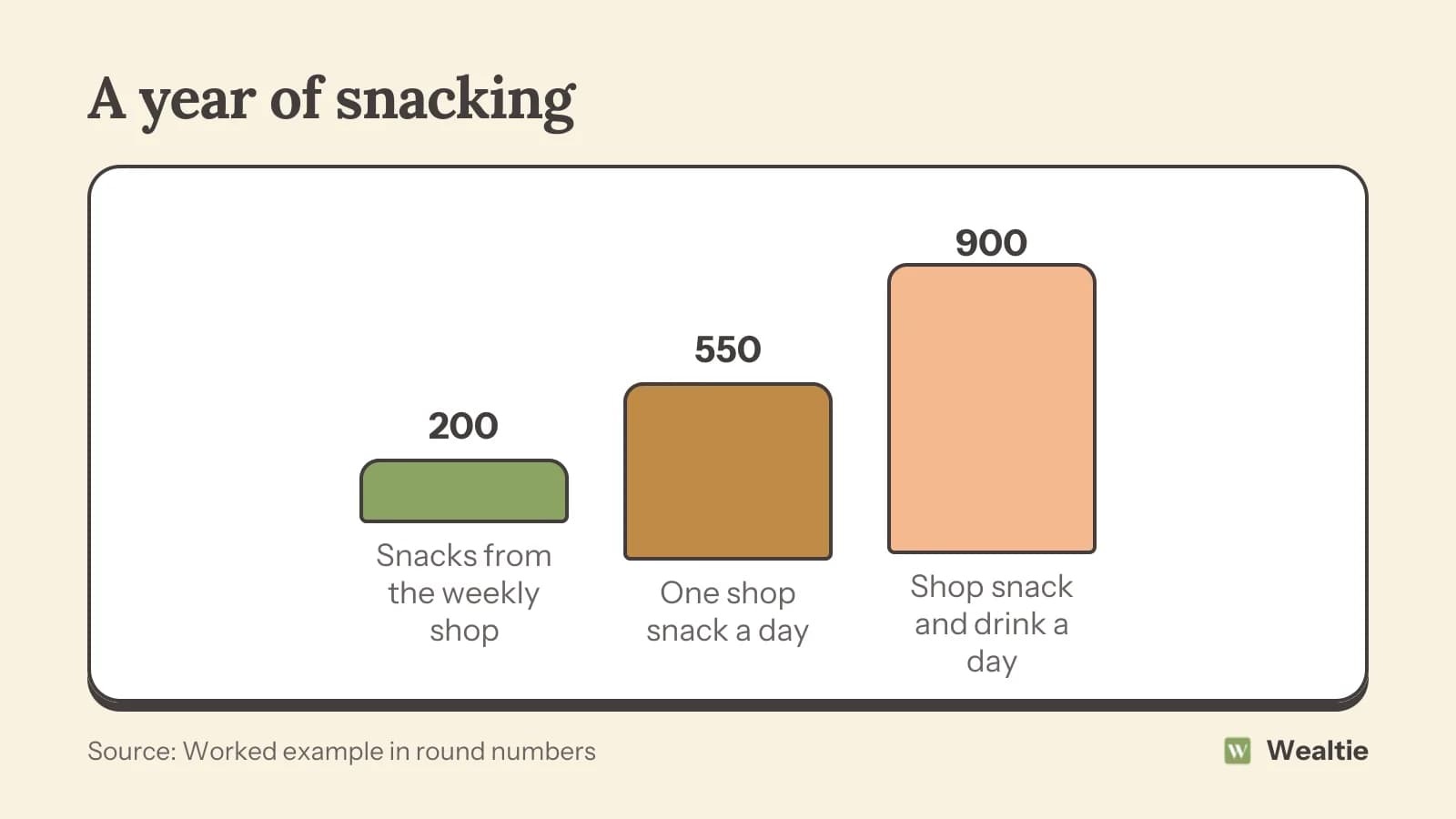
One snack a day at around 1.50 from a shop costs about 550 a year. Adding a drink brings it to about 900. Buying the same kind of snacks in the weekly supermarket shop and taking them with you costs around 200.
Why are snacks so easy to overspend on?
They're everywhere
Checkouts, petrol stations, train stations and offices all have snacks within reach.
They feel too small to count
A snack rarely feels like real spending, so it doesn't get tracked.
Hunger and tiredness
When you're hungry, tired or stressed, it's harder to resist an easy treat. Emotional spending covers how feelings drive small purchases.
Convenience pricing
Single snacks from small shops and vending machines cost much more than multipacks.
How do you snack for less?
Pack snacks from home
Fruit, nuts, yoghurt, crackers or homemade bakes from the weekly shop cost far less than buying on the go.
Buy multipacks
If you like a particular snack, buying a multipack and taking one each day is much cheaper.
Eat proper meals
Regular, filling meals reduce the urge to snack. How to plan meals on a budget covers building a weekly plan.
Avoid shopping hungry
Shopping on an empty stomach makes snacks harder to resist.
Set a weekly snack budget
Decide how much you'll spend on snacks each week and stick to it. Treats are more enjoyable when they're planned.
Notice the trigger
If you always buy a snack at the same time or place, like the afternoon slump or at the station, plan an alternative for that moment. How to stop impulse buying has more ideas.
How do snacks fit with other daily habits?
Snacks often come with other small spends, like coffee, lunch and drinks. Looking at them together gives a clearer picture. How much do you spend on coffee? and how much can bringing lunch to work save? cover the other big daily habits.
Planning snacks for the week is one of the simplest ways to save. When you do your weekly shop, buy enough snacks for work or school days, and portion them into small containers or bags. Having them ready means you're far less likely to stop at a shop or vending machine. Many people find that once snacks are planned, they also eat more healthily without trying.
It helps to choose snacks you enjoy. If your packed snacks feel like a punishment, you'll end up buying something else anyway. Mixing healthy options with a few treats you look forward to makes the habit easier to keep.
Workplaces can be full of snack temptations, from vending machines to office treats. Keeping your own snacks in a drawer at work gives you an easy alternative and stops impulse purchases during the afternoon slump.
Children's snacks add up too. Buying multipacks, baking at home and packing snacks for school and days out can save a lot compared with buying from shops every time. Letting children choose some of their snacks in the weekly shop helps them feel involved.
Think about drinks as well. Many people buy a drink with every snack, which can double the cost. Carrying a reusable water bottle cuts that part of the spending to almost nothing.
Watch out for snack spending when you're out with friends or travelling. Petrol stations, train stations and cinemas charge much higher prices, so bringing something from home can save a lot on a day out.
Finally, try tracking your snacks for a month. Writing down each purchase, however small, shows the real total. Seeing that figure is often the push people need to change the habit for good.
Some people give themselves a small weekly treat budget in cash. When it's gone, there are no more shop snacks until next week. It keeps treats special, makes the limit easy to see and stops small purchases from quietly adding up on a card.
If you work from home, keep snacks in a cupboard rather than on your desk. Out of sight often means out of mind, and you'll eat and spend less without feeling deprived.
How can Wealtie help you track snacks?
Give snacks and drinks bought on the go their own expense category in Wealtie, and set a monthly budget for them. Logging each purchase shows how quickly small treats add up and helps you stay within your limit.
Questions people ask
Often more than they think. In a worked example, one shop snack a day cost about 550 a year.
Pack snacks from home, buy multipacks, eat proper meals, avoid shopping hungry and set a weekly snack budget.
Yes. In a worked example, snacks from the weekly shop cost about 200 a year, compared with 550 bought daily from shops.
Snacks are everywhere, feel too small to count and are tempting when you're hungry, tired or stressed.
This article is general information, not financial, tax or legal advice. Your situation is your own; check the numbers that apply to you before you act on them.