Budgeting: How much do you spend on coffee? Work it out, then decide
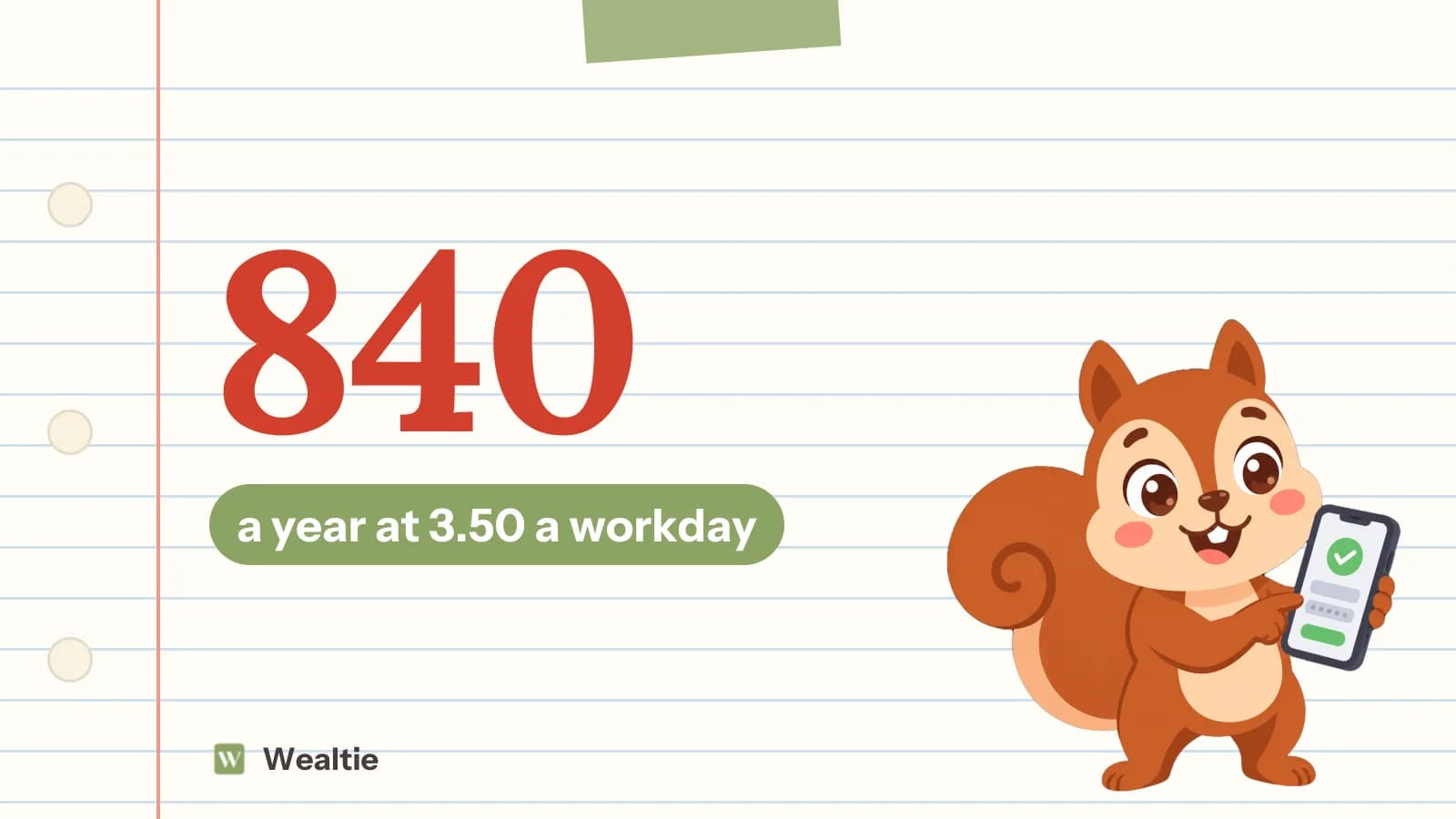
How much do you spend on coffee? Multiply the price of a cup by how often you buy one: at 3.50 a day on 20 working days, that's 70 a month or 840 a year, and making most of them at home could save over 500.
 By Wealtie Team · 3 min read
Key takeaways
- Multiply the price of a cup by how many you buy to see your real coffee spending.
- At 3.50 a day on 20 working days, that's 70 a month or 840 a year.
- Buying once a week and making the rest at home brings it down to about 290 a year.
- Keep the coffees you enjoy most, and cut the ones you buy out of habit.
How much do you spend on coffee?
Take the price of your usual cup and multiply by how often you buy one. It's one of the easiest numbers in your budget to work out, and often one of the most surprising. Small daily purchases don't feel like much, because each one's only a few coins. Check your bank statement for a month and count every coffee shop payment, including the weekends, to get your real figure.
What does a daily coffee add up to?
Here's a worked example, in round numbers that work in any currency, for someone who buys a coffee at 3.50 every working day:
| Per month | Per year | |
|---|---|---|
| One coffee every workday, 20 days | 70 | 840 |
| One coffee a week bought, the rest at home | 24 | 288 |
| All made at home | 10 | 120 |
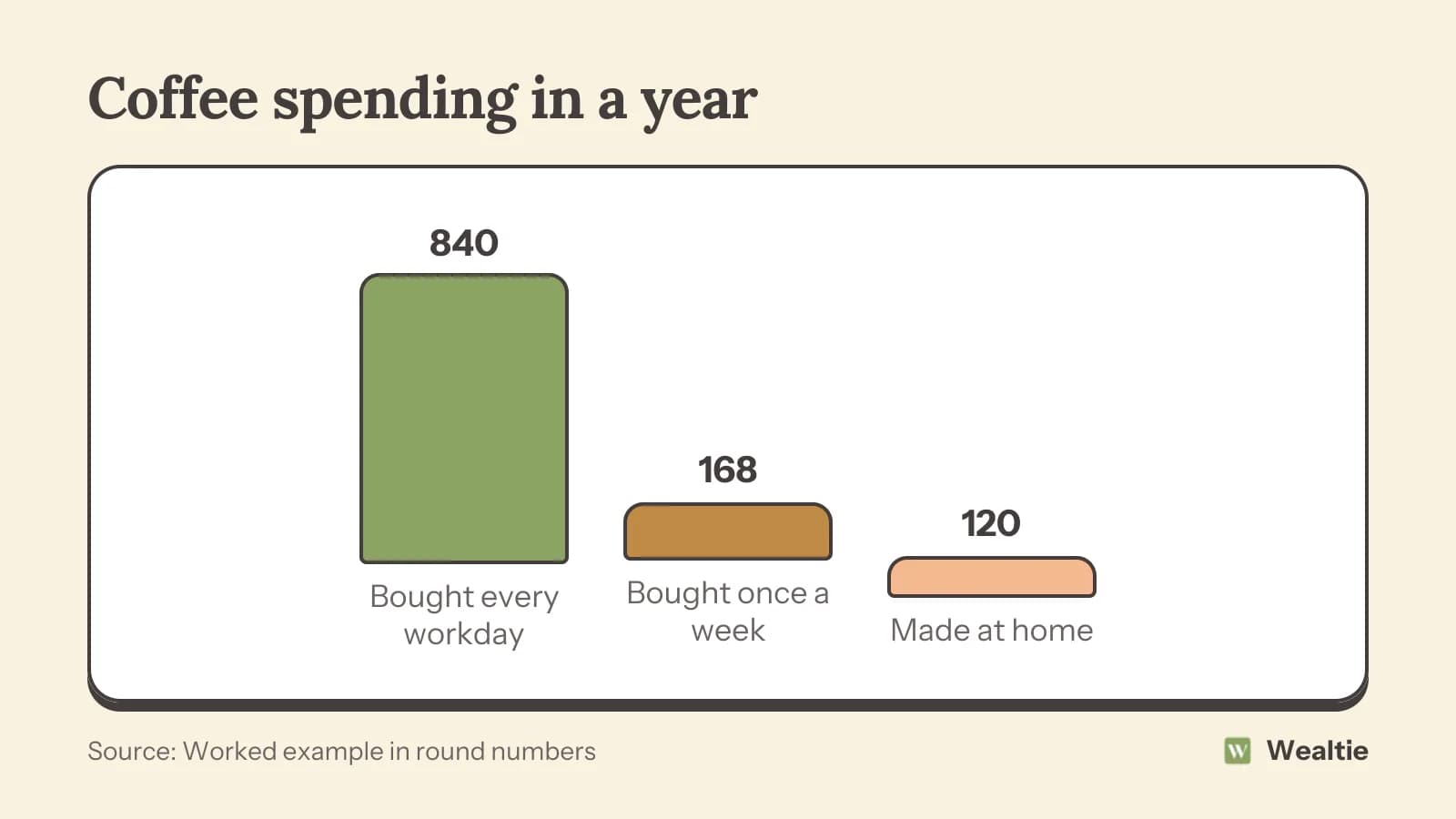
The middle option keeps the treat and saves about 550 a year. Add a second coffee in the afternoon, or a pastry with the morning one, and the numbers double. A coffee and pastry every workday at 6 comes to 1,440 a year.
Is buying coffee a waste of money?
Not if you enjoy it and can afford it. Coffee out can be a real pleasure, a break in the day or a chance to meet someone. Spending on things you value is what a budget is for, as long as the total fits and you've chosen it. The problem is coffee bought on autopilot, every day, without thinking about it, which often isn't enjoyed much at all.
The useful question is which coffees you'd miss. Keep those, and cut the rest. For many people, that's the Monday-to-Thursday commute coffee, while the weekend one with a friend stays.
How do you cut back without missing it?
A few approaches:
- Make coffee at home and take it in a flask for the weekday commute
- Keep one bought coffee as a treat, like Friday mornings or meeting a friend
- Use the coffee machine at work if there is one
- Make the bought coffee simpler, since a basic coffee often costs less than a speciality one
- Use a loyalty card for the coffees you do buy
A decent flask and good coffee at home cost little compared with a month of bought cups. If you like a particular drink, learning to make a version at home is often easier than people expect, and a simple milk frother costs less than a week of bought cups.
What about the other small daily purchases?
Coffee is often part of a pattern: a snack with it, a bottle of water, a meal deal at lunch. Look at the whole day's small spending, not just coffee. How to save money on groceries covers food at home, and the no-spend challenge is a good way to see which small habits you miss.
How do you work out your own coffee number?
Use your bank or card statement for the last month. Search for coffee shops and cafés, and count the payments and the total. Include drinks bought at stations, petrol stations and vending machines, which are easy to forget. Multiply by 12 for a yearly figure, since the annual number is often what makes people stop and think.
If you pay with cash, keep a tally for two weeks in a note on your phone, with the time and place. Patterns show up quickly, like a coffee every time you're running late, or every afternoon at the same time. Those patterns tell you where a small change, like leaving five minutes earlier with a flask, would make the biggest difference.
What should you do with the savings?
Give it a job, or it'll quietly disappear into other spending. Some people put the coffee money into a pot for something specific, which makes skipping a bought coffee feel like progress. Move the amount you'd have spent into savings each week. 550 a year is enough for a weekend away, a decent start on an emergency fund, or a dent in a credit card. How to build an emergency fund is a good place to start.
How do you see your coffee spending in Wealtie?
Log coffee in its own line in your expense categories, or in Eating Out, so you can see what it adds up to each month. The Daily Spending Pace budget widget shows what you're getting through in a day, which makes small daily purchases easier to notice.
Questions people ask
At 3.50 on 20 working days a month, about 840 a year. A second coffee a day doubles it.
Not if you enjoy it and can afford it. The savings are in coffees bought out of habit rather than for enjoyment.
Make it at home and use a flask, keep one bought coffee a week as a treat, and choose simpler drinks when you buy.
In a worked example, buying once a week and making the rest at home saves about 550 a year.
This article is general information, not financial, tax or legal advice. Your situation is your own; check the numbers that apply to you before you act on them.