Budgeting: How to stop emotional spending
To stop emotional spending, notice the feelings that lead to it, put a pause between the urge and the purchase, and find other ways to feel better. In a worked example, cutting emotional purchases from 120 to 40 a month saves nearly 1,000 a year, without giving up treats altogether.
 By Wealtie Team · 3 min read
Key takeaways
- Emotional spending is buying to change how you feel, often when stressed, bored, sad or celebrating.
- In a worked example, cutting emotional purchases from 120 to 40 a month saves nearly 1,000 a year.
- A pause between the urge and the purchase stops many buys you'd later regret.
- Keeping a small treat budget lets you enjoy spending without it getting out of hand.
What is emotional spending?
Emotional spending is buying something to change how you feel, rather than because you need it. It can happen when you're stressed, bored, lonely, sad, anxious or even happy and celebrating. A purchase gives a quick lift, but the feeling usually fades long before the bill does.
Almost everyone does it sometimes, and an occasional treat isn't a problem. It becomes a problem when it happens often, when it pushes you over budget, or when you feel worse afterwards.
How much does emotional spending cost?
Here's a worked example in round numbers that work in any currency:
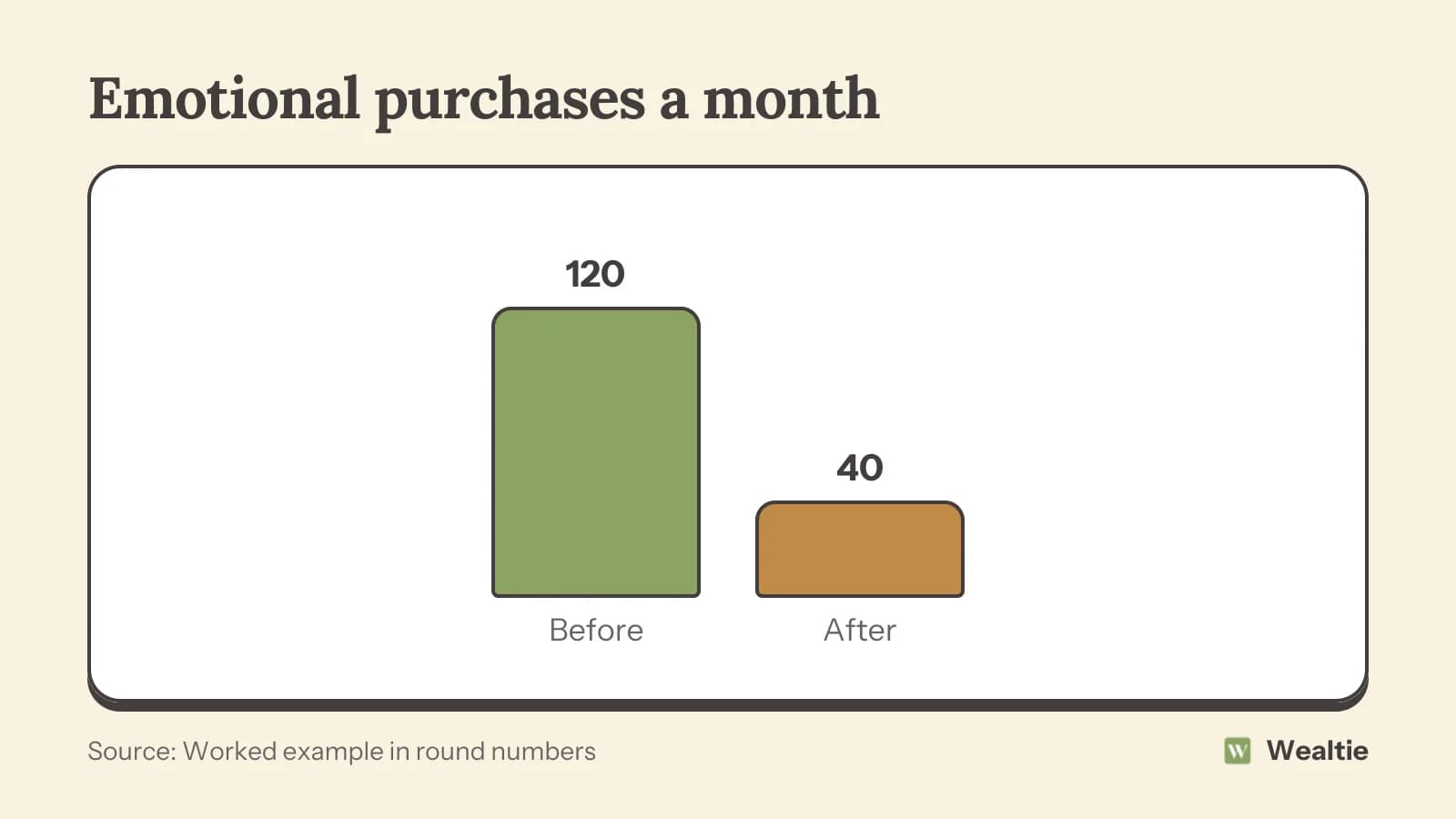
In this example, emotional purchases fall from 120 a month to 40, a saving of 80 a month, or 960 a year. The aim isn't to stop all treats, but to cut the ones that don't help.
To find your own number, look through last month's spending and mark purchases you made to feel better, rather than because you'd planned them. Notice when they happened, too.
What triggers emotional spending?
Common triggers include:
- Stress after a hard day at work or a difficult conversation
- Boredom, especially scrolling on your phone in the evening
- Loneliness, when shopping fills time or feels like connection
- Sadness or disappointment, when a treat feels deserved
- Tiredness, which makes it harder to resist
- Celebration, when a good moment becomes a reason to spend
- Comparison with friends or social media
Payday can be a trigger too, when money feels plentiful for a few days. Most people have one or two main triggers. Spotting yours is the most useful step, because it tells you when to be careful.
Keep a short note
For a couple of weeks, when you buy something unplanned, write down how you were feeling and what was happening. Patterns often appear quickly, like late-night shopping after stressful days or spending at weekends when you're bored.
How do you stop emotional spending?
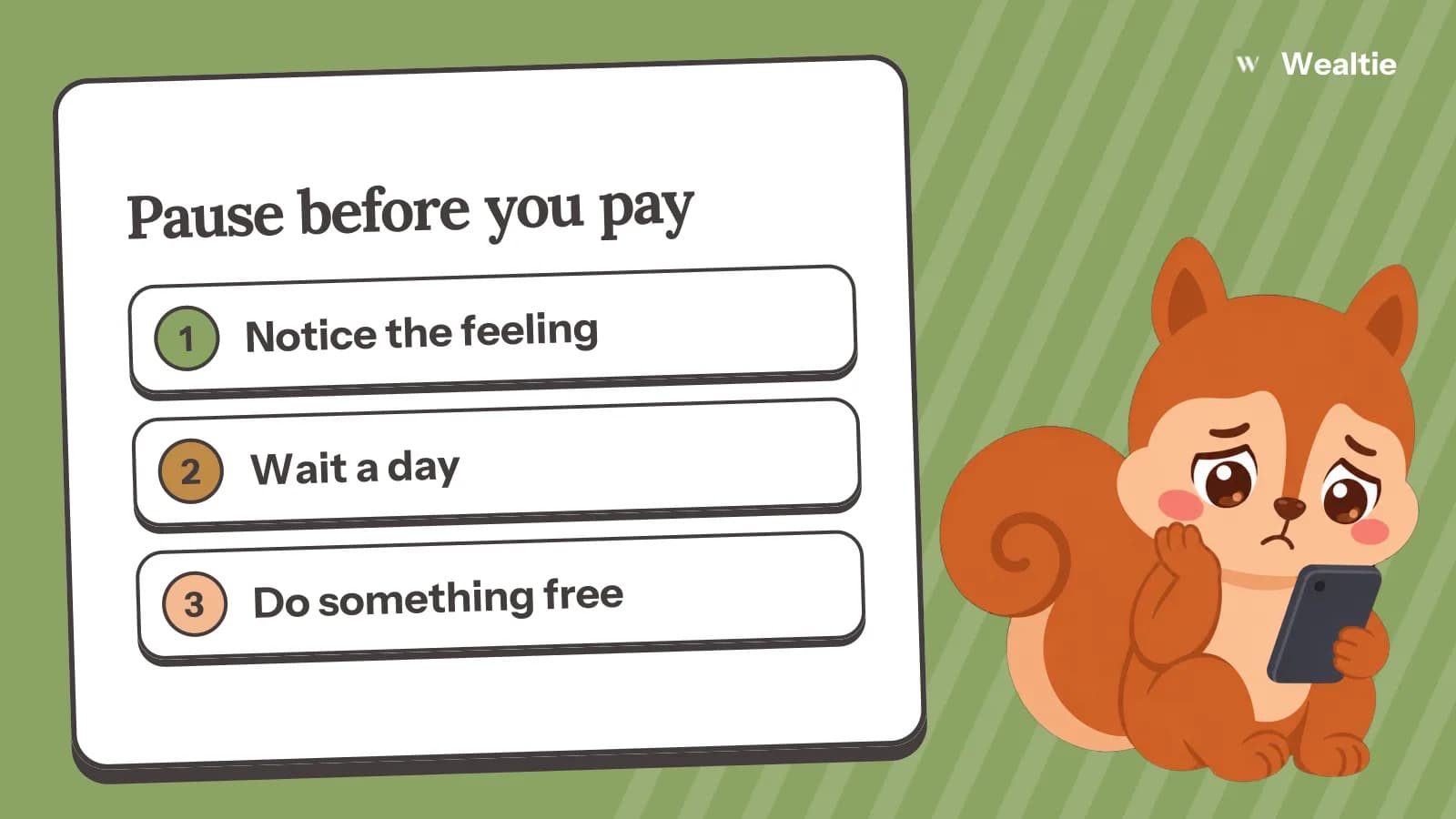
Put a pause between the feeling and the purchase. Most urges pass if you wait. Some ways to create that pause:
- Wait 24 hours before buying anything unplanned.
- Remove saved cards from shopping sites and apps.
- Delete shopping apps from your phone.
- Unsubscribe from sale emails and turn off notifications.
- Ask yourself how you're feeling, and what you hope the purchase will fix.
How to stop impulse buying has more ways to slow down.
What can you do instead?
Find other ways to meet the same need. If you shop when stressed, try a walk, a bath, exercise or calling a friend. If you shop when bored, have a list of free things to do, like reading, a hobby or a film you already own. If you shop to celebrate, mark good moments with something that isn't a purchase, like a special meal at home or time with people you love.
The goal is to have something ready for when the feeling comes, so the shop isn't the only option. Some people keep a wish list instead of buying: they add the item and look back a week later. Often the urge has passed, and the list becomes a record of money saved.
When life feels hard
Big changes, like a breakup, a job loss or a bereavement, often bring more emotional spending. Be gentle with yourself, and focus on covering essentials. How to budget after a breakup covers getting your money back on track after a big change.
Should you keep a treat budget?
Yes. Banning all treats often backfires, leading to bigger splurges later. A small monthly amount for treats, spent however you like, lets you enjoy spending without guilt and without going over budget. When it's gone, you wait until next month. How to stop overspending covers setting limits that work.
When should you get help?
If you feel you can't control your spending, if it's causing debt, or if you hide purchases from people close to you, it can help to talk to someone. Debt advice services, your doctor or a counsellor can offer support, often for free and in confidence. Spending that feels out of control is more common than many people think, and help is available. Some banks also let you block spending at certain types of shop or set limits in their app, which can add a useful pause.
How do you track emotional spending in Wealtie?
Give treats their own line in your expense categories, so you can see how much goes on them each month. A monthly limit in the budget tracker, with Budget Health, warns you when you're getting close, which can be the pause you need before the next purchase.
Questions people ask
Buying something to change how you feel, often when stressed, bored, sad or celebrating, rather than because you need it.
Notice your triggers, wait 24 hours before unplanned purchases, remove saved cards and have free alternatives ready.
An occasional treat is fine. It becomes a problem when it's frequent, pushes you over budget or leaves you feeling worse.
No. A small monthly treat budget usually works better than a ban, which can lead to bigger splurges.
This article is general information, not financial, tax or legal advice. Your situation is your own; check the numbers that apply to you before you act on them.