Budgeting: How to stop impulse buying: a few rules that hold up
To work out how to stop impulse buying, find when it happens, then add friction at that moment: a waiting period, no saved cards and fewer shopping emails. Leave a small amount in your budget to spend freely.
 By Wealtie Team · 3 min read
Key takeaways
- Look back at your last ten unplanned purchases to find out when and why you buy on impulse.
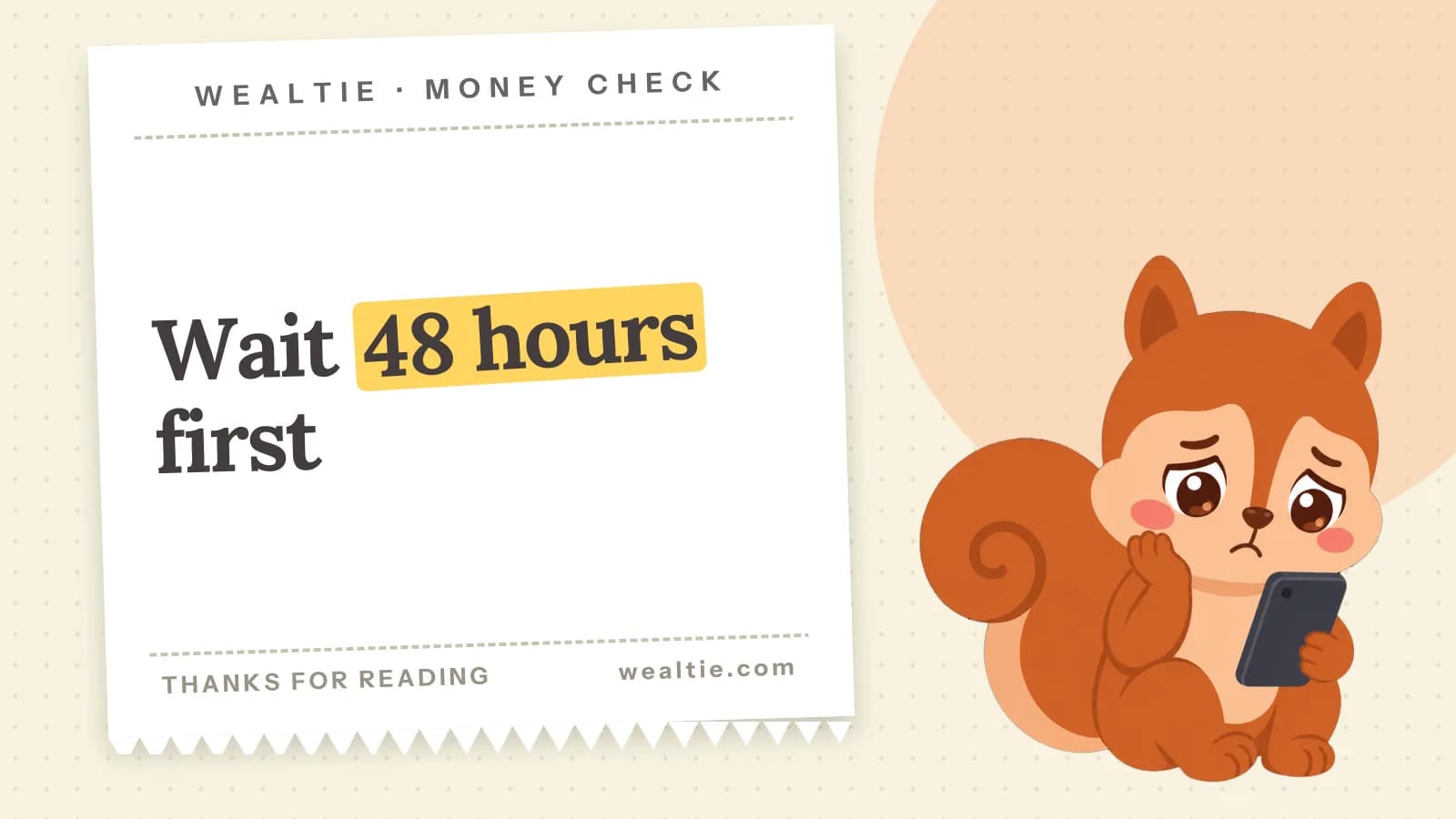
- A 48-hour waiting period on anything non-essential above a set amount stops many purchases without a decision in the moment.
- Removing saved card details and unsubscribing from sale emails adds friction where it's most useful.
- A small monthly amount for spontaneous spending makes the rules easier to keep.
How do you stop impulse buying?
Change what happens in the minute before you buy. A few small obstacles do more than willpower. The first step is working out when you do it.
When do you buy on impulse?
Go back through your last ten purchases that you didn't plan. For each one, write down when it happened, where you were, how you felt and whether you're glad you bought it.
A pattern usually shows up quickly. It might be late at night on your phone, or the day after a hard shift, or the ten minutes in a shop while you wait for someone. Common triggers:
- Being tired, bored or stressed
- A sale with a countdown
- Scrolling social media
- Shopping with a particular friend
- Payday, when money feels plentiful
You only need to deal with the ones that are yours. Someone who buys clothes after work needs a different fix from someone who buys gadgets at midnight.
Does a waiting period work?
Yes, and it's the most useful single rule. Pick a threshold, say 30 or 50 in your own currency, and wait 48 hours before buying anything non-essential above it.
Put the item in a note or a basket and come back to it. After two days, plenty of things have lost their pull. If you still want it, and it fits your budget, buy it and enjoy it.
Use a longer wait for bigger items, such as a week for anything over 200 and a month for anything over 1,000. It takes the decision out of the moment when you're most likely to get it wrong.
"Only two left" and "sale ends tonight" are designed to stop you waiting. Sales come around again. The Black Friday budget has more on that.
How do you make buying harder?
Add steps at the points where you tend to buy:
- Delete saved card details from shopping sites and your browser
- Log out of the apps you buy from, or move them off your home screen
- Unsubscribe from sale emails and turn off shopping notifications
- Unfollow accounts that exist to sell you things
- Take cash or a limited card when you go shopping in person
Each one's small, and it only adds a few seconds. A few seconds of typing a card number is often enough to make you ask whether you want it.
If buy-now-pay-later is how you've been doing it, remove that option from your accounts too. Small instalments make a purchase look cheaper than it is, and several of them can pile up without you noticing.
How do you work out what it's costing you?
Add up the last three months of unplanned purchases, then look at how much you'd have liked to keep. Say you've found 180 a month, and you're glad about 60 of it. That's 120 a month, or 1,440 a year, on things that didn't do much for you.
Turn a price into hours as well. If you take home 18 an hour, a 90 jacket is five hours of work. Asking yourself whether it's worth five hours gives you a clearer answer than asking whether you can afford it.
What should you do instead?
Have something ready for the moment. If you buy when you're bored, what will you do with that time? If you buy when you're stressed, what would help? A walk, a call, or a shower can get you past the urge, which usually fades in a while.
If shopping's your main way of cheering up, or you're hiding purchases or borrowing to pay for them, it may be something beyond a budgeting problem. It's worth talking to someone, and that could be a doctor or a counsellor.
Should you ban yourself from buying anything?
No. A complete ban tends to end in a big blow-out. Give yourself a monthly amount to spend on whatever you like, no explanation needed. How much spending money per month is the starting point, and a no-spend challenge can work well for a short reset.
If you go over, don't treat it as the end of the plan. Log it and carry on from the next day. Went over budget has more on getting back on track.
How do you catch impulse spending in Wealtie?
Create a category called Unplanned, and log purchases there the moment you make them. You'll have a real number at the end of the month, and it's in your expense categories alongside everything else. Give it its own share of the monthly limit in the budget tracker, and you'll see it fill up. The Add Transaction budget widget takes you straight to the form, so logging takes a few seconds.
Questions people ask
Usually because of a trigger like being tired, bored or stressed, or because a sale creates urgency. Check your last ten unplanned purchases for a pattern.
Wait 48 hours before buying anything non-essential above a set amount. If you still want it after that and it fits your budget, buy it.
Delete saved card details, log out of shopping apps, unsubscribe from sale emails and put anything you want in a note for 48 hours first.
No, because total bans tend to fail. Set a monthly amount for spending freely, and use the waiting period for anything above a set size.
This article is general information, not financial, tax or legal advice. Your situation is your own; check the numbers that apply to you before you act on them.



