Saving: How much you save by bringing lunch to work
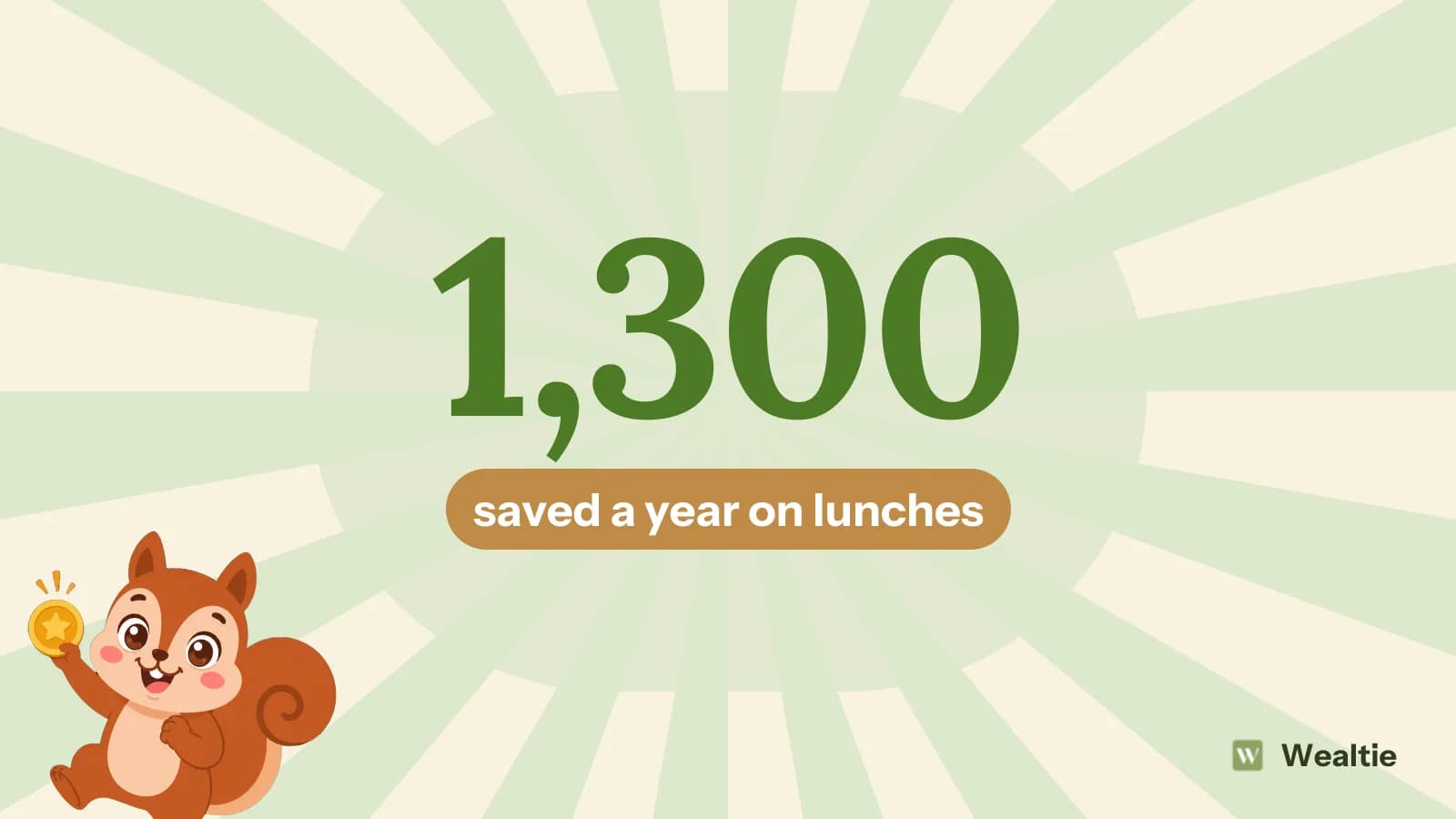
Bringing lunch to work saves a lot over a year, because small daily costs add up. In a worked example, buying lunch costs about 8 a day against about 2.50 for one brought from home, a difference of about 1,300 a year.
 By Wealtie Team · 3 min read
Key takeaways
- Bringing lunch to work instead of buying it adds up to a large yearly saving.
- In a worked example, the difference is about 1,300 a year.
- Cooking extra at dinner and packing leftovers is the easiest way to start.
- You don't need to bring lunch every day; even three days a week saves a good amount.
How much do you save by bringing lunch to work?
More than most people expect. A bought lunch doesn't feel expensive on any single day, which is why it's easy to overlook. But it's a cost you pay most working days of the year, and those small amounts add up to a large total.
What does the difference look like over a year?
Here's a worked example based on 230 working days, in round numbers that work in any currency:
| Per day | Per year | |
|---|---|---|
| Buying lunch | 8 | 1,840 |
| Bringing lunch | 2.50 | 575 |
| Difference | 5.50 | about 1,300 |
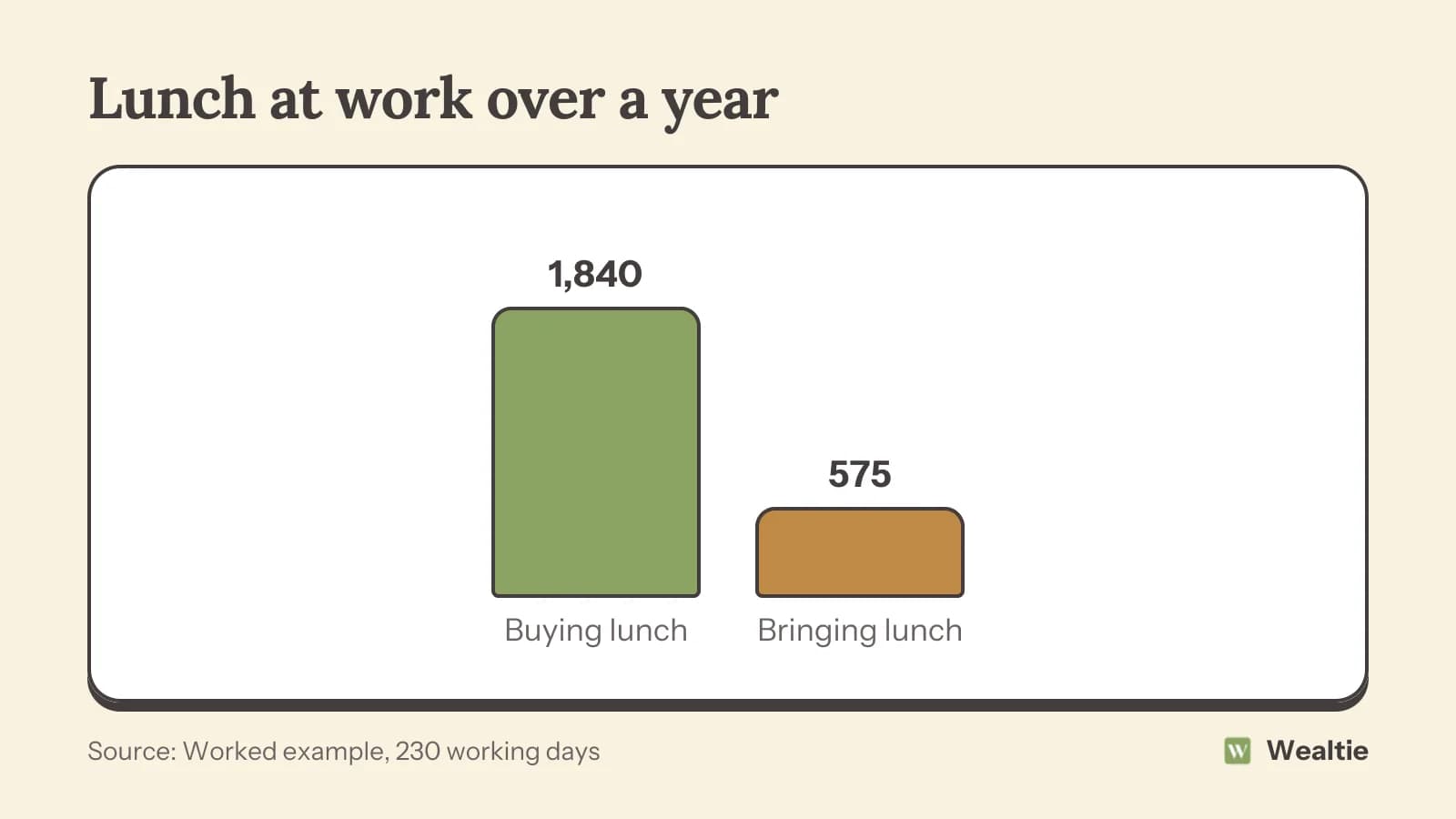
Your own figures depend on what you buy and where you work. Lunch in a city centre can cost much more than this, while a simple sandwich from a supermarket costs less. To see your real number, look at what you spent on lunches last month and multiply by twelve.
You don't have to do it every day
Bringing lunch three days a week, and buying it on the other two, still saves about 750 a year in this example. Starting with a few days makes the habit easier to keep, and it leaves room for lunches out with colleagues, which matter for work relationships too.
How do you make bringing lunch easy?
Cook once, eat twice. The simplest method is to make extra at dinner and pack the leftovers for the next day. It takes almost no extra time, and you're not making a separate meal each morning.
Other habits that help:
- Pack lunch the night before, so busy mornings don't get in the way.
- Keep a few staples at work, like oats, tea, a jar of peanut butter or soup.
- Use good containers that don't leak and keep food fresh.
- Plan lunches with your weekly shop, so ingredients are always in.
Meal planning on a budget has a weekly method that covers lunches as well as dinners.
Getting the gear right
A couple of good containers, a small insulated bag and a flask make bringing lunch much easier. They cost a little at the start, but they pay for themselves within a couple of weeks of lunches. If your workplace has a fridge and microwave, the range of lunches you can bring grows a lot.
What are cheap lunch ideas for work?
Lunches that keep well and taste good cold or reheated:
- Leftover pasta, curry, chilli or stir-fry
- Grain salads with rice, couscous or lentils
- Soup in a flask
- Wraps with beans, cheese, eggs or chicken
- Jacket potato with a filling, if there's a microwave
- A big batch of something made on Sunday and portioned for the week
Batch cooking on a weekend gives you several days of lunches from one session. Varying the flavour with different sauces or toppings stops it getting boring. A pot of rice or a tray of roasted vegetables made at the start of the week can be combined differently each day.
What about the coffee and snacks?
They add up too. A daily coffee and snack bought near work can cost as much as the lunch itself over a year. Bringing a flask, keeping snacks in your desk and making coffee at the office or at home cuts that cost as well. How much you spend on coffee works through the numbers.
What if you enjoy buying lunch?
Keep it, and make it a choice. A lunch out with colleagues or a favourite place once a week can be something to look forward to. The saving comes from cutting the lunches you buy out of habit, not the ones you enjoy. Budget for the lunches you want to buy, and bring the rest. Some people pick one day a week as their lunch-out day, like a Friday, which gives the week something to look forward to without turning every day into a bought lunch.
If you eat out more generally, how to save money eating out has ideas for keeping it affordable.
What should you do with the money you save?
Give it a job, or it tends to disappear into other spending. Moving the saving into a separate pot each week, towards a holiday, an emergency fund or paying off a card, makes it visible and keeps you motivated. Seeing the total grow is often the best reason to keep packing lunch. Over a year, the saving in the example is enough to cover a short holiday or a good part of an emergency fund.
How do you track lunch spending in Wealtie?
Give lunches at work their own line in your expense categories, so you can see what you spend in a month. A monthly limit in the budget tracker, with Budget Health, shows whether you're on track, and comparing a few months shows how much the habit has saved.
Questions people ask
In a worked example, about 1,300 a year, from about 8 a day buying lunch against 2.50 bringing it.
Yes. Three days a week saves about 750 a year in the same example, and it's an easier habit to start.
Leftovers from dinner, grain salads, soup in a flask, wraps and batch-cooked meals portioned for the week.
Cook extra at dinner, pack lunch the night before and plan lunches with your weekly shop.
This article is general information, not financial, tax or legal advice. Your situation is your own; check the numbers that apply to you before you act on them.