Income & freelancing: How to budget when you're self-employed with kids
To budget when you're self-employed with kids, pay yourself a steady monthly amount, put family essentials like childcare first, set aside tax from every payment, and build a bigger emergency fund. In a worked example, a 2,800 monthly salary covers family costs with 200 saved.
 By Wealtie Team · 3 min read
Key takeaways
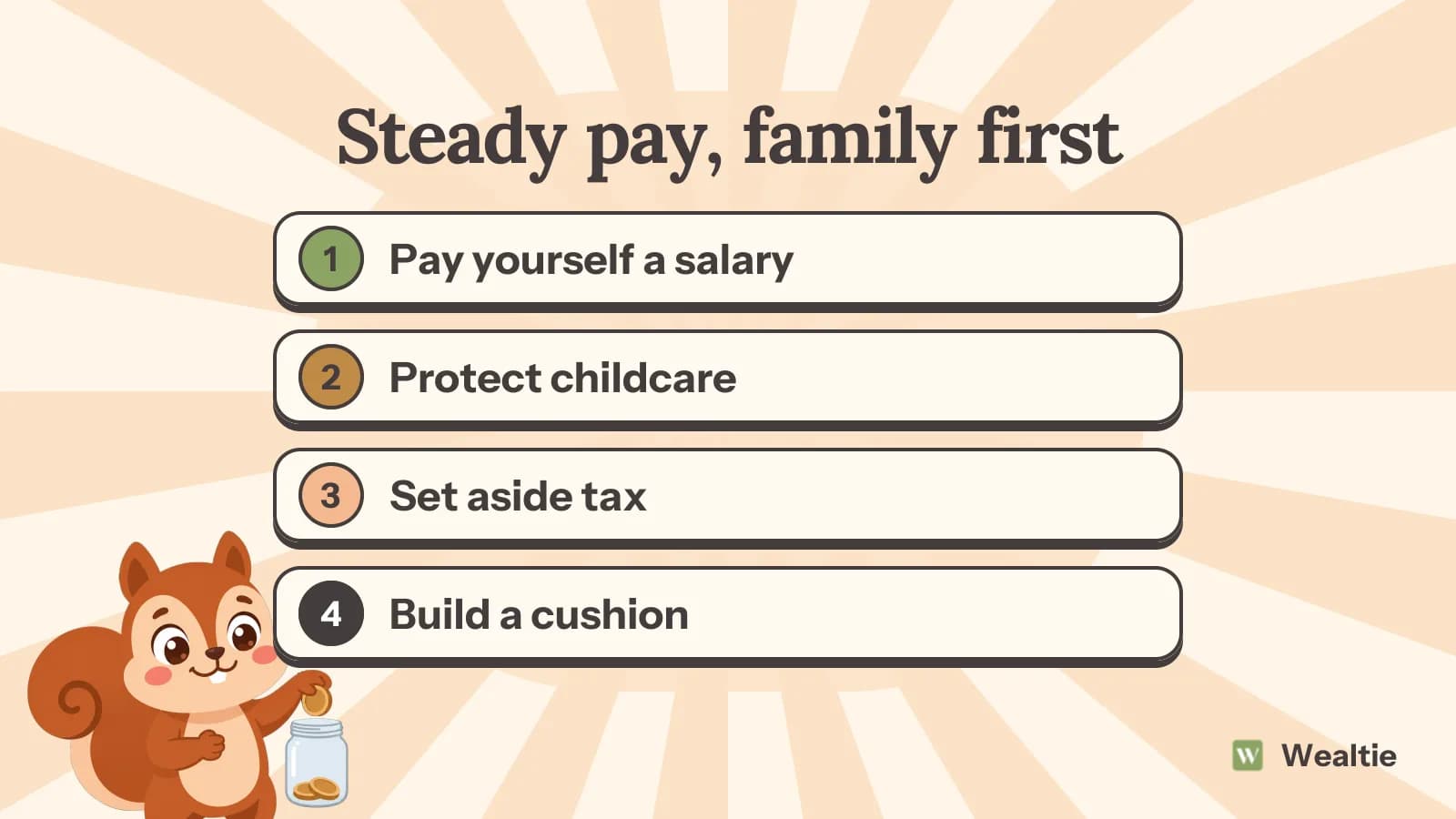
- Pay yourself a steady monthly salary from a business account, so family costs are covered even in slow months.
- Put childcare and family essentials first in the budget, since they're hard to cut.
- Set aside tax from every payment, since a big tax bill can be hard to meet with family costs.
- Aim for a larger emergency fund than an employee might need, since income and sick pay aren't guaranteed.
How do you budget when you're self-employed with kids?
Make your personal income as steady as you can, protect the family's essentials, and plan for the gaps. Self-employment gives flexibility that many parents value, but income can vary, there's often no sick pay, and family costs like childcare and food don't change when work is quiet. A system that smooths income and puts family first takes a lot of the stress away.
How do you smooth an uneven income?
Pay yourself a salary. Keep all business income in a separate account, then transfer a fixed amount to your personal account each month. In good months, the extra stays in the business account. In slow months, you still pay yourself the same, using what's built up.
To set the salary, look at your income over the last year, take off business costs and tax, and use a cautious monthly figure. How to pay yourself a salary when self-employed has the method.
What does the family budget look like?
Here's a worked example of a monthly salary of 2,800, in round numbers that work in any currency:
| Line | Monthly |
|---|---|
| Housing and bills | 1,300 |
| Childcare | 600 |
| Food and family costs | 550 |
| Transport and other | 150 |
| Savings | 200 |
| Total | 2,800 |
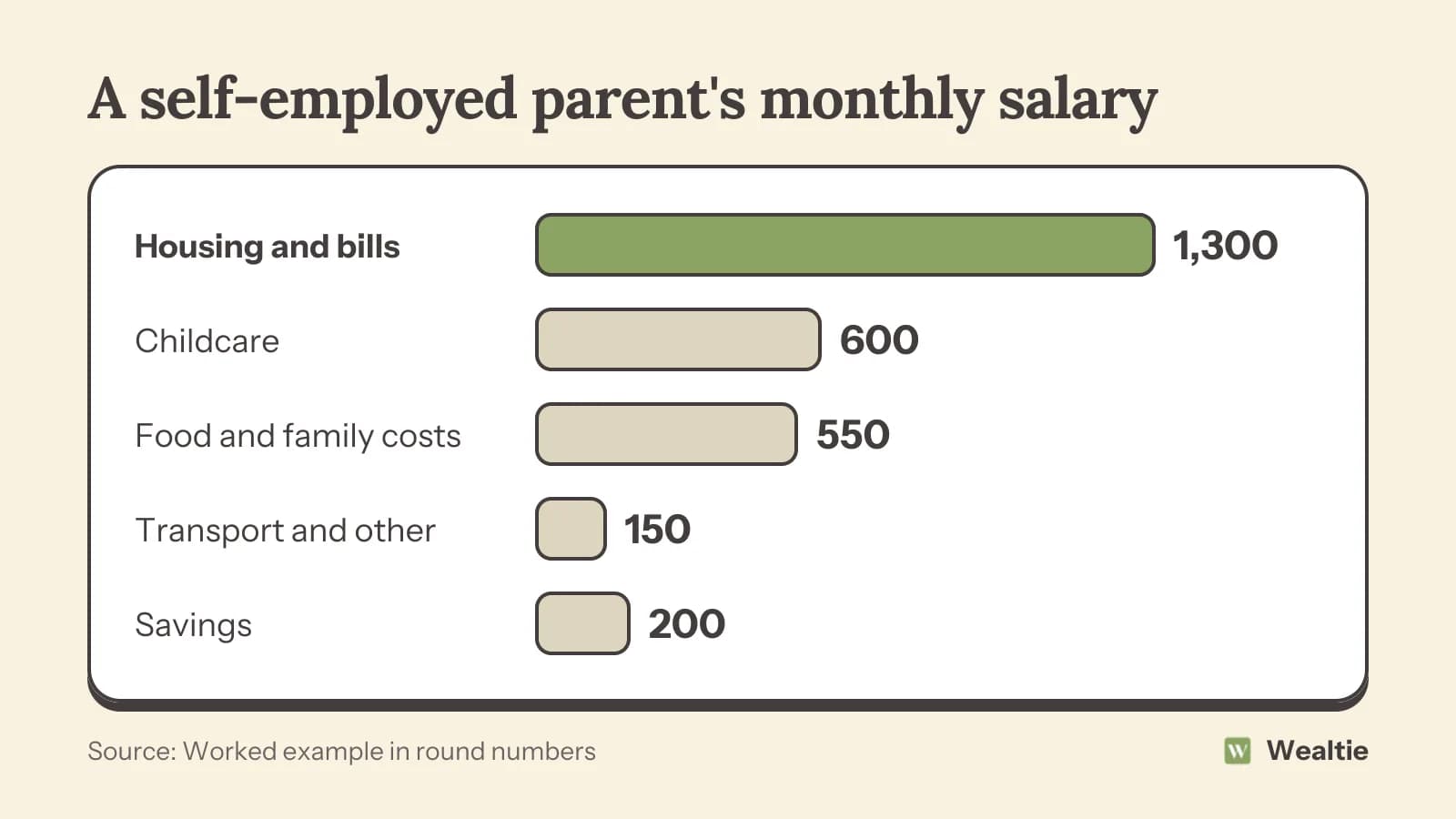
Childcare and family costs come straight after housing, because they're hard to cut at short notice. Review the salary once or twice a year, raising it when the business account has built up a healthy cushion and lowering it if slow months are draining it. Your figures depend on your children's ages and your local costs.
How do you handle childcare?
Plan it around your work, and check what help you can get. Self-employed parents can often use flexible childcare, booking more in busy months and less in quiet ones, though not every provider allows that. Check whether self-employed parents qualify for government childcare help where you live, since rules sometimes differ from employees. How to save money on childcare goes through the options.
Working around school hours or sharing childcare with a partner can lower costs, but be realistic about how much work fits in.
How do you handle tax?
Set aside a share of every payment the day it arrives, in a separate account. Tax bills can arrive as one large payment, and meeting it alongside family costs is hard without planning. How much to set aside for taxes explains how to work out the amount.
Why do you need a bigger emergency fund?
Because there's often no sick pay, no paid leave and no redundancy pay when you're self-employed, and a family depends on the income continuing. If you're ill or a child is unwell for a long time, income can stop. Aim for three to six months of your salary, built up from good months. Consider income protection insurance if your family relies on your earnings. How to build an emergency fund has the steps.
What about when a child is ill?
Plan for it, since it often means a day or two without work. Keep a list of people who could help, like a partner, relatives or another parent, and a small buffer in your salary for lost days. If you work with clients, being upfront about occasional childcare emergencies and building some slack into deadlines avoids stress. Some self-employed parents keep one day a week lightly booked for exactly this reason.
How do you plan for school holidays?
Plan income around them, since work often drops when children are off school. Save extra in busy months to cover quieter holiday periods, or book childcare or holiday clubs for part of the time. The summer holidays budget covers holiday costs with children.
How do you keep track of both sides?
Keep business and personal money separate, and check both once a month, ideally on the same day: is the business account building up, and is the family budget on track? If the business account keeps falling, the salary might be too high, or prices need to rise.
How do you budget as a self-employed parent in Wealtie?
Add a separate account for the business and for personal money, and move your monthly salary between them as a transfer, which isn't counted as spending. Set your monthly income goal in the income tracker, and on Pro, income analytics show your sources and how steady your income is. A monthly limit in the budget tracker keeps family spending on track.
Questions people ask
Pay yourself a steady monthly salary from a business account, put childcare and family essentials first, set aside tax from every payment and build a bigger emergency fund.
Often three to six months of your salary, since there's usually no sick pay or paid leave.
Often, though rules may differ from employees. Check what's available where you live.
Save extra in busy months to cover quieter holiday periods, and book childcare or clubs for part of the time.
This article is general information, not financial, tax or legal advice. Your situation is your own; check the numbers that apply to you before you act on them.