Budgeting: How to budget for the summer holidays with kids at home
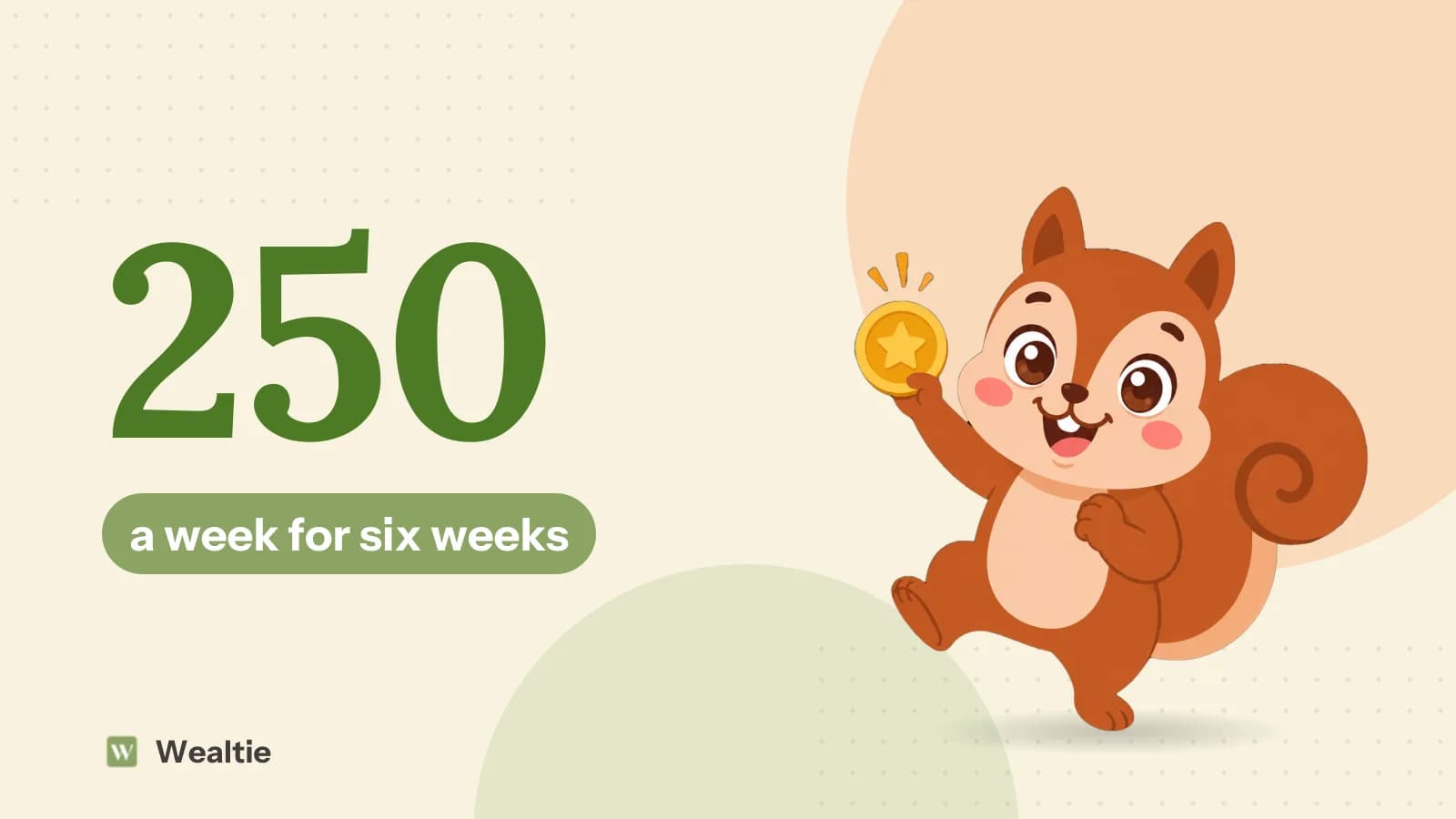
A summer holidays budget with kids covers childcare or holiday clubs, days out, activities and extra food at home. In a worked example, six weeks for two children comes to about 1,500, or 250 a week, and planning it in spring spreads the cost.
 By Wealtie Team · 3 min read
Key takeaways
- List the summer costs: childcare or clubs, days out, activities, and the extra food of having children home all day.
- In a worked example, six weeks for two children comes to about 1,500, or 250 a week.
- Free activities, a mix of paid and unpaid days, and sharing childcare with friends keep the total down.
- Saving a monthly amount from spring stops summer landing on one month's budget.
How do you budget for the summer holidays with kids?
List what the weeks will cost, decide which parts are paid and which are free, and save for it in advance. School holidays bring costs that don't exist in term time: childcare or holiday clubs if you're working, days out, activities, and more food at home. Planning it as one block, instead of week by week, stops August becoming the most expensive month of the year.
What does a summer with kids cost?
Here's six weeks for two children, in round numbers that work in any currency:
| Cost | Amount |
|---|---|
| Holiday clubs, six days each at 60 | 720 |
| Days out | 300 |
| Extra food at home, 50 a week | 300 |
| Activities and treats | 180 |
| Total | 1,500 |
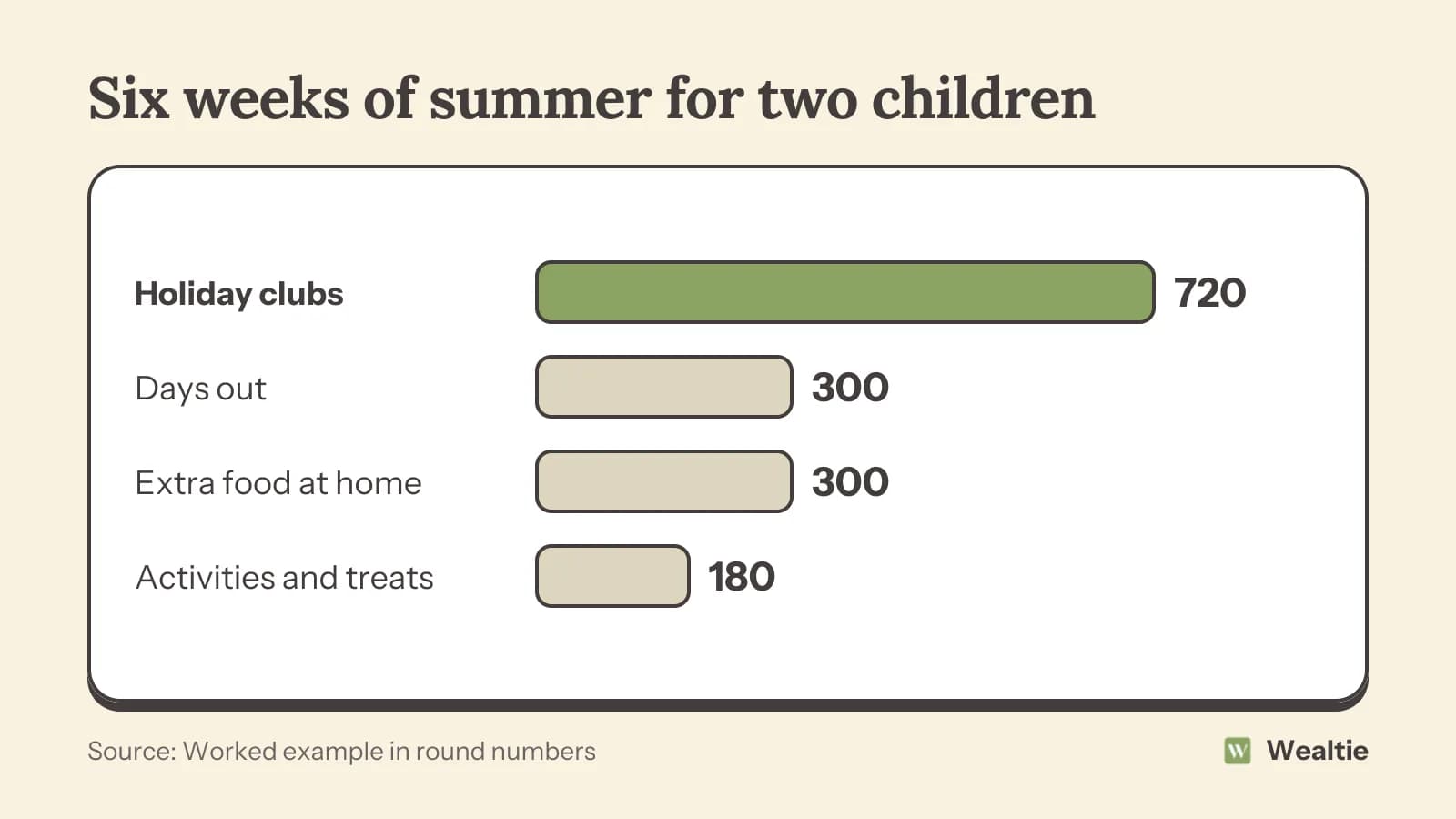
That's 250 a week. If you're travelling as well, add the holiday separately. Writing the six weeks out on a calendar, with paid days, free days and childcare marked, is the quickest way to see where the money goes and where a free day could replace a paid one. If you don't need childcare, the total can be much lower.
How do you cut childcare costs?
Mix and match. Holiday clubs are useful but expensive for every day of the holiday. Combine them with days covered by family, a swap with another family where you each take the children for a day, and any leave you can take. Some schools, councils and community groups run cheaper clubs, and some offer free places for families on lower incomes.
Book early. The cheaper clubs often fill well before the holidays start. Check whether your childcare help or employer schemes can be used for holiday clubs too.
How do you keep days out affordable?
Plan a mix of paid and free days. Parks, beaches, woods, free museums, libraries and local events cost little or nothing. Save paid outings, like theme parks or zoos, for one or two big days, and look for family tickets or online discounts. Many attractions charge less when booked online or on quieter days.
Take a picnic. Food at attractions is often expensive, and a packed lunch and drinks can halve the cost of a day out. A few snacks in a bag avoid the constant requests for something from the kiosk.
What about the extra food at home?
It's easy to forget, but children at home all day eat more, and lunches and snacks that school used to provide now come from your cupboards. Plan simple lunches for the week, buy snacks in larger packs and portion them, and involve the children in cooking. It keeps them busy and keeps costs down. A snack drawer with a set amount for the week stops snacks disappearing in two days.
How do you keep children busy for free?
A few ideas that cost very little:
- A summer reading challenge at the local library
- Den building, scavenger hunts and nature walks
- Baking or cooking a simple meal together
- Craft projects with things from around the house
- Meeting friends at a park instead of paid play centres
- A garden or balcony camp-out
A simple plan for each week, with one or two outings and some free days, helps you avoid paying for something every day. Check local listings for free summer events, which many councils and libraries run, and let older children help plan the week.
How do you save for summer?
Start in spring. Divide the total by the months until the holidays and move that amount into a separate pot each month. 1,500 saved from March is 300 a month. Saving from January brings that down to about 215.
If that's too much, look at the biggest line, usually childcare, and see what can be covered by family or swaps. Ask whether holiday clubs offer sibling discounts or free places for families on lower incomes.
What about the other school holidays?
The same approach works for shorter breaks during the year. Put all the school holidays in your calendar, estimate each one, and include them in the monthly saving. The family budget puts holiday costs alongside the rest of family spending.
How do you plan summer in Wealtie?
Add a savings account for the summer and move money into it each month as a transfer, which isn't counted as spending. During the holidays, log costs in a Summer category, so your expense categories show the total. A monthly limit in the budget tracker keeps the rest of the month on track.
Questions people ask
About 1,500 for two children over six weeks in a worked example, or 250 a week, though childcare needs change it a lot.
Mix paid and free days, take packed lunches on days out, combine holiday clubs with family help or swaps, and book cheaper clubs early.
Library reading challenges, parks, nature walks, baking, crafts and meeting friends outdoors.
In spring or earlier. Saving 1,500 from March is 300 a month, or about 215 a month from January.
This article is general information, not financial, tax or legal advice. Your situation is your own; check the numbers that apply to you before you act on them.