Budgeting: How to save money on childcare without cutting corners
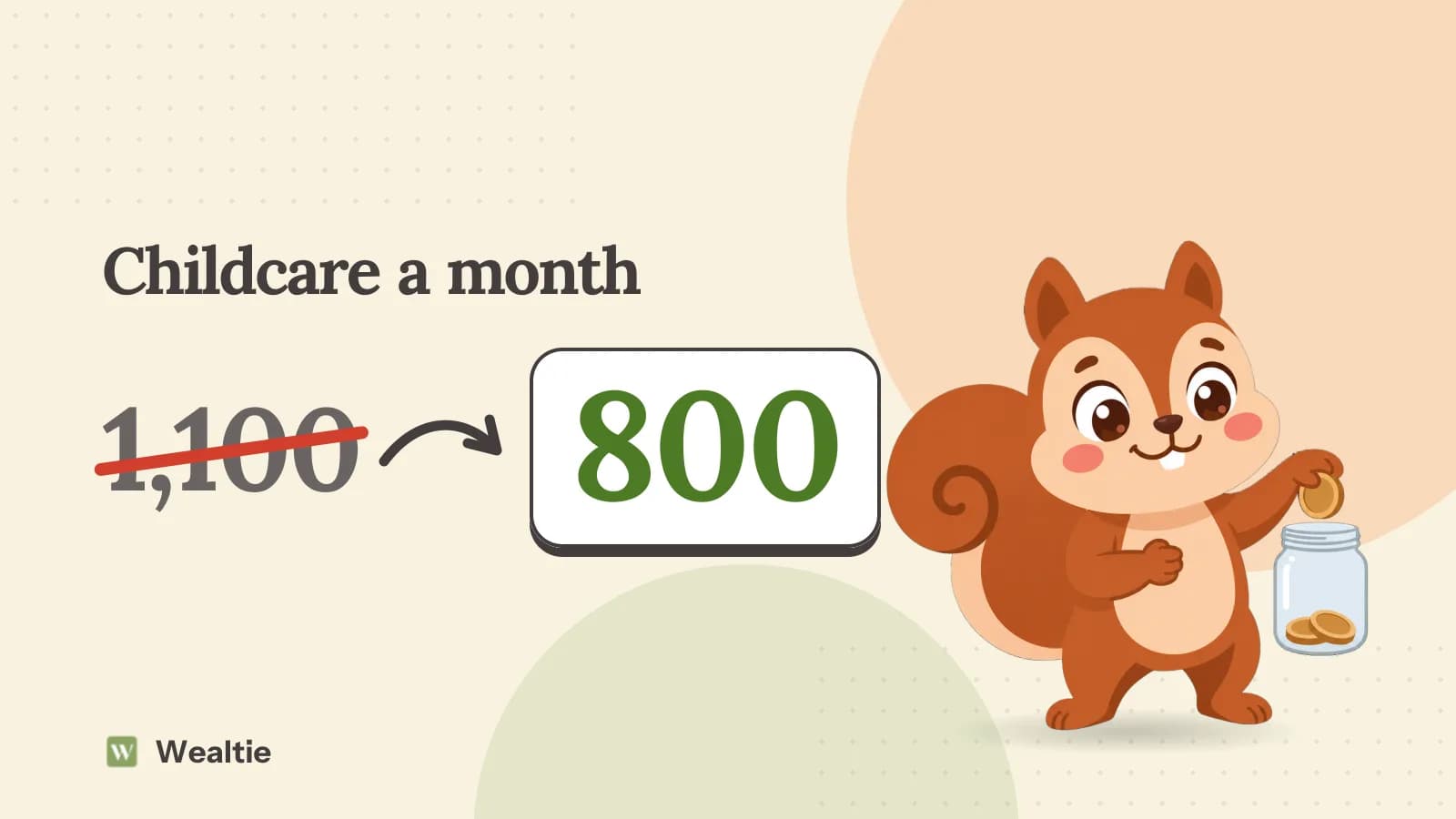
To save money on childcare, check every government scheme and tax help available to you first, then compare types of care, and look at flexible working and family help. In a worked example, those changes cut 1,100 a month to 800.
 By Wealtie Team · 3 min read
Key takeaways
- Check every childcare scheme, tax help and employer benefit you're entitled to, since many families miss some.
- In a worked example, claiming help, one day with family and shorter sessions cut 1,100 a month to 800.
- Compare nurseries, childminders, nannies and shared care, since costs and flexibility differ.
- Book places early, because waiting lists can be long and last-minute care often costs more.
How do you save money on childcare?
Start with the help you're entitled to, then look at the type and amount of care. Childcare is one of the largest costs for many families, often second only to housing. The biggest savings usually come from schemes and tax help that families don't realise they can claim, so start there.
What help should you check first?
Depending on where you live, there may be:
- Free hours of childcare for children of certain ages
- Tax-free accounts or tax credits for childcare costs
- Benefits that cover part of childcare for working parents on lower incomes
- Employer schemes, like childcare vouchers, subsidised nurseries or salary sacrifice
Check your government's official guidance, and use any online calculators it provides, since they can show quickly what you could save. Rules change, and eligibility can depend on your income, hours and your child's age. Ask your employer what they offer too, and set reminders if a scheme needs renewing, since missing a deadline can stop payments.
How much can you save?
Here's a worked example in round numbers that work in any currency:
| Change | Saved a month |
|---|---|
| Claiming government help you were missing | 150 |
| One day a week with a grandparent | 100 |
| Shorter session times on two days | 50 |
| Total, from 1,100 to | 800 |
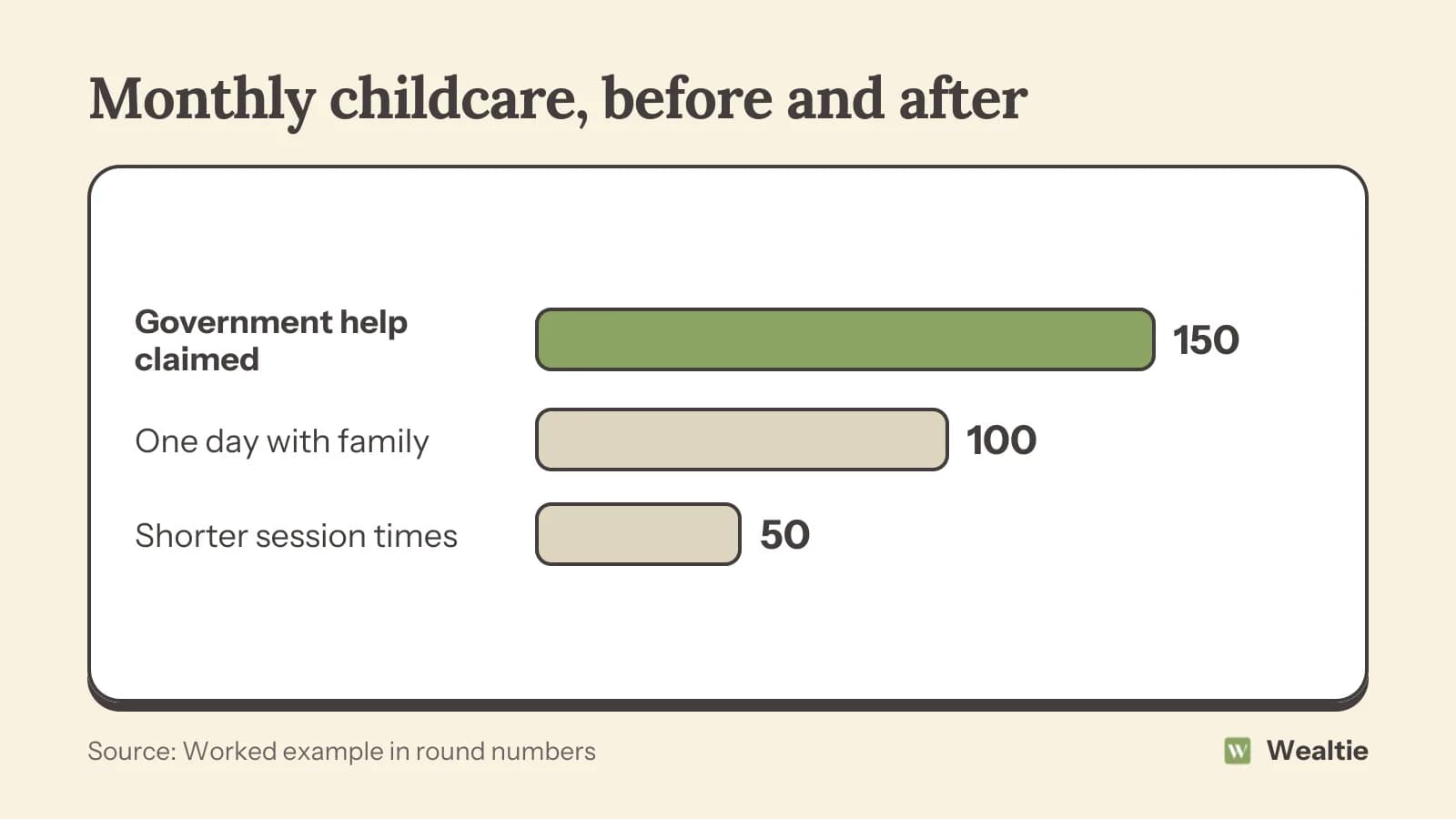
That's 300 a month, or 3,600 a year. Your own savings depend on your situation and what's available.
Which type of care costs least?
It depends on your area and needs. Common options include nurseries, childminders who care for a few children in their home, nannies, nanny shares, after-school clubs and family help. Childminders are sometimes cheaper than nurseries and more flexible. A nanny share, where two families split one nanny, can work well for several children.
Compare not just the daily rate but what's included, like meals, nappies and late fees, and how flexible the hours are. Visit a few settings and ask other parents for recommendations, since the cheapest option isn't always the best fit. Ask about sibling discounts, and whether you can pay monthly across the year instead of termly. Check notice periods and deposits before signing, since moving between providers can cost money.
How can work help?
Flexible working can reduce the hours of care you need. Compressed hours, working from home some days, or staggering start times with a partner can cut a day or two of care each week. Many employers consider requests, and in some countries you have a right to ask. Put any request in writing, explaining how the work will still get done.
If both parents work, look at whether your schedules could cover more of the week between you.
Should you use family or friends?
If they're willing and able, it can save a lot. Agree clearly what's involved, how often, and whether you'll contribute something, like food or travel costs. Keep it sustainable for them, so the arrangement lasts. If a relative helps regularly, check whether they're eligible for carer credits or support where you live. A childcare swap with another family, taking turns, can work for occasional days.
How do you plan for childcare costs?
Start early. Waiting lists for popular nurseries and childminders can be long, so research and register well before you need a place. Last-minute care often costs more.
Plan for changes too. Costs often drop when free hours start or a child starts school, and rise again during school holidays. A small monthly amount set aside for holiday care keeps those months from being a shock. Holiday clubs and activity camps vary widely in price, so compare a few and book early, since the cheaper ones fill fast. The family budget covers childcare alongside other costs.
Is going back to work worth it after childcare?
Work it out over the longer term, not just this year. Childcare costs fall as children get older, while your career and pension keep building. Count the years until free hours or school, since the most expensive period is often short. Compare your take-home pay after childcare and work costs, and think about how the numbers change in a year or two. The stay-at-home parent budget covers the other side.
How do you track childcare in Wealtie?
Set regular childcare payments up as recurring transactions, so they log themselves on their due dates. Give childcare its own line in your expense categories, and a monthly limit in the budget tracker shows what's left after it each month.
Questions people ask
Claim every government scheme and tax help you're entitled to, compare types of care, use flexible working and family help where possible, and book early.
Often free hours, tax-free accounts, tax credits, benefits and employer schemes, depending on where you live. Check official guidance.
Sometimes, and they can be more flexible. Compare what's included, like meals and late fees, not just the daily rate.
As early as you can, since waiting lists for popular places can be long and last-minute care often costs more.
This article is general information, not financial, tax or legal advice. Your situation is your own; check the numbers that apply to you before you act on them.