Income & freelancing: How to price and track income from selling crafts
To make money selling crafts, price each item to cover materials, your time and selling fees, then track income and costs together so you know what you're earning. In a worked example, an item that sells for 30 costs 12 to make and sell, leaving 18 for your time.
 By Wealtie Team · 3 min read
Key takeaways
- Price handmade items to cover materials, your time, fees and a profit.
- In a worked example, an item that sells for 30 leaves 18 after materials, fees and packaging.
- Track income and costs together, so you know what you earn, not just what you sell.
- Check the tax rules where you live once your craft income becomes regular.
How do you make money selling crafts?
Price properly, and track what you earn after costs. Many makers start selling because friends admire their work, and it's easy to set prices that only cover materials. But once you count your time, selling fees and packaging, a price that felt fair can leave almost nothing. Getting the pricing right from the start makes selling crafts worth your effort.
How do you price handmade items?
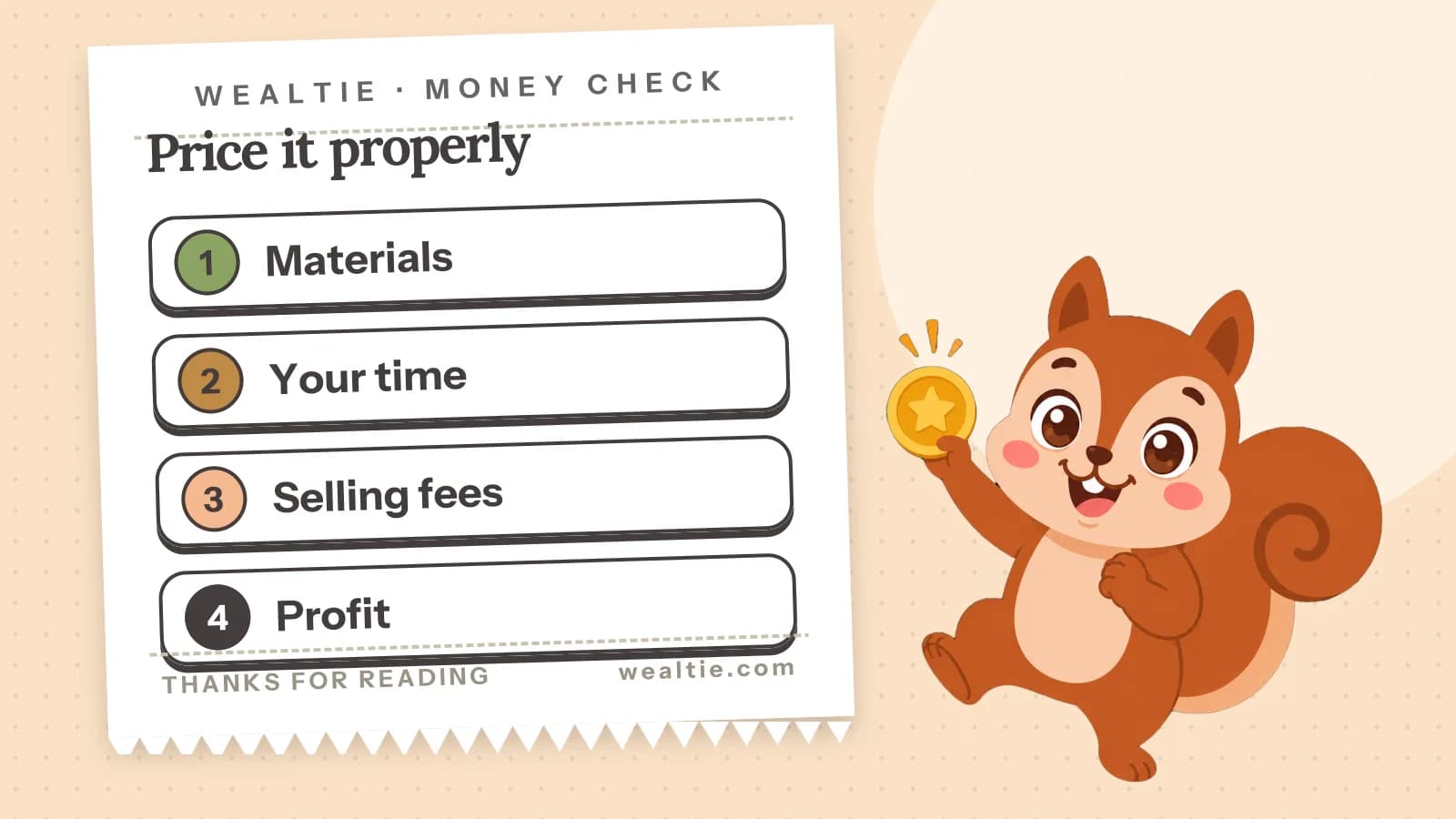
Add up four parts:
- Materials for one item, including small things like thread, glue or glaze.
- Your time, at an hourly rate you're happy with.
- Selling costs, like platform fees, payment fees and packaging.
- A profit margin on top, so the business can grow.
Here's a worked example for an item that sells for 30, in round numbers that work in any currency:
| Part | Amount |
|---|---|
| Materials | 8 |
| Selling and payment fees | 3 |
| Packaging | 1 |
| Your time and profit | 18 |
| Price | 30 |
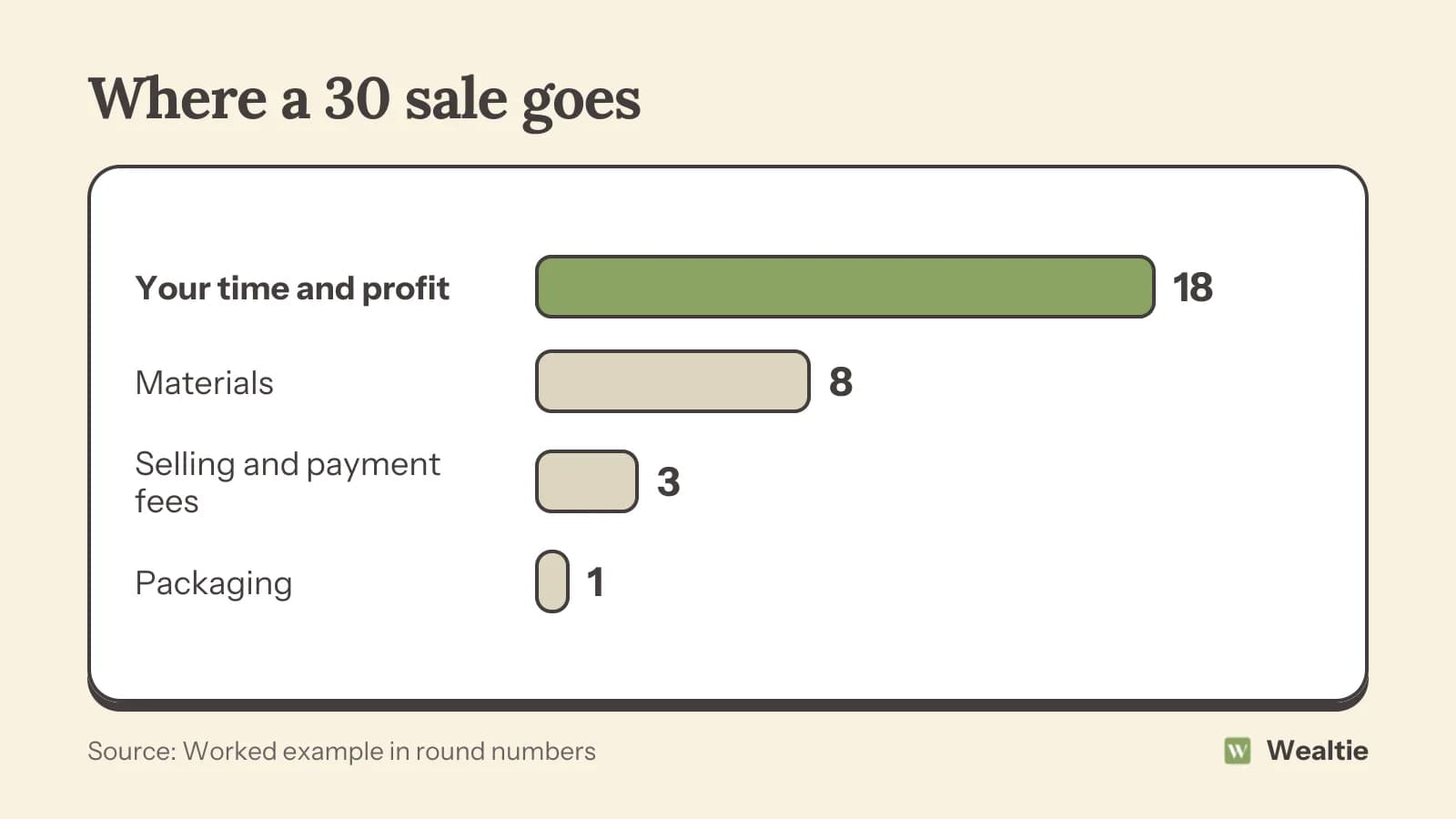
If the item takes an hour and a half to make, the 18 works out at 12 an hour. If that feels too low, you can raise the price, make it faster or choose items that sell for more.
Don't underprice
Handmade work is often underpriced, especially by people starting out. Low prices can make work look less valuable and leave you exhausted for little money. Look at what similar items sell for, and price for the quality of your work, not just for what you'd pay yourself.
Where can you sell crafts?
Online marketplaces, craft fairs, markets, local shops and social media all work, and many makers use more than one. Each has different costs. Online platforms often charge listing and sale fees, markets charge for a stall, and shops that sell on your behalf take a share of the price.
For example, a market stall might cost 40 for the day. If you sell 200 of items with 70 of materials, you're left with 90 for your time, after the stall fee. Counting the hours you spent at the stall, plus travel, shows whether a market is worth it.
Commissions and custom orders
Custom orders, like a personalised gift or a piece in a chosen colour, usually take longer and involve more back-and-forth. Price them higher than your standard items, and ask for a deposit before you start, so you're not left with materials and time spent if the buyer changes their mind.
How do you track craft income and costs?
Keep a simple record of every sale and every cost. Many makers track sales but forget materials, fees and travel, which makes the business look more profitable than it is. A record of both shows your real earnings each month, and which items or places sell best.
Keeping your craft money separate from personal spending makes this much easier. How to track side hustle income has a simple method.
Watch the materials stash
It's easy to buy more materials than you need, especially when supplies are on sale. Buying for orders you have, rather than for projects you might make one day, keeps your costs down and stops money sitting on a shelf.
What about slow months?
Craft sales are often seasonal. Many makers sell most in the run-up to holidays and much less in quiet months. Look at your income across a full year, rather than one good month, before relying on it. Setting a little aside from busy months smooths out the quieter ones. Quiet months are also a good time to make stock for busy seasons, test new designs or photograph your work.
Do you need to pay tax on craft sales?
It depends on where you live and how much you earn, but in many countries, regular income from selling crafts needs to be declared once it passes a certain amount. Keep records of sales and costs from the start, since costs can often be deducted. How to declare side hustle income covers the general steps, and a local tax office or adviser can confirm the rules for you.
How much can a craft business make?
It varies widely. Some makers sell a few items a month for extra money, while others build a full-time business. Setting a monthly income goal gives you something to aim for and helps you see whether your pricing works. How much should a side hustle make helps you decide whether the time is worth it.
How do you track craft income in Wealtie?
Add your craft sales as income in the income tracker, and log materials, fees and packaging in their own expense categories, so you can see what's left. A monthly income goal shows how close you are to your target, and Pro adds income analytics to compare months and sources.
Questions people ask
Add materials, your time at an hourly rate, selling fees and packaging, then add a profit margin on top.
Enough to pay you fairly for your time after all costs. In a worked example, a 30 item leaves 18 for time and profit.
Often, once the income is regular or passes a threshold. Check the rules where you live and keep records from the start.
Online marketplaces, craft fairs, markets and local shops all work. Compare their fees and the time each one takes.
This article is general information, not financial, tax or legal advice. Your situation is your own; check the numbers that apply to you before you act on them.