Income & freelancing: How to budget on a part-time income without running short
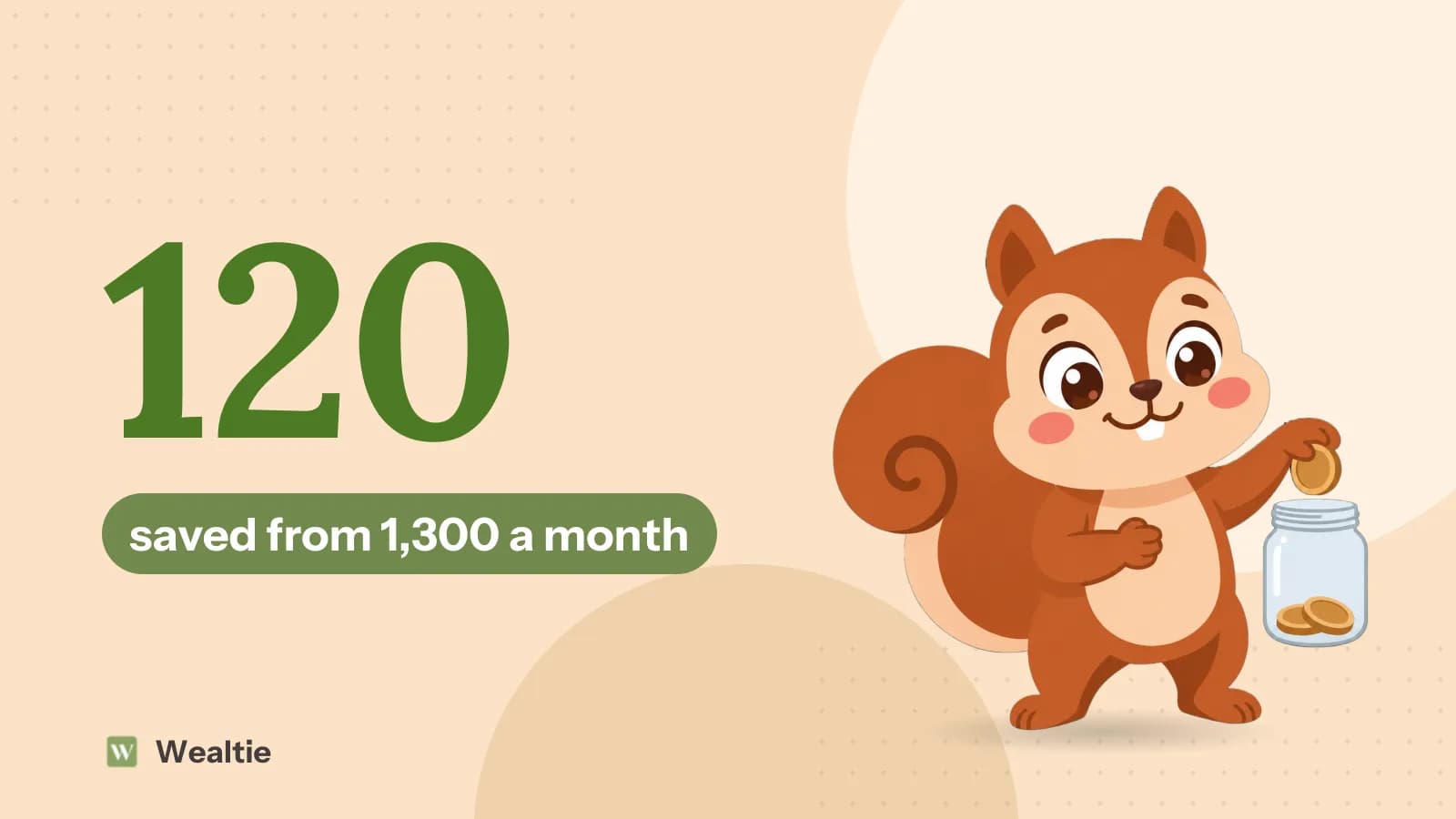
To budget on a part-time income, start from your lowest regular take-home pay, keep fixed costs as low as you can, check what support you might get, and plan for months when hours change. In a worked example, take-home of 1,300 covers essentials with 120 saved.
 By Wealtie Team · 3 min read
Key takeaways
- Budget from your lowest regular take-home pay, since part-time hours can vary.
- In a worked example, take-home of 1,300 covers rent, food, transport and other costs with 120 saved.
- Keeping fixed costs low is the most important part of a part-time budget.
- Check for top-up benefits or support, since many part-time workers are entitled to help.
How do you budget on a part-time income?
Start from what reaches your account in a quiet month, cover the essentials first, and keep a cushion for months when hours drop. People work part-time for many reasons, like studying, caring for family, health or choice, and a part-time income can work well with a plan. The key is fitting fixed costs to the income, not the other way round. It also helps to know which bills are fixed and which you can change month to month, since that tells you where you have room when hours dip.
What does a part-time budget look like?
Here's a worked example on take-home of 1,300 a month, in round numbers that work in any currency:
| Line | Monthly |
|---|---|
| Rent and bills | 700 |
| Food | 250 |
| Transport | 80 |
| Everything else | 150 |
| Savings | 120 |
| Total | 1,300 |
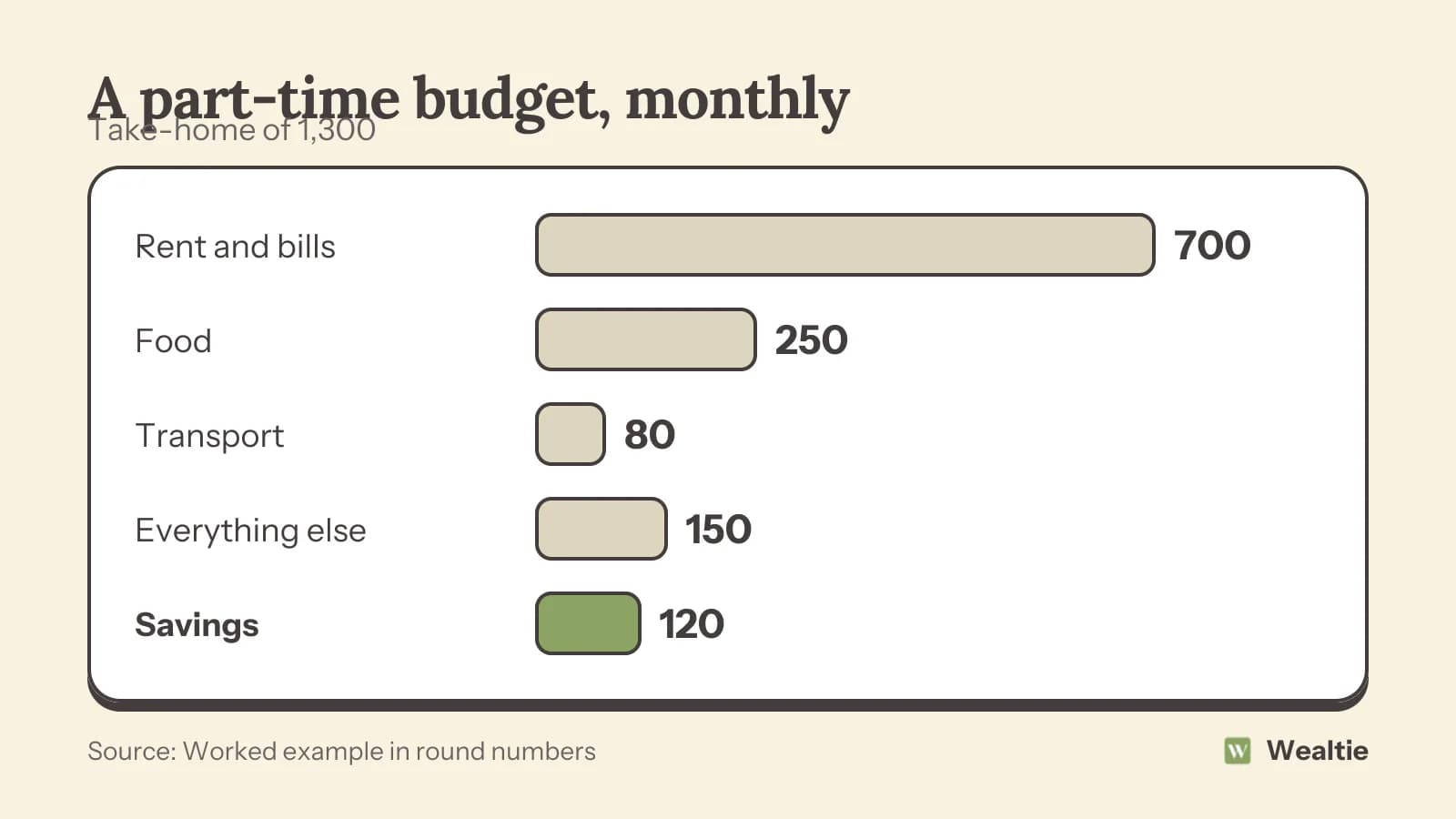
The biggest line is housing, which is common. If rent takes more than this, the other lines need to shrink, starting with spending money. Your own figures depend on where you live and who you share costs with.
Which income figure should you use?
Your lowest regular take-home pay. If your hours vary, look at the last three to six months and pick the lowest normal month, leaving out unusual ones like a week off sick. Budget on that, and treat anything above it as extra for savings or goals. Keep a simple record of your hours and pay each month, so you can spot patterns, like quieter months in the year, and plan for them.
If you're paid weekly or every two weeks, set aside part of each payment for rent and monthly bills, so they're covered when they land. Gross vs net income explains what comes off your pay before it arrives.
How do you keep fixed costs low?
They matter most on a smaller income, since they're hard to change quickly. Look at the big ones first:
- Housing: sharing, a smaller place or a cheaper area can make the biggest difference
- Transport: a bike, public transport pass or car-sharing instead of a car
- Phone and internet: SIM-only plans and social tariffs if you qualify
- Subscriptions: keep only the ones you use
How to negotiate bills can lower several of these in an afternoon.
How do you handle irregular paydays?
If you're paid on different days or amounts each month, list your bills by due date and set aside money for each one as pay arrives. A separate account for bills, topped up from each payment, keeps rent and essentials safe from everyday spending. Then the rest of each payment is what you've got to live on until the next one. Checking the bills account once a week takes a few minutes and stops surprises.
What support might you get?
Possibly more than you expect. Depending on where you live, part-time workers can be entitled to benefits that top up low earnings, help with housing costs, reduced local taxes, or support with childcare. A benefits calculator from your government or a reputable charity can show what's available in a few minutes. Check again whenever your hours or household change.
How do you handle months when hours drop?
With a cushion. Even a small emergency fund, built from the extra in good months, covers the quieter ones. Aim for at least one month of essential costs to start. How to build an emergency fund has the steps.
If hours drop for a longer period, look at bills you can pause or reduce, and contact companies before missing payments.
Should you take on extra work?
It depends on why you work part-time. If you'd like more income and have the time, extra hours or a second job can help, but check how extra earnings affect any benefits you receive. If you work part-time for health or caring reasons, protecting that balance can matter more than extra income. How much should a side hustle make helps you judge whether extra work pays.
How do you save on a smaller income?
Start small and automate it. Even 20 a month adds up, and it builds the habit. Move it on payday, before you spend anything. In a good month, move a bit extra. Over a year, small, steady amounts make a real difference. Twenty a month is 240 a year, enough to cover a broken appliance or a car repair without borrowing.
How do you budget on a part-time income in Wealtie?
Set your monthly income goal to your lowest regular take-home in the income tracker, and set the limit in the budget tracker to fit. Budget Health warns you mid-month if spending runs ahead. Move savings to a separate account as a transfer, which isn't counted as spending.
Questions people ask
Start from your lowest regular take-home pay, cover fixed costs first, keep them as low as you can and build a small cushion for quieter months.
Many people do, especially with low fixed costs and any support they're entitled to. Housing is usually the biggest factor.
Depending on where you live, benefits that top up low earnings, housing help, reduced local taxes or childcare support. A benefits calculator shows what applies.
Whatever you can manage regularly, even 20 a month. Move it on payday and add extra in good months.
This article is general information, not financial, tax or legal advice. Your situation is your own; check the numbers that apply to you before you act on them.