Income & freelancing: How to budget with overtime pay so it doesn't disappear
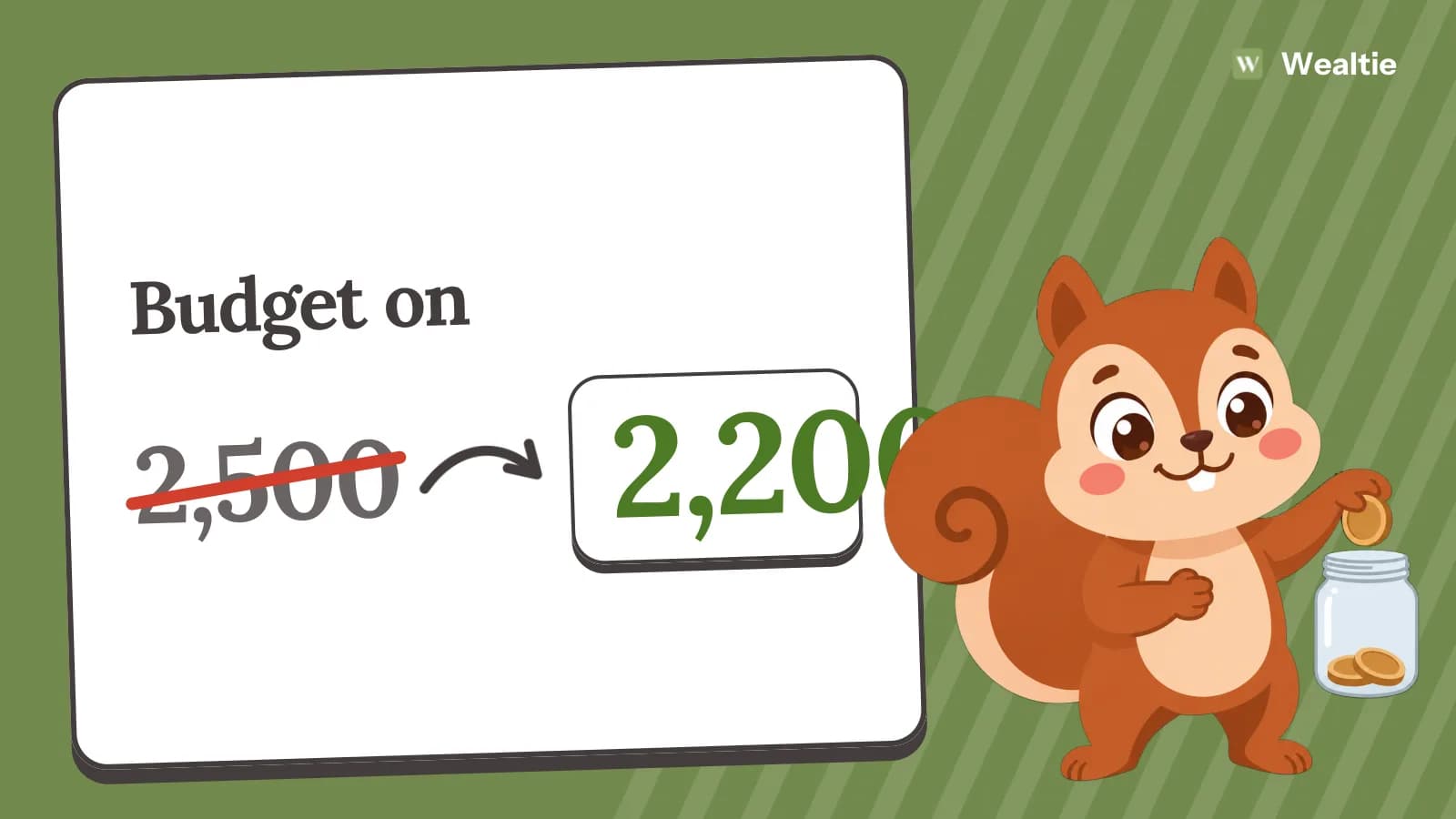
To budget with overtime pay, build your monthly budget on your base pay only, then send overtime to savings, debt or goals. In a worked example, base take-home of 2,200 covers the budget, and 300 of overtime goes straight to savings.
 By Wealtie Team · 3 min read
Key takeaways
- Build your budget on base pay only, since overtime can change or stop.
- In a worked example, base take-home of 2,200 covers the budget, and 300 of overtime goes to savings or goals.
- Overtime is usually taxed like other pay, so plan from the take-home amount.
- Avoid raising fixed costs based on overtime, since they're hard to cut if overtime dries up.
How do you budget with overtime pay?
Base your budget on the pay you can count on, and treat overtime as extra. Overtime can be a great way to get ahead, but it often comes and goes with workloads, seasons or company decisions you don't control. A budget that relies on it can leave you short when it stops. A budget built on base pay, with overtime going to goals, gets the benefit without the risk.
What does that look like in practice?
Here's a worked example in round numbers that work in any currency:
| Monthly take-home | |
|---|---|
| Base pay | 2,200 |
| Overtime, in a busy month | 300 |
| Total | 2,500 |
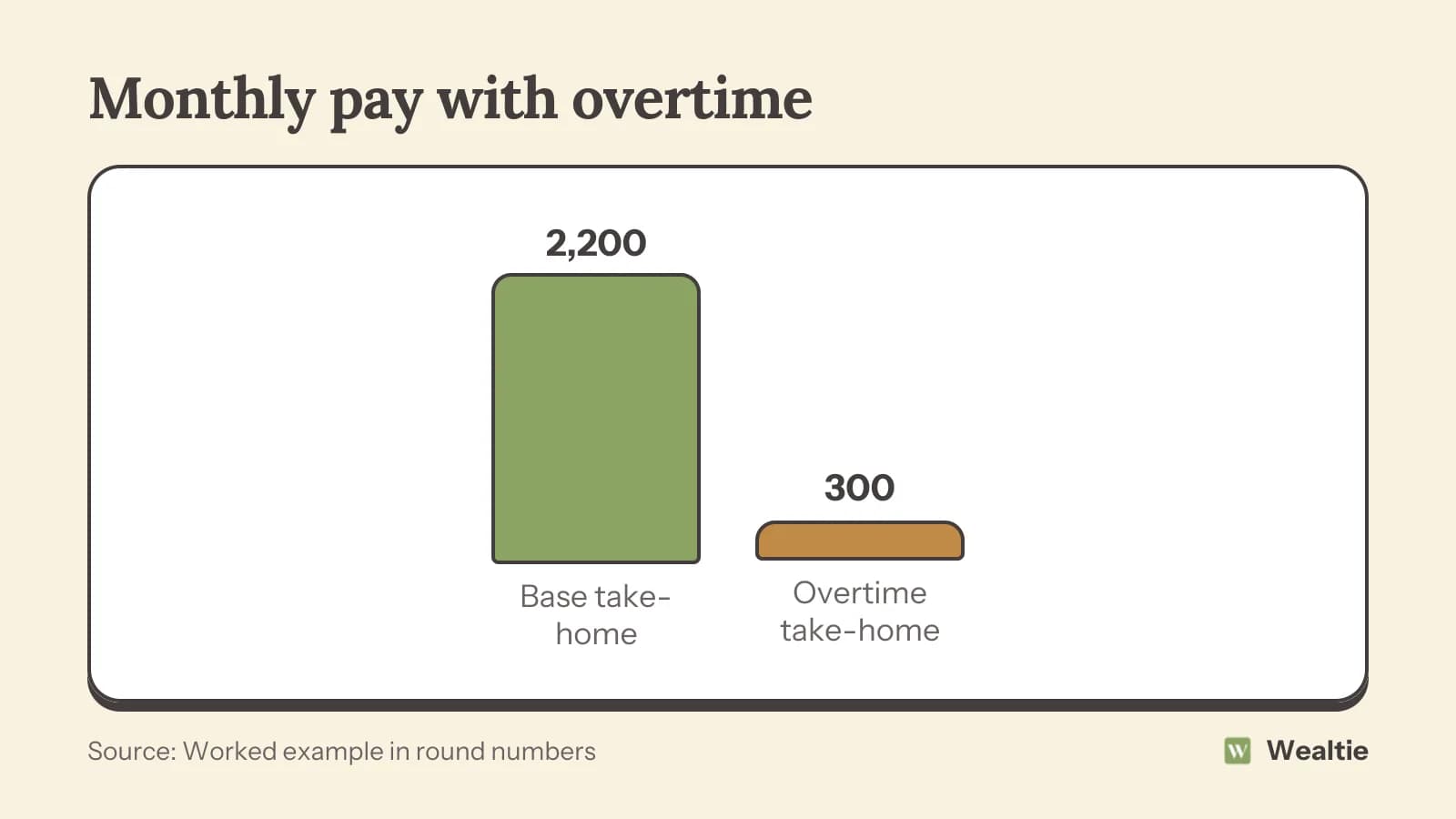
The monthly budget, covering rent, bills, food, transport and spending money, is built to fit 2,200. The 300 from overtime goes straight to savings, debt or a goal. Over a year, regular overtime like that adds up to 3,600. That could fill an emergency fund, clear a credit card or pay for a holiday, without the budget ever depending on it. If overtime varies a lot, look at the last six months to see what's typical, and treat even the low months as a bonus.
How much of your overtime will you keep?
Less than the gross amount. Overtime is usually taxed like other pay, and in some systems extra pay in one month can be taxed at a higher rate in that payslip. Check your payslip to see what overtime adds to your take-home, not just the hours worked. Gross vs net income explains how deductions work.
Where should overtime go?
Down a simple list, until it runs out:
- High-interest debt, like credit cards
- Your emergency fund, until it's full
- Goals, like a holiday, car or home deposit
- Some for yourself, as a reward for the extra hours
Keeping a share for yourself makes the extra hours feel worth it, especially after long weeks. A common split is most of it to savings and goals, with a smaller part to enjoy. What to do with a pay rise has a similar approach for income increases.
Why not raise your spending?
Because overtime can stop at short notice. If you take on a bigger rent, a car loan or new subscriptions based on overtime, you'd struggle to pay them if the overtime disappeared. Keeping fixed costs within your base pay means a quiet month is disappointing, not a crisis.
If overtime has been steady for a long time and looks set to continue, you might decide to count part of it, but keep a buffer. Counting a cautious share, like half of the usual amount, leaves room if it drops.
What if your base pay doesn't cover the basics?
Then overtime is covering essentials, which is common but risky. Build an emergency fund from good months, so you can cover a month without overtime. Look at ways to lower fixed costs or increase base pay, like asking for a raise or looking for a better-paid role. How to negotiate a pay rise can help with that.
How do you keep track?
Check your payslip each month to see the overtime and the tax on it, and make sure the hours are right. Move the overtime amount to savings the day it arrives, so it doesn't drift into everyday spending. Note your overtime each month, so you can see how much it varies over a year. Patterns, like busy seasons, help you plan bigger goals around the months when overtime usually comes, like booking a holiday after a busy period has paid for it.
Is the extra time worth it?
Count the cost as well as the pay. Overtime can mean less time with family, more tiredness and extra costs like takeaways or childcare. Work out what you keep per hour after tax and those costs. If it's worth it for a goal, set an end date, like until the emergency fund is full, so the extra hours don't become permanent without a reason. Some people find a few months of overtime toward one clear goal is easier to keep up than open-ended extra shifts.
How do you budget with overtime in Wealtie?
Set your monthly income goal in the income tracker to your base take-home, so a month with overtime shows up as over target. Move the overtime to a savings account as a transfer, which isn't counted as spending, and your net worth tracker shows it building up.
Questions people ask
Build your budget on base pay only, since overtime can change or stop, and send overtime to savings, debt or goals.
Overtime is usually taxed like other pay, and in some systems extra pay in one month can be taxed at a higher rate in that payslip.
Pay down high-interest debt, build your emergency fund, then put it toward goals, keeping some as a reward.
Build an emergency fund from good months, and look at lowering fixed costs or increasing your base pay.
This article is general information, not financial, tax or legal advice. Your situation is your own; check the numbers that apply to you before you act on them.