Saving: Are noise-cancelling headphones worth it?
Are noise-cancelling headphones worth it? They are for daily commuters, travellers and people in noisy spaces, and in a worked example, a 250 pair used every working day for three years costs about 0.33 a day.
 By Wealtie Team · 3 min read

Key takeaways
- Noise-cancelling headphones are worth it for daily commuters, travellers and noisy workplaces.
- Cost per day shows the value of a pricier pair.
- Mid-range and older models often offer most of the benefit for less.
- Look after them to make them last longer.
Are noise-cancelling headphones worth it for you?
Noise-cancelling headphones use small microphones and electronics to reduce background noise, like the hum of a train, the drone of a plane or office chatter. Many people find they make commuting and travelling more relaxing and help them concentrate in noisy spaces. Because the noise is reduced, you can listen at a lower volume, which is easier on your ears.
They're also more expensive than ordinary headphones, so whether they're worth it depends on how often you'll use them. Here's a worked example of three pairs used every working day for three years, in round numbers that work in any currency:
| Headphones | Cost per day of use |
|---|---|
| Budget pair at 80 | 0.11 |
| Mid-range pair at 250 | 0.33 |
| Premium pair at 400 | 0.53 |
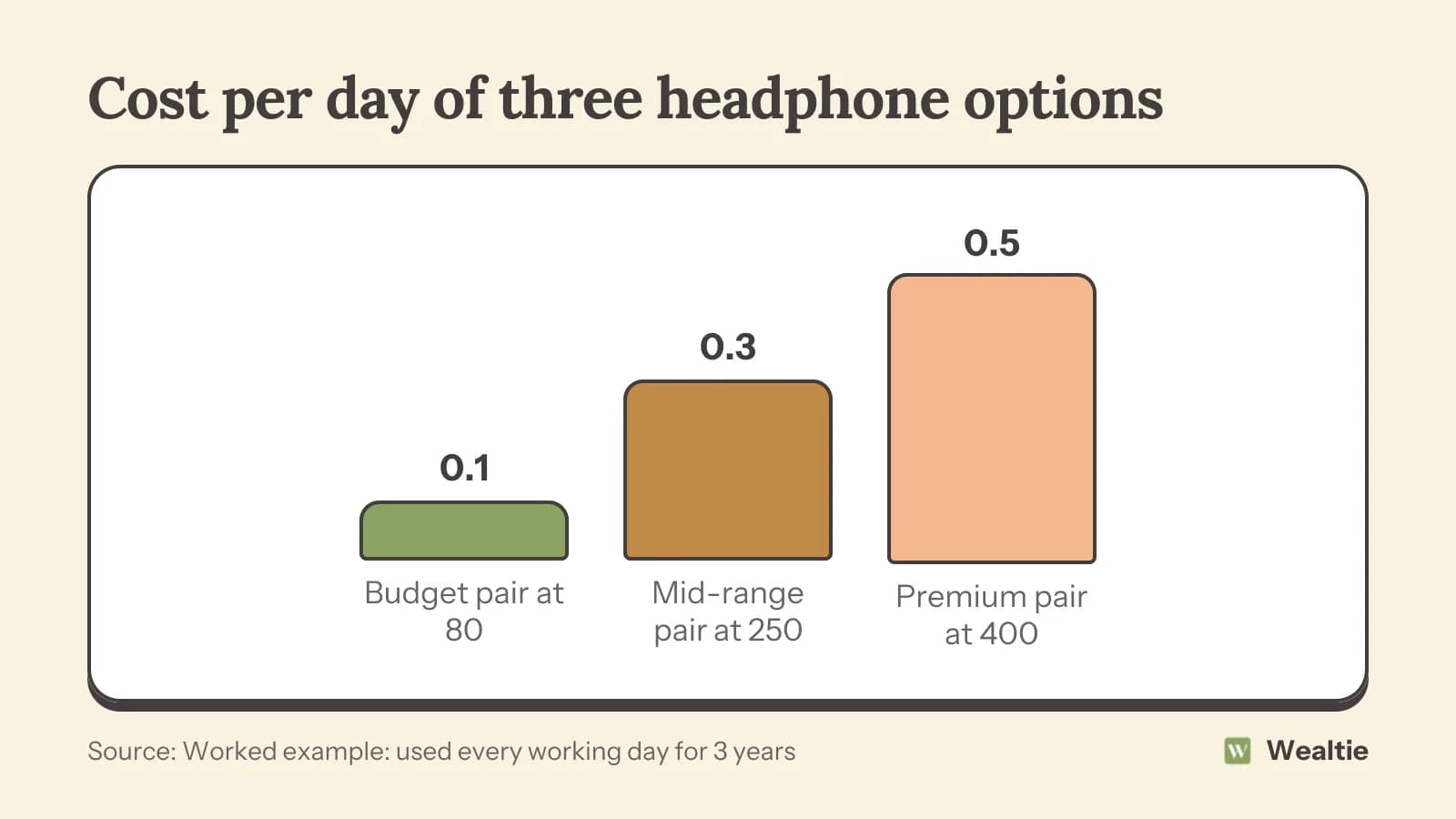
Used daily, even the premium pair costs about half a unit a day. If you'd only use them on a couple of flights a year, the cost per use is much higher. Cost per use covers this way of comparing purchases.
Who gets the most value from them?
Daily commuters
Trains, buses and the underground can be loud. Noise cancelling can make a long commute calmer and more useful for reading or listening to podcasts. How to cut commuting costs covers the money side of commuting.
Frequent travellers
On long flights, reducing engine noise can make a big difference to comfort and rest.
People working in open-plan offices or at home
Blocking out chatter, building work or household noise helps with concentration.
People sensitive to noise
Some people find everyday noise tiring or stressful, and headphones help them stay calm in busy places.
When might they not be worth it?
You rarely use headphones
If you'd use them a few times a year, a cheaper pair or earplugs may be enough.
You need to hear your surroundings
Cyclists, runners near traffic and people who need to hear announcements or children should be careful. Many headphones have a mode that lets outside sound in.
You lose things easily
Expensive earbuds are easy to lose. A cheaper pair might suit you better.
How do you buy them for less?
Choose mid-range
Mid-range models often offer most of the noise cancelling and sound quality of premium ones at a lower price.
Buy last year's model
When new models launch, older ones often drop in price and still perform well.
Look at refurbished
Refurbished headphones from reputable sellers can cost much less and often include a warranty.
Wait for sales
Headphones are common in seasonal sales. If you're not in a hurry, wait for a good price.
Skip the extended warranty
Extended warranties for headphones rarely pay off. Is an extended warranty worth it? covers when they do.
How do you make them last?
Keep them in their case, avoid wrapping cables tightly, keep them dry and charge the battery as the manual recommends. Replacement ear cushions are often available cheaply and can make an older pair feel new. Looking after them well spreads the cost over more years and lowers the cost per day.
What if you upgrade?
If you replace a working pair, sell or pass on the old ones rather than leaving them in a drawer. How to sell things you don't use covers selling electronics quickly. How to save money on electronics covers buying smarter in general.
Try a few pairs before you buy if you can. Comfort matters as much as noise cancelling, especially if you'll wear them for hours on a flight or at a desk. Some people prefer over-ear headphones, which tend to block more noise and feel comfortable for longer, while others prefer small earbuds that fit in a pocket. Shops often have demo pairs, and some retailers have generous return policies if a pair doesn't suit you.
Think about how you'll use them day to day. If you take calls on the move, check the microphone quality. If you travel a lot, look for good battery life and a case that protects them in a bag. If you use several devices, check how easily they switch between your phone and laptop. Paying for features you'll use is worthwhile, but paying for ones you won't is where costs creep up.
Keep the volume moderate, too. Noise cancelling makes it easier to listen quietly, which is better for your hearing over the years, and a pair that protects your ears is good value in a way that's hard to put a number on.
If you already own a pair of good headphones without noise cancelling, consider whether earplugs or moving to a quieter seat might solve the problem for free.
How can Wealtie help with tech spending?
Log headphones and other gadgets in an electronics expense category, and set a yearly budget for tech. Seeing the total helps you decide which upgrades are worth it and which can wait.
Questions people ask
They're worth it for daily commuters, frequent travellers and people working in noisy spaces who use them every day.
In a worked example, a 250 pair used every working day for three years cost about 0.33 per day.
Many budget and mid-range pairs offer good noise cancelling. Premium pairs usually add comfort, sound quality and features.
Keep them in a case, keep them dry, charge them as recommended and replace worn ear cushions instead of the whole pair.
This article is general information, not financial, tax or legal advice. Your situation is your own; check the numbers that apply to you before you act on them.