Budgeting: Is an extended warranty worth it? How to decide at the till
Is an extended warranty worth it? Rarely, for most electronics and appliances, because the item is often covered already and repairs can cost less than the warranty, though it can make sense for expensive items you couldn't afford to replace.
 By Wealtie Team · 3 min read

Key takeaways
- Many products come with a manufacturer's warranty, and consumer law may give extra protection, so check what you already have.
- In a worked example, a 120 warranty on a 600 washing machine costs more than the likely repair cost.
- Putting the warranty price into savings instead covers most repairs you might face.
- A warranty can make sense for expensive items you couldn't afford to repair or replace, if the terms are good.
Is an extended warranty worth it?
Usually not, for most everyday electronics and appliances. Shops offer them at the till because they're profitable, and the price is often high compared with the chance of a repair you'd need to pay for. There are exceptions, which are worth knowing.
What protection do you already have?
More than the salesperson might mention:
- The manufacturer's warranty: many products come with one for a set period at no extra cost
- Consumer law: in many countries, goods must be of satisfactory quality and last a reasonable time, which can cover faults beyond the manufacturer's warranty
- Card protection: some credit cards offer purchase protection or extend the manufacturer's warranty
- Home insurance: some policies cover accidental damage to items in the home
Keep receipts and the warranty card or confirmation email in one place, since you'll need proof of purchase for any claim. Write down when each warranty ends, so you know whether a fault is still covered before you pay for a repair. An extended warranty often overlaps with some of these, so you can end up paying for cover you already have. Check before you buy.
How do you work out whether it's worth it?
Compare the warranty's price with what a repair might cost you and how likely you are to need one. Here's a worked example in round numbers that work in any currency:
| Line | Amount |
|---|---|
| Washing machine | 600 |
| Three-year extended warranty | 120 |
| Example repair cost if it breaks after the standard warranty | 150 |
| Expected cost, given a modest chance of that repair | 45 |
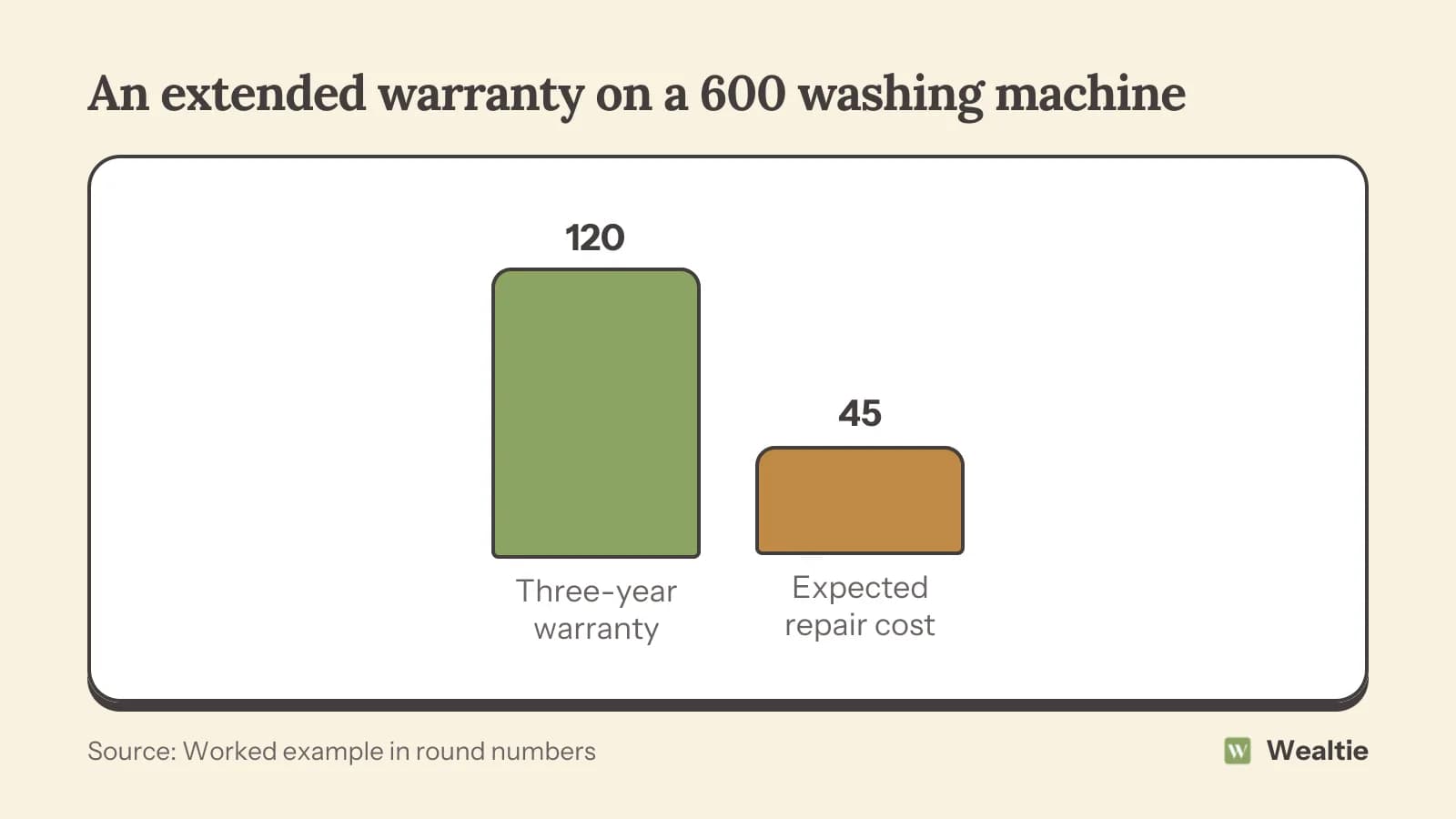
The warranty costs more than the repair you'd expect to pay for, on average. The seller usually knows how often products break and prices the warranty to make money on average. The difference is their profit. If you put 120 into savings instead, it would cover most repairs, and if nothing breaks, you keep it.
When can an extended warranty make sense?
In a few cases:
- An expensive item you couldn't afford to repair or replace, with no savings to fall back on
- Something that's often dropped or damaged, if the warranty covers accidental damage
- A product known for costly repairs, where the warranty is reasonably priced
- When the terms are clear and generous, with no high excess and fast repairs
For a small business that depends on one machine, fast repair or replacement may be worth paying for. Even then, compare it with standalone cover from another provider, which can be cheaper than the shop's.
What should you check in the terms?
If you're considering one, read:
- What's covered: faults only, or accidental damage too
- The excess you pay on each claim
- Whether repairs are done quickly, or you'll be without the item for weeks
- Whether you can cancel and get a refund
- When it starts, since some overlap with the manufacturer's warranty
Watch for terms that require you to register the product or use approved repairers, and check who handles the claim. You usually don't need to decide at the till. Many shops let you buy cover within a period after purchase, so you can check the terms at home.
What's a better alternative?
A small repair fund. Instead of paying for warranties on every item, set aside a little each month for repairs and replacements. Over a few years, that fund often ends up larger than the cost of the repairs you need. What is a sinking fund explains how to set one up.
If something breaks after the warranty ends, get a repair quote before replacing it, since many faults cost less to fix than you'd expect. For phones and laptops you carry around, think about whether you'd look after a case and a screen protector instead. They cost far less than a protection plan.
How do you say no at the till?
Briefly. "No thanks, I'm covered" is enough. If you're unsure, say you'll think about it and check the terms at home. Sales staff often earn commission on warranties, so expect a second offer. If they say the manufacturer's warranty is short, check what consumer law covers before deciding.
How do you track repairs in Wealtie?
Add a small savings account for repairs and move a monthly amount into it as a transfer, which isn't counted as spending. When something breaks, log the repair as an expense from that account. Your net worth tracker shows the fund, and your expense categories show what repairs cost over a year.
Questions people ask
Usually not for most electronics and appliances, because you often already have protection and the warranty costs more than likely repairs. They can make sense for expensive items you couldn't afford to replace.
Often not, since the manufacturer's warranty and consumer law may already cover faults. Check what you have before buying extra cover.
A small repair fund. Putting the warranty price into savings covers most repairs, and you keep the money if nothing breaks.
Often, yes. Many shops let you add cover within a period after purchase, so you can check the terms at home first.
This article is general information, not financial, tax or legal advice. Your situation is your own; check the numbers that apply to you before you act on them.



