Budgeting: How to cut commuting costs without changing jobs
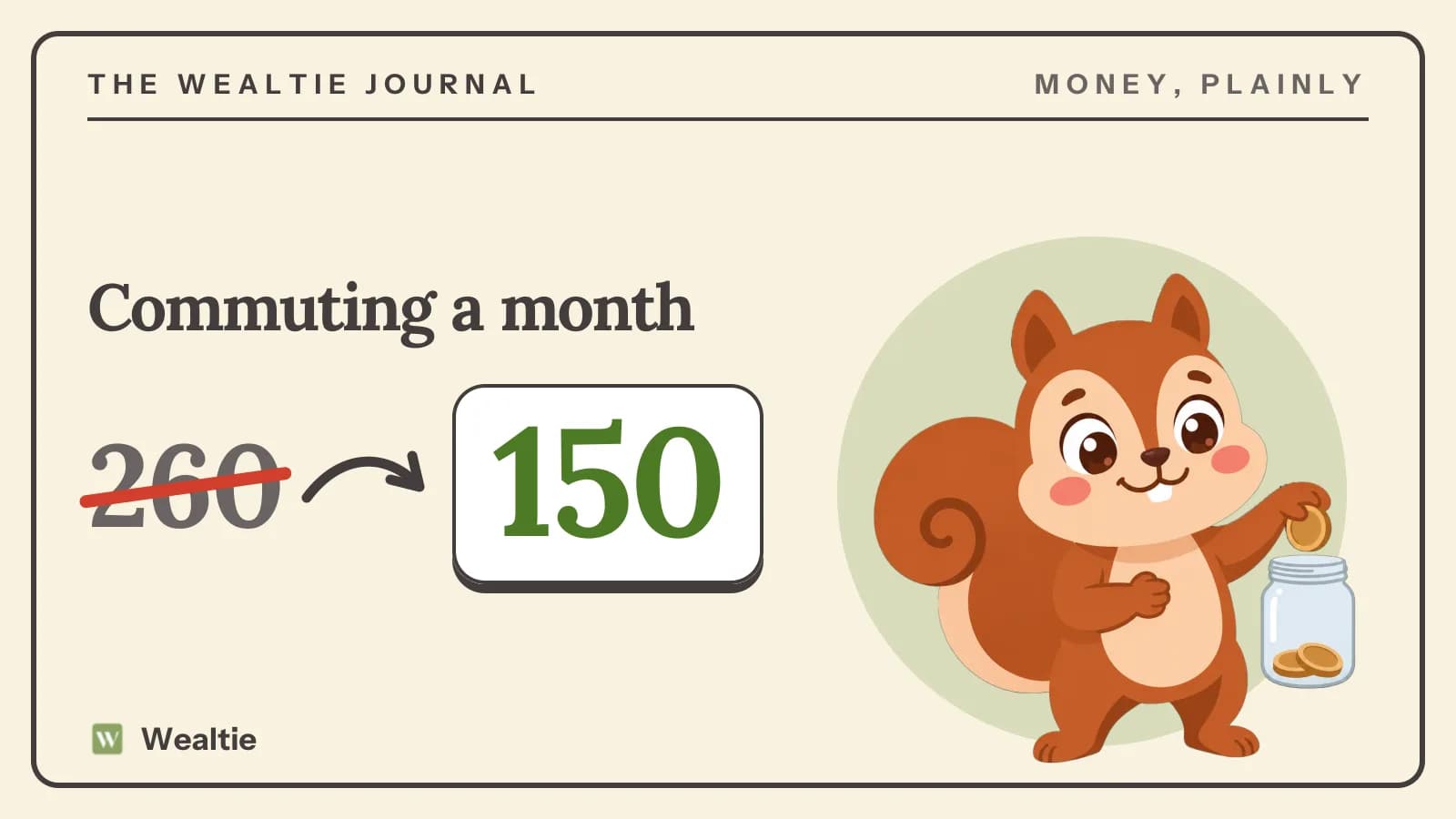
To cut commuting costs, add up what you spend now, then compare the options: season tickets, travelling off-peak, cycling part of the week, sharing lifts or working from home some days. In a worked example, a 260 monthly commute drops to 150.
 By Wealtie Team · 3 min read
Key takeaways
- Work out the full cost of your commute, including fuel, parking, wear on the car and the coffee on the way.
- In a worked example, a 260 monthly commute drops to 150 with three days by train and two at home.
- A season or monthly ticket can cost less than paying daily if you travel most days.
- Working from home one or two days a week can cut commuting costs more than any ticket deal.
How do you cut commuting costs?
Start with the real cost of what you do now, then compare it with the alternatives. Commuting is one of the largest regular costs after housing for many people, and because it happens every day, small changes add up quickly.
How much does your commute cost?
More than the ticket or the fuel. Add everything:
- Fuel or tickets
- Parking
- Wear on the car, like tyres and servicing
- Tolls or congestion charges
- The coffee or breakfast you buy on the way
Here's a worked example in round numbers that work in any currency, for someone who drives 20 days a month at about 13 a day all in. That's 260 a month. Count the days you commute in a typical month, allowing for holidays and sick days, since that changes whether a monthly ticket pays off.
What are the cheaper options?
Here's the same person, switching to the train three days a week and working from home the other two. Before making a change like this, try it for a month to see how the journey and the days at home work for you:
| Option | Monthly cost |
|---|---|
| Driving five days a week | 260 |
| Train three days, home two | 150 |
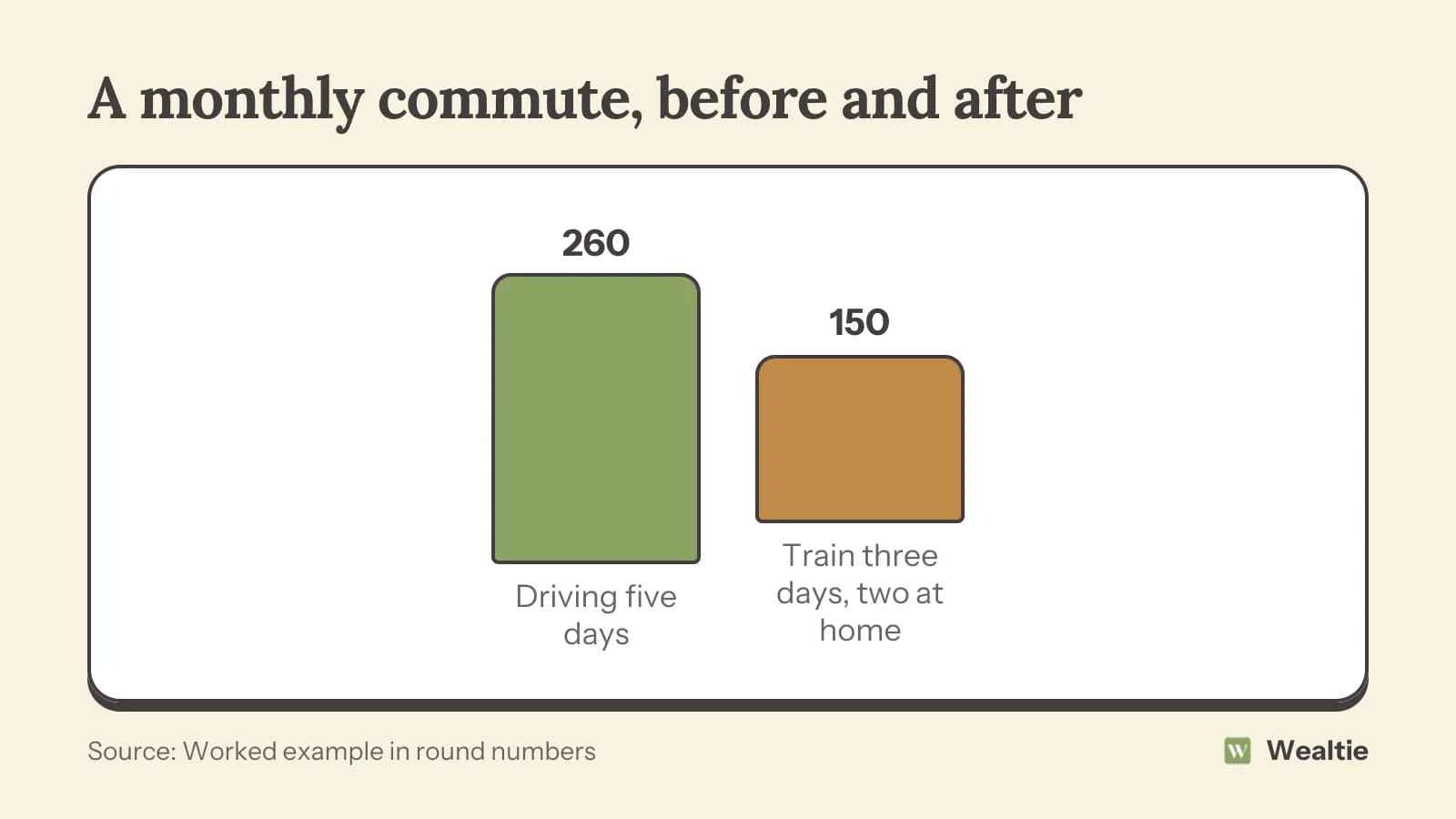
That saves 110 a month, or 1,320 a year. Your options depend on where you live and work, but these are the usual ones to compare:
- Season or monthly tickets: if you travel most days, a monthly ticket can cost less than paying daily. Paying 9 a day for 20 days is 180, so a monthly ticket at 140 would save 40.
- Off-peak travel: if your hours are flexible, travelling outside the busiest times can be cheaper
- Cycling or walking: for part of the journey or some days of the week
- Lift sharing: sharing fuel and parking with a colleague
- Working from home: even one day a week removes a fifth of the cost
For long distances, booking ahead or buying a railcard can reduce fares. For short ones, a second-hand bike and basic kit can pay for themselves within a few months.
Is working from home cheaper?
Usually for commuting, though your home costs rise a bit, like heating and electricity during the day. For most people, those extra costs are smaller than a day's commuting. Note the extra home costs for a month if you want to compare like with like. If your employer allows it, a couple of days at home is often the biggest single saving available.
Check whether your country offers tax relief or allowances for working from home, since some do.
Does your employer help?
Ask. Some employers offer schemes that make commuting cheaper, like season ticket loans spread over your salary, cycle-to-work schemes, parking subsidies or shuttle buses. Many people never ask, and the schemes go unused. If you're starting a new job, ask about travel support before you accept, since it can change the value of the offer.
Should you get rid of the car?
Only if you'd manage without it most of the time. If the car is mainly for commuting and there's good public transport, selling it saves fuel, insurance, tax, servicing and parking all at once. Occasional car hire or a car club can cover the times you need one. Work out what the car costs per year, including insurance, tax, servicing and the value it loses, and divide by the days you use it. The cost per day often surprises people.
If you need the car for other reasons, focus on driving it less and running it cheaply. How to save money on gas and how to save money on car insurance help with that.
What about the small daily costs?
They add up as much as the travel. A coffee and pastry bought every commute day can come to 80 a month. A flask from home and a packed breakfast cut most of that. Plan the journey home too, so you're not paying for a taxi when you miss the last train. How to save money on eating out covers the lunches.
How do you track commuting costs in Wealtie?
Give commuting its own line in your expense categories, and log fuel, tickets and parking there. You'll see what the commute costs each month, and how much a change saves. A monthly ticket can be set up as a recurring transaction with the bill tracker, so it logs itself on the day it renews.
Questions people ask
Add up the full cost, then compare season tickets, off-peak travel, cycling, lift sharing and working from home some days. Ask your employer about travel schemes.
If you travel most days, often yes. Compare the monthly ticket with your daily fare multiplied by the days you travel.
Usually, because commuting costs more than the extra heating and electricity at home. Check whether tax relief is available where you live.
Add fuel or tickets, parking, wear on the car, tolls and the food or coffee you buy on the way. A worked example comes to 260 a month.
This article is general information, not financial, tax or legal advice. Your situation is your own; check the numbers that apply to you before you act on them.