Saving: How to sell things you don't use and put the money to work
To sell things you don't use, start with items that hold value, like electronics, furniture, bikes and branded clothes, price them by checking what similar items have sold for, and decide in advance where the money will go. A clear-out can raise a few hundred.
 By Wealtie Team · 3 min read
Key takeaways
- Start with items that hold value, like phones, furniture, bikes and branded clothes.
- Price items by looking at what similar ones have sold for, not what they're listed at.
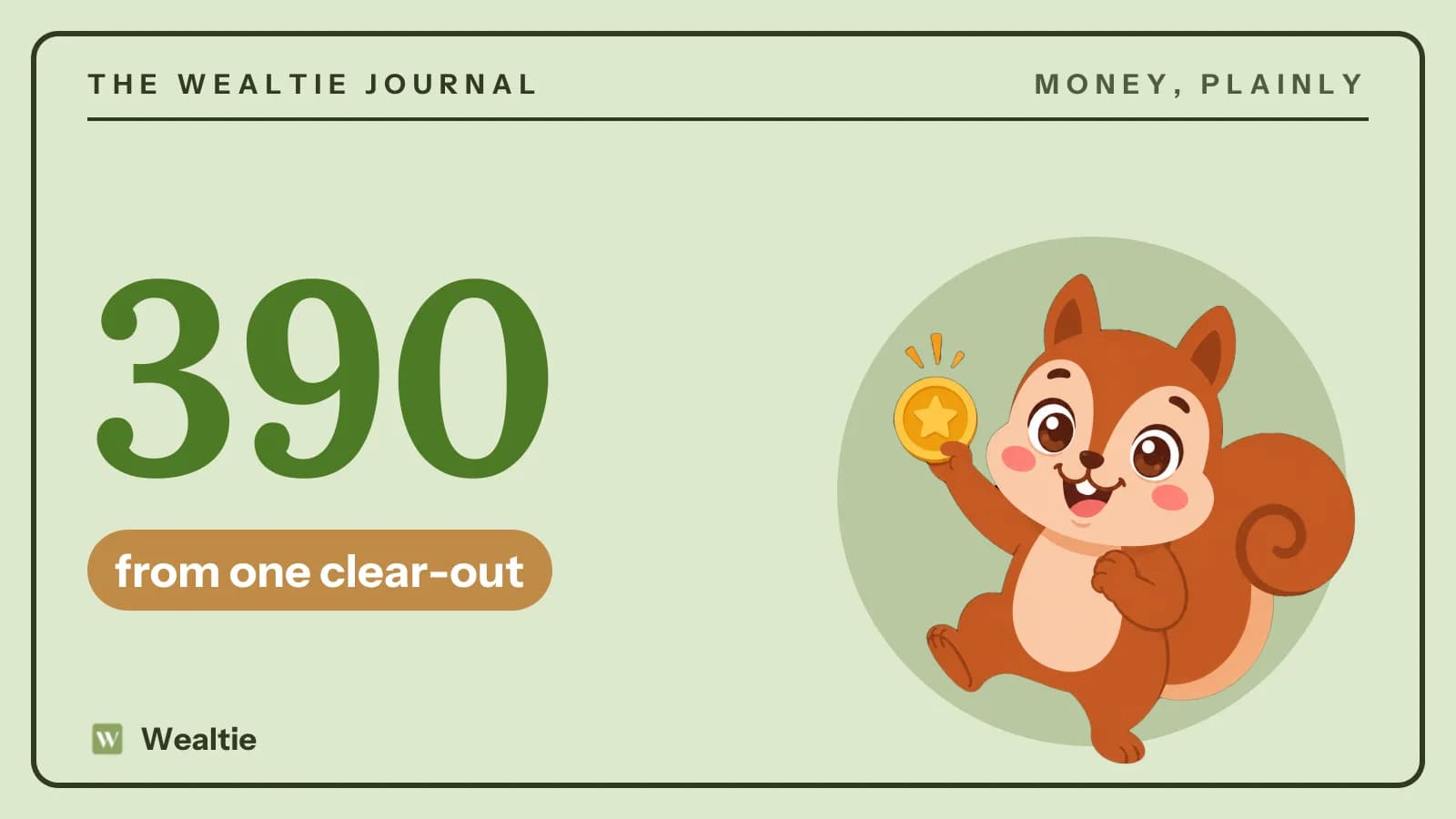
- In a worked example, one clear-out raises 390.
- Decide where the money goes before it arrives, or it disappears into everyday spending.
How do you sell things you don't use?
Pick the items that are worth the effort, list them where buyers are looking, price them sensibly and handle the sale safely. Then decide where the money goes. A clear-out gives you space and cash, and the second part is easy to waste if you don't plan for it. Start with one room or one cupboard, so it doesn't take over a whole weekend.
What sells well?
Things that hold value and that people search for:
- Phones, tablets, laptops and game consoles
- Furniture in good condition, especially solid wood
- Bikes and sports equipment
- Branded clothes, shoes and bags
- Baby and children's equipment, like buggies and high chairs, where safe to resell
- Tools, garden equipment and small kitchen appliances
- Books, games and collectables in bulk
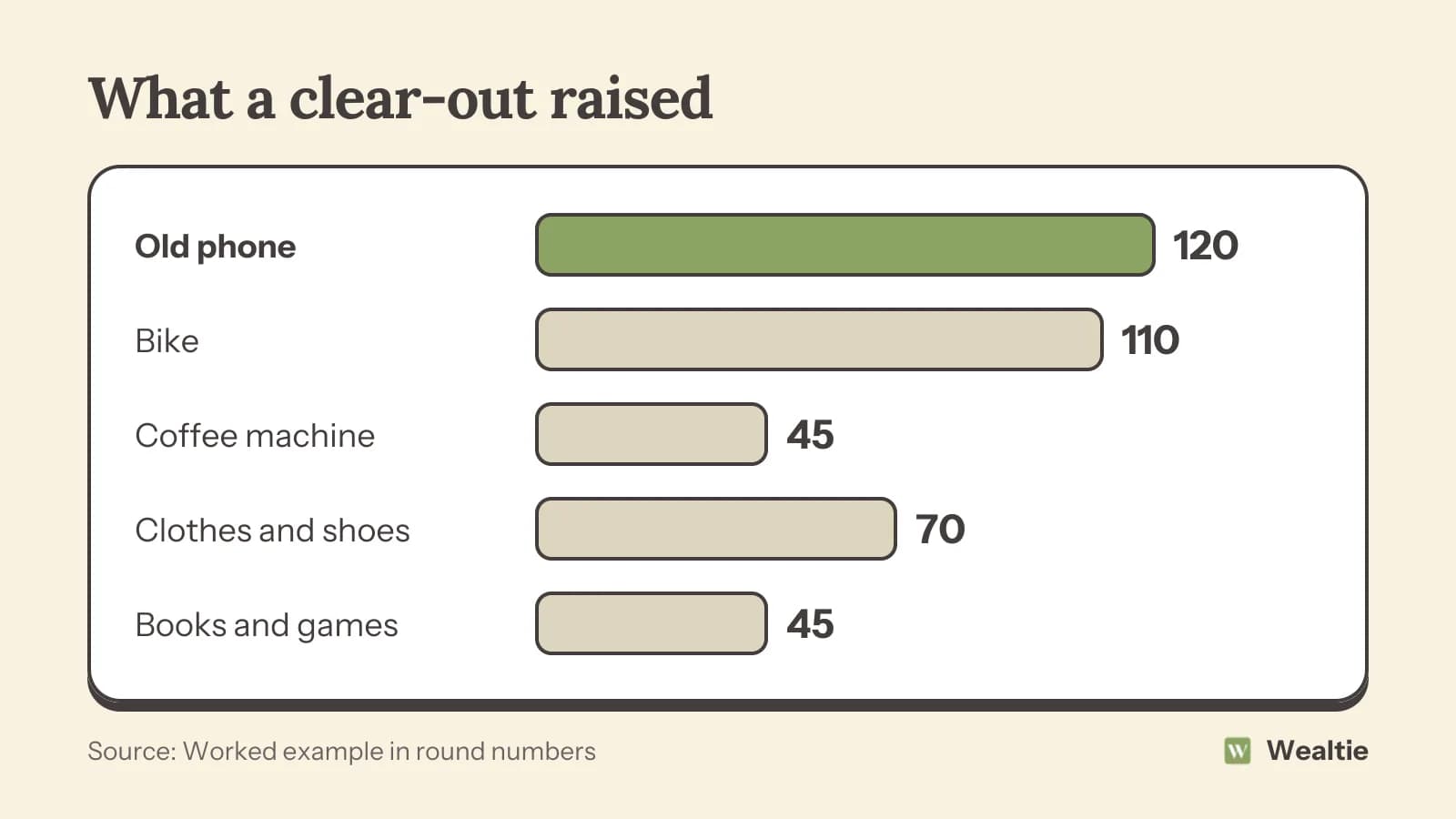
Here's what a single clear-out might raise, in round numbers that work in any currency:
| Item | Sold for |
|---|---|
| Old phone | 120 |
| Bike | 110 |
| Coffee machine | 45 |
| Clothes and shoes | 70 |
| Books and games | 45 |
| Total | 390 |
Seasonal items sell best in season, like garden furniture in spring and coats in autumn. Low-value items, like single paperbacks or worn clothes, often aren't worth listing separately. Bundle them, donate them or take them to a recycling point. A bundle of children's clothes in one size, for example, often sells when single items wouldn't.
How should you price things?
Look at what similar items have sold for, not what they're listed at, since many listings never sell. Most marketplaces let you filter for sold items. Price a little above what you'd accept, so there's room for an offer.
Be realistic about condition. Something used for five years won't fetch near-new prices. A fair price sells faster, and time matters if you're short of space. If something hasn't sold in two weeks, lower the price a little or improve the photos.
How do you make a listing that sells?
Clear photos in daylight, from several angles, showing any marks or damage. A short, honest description with the brand, model, size or dimensions and condition. Buyers trust listings that mention flaws, and it saves arguments later.
Clean items before you photograph them, and take the photos somewhere tidy with good light. A quick wipe or wash can add a surprising amount to what something sells for.
Where should you sell?
Online marketplaces suit most items, and local selling groups work well for furniture and bulky things that buyers collect. Specialist platforms can get better prices for electronics, clothes or collectables. Trade-in schemes for phones and gadgets are quick, though they usually pay less than selling privately.
For speed, a car boot sale or a garage sale can clear a lot in a morning. Collection-only listings save packing and postage, but limit buyers to your area.
How do you sell safely?
For collection from home, have someone with you, and keep the item near the door. Meet in public places for small items. Accept payment in a way that clears before the buyer leaves, and be wary of anyone who offers to overpay, pay with a cheque, or asks you to send the item before paying.
Keep messages on the platform until the sale's done, which gives you a record. Remove your personal data from phones and laptops before selling, by signing out of accounts and resetting them to factory settings.
Where should the money go?
Decide before it arrives. Money from selling tends to land in your everyday account and vanish into ordinary spending. A few good uses, in order:
- Pay down any high-interest debt
- Add to your emergency fund
- Put it toward a goal you're saving for
Move it the day it arrives, and write down the total, since seeing it often motivates the next clear-out. If you're selling a lot, check whether it counts as trading where you live, since regular selling can have tax rules. How to declare side hustle income covers the US and UK.
How do you stop the clutter coming back?
Before buying something, ask whether you'll use it enough to justify it and where it'll live. Cost per use is a quick test, and how to stop impulse buying helps with the purchases that end up in a cupboard.
How do you track sales in Wealtie?
Log each sale as income, so the income tracker shows what the clear-out raised. Then move the money to savings or toward a debt as a transfer, which isn't counted as spending. Your net worth tracker shows the difference it makes.
Questions people ask
Phones and electronics, solid furniture, bikes, branded clothes and shoes, and children's equipment tend to sell well.
Look at what similar items have sold for, not what they're listed at, and price a little above what you'd accept.
Meet in public for small items, have someone with you for collections, make sure payment clears first and remove personal data from devices.
Decide before it arrives: pay down high-interest debt, add to your emergency fund or put it toward a goal.
This article is general information, not financial, tax or legal advice. Your situation is your own; check the numbers that apply to you before you act on them.