Saving: Is an electric scooter worth it for commuting?
Is an electric scooter worth it? For short commutes that replace bus fares or car trips, often yes, and in a worked example, a 500 scooter replaces an 80 bus pass and pays for itself in about seven months.
 By Wealtie Team · 3 min read

Key takeaways
- An electric scooter is worth it for short, regular trips that replace fares or driving.
- Running costs are very low: a little electricity and occasional repairs.
- Check local rules, since riding on public roads isn't legal everywhere.
- Budget for a helmet, lock, insurance where needed and tyre or battery repairs.
Is an electric scooter worth it?
Electric scooters have become a popular way to make short trips, especially in cities. They're quick, easy to carry onto trains and cheap to run. Whether an electric scooter is worth it depends on how far you travel, what it would replace and whether it's legal to ride one where you live. For a short daily commute that would otherwise cost bus fares or fuel and parking, the savings can add up quickly.
Here's a worked example of a year commuting a few kilometres each way, in round numbers that work in any currency:
| Option | First-year cost |
|---|---|
| Electric scooter, incl. purchase | 560 |
| Monthly bus pass | 960 |
| Driving and parking | 1,800 |
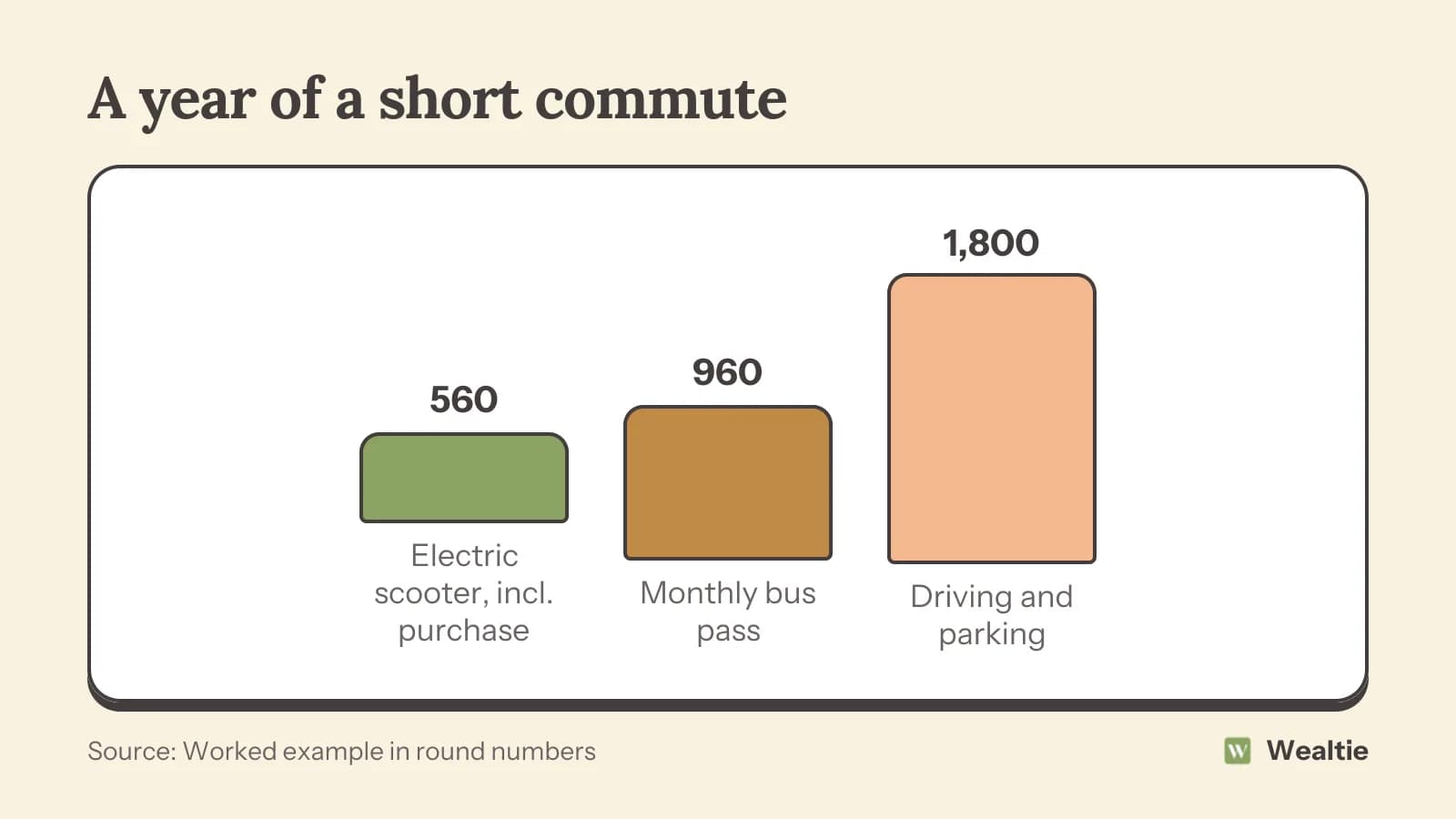
The scooter costs 500 to buy, around 10 a year in electricity and about 50 in maintenance, so 560 in the first year. After that, it costs only the running costs. A monthly bus pass at 80 costs 960 a year, and driving with fuel and parking costs about 1,800. Against the bus, the scooter pays for itself in about seven months.
What does an electric scooter cost to run?
Electricity
Charging a scooter uses very little electricity, often just a few units of currency over a whole year of commuting.
Maintenance
Tyres, brakes and bearings wear out and need replacing. Punctures are common on some models, so tubeless or solid tyres can save hassle.
Battery replacement
Batteries lose capacity over time and may need replacing after a few years. Replacement batteries can be expensive, so check the cost before you buy.
Insurance
In some places, insurance is required for private scooters on public roads. Even where it's not, it can protect you against theft and liability.
Safety gear and a lock
A helmet, lights and a good lock are essential. Add these to the upfront cost.
Are electric scooters legal where you live?
Rules vary a lot. In some countries and cities, private electric scooters can be ridden on roads or cycle lanes. In others, only rental scooters are allowed on public roads, and private ones are restricted to private land. There may be speed limits, age limits and rules about helmets, lights and insurance. Check your local rules before buying, since riding illegally can mean fines and invalid insurance.
When is an electric scooter worth it?
Short, regular commutes
Scooters work best for trips of a few kilometres. Longer distances can be tiring and drain the battery.
Replacing paid transport
The biggest savings come when a scooter replaces bus fares, taxis or driving and parking. How to cut commuting costs covers other ways to save on getting to work.
Combining with trains
A folding scooter can cover the first and last part of a train journey, replacing a bus or taxi at each end.
Living without a car
For people who don't drive, a scooter adds flexibility for short trips. Living without a car covers the wider costs and savings.
When might it not be worth it?
Long or hilly routes
Long distances and steep hills can stretch the battery and your patience.
Bad weather
Rain, ice and cold make scooting unpleasant and less safe. If you'd only use it half the year, the savings shrink.
Theft risk
If you can't store it safely at both ends, theft is a real risk.
Compared with a bike or e-bike
A bicycle costs less to buy and keeps you fit, while an e-bike handles longer distances and hills. The cost of cycling covers what a bike costs to run.
How do you buy one without overspending?
Choose a model with a range that comfortably covers your round trip, good brakes and lights, and tyres suited to your roads. Read reviews about reliability and the availability of spare parts. A second-hand scooter can save money, but check the battery health and look for signs of crashes or water damage.
Before buying, try a rental scooter for a week or two if your city has a scheme. It shows whether you enjoy riding, how your route feels at rush hour and how the weather affects you, for a fraction of the cost of buying. If you end up using it every day, buying will usually be cheaper than renting over a year. If you find you rarely use it, you've saved yourself several hundred.
Think about where you'll charge and store it at work, too. A scooter that has to be left outside all day is a theft risk, and some offices don't allow them indoors.
How can Wealtie help you see the savings?
Log the scooter purchase, accessories and repairs in a transport expense category, and compare it with what you spent on fares or fuel before. Setting a monthly budget for transport shows how much the switch saves over a year.
Questions people ask
For short, regular trips that replace fares or driving, often yes. In a worked example, a 500 scooter paid for itself in about seven months against a bus pass.
Very little. Electricity costs a few units a year, plus maintenance like tyres and brakes and eventually a new battery.
Rules vary by place. Some places allow private scooters on roads or cycle lanes, while others only allow rental scooters.
A scooter is easy to carry and quick for short trips. A bike costs less and keeps you fit, while an e-bike suits longer routes.
This article is general information, not financial, tax or legal advice. Your situation is your own; check the numbers that apply to you before you act on them.