Saving: Is a monthly travel pass worth it? How to check
Is a monthly travel pass worth it? It is once your trips cost more than the pass, and in a worked example, a 90 pass beats 3 fares after 30 single trips, or 15 days of commuting.
 By Wealtie Team · 3 min read
Key takeaways
- A monthly travel pass is worth it once your trips cost more than the pass.
- Work out your break-even point by dividing the pass price by the fare.
- Hybrid workers on two or three office days may save with pay as you go.
- Count holidays, sick days and remote days before buying.
Is a monthly travel pass worth it?
A monthly travel pass, season ticket or unlimited card lets you make as many trips as you like on buses, trams, trains or the metro for a fixed price. It's often the cheapest option for people who commute five days a week. But with more people working from home part of the week, a pass isn't always the best value. Whether a monthly travel pass is worth it depends on how many trips you'll make and what a single fare costs.
Here's a worked example, in round numbers that work in any currency. A single fare costs 3, so a day in the office costs 6. A monthly pass costs 90:
| Option | Monthly cost |
|---|---|
| Pay as you go, 3 days a week | 72 |
| Monthly pass | 90 |
| Pay as you go, 5 days a week | 120 |
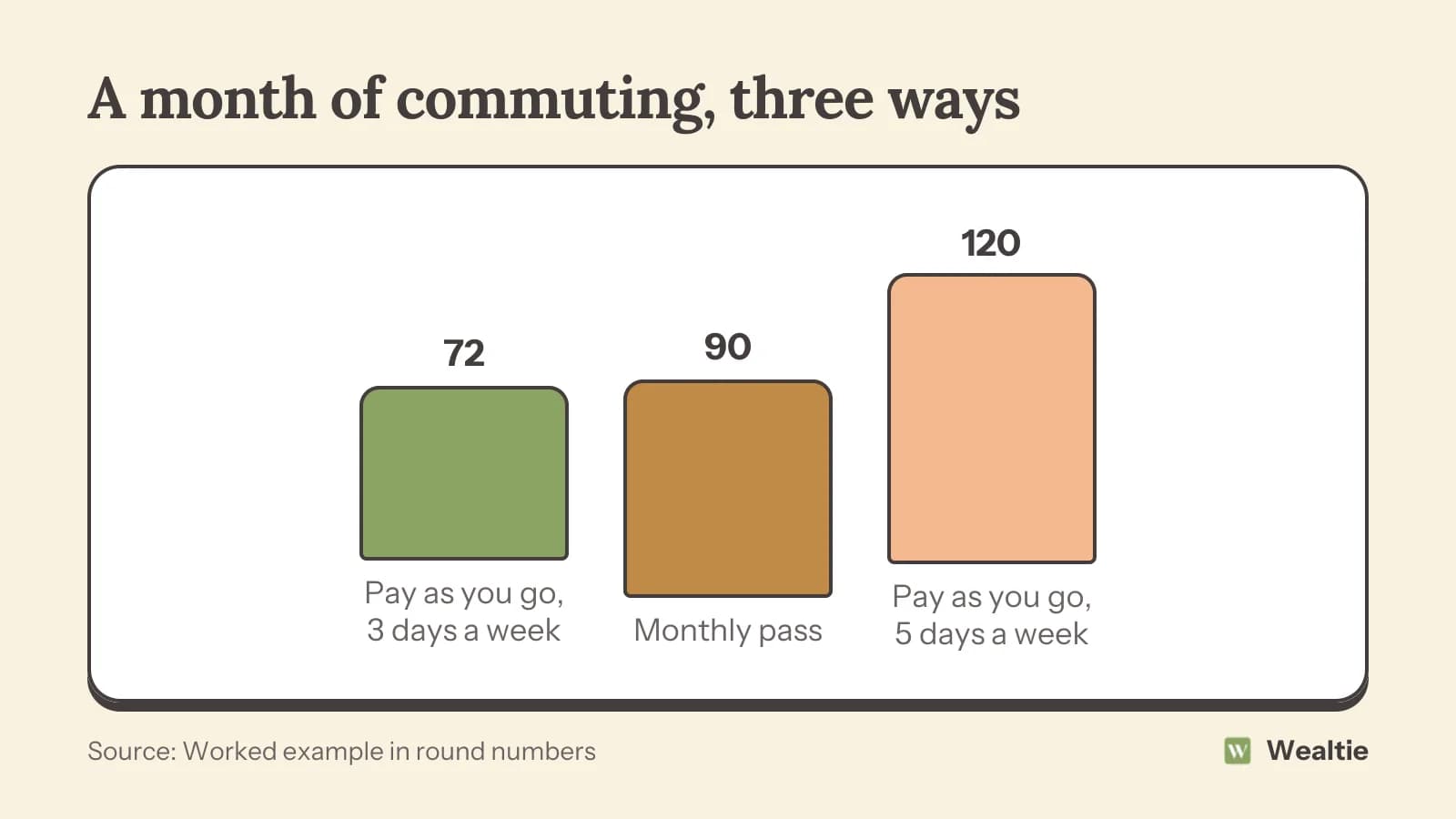
Commuting five days a week, the pass saves 30 a month. Commuting three days a week, paying as you go costs 72, which is 18 less than the pass. The right choice depends on your routine.
How do you work out the break-even point?
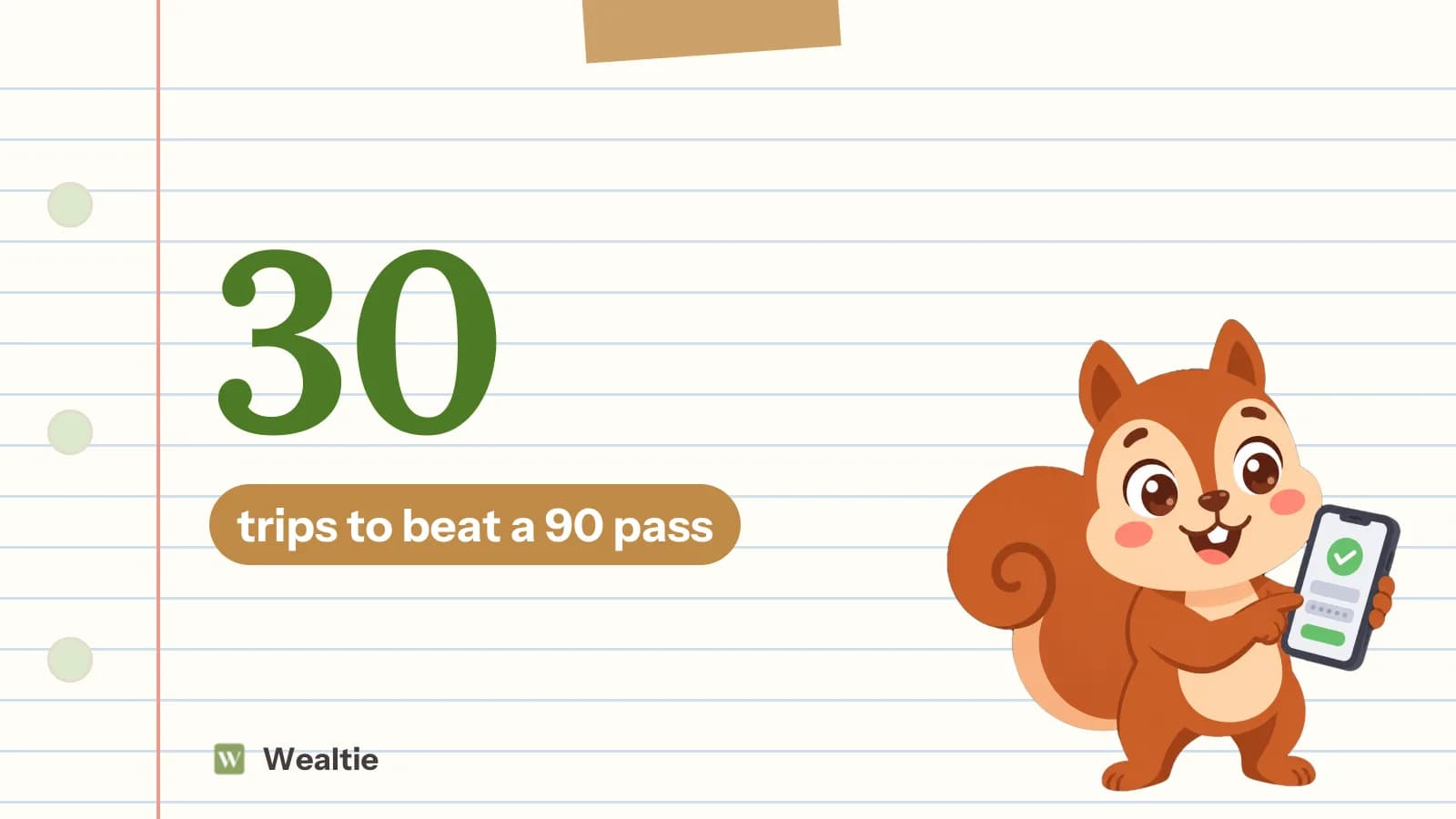
Divide the price of the pass by the cost of a single trip. In the example, 90 divided by 3 is 30 single trips, or 15 days of commuting there and back. If you'll travel more than that in a month, the pass is cheaper. If you'll travel less, pay as you go.
Remember to count the weeks you won't travel. Holidays, sick days, bank holidays and working from home all reduce the number of trips. A month with a week off might drop you below the break-even point.
When is a monthly pass worth it?
You commute four or five days a week
Regular commuters usually make enough trips to beat pay as you go.
You use transport outside work too
If you also travel at weekends or in the evenings, those trips are free with a pass, which lowers the cost per trip.
Fares are high
The higher the single fare, the faster a pass pays for itself.
Your employer helps
Some employers offer interest-free loans for annual passes or tax-free travel schemes, which can make a pass cheaper. The value of workplace benefits covers perks worth asking about.
When is pay as you go cheaper?
Hybrid working
If you go into the office two or three days a week, pay as you go or a part-time pass is often cheaper. The four-day week budget covers money changes when your working pattern shifts.
Daily or weekly caps
Many transport systems cap what you pay in a day or week, so you never pay more than a set amount even without a pass. Check whether your system has caps.
Irregular schedules
If your travel varies a lot from month to month, paying as you go avoids paying for trips you don't make.
Are annual passes better value?
Annual passes are often cheaper per month than monthly passes, but you pay upfront and lose flexibility if your job or routine changes. Some can be refunded in part if you stop using them. They suit people with a stable commute for the whole year. How to save money on train tickets covers other ways to cut rail costs.
What else can cut commuting costs?
Railcards, off-peak travel, cycling part of the way and car-sharing can all reduce what you spend getting to work. How to cut commuting costs covers the options, and commute vs rent covers whether living closer to work could save money overall.
How do you check what works for you?
Track your trips for a month, noting how many you take and what each costs. Compare the total with the price of a pass. Reviewing it every few months, especially if your working pattern changes, keeps you on the cheapest option.
It also helps to think about the trips you'd take if they were free. With a pass, many people use public transport more at weekends and evenings, which can replace taxis, parking or fuel. If that's likely, the real saving from a pass is bigger than the commuting sums alone suggest. On the other hand, don't buy a pass hoping it will change your habits if you know you'll mostly drive or work from home.
If you're starting a new job, give yourself a month of pay as you go before buying a pass. You'll learn your real routine, including how often you work from home, and can choose the cheapest option with real numbers.
How can Wealtie help you track travel costs?
Log fares or your pass in a transport expense category, and add a monthly pass as a recurring transaction. Comparing a few months of pay-as-you-go spending with the price of a pass shows which option saves you more.
Questions people ask
It's worth it once your trips cost more than the pass. In a worked example, a 90 pass beat 3 fares after 30 single trips, or 15 days of commuting.
Divide the price of the pass by the cost of a single trip to find how many trips you need to break even, then count your trips.
Often not. Two or three office days a week may cost less with pay as you go, especially where daily or weekly caps apply.
Usually per month, yes, but you pay upfront and lose flexibility if your job or routine changes.
This article is general information, not financial, tax or legal advice. Your situation is your own; check the numbers that apply to you before you act on them.