Budgeting: New radiator cost: buying, fitting and running
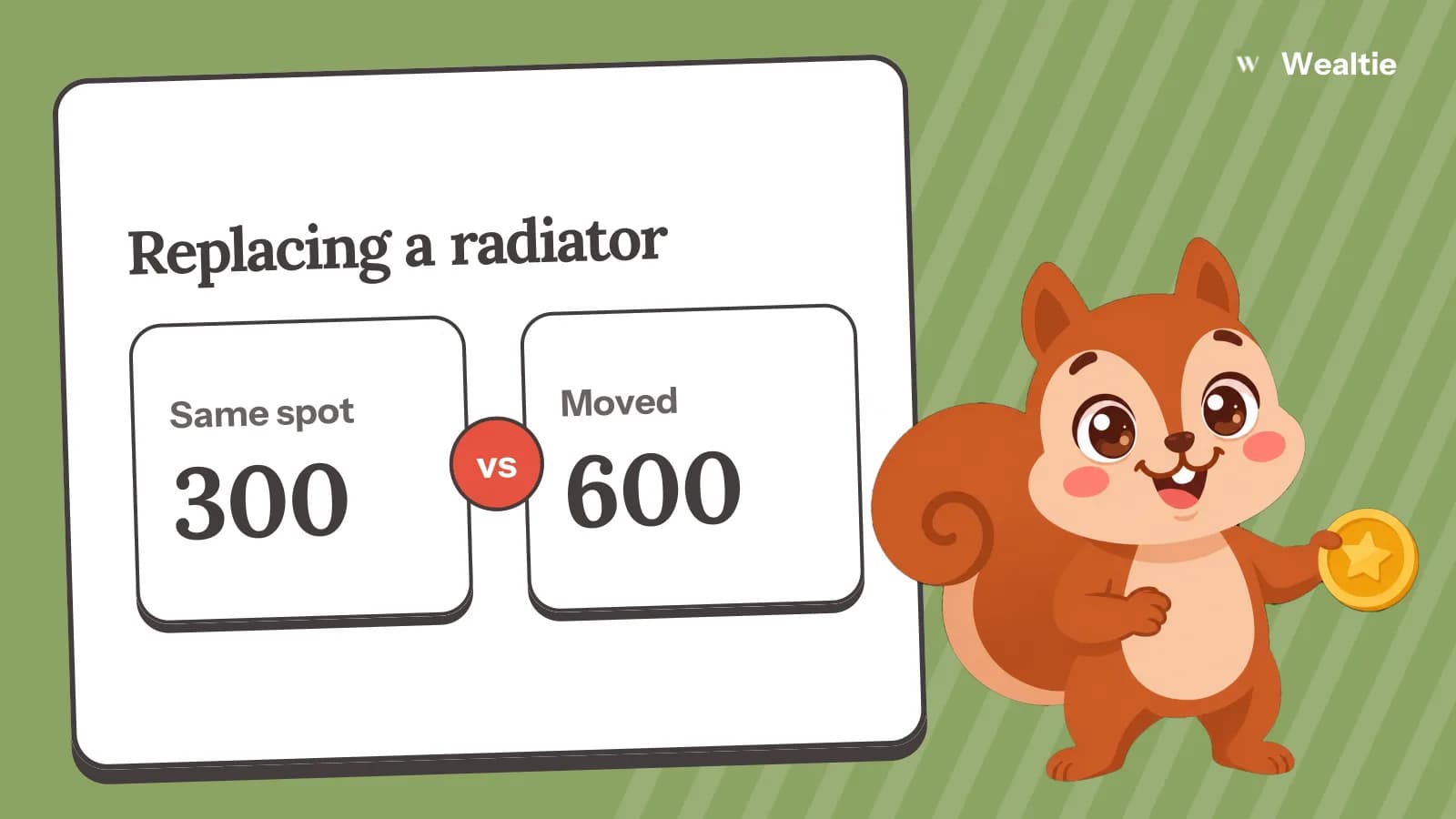
New radiator cost depends mostly on whether you're swapping a radiator in the same spot or moving pipes to a new position. In a worked example, a like-for-like swap costs 300 fitted, while moving a radiator costs 600.
 By Wealtie Team · 3 min read
Key takeaways
- New radiator cost depends on the radiator and whether pipes need moving.
- A like-for-like swap is the cheapest way to replace a radiator.
- Bleeding, balancing and new valves can fix many cold radiators for little or nothing.
- Replace radiators at the same time as other heating work to save on labour.
How much does a new radiator cost?
Radiators can last for decades, but eventually they may leak, rust, stop heating evenly or be the wrong size for a room after a renovation. New radiator cost depends on the type and size of radiator you choose, whether the new one fits the existing pipes and how much work the plumber needs to do.
Here's a worked example of replacing one radiator, in round numbers that work in any currency:
| Option | Cost |
|---|---|
| Bleed and balance only | 0 |
| Like-for-like swap | 300 |
| Move to a new wall | 600 |
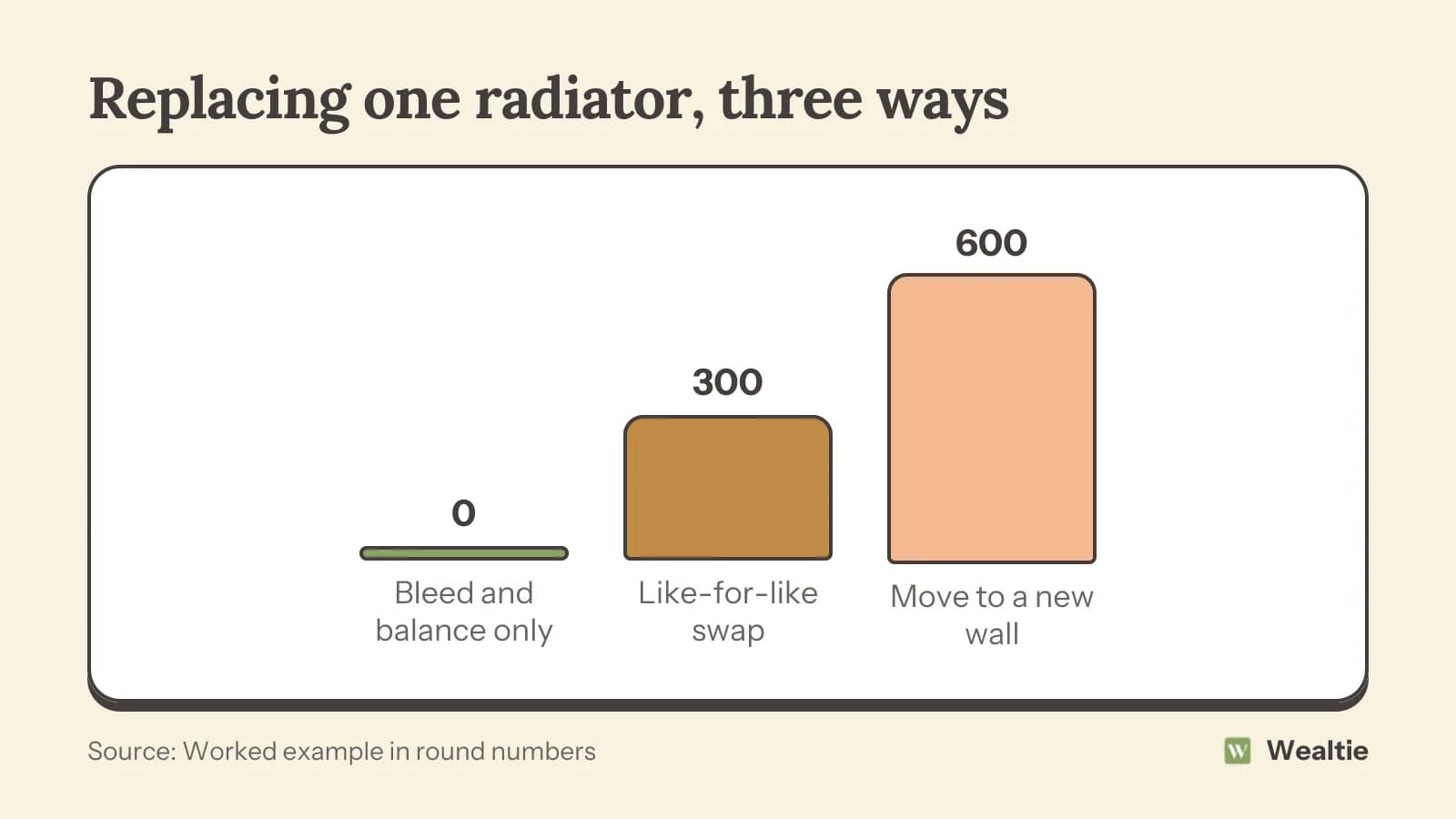
A like-for-like swap, where the new radiator uses the same pipe positions, might cost around 300, made up of 150 for the radiator and 150 for fitting. Moving a radiator to a new wall needs extra pipework, floor lifting and making good, which could bring the cost to 600 or more. Designer radiators and towel rails can cost much more.
Do you need a new radiator at all?
Bleed it first
A radiator that's cold at the top often has trapped air. Bleeding it with a radiator key costs almost nothing and takes minutes.
Balance the system
If some radiators heat quickly while others stay lukewarm, balancing the system by adjusting the valves can spread heat more evenly.
Check the valves
Sticking or broken valves can stop a radiator heating. Replacing a valve, or fitting thermostatic radiator valves at around 30 each, is much cheaper than a new radiator.
Consider a system flush
Sludge in the pipes can leave radiators cold at the bottom. A flush can help the whole system, though it costs more than bleeding.
How to save money on heating covers other simple ways to get more from your heating.
When should you replace a radiator?
It's leaking or badly rusted
Leaks and heavy rust usually mean the radiator is near the end of its life.
It's the wrong size
After knocking through walls or adding an extension, a room may need a bigger radiator to stay warm.
You're upgrading the heating system
If you're installing a new boiler or a heat pump, radiators may need resizing, especially for heat pumps, which work best with larger radiators at lower temperatures. The cost of a heat pump and the cost of a new boiler cover those projects.
You're renovating
During a room renovation, replacing an old radiator is quicker and cheaper while walls and floors are already being worked on.
How do you save on a new radiator?
Swap like for like
Choosing a radiator that matches the existing pipe positions avoids extra plumbing work.
Buy the radiator yourself
Some plumbers will fit a radiator you've bought, which can be cheaper, though check they're happy to do so.
Do several at once
Replacing several radiators in one visit spreads the call-out cost.
Choose standard designs
Simple panel radiators cost much less than designer styles and often heat just as well.
Add smart controls
Thermostatic valves and a smart thermostat help you heat only the rooms you use. Is a smart thermostat worth it? covers the savings.
How do you budget for heating repairs?
Radiators, valves and boiler servicing are regular home costs. Setting aside a small amount each month for heating and other repairs means you're ready when something needs replacing. How to plan a home maintenance budget covers how much to save, and repair or replace covers deciding what to fix.
Think about the size of radiator each room needs. A radiator that's too small for a large or poorly insulated room will struggle to keep it warm, while one that's too big wastes money upfront. Plumbers and online calculators can work out the heat output a room needs based on its size, windows and insulation. Getting this right when you replace a radiator means a more comfortable room and less wasted energy.
Insulation matters too. Before upgrading radiators in a cold room, check whether draughts, single glazing or a lack of loft insulation are the real problem. The cost of loft insulation covers one of the cheapest ways to keep heat in, which can make your existing radiators feel far more effective.
Finally, ask for a written quote that includes the radiator, valves, any pipework, draining and refilling the system and making good. Comparing complete quotes avoids surprises when the bill arrives.
Old radiators can often be sold or recycled for their metal, which can recover a little of the cost if your plumber doesn't take them away.
How can Wealtie help you plan home costs?
Log heating repairs and replacements in a home expense category, and set a monthly budget for upkeep. Seeing what your heating costs over a year helps you plan bigger jobs before winter.
Questions people ask
In a worked example, a like-for-like swap cost about 300 fitted, while moving a radiator to a new wall cost about 600.
Often, yes. Bleeding, balancing the system, replacing a valve or flushing sludge can fix many cold radiators.
Often, yes. Heat pumps work best at lower temperatures, so some radiators may need to be larger to heat rooms well.
Swap like for like, replace several at once, choose standard designs and add thermostatic valves.
This article is general information, not financial, tax or legal advice. Your situation is your own; check the numbers that apply to you before you act on them.